This post overlaps with the last one. I ran out of my self-imposed text allocation per image to include details about the specific epithet, which basically mean species name, of the Water Bush (Bossiaea aquifolium). This is derived from two Latin words of acus and folium meaning needle and leaf, and the whole word is said to suggest sharp-leafed. This name is most often used for plants in the holly family, and if you check the leaves of the Water Bush they do have a holly leaf shape. As I read on aquifolium was stated to be the pre-Linnaean name for holly:

This led me down a rabbit warren into finding out about what ‘pre-Linnaean’ meant. Taking me back to the 18th century, when a Swedish biologist developed what is called the binomial nomenclature. In plain language this means a two-term naming system, and relates to the genus and specific epithet. The scientific names of these two components are usually derived from Latin, but other languages have been known to creep in. The biologist responsible for setting this up being Carl Linnaeus, known as the father of modern taxonomy:

I did find it interesting that taxonomy itself is in fact derived from two Greek words taxis and νομία (pronounced nomia), meaning arrangement and method. And while on this fact finding mission I thought I would check out the word I use the most, species. This does come directly from a Latin word that means kind, sort, or appearance, which in itself is derived from the verb specere meaning to look at. As such the eminent and more well-known Charles Darwin did use the right term for his 19th century book The Origin of Species. Of course he did:
The full title of his work was ‘On the origin of species by means of natural selection, or the preservation of favoured races in the struggle for life’. One of the modern day definitions of species is ‘a group of living organisms consisting of similar individuals capable of exchanging genes or interbreeding’. Something that I guess could occur as part of preservation. And this would suggest the term specific epithet and species are not interchangeable. As I have found in trying to identify my finds, many orchids regularly exchange genes or interbreed:
When two different specific epithet orchids do this they are said to hybridise, but should they be one species? Hybridise comes from a Latin word hybrid, translating to mongrel or offspring of parents of different species. This however now indicates they may be interchangeable. Confused yet, because I am. You can probably see why I ran out of room, and after all that I think I will stick with species rather that the mouthful of specific epithet. Especially seeing in the classification breakdown on the Atlas of Living Australia, they use the term species:
It felt like I was going round in circles with all that, which is what I did at Crook Brook. Two circuits in fact, on a relatively quiet day here. This may be surprising considering the lovely day it was for a walk, not a climb at Welly Dam. The crowds were instead being drawn to the nearby Dardanup for the annual Bull & Barrel Festival, something we have still not been to. I’d rather be out here than in amongst throngs of people. And while it was a very pleasant gentle stroll, despite not seeing many orchids I now have to speed things up:
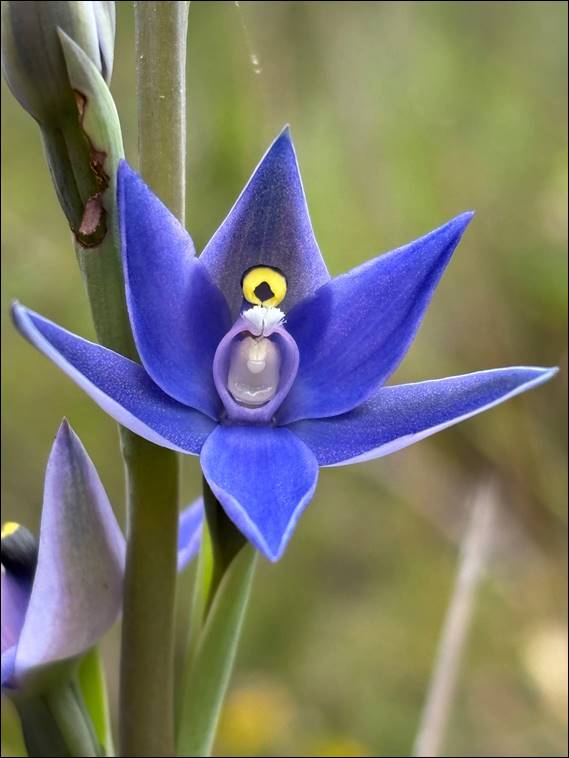
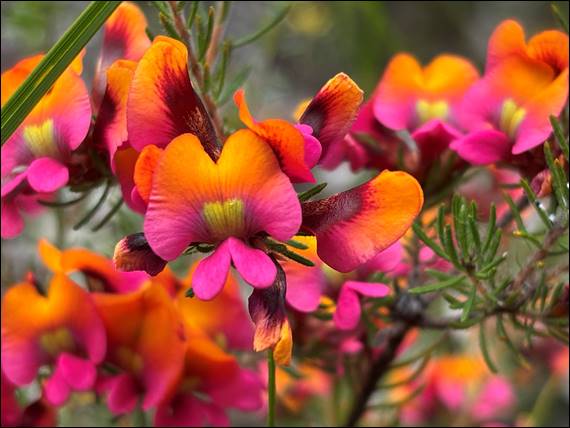
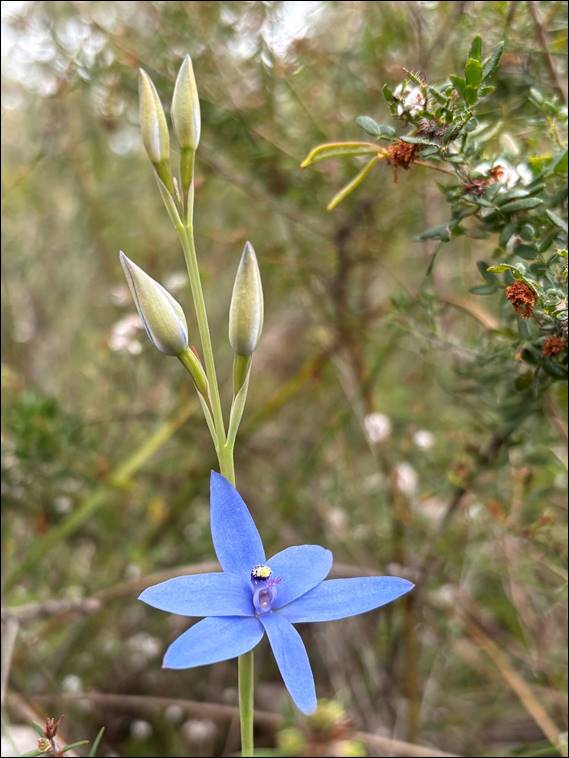
This will now be a quick fire list of what I found being: a spectacular looking Scented Banjine (Pimelea suaveolens); a lonely Leaping Spider Orchid (Caladenia macrostylis) with the maximum number of three flowers; one of several Scented Sun Orchids (Thelymitra macrophylla) that unlike those at Welly Dam had a few flowers open; all I can work out is it is one of the Flame Peas(Chorizema); and an elegant Blue Lady Orchid (Thelymitra crinite) from which I was going to get into detail about the role of calli but that can wait for another day:
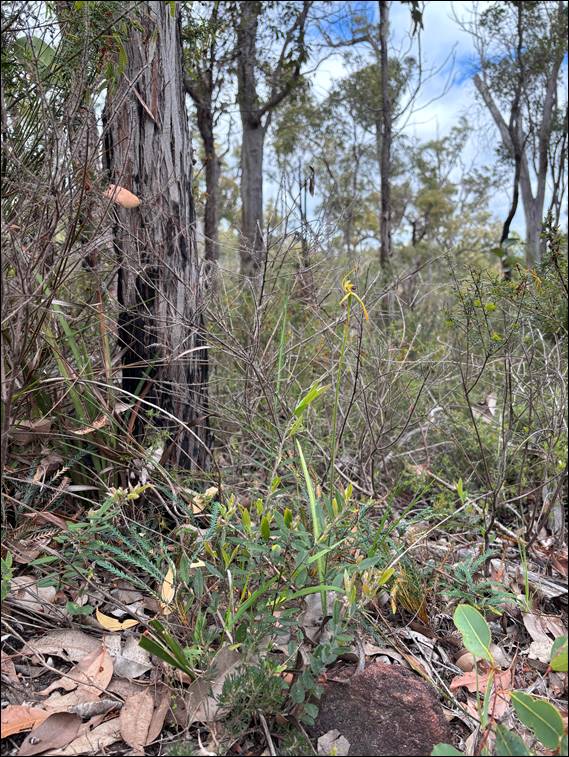
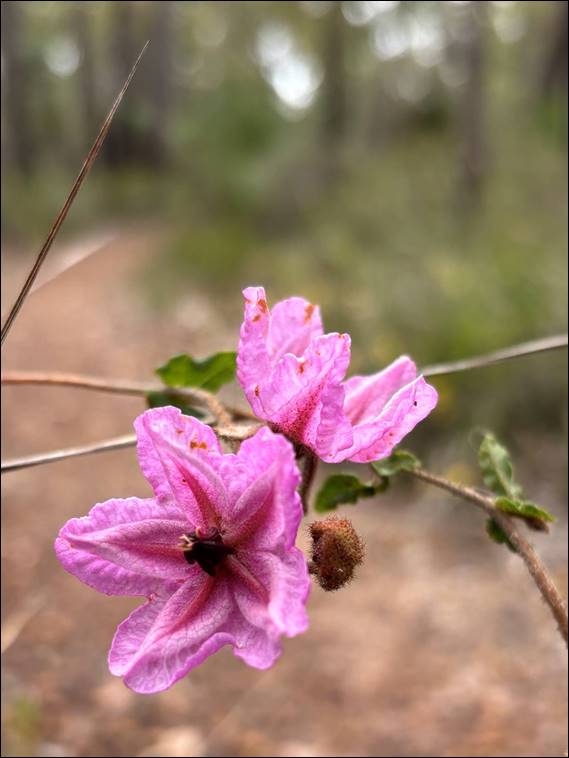
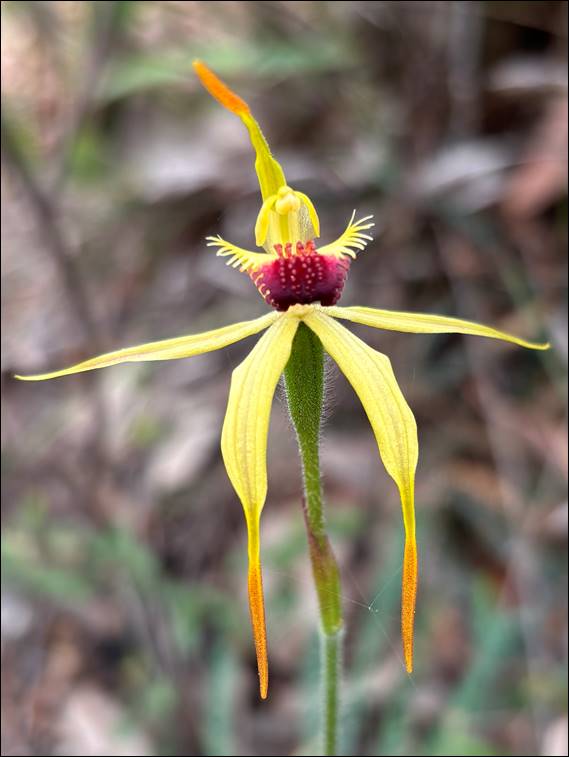
The next image being one of the thirty one species of Thomasia, thirty of which are endemic to the south-west of Australia. My guess is it maybe the Large Flowered Thomasia (Thomasia grandiflora). The last two images are of a Clubbed Spider Orchid (Caladenia longiclavata), I only found one. Said to be common and widespread yet this is just the second I have ever come across. Part of the species name comes from clavus meaning “club” or “cudgel” in Latin, appropriate as my brain feels a bit like it has been bashed in from researching these posts:
 Sandbagged