An English manuscript in the 16th century, about what I cannot find, reportedly referred to the not so pleasant life of a dog. A life of subservience, fed scraps, kept out in the cold, and only kept alive while it could undertake the works forced upon it by its owners. The phrase coined was not intended to create images of what you would consider a good life. Shakespeare also used this intent in the seventieth century, 1606 to be precise, when in Timon of Athens he used the insult ‘Thou was’t whelpt a Dogge, and thou shalt famish-a Dogges death!’:
In much more recent times and in stark contrast, in western society at least, for many a dog the idiom ‘It’s a dog’s life’ has been completely flipped on its head. Now being very much in their favour, as these pampered pooches have become part of the family. Many given as good, and some are even given better treatment than our fellow humans. No longer thrown out and abandoned when they are no longer useful, indeed some strive to keep them in the best health possible to extend their life span:
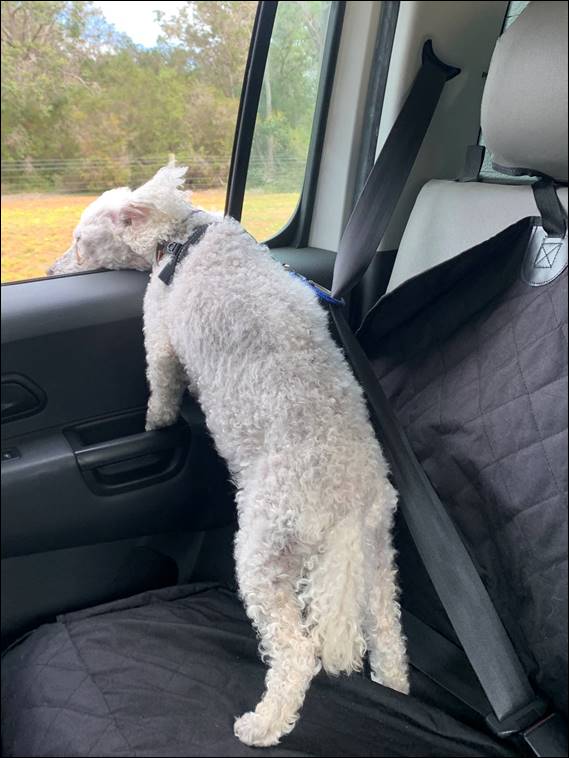
At fifteen years old Nicka, shown hanging out the window, is certainly going well. But her and Sooky’s, who is two years younger, good condition comes down to the basics in life. A balanced diet, healthy living, and of course a dose of luck in terms of not having been afflicted by the many ailments that can impact us despite our best efforts to look after ourselves. Miniature poodles are said to start to lose that youthful puppy personality at around 3 to 4 years of age, but not our two. At their very much mature years, they are still very playful:
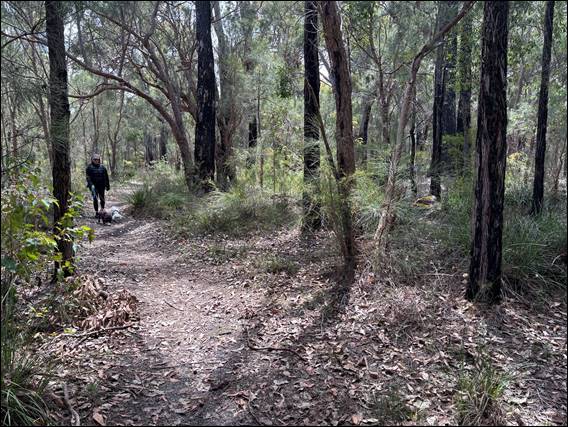
The basics of life and maintaining a youthful attitude, as much as possible because there are times you do need to act your age, is high on Lisa and my agenda. For me that includes getting out in nature as much as possible, which is why here is yet another post of the great outdoors. Visiting a place we have been to three times before, twice in spring and once in winter. Today as we wandered round the Kondil Wildflower circuit just outside of Nannup, it felt a little more like a winter walk despite being spring time. As were others out, we were rugged up:
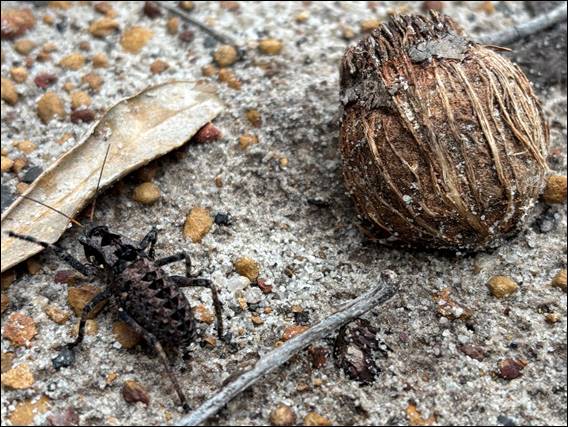
A circuit of contrasts. The start was damp, vegetation thick and green, and one section of the path was completely underwater. Then from about the halfway point it became dry and barren, the vegetation looking like it was just hanging on. With the poodles in tow, the pace was dictated more by them than me, as I looked for orchids. It wasn’t fast but not as slow as the Sluggish Katydid (Pachysaga australis) we spotted as soon as we stepped out of the car. There are approx. 1,000 katydids in Australia but only six species in the Pachysaga genus:
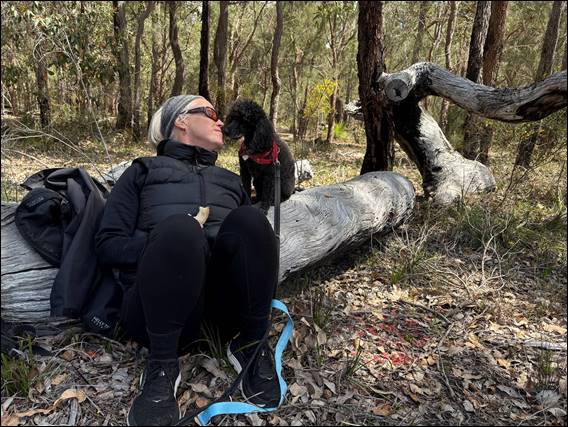
The markings make the identification indisputable. The recorded observations however hint otherwise, most being round the Perth Region and just one sighting near Bunbury. Halfway round Lisa and I ducked off the circuit onto another track, where I knew we would find some perfect logs to rest against for a cuppa and cheese butty. I also hoped for some orchids but in comparison to our previous spring walks it was incredibly light on. This particular spot has previously been abound with ducks and hammers, today I spotted just one or two of each:
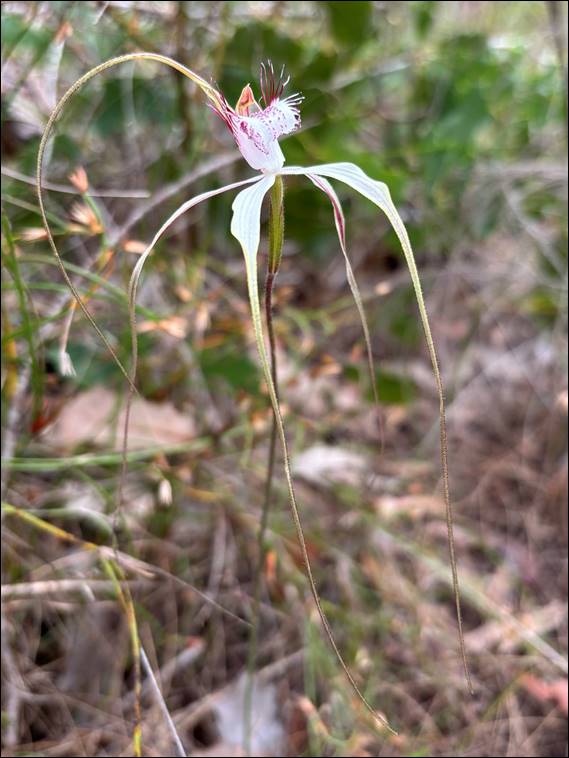
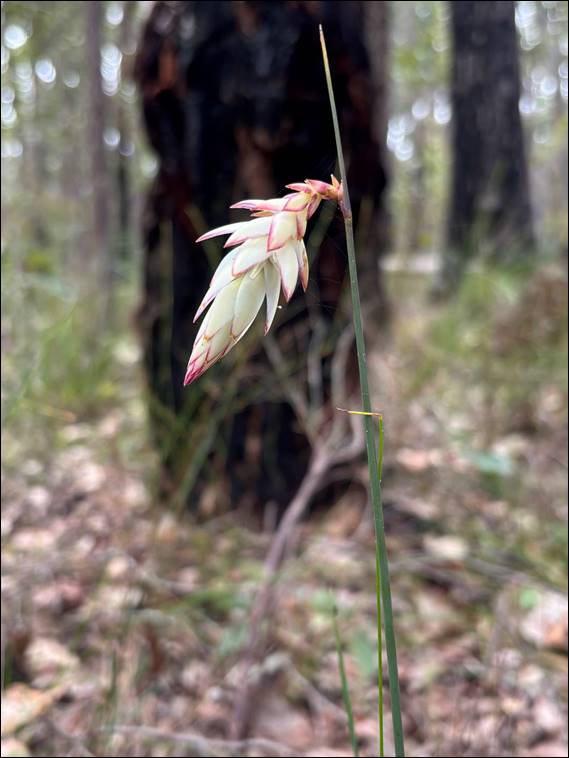
Unlike the Hooded Lily (Johnsonia lupulina) a few images up, all the greenhoods we saw were wilting and on their way out. The only orchids in abundance were the karri cowslips and rattle beaks. That said not all was lost and I did clock up another subspecies of the white spider orchids, with the above Merritt’s White Spider Orchid (Caladenia longicauda subsp. merrittii). This subspecies are found mostly in a narrow corridor that stretches from Karridale to Nannup, another large flowered plant of which we only spotted the one:
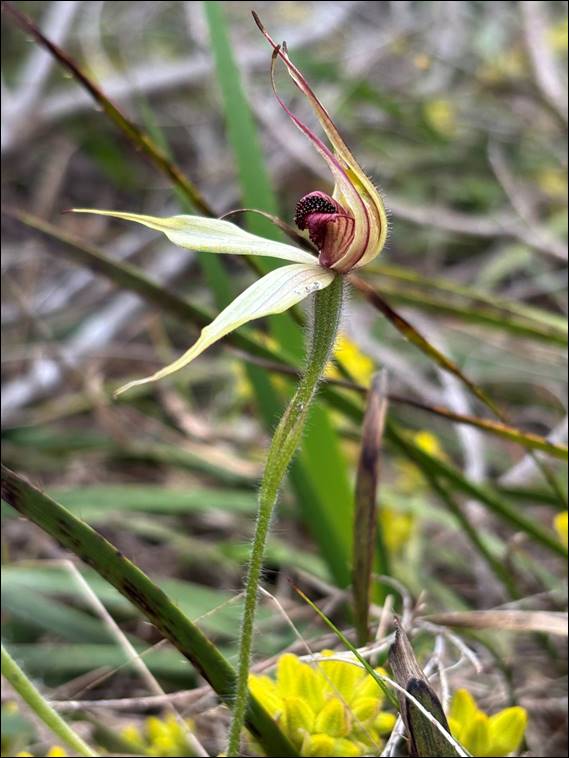
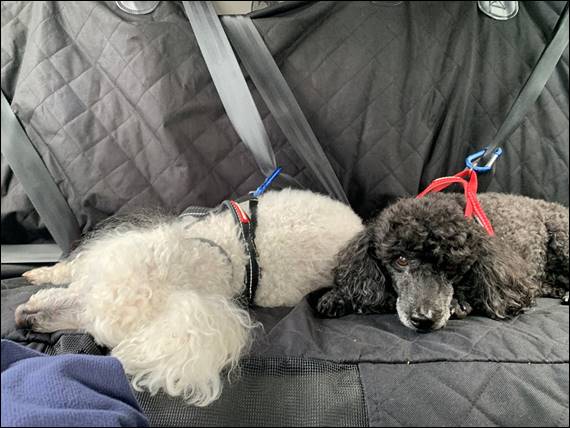
There were quite a few people out, not that we saw them during the walk. This included two locals geared up with cameras, obviously looking for orchids. They too said it had been very light on today, so I do not think we missed anything of note. To wrap up the walk there was a single Leaping Spider Orchid (Caladenia macrostylis) very close to the car. The species name macrostylis comprises two words for which the meaning should be obvious, being big style. The poodles showed none of this, flopped on the back seat asleep for most of the trip home:
 Sandbagged