Over the last few weeks I’ve been sent images by Howsie and work Josh of their finds at more southerly places. Coincidently they happen to have been from two of the places Lisa and I have visited this year, during our short weekend getaways. The images were of course of orchids, and species that are not found in our patch. One location is a potential day trip, but it is at a distance that requires more commitment. Instead I have committed to Lisa and I endeavouring to aligning our southerly getaway destinations with the orchid season:
While this means they will have to wait till next year, there is fortunately still more to be found in our area. I almost missed out on another opportunity this time a local one, which came up through work. However, in reaching out the community member who had set up the original opportunity offered to take me for a look through a bit of bush that they have spent decades looking after. Seeing it was work initiated I reached out to likeminded work colleagues, and the group grew a bit. It certainly was not like my usual solitude type wander:
It was regardless of the numbers still very worthwhile and a place I may revisit by myself one day. Especially seeing the Minninup Tuart Woodland is a mere ten minute drive from home. Unlike the Tuart Woodland that is right on our doorstep, this one is a bit further north and separated by the Capel River and farmland. What struck me was that unlike the rest of the Tuart Forest National Park, this area has somehow managed to avoid being overrun by the dreaded, highly invasive, and toxic Arum lily (Zantedeschia aethiopica):
This was more of a guided tour, but it still comes down to keeping a sharp eye out and knowing what to look for. Quite a few of the usual species were out, but the stars were most definitely the spiders. It was clear that the community member knew this area and much of the flora really well. They have however expanded their knowledge across all flora, and the Orchids family was not their strong point. I pointed out a couple of unusual aspects of some of the finds but mostly took images to do my own investigation later:
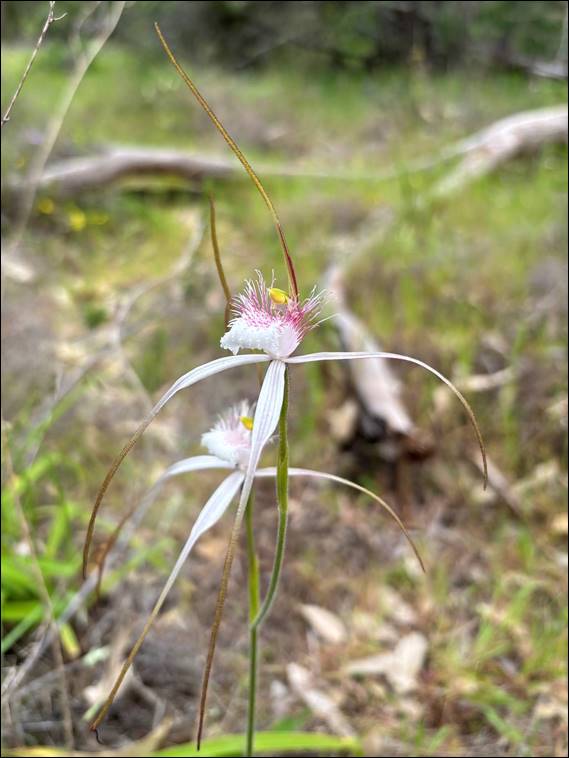
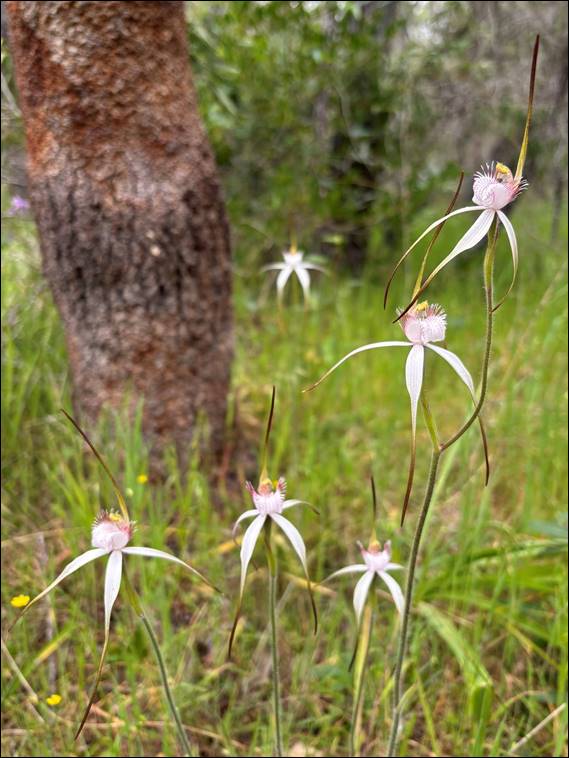
This lead me down a rabbit hole, to the point that I decided to call in the experts. I have not been in touch with Noel Hoffman for a year, one of the co-authors of one of the main Orchids books for western Australia. He replied in as lovely and personable a manner as ever, and I was pleased when he confirmed my thinking. So going all the way back to the beginning we start with the Sandplain White Spider Orchid (Caladenia speciosa), it was the next image however that started to make me doubt despite being advised it was the same species:
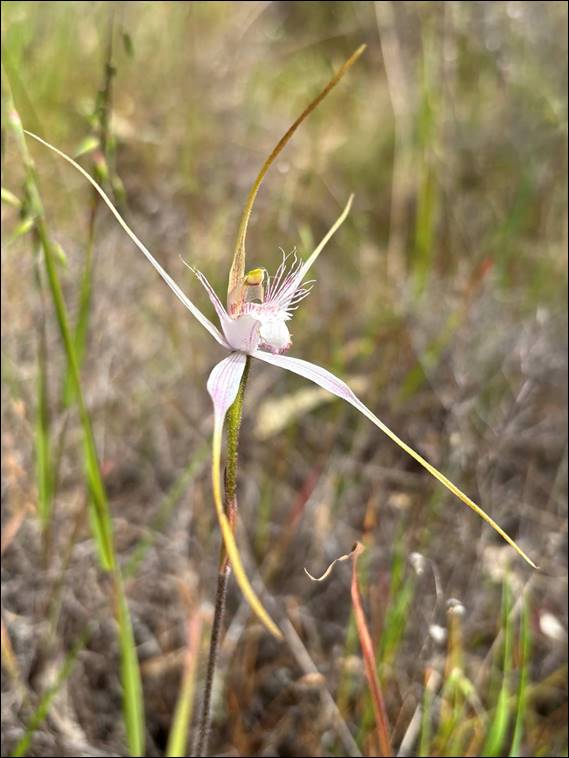
The fringes are straighter, shorter, and generally neater, and the petals shorter in overall length and with darker, slightly heavier clubbing. This led me to suggest it may be the Coastal White Spider Orchid (Caladenia longicauda subsp. calcigena). However, while the habitat is correct it seemed to be out of recorded range. Records suggest it is found from Bunbury northwards but the various public databases show no recorded observations south of Lake Clifton, which is seventy kilometre to the north as the crow flies:
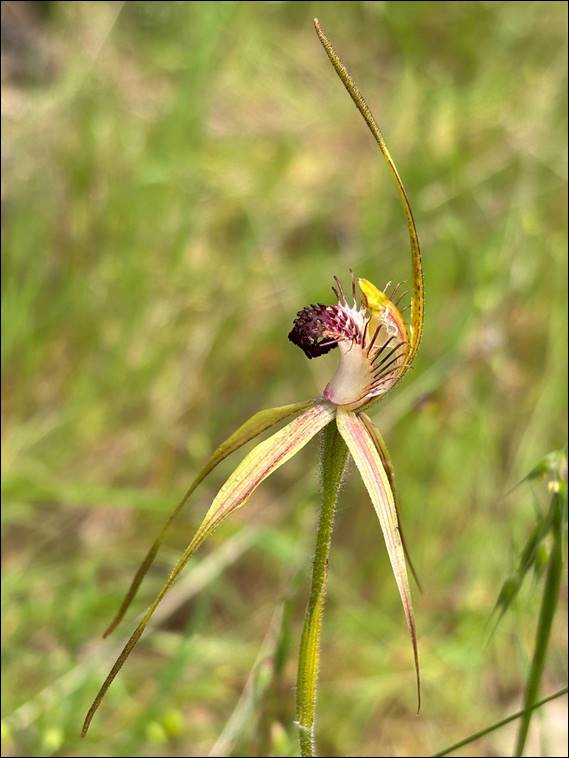
Noel confirmed my identification, although also admitting that the white spiders are a tricky bunch. He also confirmed the next image as being a Tuart Spider Orchid (Caladenia georgei), not a Karri Spider Orchid (Caladenia brownii) as had been suggested by our guide. The calli extending over the red tip of the labellum being the giveaway feature to distinguish between them. And even better the following image is a cross between the Coastal White and Tuart Spider Orchid, a commonly found hybrid two hundred kilometre to the north at Joondalup:
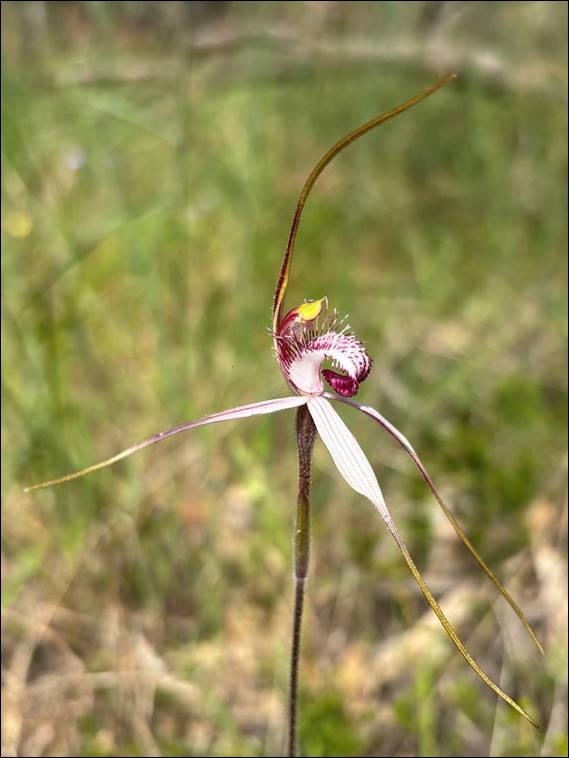
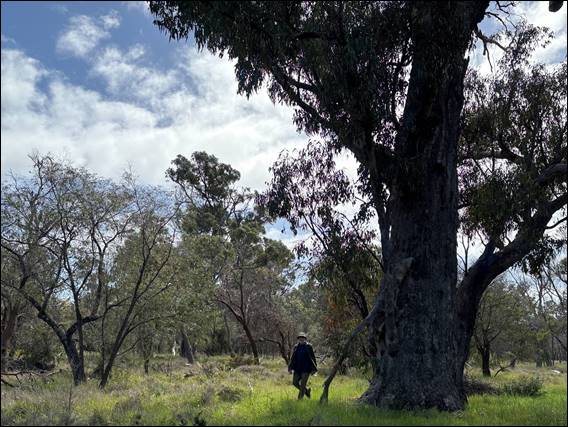
The last spider has both Noel and I stumped, it is clearing a hybrid of a Sandplain White Spider Orchid but with which other species? The way the petals and sepals are being held and the distinct pale clubbing has not helped us one bit, so it remains a mystery. The next image is of someone else who joined the trip being Brendan who used to work with us, and is now gainfully retired. It was lovely to catch up with him and his partner Sharon, and I get the feeling that he will enjoy seeing his mug in this post:
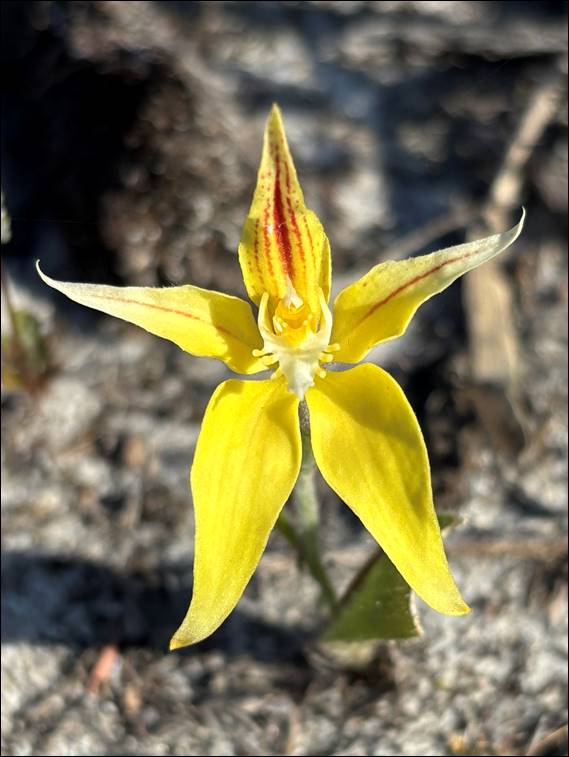
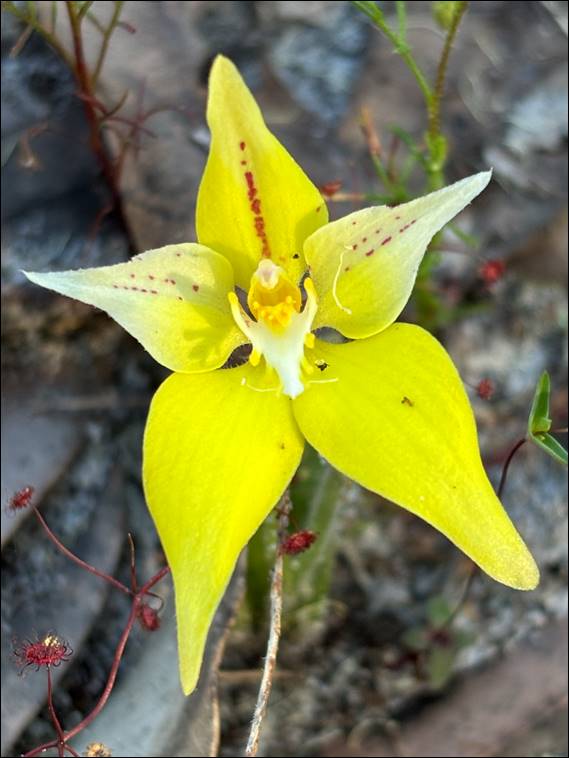
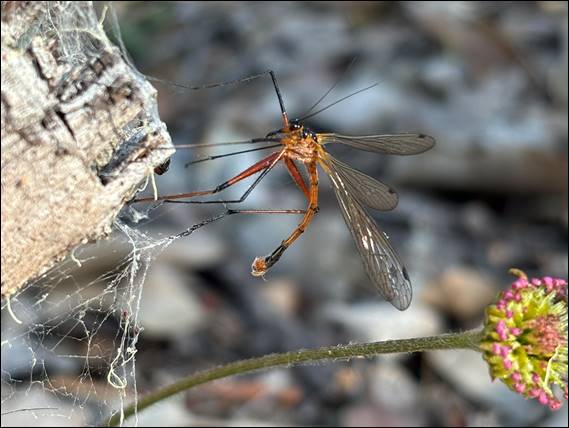
The last three images are from the Capel Nature Reserve, a short trip on Thursday and the only midweek trip I managed. The Karri Cowslip Orchid (Caladenia flava subsp. sylvestris) flowers later than the Cowslip Orchid (Caladenia flava), is generally taller and has pale tipped petals and sepals. With narrower petals and sepals the second one may be a hybrid with a Pink Fairy Orchid (Caladenia latifolia), which is a common find. For my last image I found a predator becoming the prey, being a Common Western Scorpionfly (Harpobittacus similis):
 Sandbagged