This post starts where it ends. The last find I have included made we go back in time, which like last week resulted in me uploading not one but two new but quite old posts. They go way back to 2010 and 2011. The reason being is that is where my orchid fascination started, fifteen years ago. It was our first camping trip to the magnificent Stirling Ranges that introduced me to the delights of these hugely varied and diverse plants. More specifically it was the Mount Trio Bush Camp that kicked it off, with all the images and information they had on display:
My write up of that first trip found here: https://sandbagged.blog/2010/10/18/a-striling-range-holiday/. If you dare to go through that you will notice a very different style applied to write up our adventures. Back then it was very much about keeping overseas family and friends up to date on what we had been up too. An image says a thousand words, and I leaned on that by including lots of pictures with just a short sentence for each. That posts also show how wrong I was with some of my early assumed identifications:
So enamoured by the location and campsites, in 2011 we went back for another spring break at the Mount Trio Bush Camp: https://sandbagged.blog/2011/10/24/glamping/. On our first trip, and as it had only recently been established, we had the place quite literally to ourselves. For the second visit we saw more people but not many, and today it has been completed transformed. Being deservedly popular, but with popularity the quiet charm that drew us there each spring time while Elseya was young diminished:
As I was fully expecting, I have neglected all the images in this post and relived fond memories of the past. That is after all one of the reasons for keeping a record of such treasured moments. First by images, then by emails, and now by these posts. The reason for including the second post is that was the first time that I saw what I very unexpectedly stumbled across at the end of my second walk this week. To understand that you will have to get to the end of this write up, which captures the walks that I squeezed in on Wednesday and Thursday:
The weather was not too bad all things considered, and the week ahead is looking like the winter fronts may be behind us. I’ve previously mentioned that Rongy and Sarah recently returned from their long travels. They have been inspired by my finds to start looking for orchids. Sending me a fair few images of what they have discovered. It was one of those finds that led me to head to the Dalyellup Tuart Forest on Wednesday. Having only walked through that bit of bush once before, late last season I haven’t really explored it:
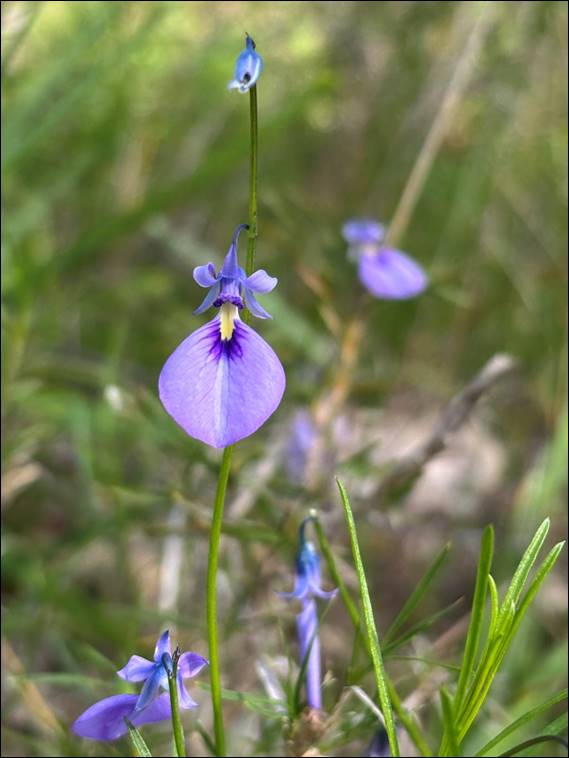
This was a bit of an assisted find, having been given the coordinates of where to go. Rather than making a beeline for that spot I started some way off to explore what else may be about. It was pretty quiet on the orchid front. Granted I saw heaps of Cowslips and Donkey’s, but little else. I did however really like the Wild Violet (Hybanthus calycinus) in the first image, this plant has had a bit of a back and forth name change over time. Being switched between genera going from Hybanthus to Pigea, but still widely recognised as Hybanthus:

It goes to show how tricky this business of identify plants and their true names can be. Sometimes I really do wonder why I put myself through it! When I got to the special spot I hunted and hunted, but there was nothing to see. After a solid half an hour I decided to text Sarah and let her know I failed. A few minutes later the phone pinged and she replied to say she was heading into town soon and could stop by to show me where they were. This led to various pins being shared of where we were, which was a considerable distance apart:
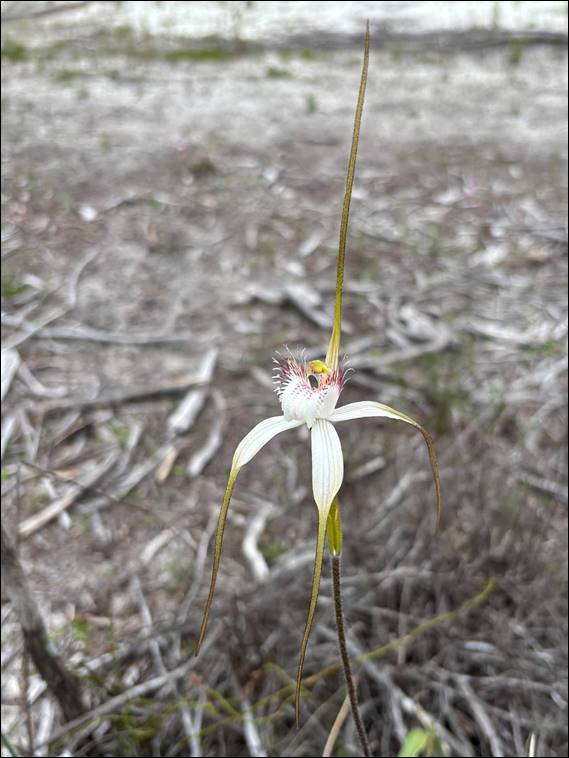
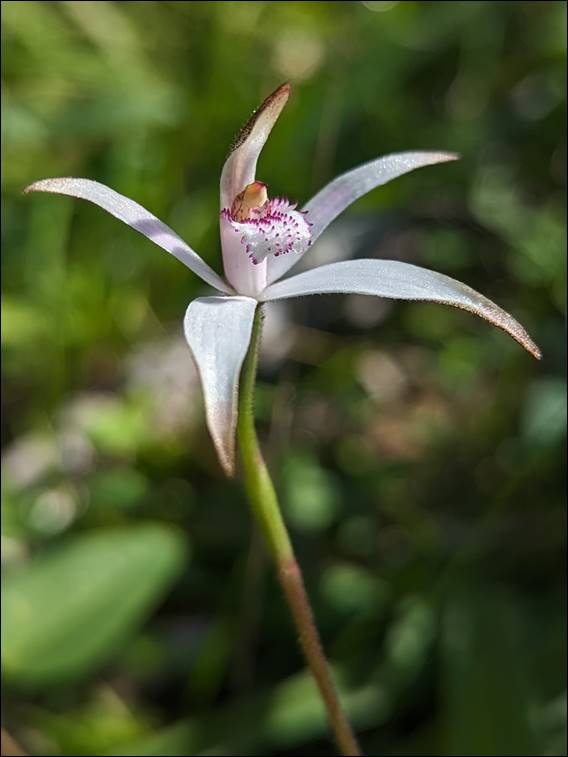
You could say this was more than an assisted find seeing I was going to be led right to the spot. It was certainly not in keeping with how I like to find orchids, but this one was special. As I made my way towards Sarah, taking a straight line through the bush, I stumbled across two Sugar Candy Orchids (Caladenia hirta subsp. hirta). Being the species I was after, and allowing me to get that great feeling of just stumbling across the find. The reason it was special find, is that I have not seen these before and didn’t realise they could be found here:
I have however seen one of the two subspecies at the Stirling Ranges. The subspecies being the Sugar Candy Orchids (Caladenia hirta subsp. hirta) that is white, and Pink Candy Orchid (Caladenia hirta subsp. Rosea), which is obviously pink and the one I have seen before. This one is detailed as being a common subspecies that is found in Banksia, tuart and peppermint woodland. So I find is amazing that I have not come across it before here. I then caught up with Sarah and overall I got to see five of them making the trip out very worthwhile:
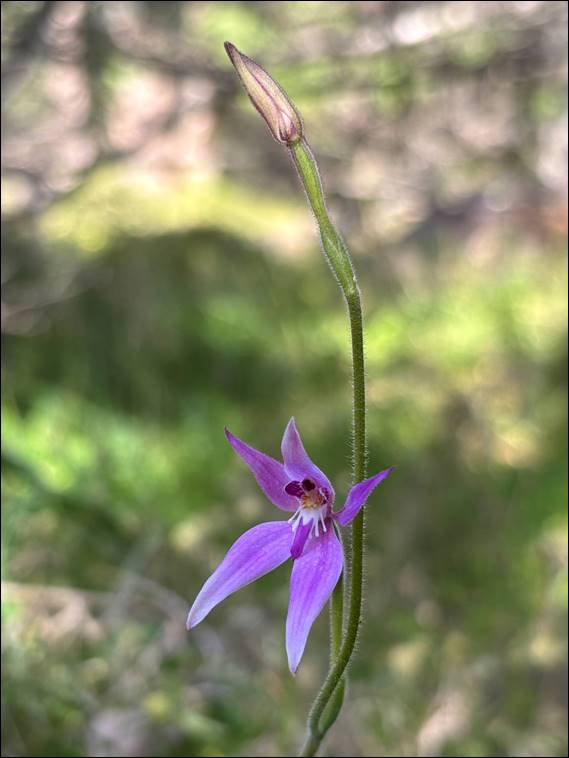
In the same area there were also quite a lot of Pink Fairies (Caladenia latifolia), being the third image. Common as anything but worthy of inclusion, and linking nicely to the rather grainy video of a male Splendid Fairywren (Malurus splendens). We stood and watched for what seemed like forever. Normally skittish and quick to hide in the bush this male didn’t care, putting on a great display that was hard to pull ourselves away from. But we did eventually, leaving him to carry on chirping away:
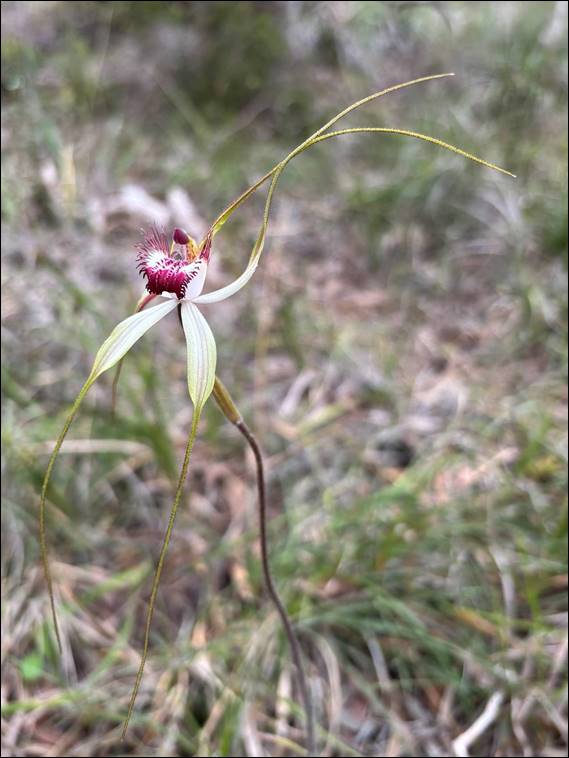
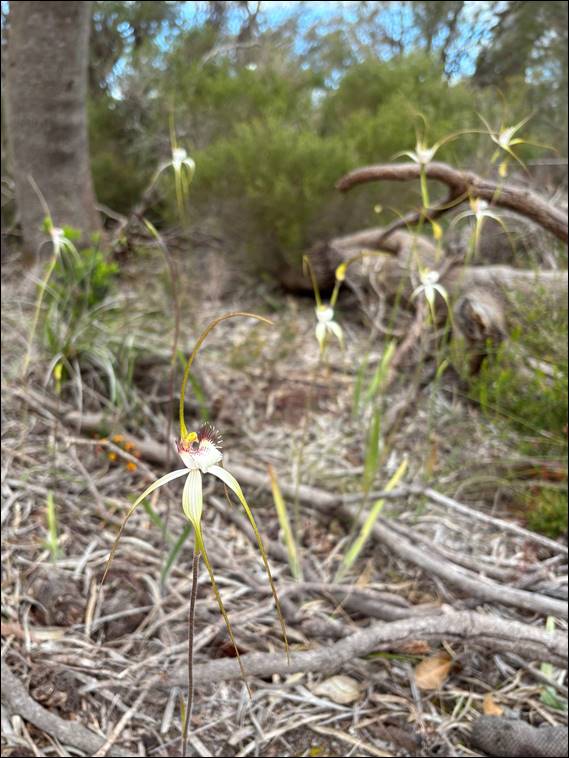
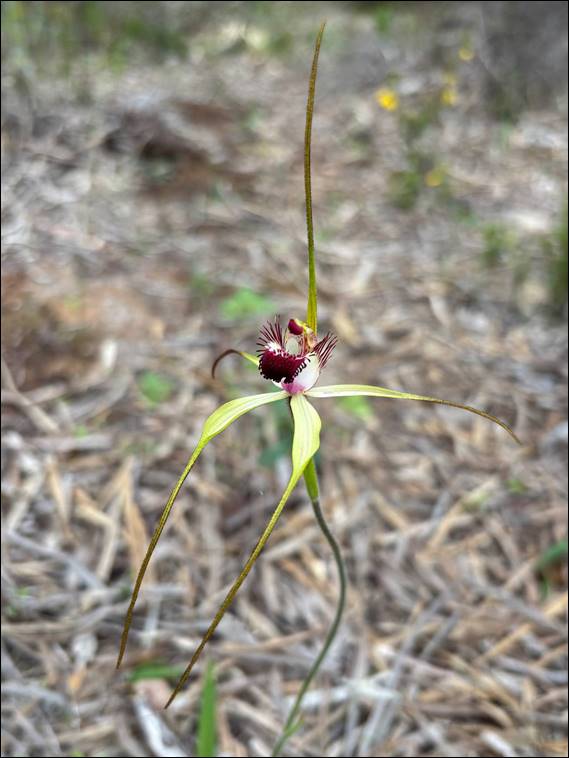
On Thursday I went to see how the spiders were going at the Capel Nature Reserve, and the images speak for themselves. It was hard to walk more than a few minutes without seeing another one, totally stunning. The first two images from this reserve being of clumps of White Spider Orchid (Caladenia longicauda subsp. longicauda). The third being the Sandplain White Spider Orchid (Caladenia speciosa), identifiable by the long tangled fringes. Like hair that is allowed to grow without trimming, these can be prone to splitting:
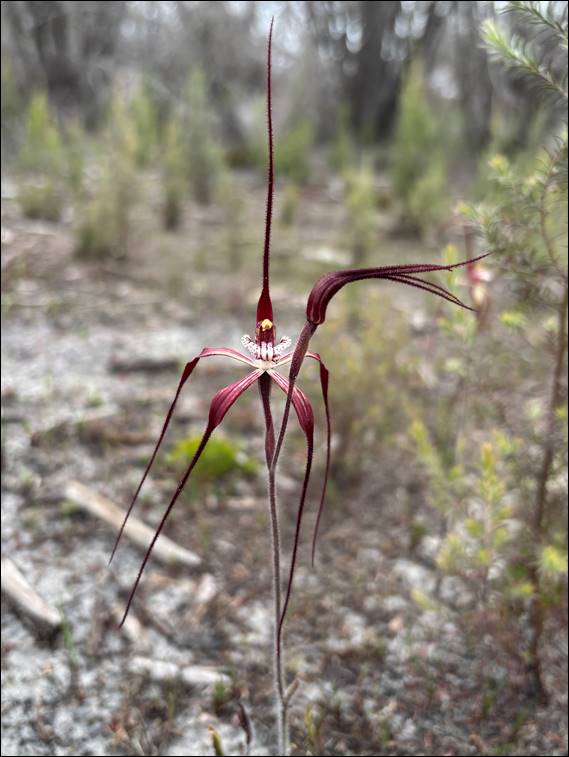
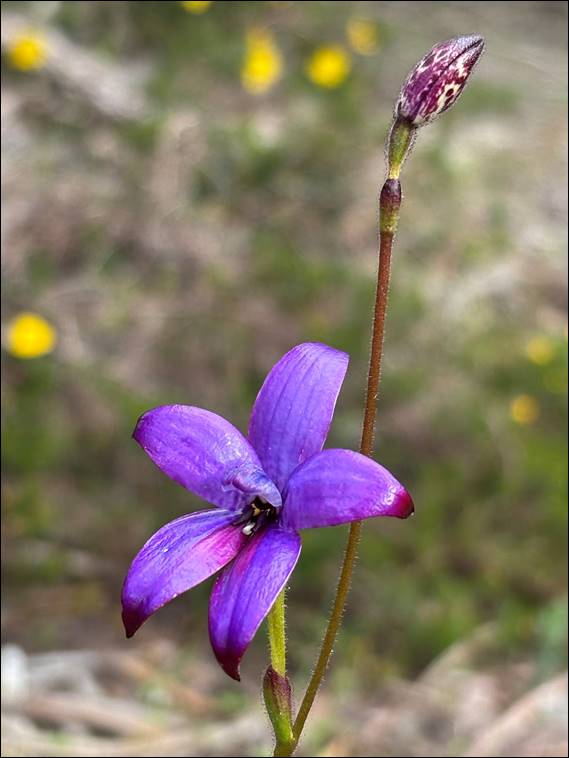
This was the species that I recently found to be listed as Priority 4, meaning they are considered rare or near threatened. I’ve broken the spiders up with a Purple Enamel Orchid (Elythranthera brunonis). I like the image included as it has a bud displaying the mottled pattern that resides on the back of the petals and sepals once the flow opens. I tell people to check this overlooked feature out, as it is quite beautiful. Capel was certainly on fire, and I also found a King Spider Orchid (Caladenia pectinata) with its deep red tip on the labellum:
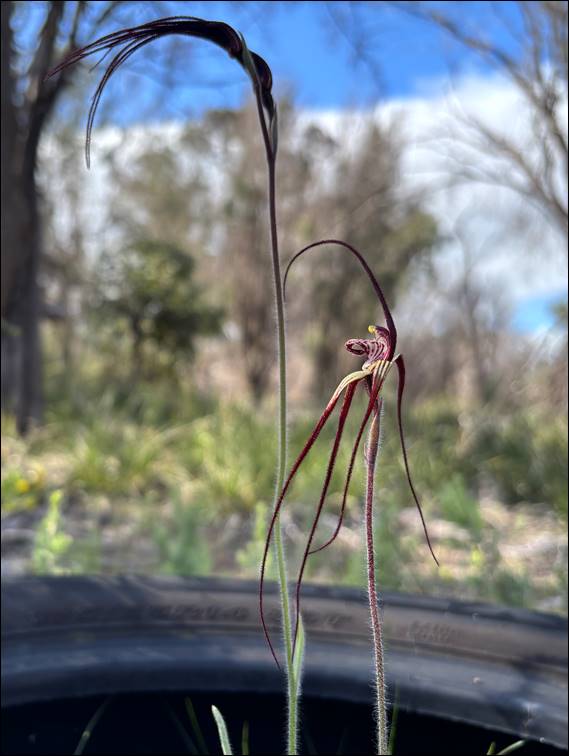
This species of the king orchids spreads its sepals and petals elegantly. The next image is a cross between a King Spider and White Spider Orchid. Having the red tipped labellum and sepals and petals being coloured and displayed like the latter species. I have unapologetically included two images of some of the many Chapman’s Spider Orchids (Caladenia chapmanii). There are plenty more spikes that are yet to flower, and I can safely say I will never ‘tyre’ of seeing these magnificent spiders with their display of a multitude of stunning colours:
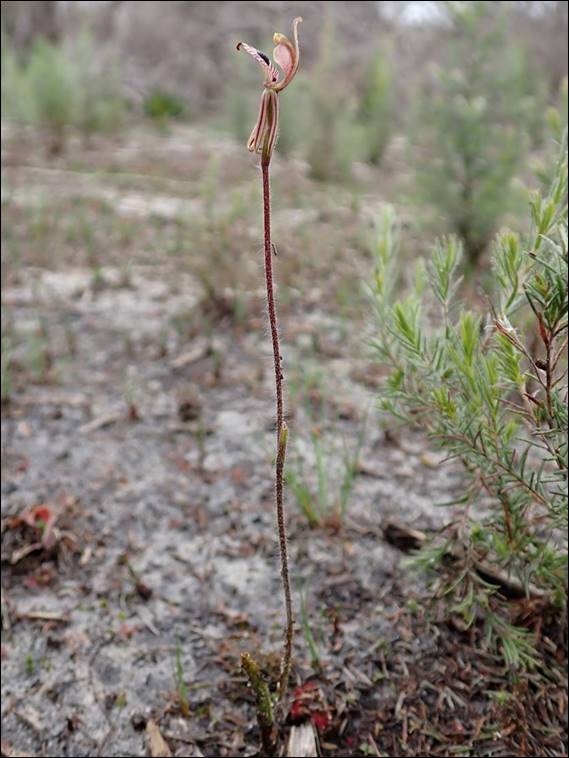
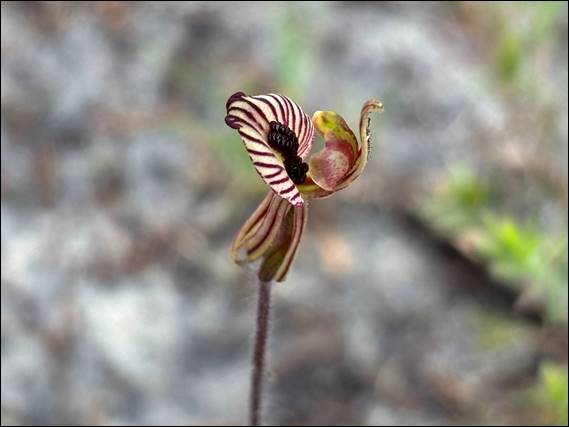
It feels like I have just raced to the finish line. Here, finally, are two images of a Zebra Orchid (Caladenia cairnsiana) that I almost didn’t see. These come from a underground tuber and are described as usually being found in scattered groups or sometimes in clumps of more than ten. I’ve only ever seen these, like the Sugar Candy Orchids, in the Stirling Ranges. Indeed this species was first described from a specimen collected in the Stirling Ranges. Finding them, as described, in groups and clumps. Tried as I might I did not see any more here:
 Sandbagged