We are creeping toward the end of winter and into spring, with only a week left. No doubt this will result in a higher chance of me bumping into others out hunting orchids in my local haunts. The south west of Western Australia is well known for its diversity of orchids, and it attracts avid hunters from both within the state and across Australia. I’ve come across people who have said that they make an annual pilgrimage here to check what may be out. So before things start to heat up I thought I’d squeeze another quiet stroll in:
I’ve previously mentioned that whether some species will be in flower can be reliant on summer bushfires. But most species can more reliably be expected to emerge from their winter slumber. Not being dependent upon anything so extreme to be aware that it is time to come out. There are two obvious catalysts. Heat, not as high as that created by fire, just the seasonal warming daytime temperatures. Kind of linked to this is the intensity of the sun and the increasing daylight hours, which can also be a biological trigger:
The other obvious one being the abating rain, although there is more to rainfall patterns with the build-up of the soil moisture ratio also being important. Without the right mix the dormant plants may not be able to adequately access water and the nutrients required to give them the energy to grow. Purely for convenience I popped into the Capel Nature Reserve, less driving required allowing more time for very slow walking. With the amount of trips I make here you may think I know ever square metre, but there are still undiscovered nooks:
My approach of heading into the bush and wandering about aimlessly with no idea of direction, distance, and often time, means I really have no idea of which bits I have been to and which I have not. Today however I came across a patch, which I can say with a degree of certainty, that I have not seen previously. Before I get to that I probably need to play catch-up. Having admitted to walking very slowly, I am equally guilty at time of rambling on in my post, so I first need to provide a bit of context for the images included so far:
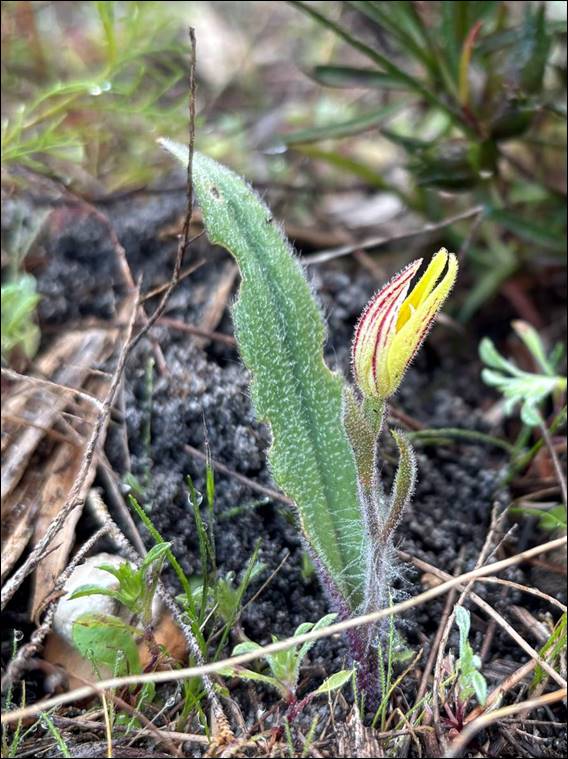
The Caladenia genus is that of the mighty spider orchids. All up there are approx. 350 species, 180 of which can be found in Western Australia, and 140 in the south west. While there are many other genus of orchids, the spiders are regarded by some as the most spectacular. Varying in shape, size, and colour and with so many crammed in one part of the state it is clear why people would want to come here. The most common being the Cowslip Orchid (Caladenia flava subsp. flava), for which I still like to celebrate the first one I see each season:
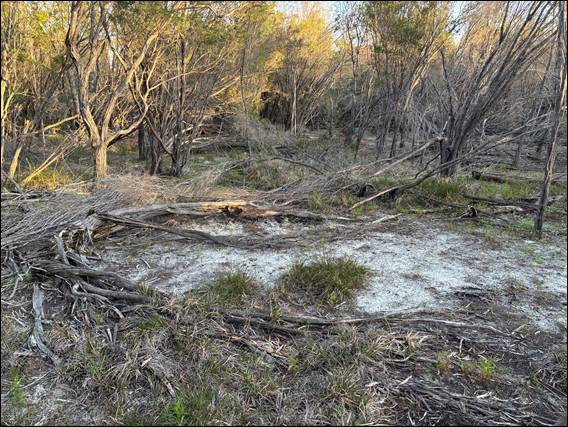
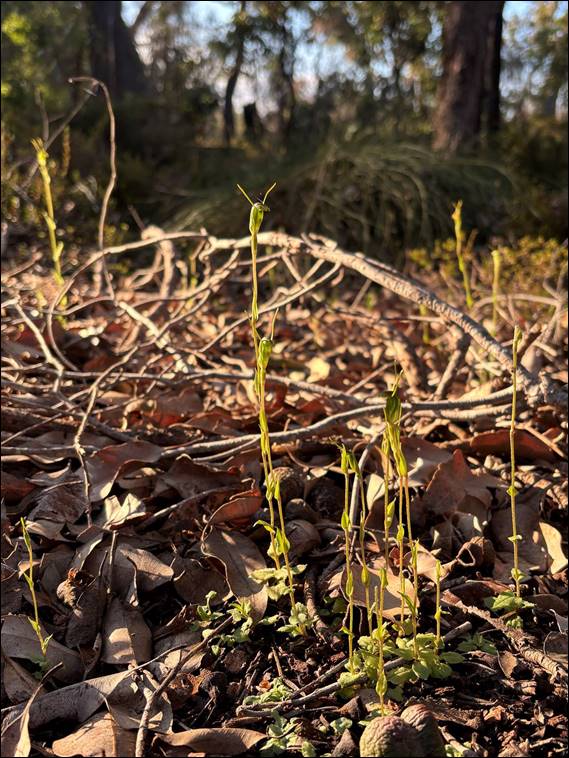
Shown in the first image it usually found in flower from July to August, this is yet another species hinting to me that we are having a late and potentially compressed orchid season. For the second image I got rather excited, when I came across clump of Glossy-leaved Hammer Orchids (Drakaea elastica). The second area I have found them. Unlike the other spot, which is on an access track, this one is more protected and looked to have a few preparing to flower. An important enough find for me to pin the location and photograph it for when I go back:
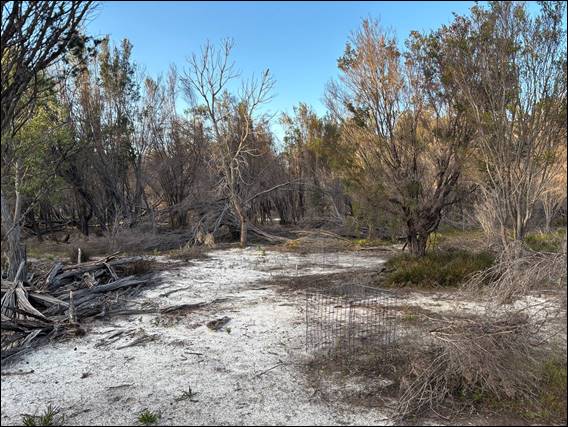
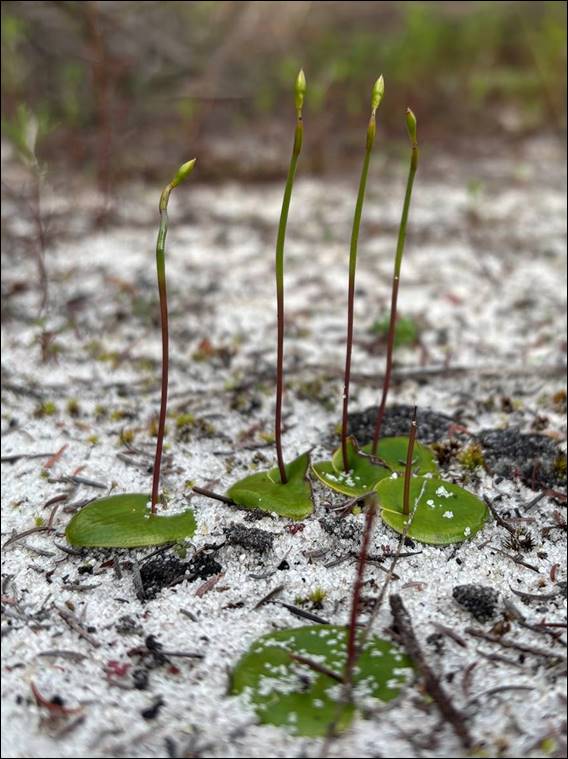
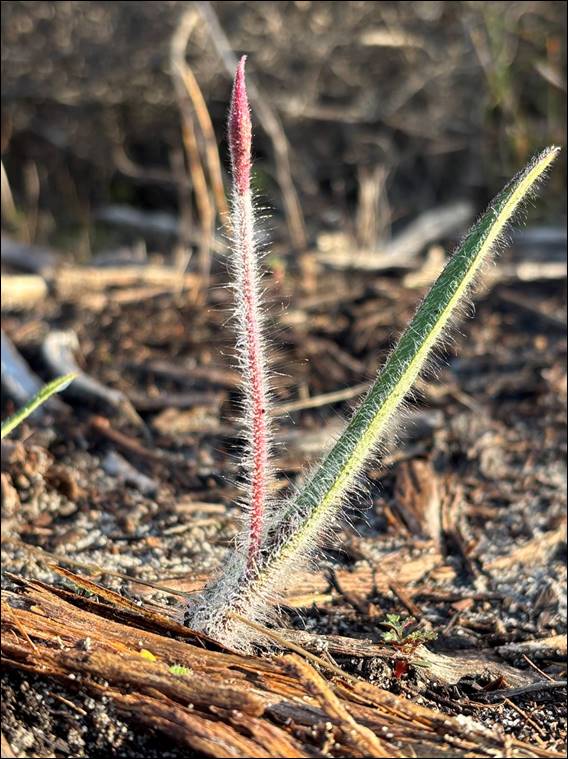
Wandering along a mere thirty yards and into another clearing I spotted five or six cages, shown in the third image. And sure enough they were located over more patches of this critically endangered species, under World Conservation Union. Noting that strangely, and a bit disappointingly, under state and federal Australian legislation it is only listed as rare and endangered, respectively. I found more patches spread across this area, not protected by cages. Quite a few had spiked and look like they may bloom, as shown in the fourth image:
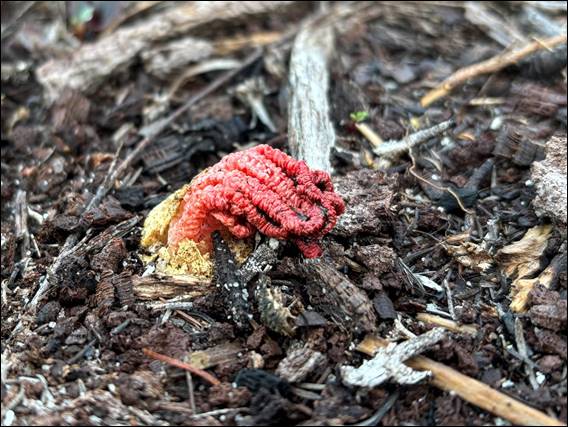
The stroll was proving to be a success when I also came across a fungi I have been keeping an eye out for. Having only stumbled across it once before, some years back. The creepy looking Craypot Stinkhorn (Colus pusillus), for which there is no need to say which image it is in. The wrinkly red finger like tentacles will form a cage like structure. This happen all in the course of a day, and it looks to me the cage is yet to form. More success was had in finding flowering orchid species with repeat finds of fairies, snails (two images up), and greenhoods:
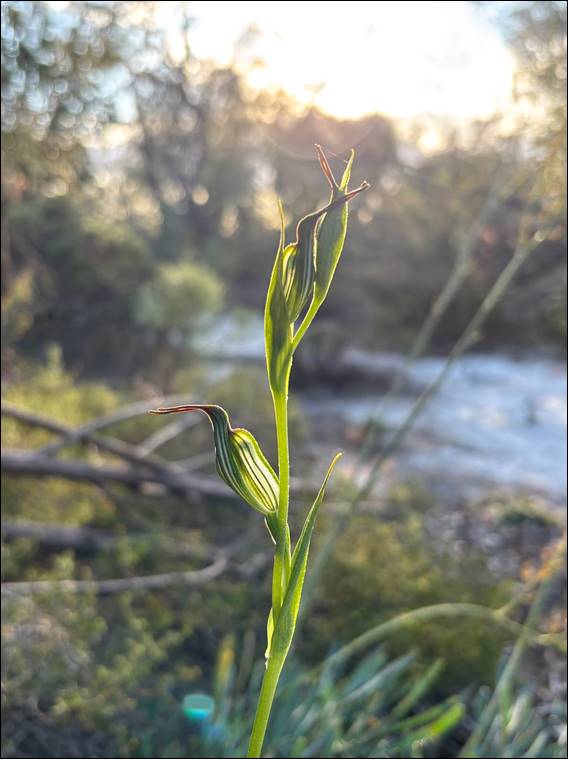
For the latter genus this included my first, nearly in flower, Jug Orchid (Pterostylis recurva) shown two images up. There are usually heaps of these about, but this was the only plant I found. Then there were loads of Caladenia genus spikes, some of which I recognised, others I am not so sure. The above I am pretty confident is a Chapman’s Spider Orchid (Caladenia chapmanii), which is a real beauty. After picking up the pace I have final caught up with my images, however I may head out again later to see if the Craypot Stinkhorn has formed its cage:
 Sandbagged