Now I know one reason the snorkelling was particular pants last summer. It is due, in part at least, to the moon’s 18.6-year wobble. This may sound like something out of a science fiction film. However, unlike those films where the moon is either at risk from an asteroid strike or breaks its orbit to commence on a collision course with earth, this wobble is a natural phenomenon. All the moon does is tilt slightly, and the effect of this changes the gravitational pull on earth. During the peak period tides can increase by as much as a 30-40% in our local area:
The moon’s wobble is predicated to reach its peak in 2025 for Western Australia. Hopefully, after this year, the summer snorkel seasons may start to improve for the next nine or so years. Noting of course there are other contributing factors at play. Why am I talking about this? Well we are assessing why the sea grass in an estuary may not be doing so great over the last year. Sea grass being critical for the ecosystem. Being a habitat, food source, and nursery for many marine species. And it seems the moon’s wobble is likely to affect sea grass health:
Next question is why are we doing this? Well, the general populations memories are short lived, too short to be able to recall impacts from cycles that last nearly two decades. As such and as a result of recent observations by citizen scientists, things are stirring in this space. Our role is to objectively understand and respond to these claims, based on science and facts. In other studies they have identified the moon’s wobble can play a significant role in the health of mangrove wetlands. And like sea grass meadows, they too are also critical for marine species:
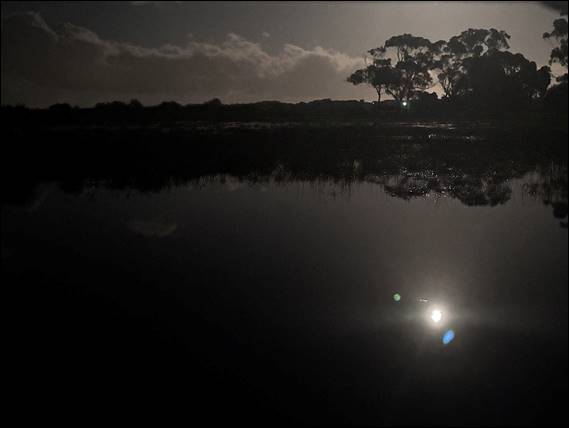
It would seem that I myself have wobbled off the path for this post. Not surprisingly I was not heading out snorkelling, at such an early hour nor as we enter the last month of winter. I went off track because the waxing gibbous moon was so intense, as I was driving out. It was providing 99.5% illumination only just shy of a full moon, which is due tonight. The glorious sight stayed with me most of the way to my destination. With approx. 10km to go the moon slipped behind a cloud bank. So extensive and filled with moisture that there was no trace of the moon:
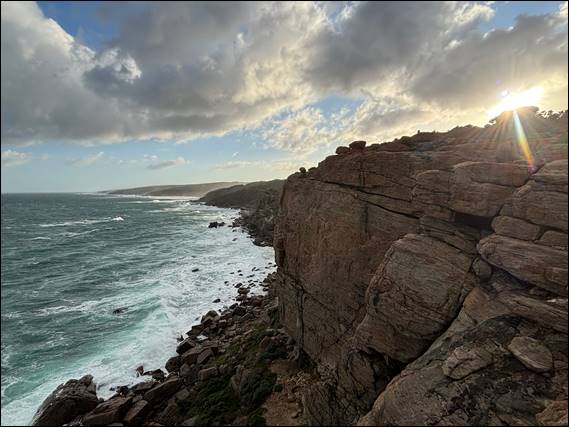
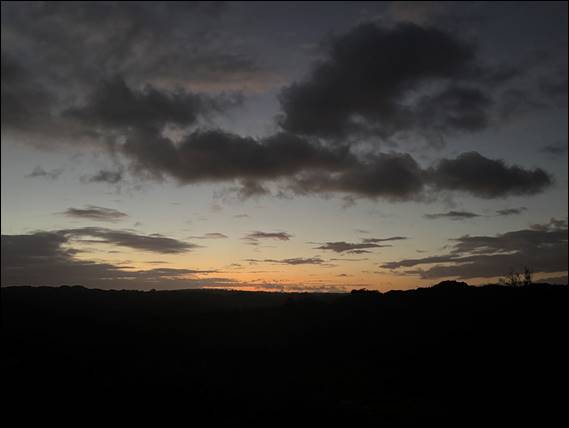
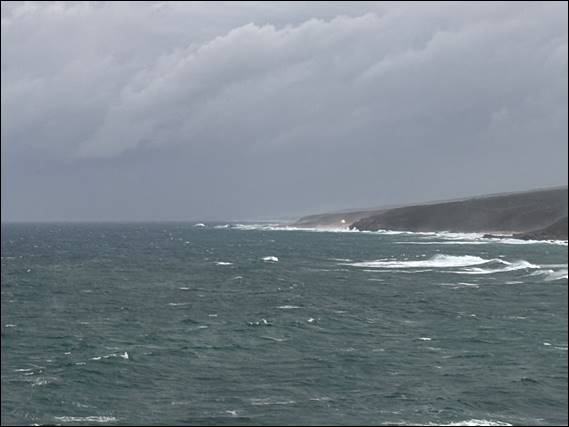
It was a gamble heading out, and I had ummed and ahhed about where to go. Only making a decision after being on the road for half an hour. The charts suggested I would be alright till mid-morning. The clouds told another story. While the second image shows a relatively cloud free sky to the east, back home, the next image shows Moses Rocks. Taken a mere half an hour after getting to the cliffs. If I had gone there I would have got wet from early on. The lights of a car perched above the beach, 4km north of where I stood, was probably a surfer checking the conditions:
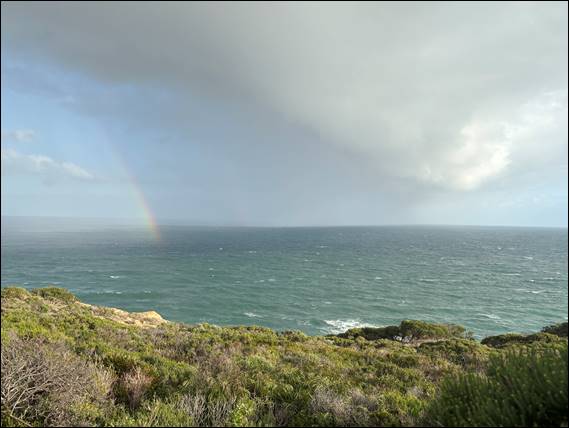
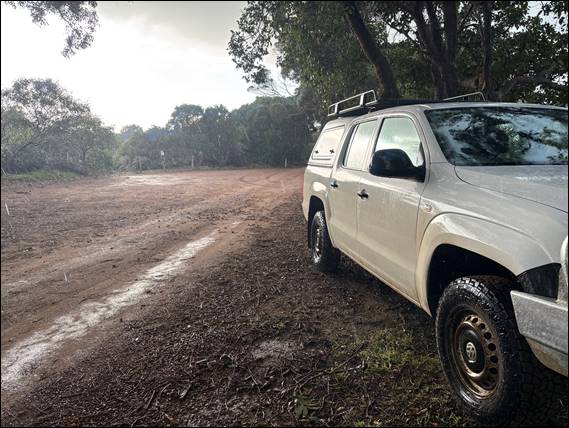
You may not be surprised to hear that I was flying solo today. Plumping for Wilyabrup for ease of setting up. Thinking there would not be time to faff about, plus the longer lines appealed. With no time to mess about I set my schedule during the second half of the drive out. Two set ups, six lines, twelve laps, average grade of 15, and bang on 300m of climbing. The only other thing I focused on was watching the clouds. Switching from threatening to clearing several times. Not until I had completed what I had set my mind too did it come in. Catching up with me just before I got back to car:
 Sandbagged