Looking out and seeing a blue sky as I type this makes me think that maybe I should have gone for an afternoon wander. Or possibly even a climb, not that I would have had success in convincing anyone to head out. It had looked like we would be blanketed in clouds and rain all weekend, to the point I didn’t bothered to try and organise anything. Having resigned myself to not touching rock, I knew there was no way I would stay sane if I didn’t at least go for a stroll. And knowing I would get wet I also realised it would end up being a hike:
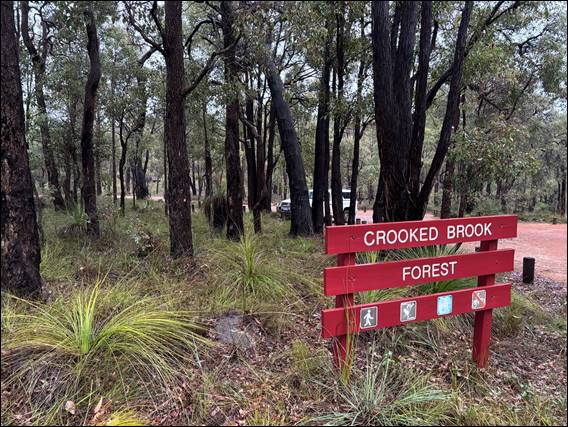
As opposed to a wander or stroll, that meant getting on with it and putting some miles under my feet. It was no surprise to see my car looking lonely as I headed off on the 10km loop at Crook Brook. Lisa hadn’t joined me today. She also hadn’t gone down the beach for a plunge, which would have happened just before I arrived. No one had. Like me not touching rock on a weekend, this was a rare occasion for the Peppy Plungers. But justified as the rain was lashing down, the wind was near gale force, and the ocean was a messy surge of water:

Inland however the wind was way more sedate, and the rain remained relatively light with only the occasional heavier spell. In such situations it is a tough call as to whether to wear the waterproof. Today the decision wasn’t hard. I was travelling light, with only my phone and a muesli bar for company. The jacket stayed on, and I accepted I would get a little toasty as I moved quickly. I still kept my eyes peeled despite the pace. Noticing the flecks of pink, white, blue, yellow, and red of the few natives that were in flower speckled here and there:
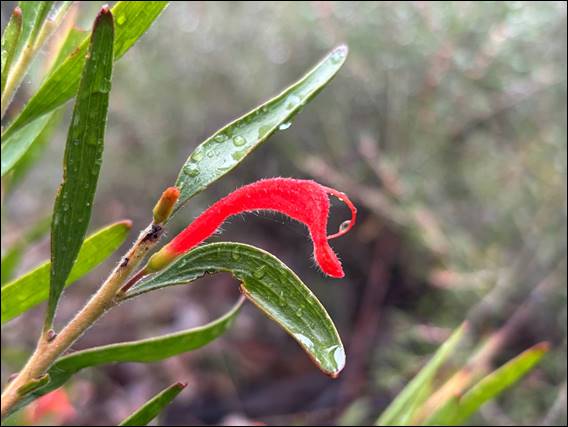
The one that really caught my eye was the above Hairy Jug Flower (Adenanthos barbiger). With fine white hairs on the perianth, a fancy name for non-reproductive parts or petals and sepals, clearly visible against the deep red. These filaments are where it gets its scientific name, with barba meaning beard in Latin. An endemic plant that flowers from August through till December, so it had started flowering right on cue. Unlike a few orchids I could mention. Initially I only saw Banded Greenhoods (Pterostylis vittata), which flowers from April:

Although his year I felt that they had started late. I have also only seen spikes of the Jug Orchid (Pterostylis recurve) that is supposed to flower from August. I may be impatient, but the above Slender Snail Orchid (Pterostylis crispula) have only just started to appear, despite having been known to flower as early as May. Distinguished from other snail orchids by its narrow flower and small basal rosette. Most others species in the local area don’t have a basal rosette. Sadly I also stumbled across a South African Weed Orchid (Disa bracteata), with its spike forming and will no doubt bloom on time, which normally happens in October:
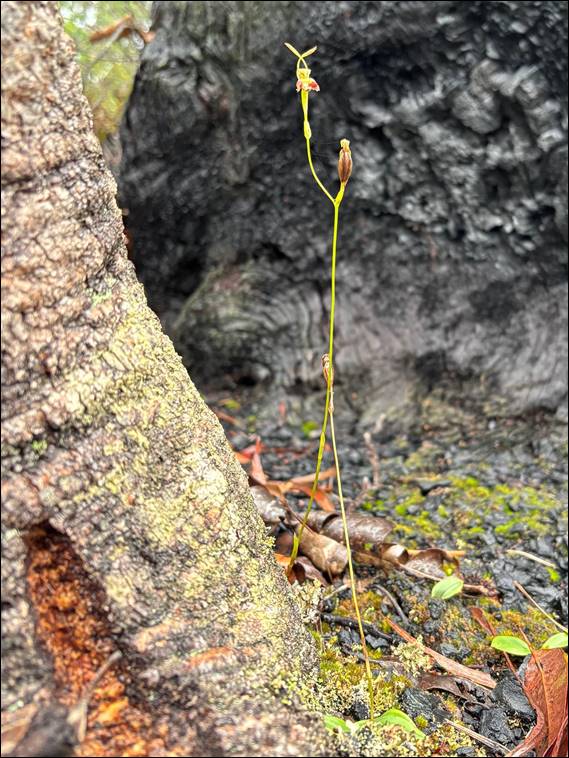
It is likely the only invasive orchid in Western Australia. Having arrived as far back as 1944. Since then it spread to South Australia in 1988 and Victoria in 1994. It has now also been sighted in Tasmania. Relishing the conditions here, that are similar to South Africa, and forming quite large colonies. There’s no getting rid of it now. Back to the natives, I found a few Hare Orchids (Leporella fimbriata) still flowering, as shown above. Blooming from March, the flowers can last seven months still being seen and recognisable as late as September:
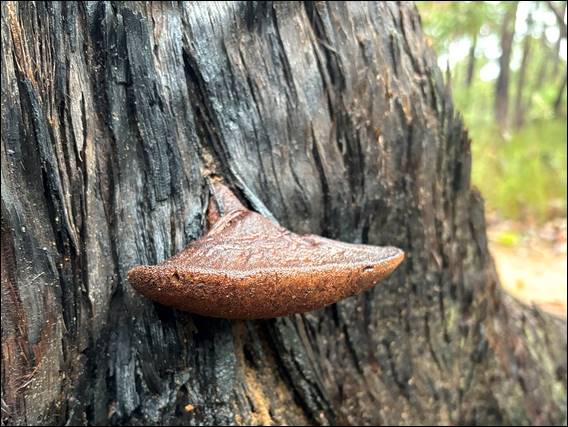
There wasn’t much fungi to see, and the above was the only one to draw enough of my attention to warrant a quick stop from pounding the track, to snap an image. I’ll stick my neck out and suggest it may be a Beefsteak Fungus (Fistulina hepatica), which can also be known as a Beefsteak Polypore, Poor Man’s Steak, Ox Tongue, or Tongue Mushroom. While closely related to gilled fungi the fertile surface, being the underside, has smooth cup-shaped elements instead of gills. Forming what looks like a solid base, a bit like fungi in the Boletus genus:
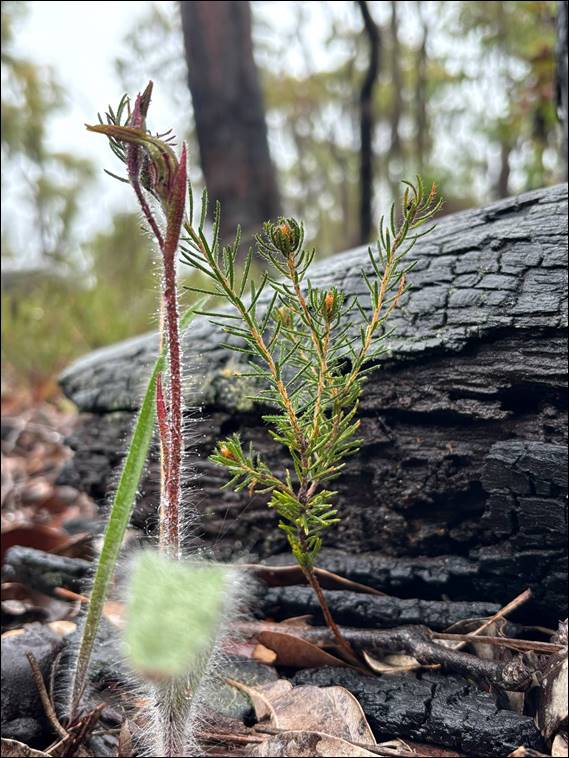
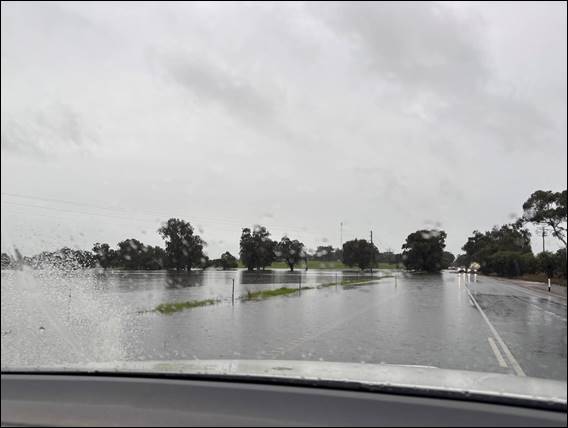
I wasn’t too concerned about the lack of fungi, as orchids kept popping into view. Stopping to check the Slender Hammer Orchid (Drakaea gracilis) Lisa and I found a few weeks back, there were now two spiking. And above a Reaching Spider Orchid (Caladenia arrecta), being my favourite of the spider orchids. Both of these species are known to flower from August, but as alluded to above seem to be another couple of species that may delay their bloom. Happy with six good and one bad orchid species, it was time to drive back only to find a few roads were now flooded:
 Sandbagged
Nice play on words with that title 🙂 Trust all’s well.
LikeLiked by 1 person
Damp but grand, cause I’m still getting out in nature. But probably not as relaxed and adventurous as your nomadic life. Where are you at the moment?
LikeLiked by 1 person
Damp but grand here too, in Gdańsk. Just finishing up ten weeks in Poland. Learned a lot. Back to Blighty this week to catch up with family and friends. Off to Morocco and then Spain for the autumn and much of the winter. All good.
LikeLiked by 1 person
That’s the life, keep learning as you go!
LikeLiked by 1 person