True to her words, on Sunday last weekend, Lisa and I headed to mini Pear Mill as it will be known from now, but only by us. Here we enjoyed a taste of decadence, played a game of scrabble, and were surrounded by a diverse range of antiquities. The latter distracting our attention when the letters on our boards were proving just too tricky. It is a chilled spot and we spent a very relaxed hour or two there. While it has its differences, the true Italian style food for one, it did so remind me of Pear Mill. So much so we told the owners:
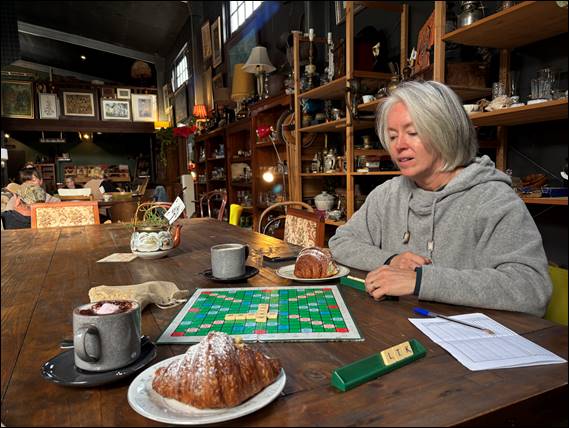
Keen to see images of the original Pear Mill we dug some out and they were tickled pink when they saw them. Sure the UK version is way bigger, but the similarities in style, look, and feel are uncanny. It also seemed that it was a place where Lisa gets good Juju because not only did she win the game, but she completed trousered me. Something that doesn’t happen too often. After the owners congratulated Lisa, and we got home, she was not sure about my idea of a wander on the beach to stretch the poodle’s legs. It was pretty wild and woolly:
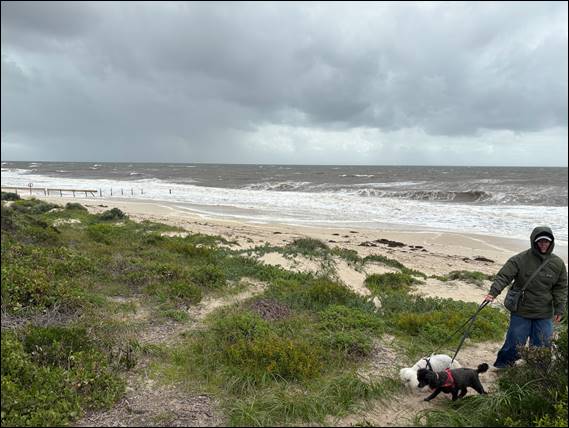
A break in the scattered showers seemed likely. When we got to the top of the beach we were hit by the winds, almost resulting in Lisa wanting to do a quick U-turn. The poodles were however too excited, undeterred by weather unless it is chucking it down. If we had any cobwebs hanging about in our heads they were certainly blown far away. Being a very invigorating walk for all the senses, to the point that we decided to take the more protected way back. A narrow path that leads through the dunes pretty well to our backdoor:
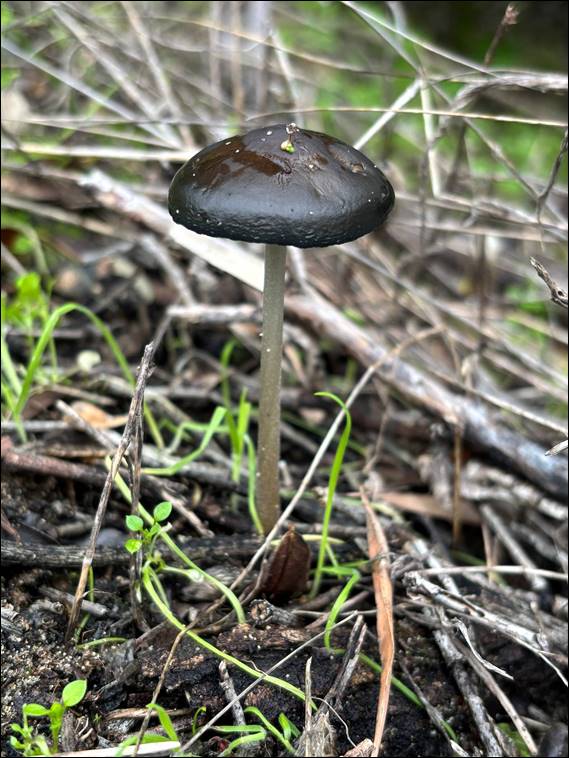
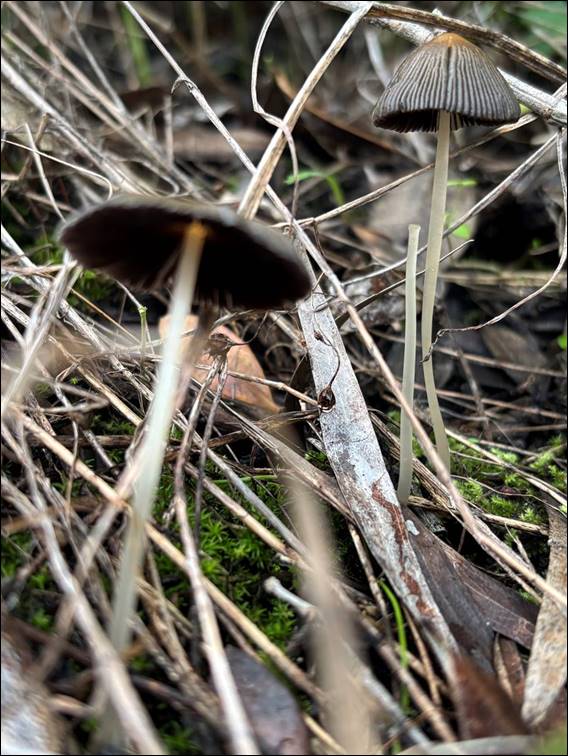
As Lisa and poodles went ahead, I did a slight detour to see if a small orchid spot was yielding anything yet. It wasn’t. I did however spy the above Rooting Shank (Oudemansiella gigaspora), and the below Parasol Ink Cap (Parasola plicatilis). I really liked the second find for which the common name is very apt. It is a very delicate species, and is only out for a short time. The body will come up at night after rain, and during the day it has one of two fates. If it is sunny they will dry up, and if not the weight of the cap will eventually make it collapse:
Fast forward to Saturday, and like my morning out to Moses with Craig and Howsie it was another cool start. Yesterday was so cold that Perth, some 200km to the north, had recorded it’s coldest morning in fifteen years. Images of frozen lawns accompanied the news article. I had checked the grass as I drove out yesterday, but the dew hadn’t become ice. This morning wasn’t as cold, although it was barely above four degrees as Lisa and her Peppy Plungers entered the water. Meanwhile my legs, not the poodles, were getting a stretch at the Capel Nature Reserve:

Donning my walking boots as I was going off track, and not just that but also wanted to explore the wetland area of the reserve. Not always able to avoid a short patches where I had to go through water, I was happy to have my toes covered. Still unsure that I would enjoy going in for a full body winters plunge, as Lisa does just about every Saturday morning. The sun had just started to poke its head over the horizon as I started the walk. Signally the coldest part of the day was upon us. I did wonder if this was more of a physiological thing:
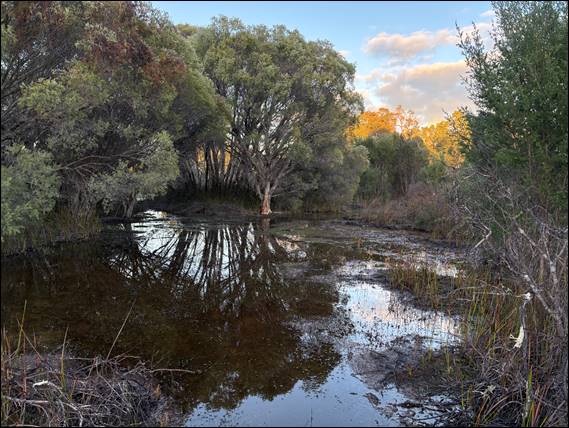
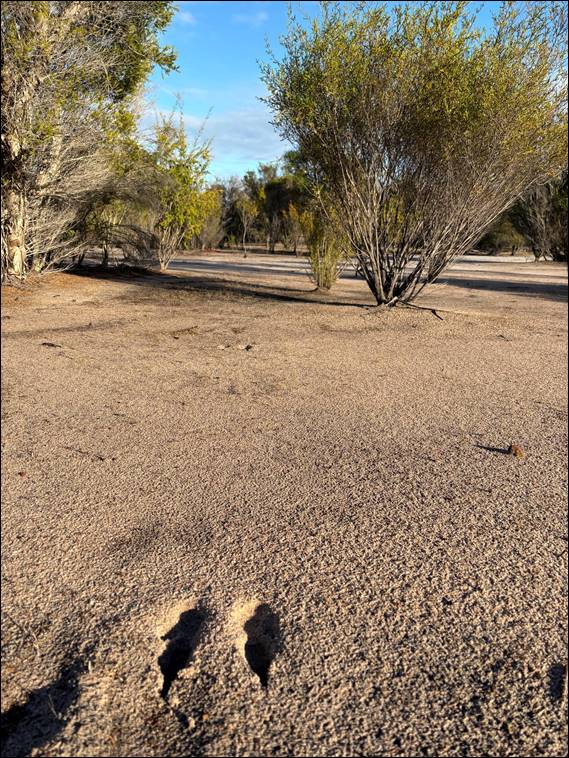
But no, it does in fact take a moment for the sun to get high enough before the heating effect can take hold. Until then the surface of the land is still radiating out and losing heat, as it does all night long. This prolongs the cooling effect until after sunrise. A reason for wanting to explore this area is to see if I could find any fungi that may favour the wetter areas. The path I wove attempted to follow the goat tracks left by kangaroos, which criss-crossed the area. Walking somewhat taller than the average kangaroo this didn’t always work in my favour:
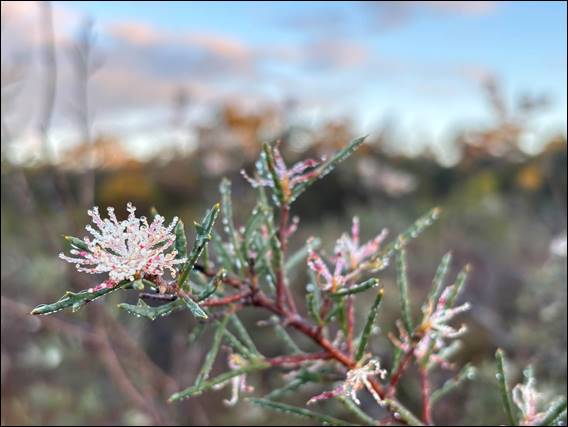
Stands of the above dense Variable-Leaved Hakea (Hakea varia) with its stiff prickly leaves, were not very pleasant to push through. Not fancying getting down low to crawl through the soggy based, low tunnels the kangaroos had made I had to find alternative paths. This shrub is a widespread endemic species of the south west. Preferring winter wet areas, it can survive without. Obviously loving the wetlands here, where it was thriving. As were the frogs, unseen but their ‘bonk’, ‘tok’, ‘quacking’, ‘dripping tap’, and ‘rattling’ calls rang out:
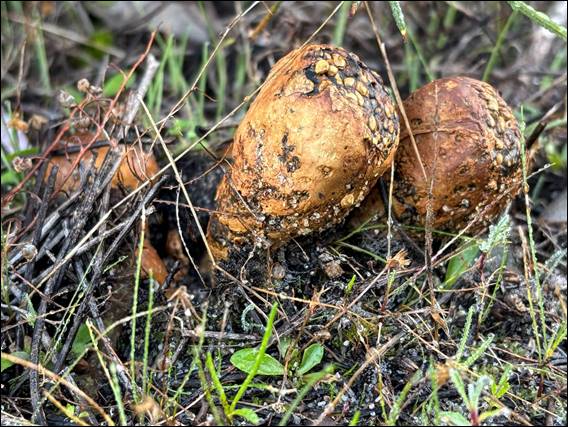
I wasn’t so lucky with the fungi, or not as lucky as I had hoped. Still I did enjoy the ramble not really knowing where I was going, what I might come across, and soaking in being surrounded by nature. I did stumble across a couple of gasteroid fungi, which the informal name for the group called Basidiomycota. As the common name kind of suggests, these do not have an open structure under which their spore are grown and dispersed from. Instead their spore are grown inside them, and when ready to be released the body will wear away or open up:
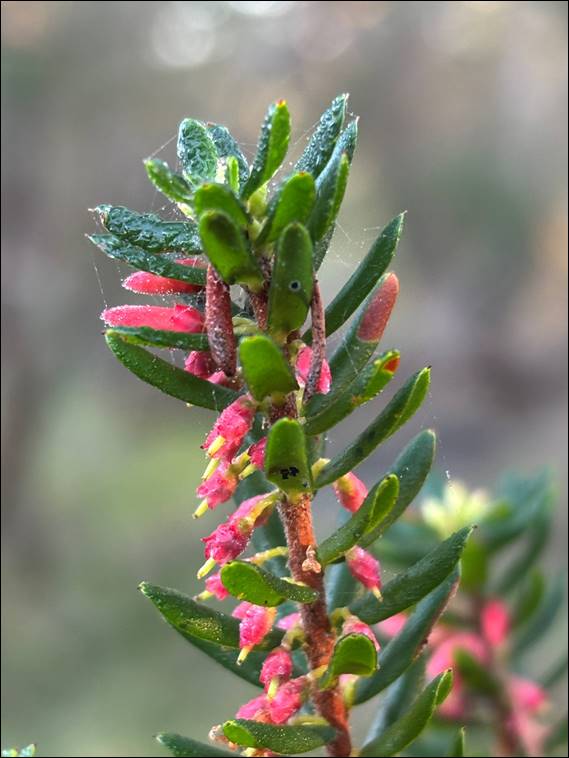
Two images up I was pleased to finally find what has numerous common names across the globe including Dead Man’s Foot, Dyeball, Pardebal, and Bohemian Truffle (Pisolithus arhizus). It’s scientific name has also changed over time. Containing a black viscous gel early specimens were collected for use to create dye for clothes, hence the common name of Dyeball. I’ll skip past the above, which has alluded me and even Howsie was unable to assist. Below, is what is known both as a Star Earthball and or Dead Man’s Hand (Scleroderma polyrhizum):

This was some time after I had left the wetland area, being back in the drier sandy soils that most of the nature reserve comprises of. These tend to stay buried until it is time for the spores to be released. Pushing up, the outer surface cracks to expose the powdery spore mass that is dispersed by the wind. The spores from these specimens had since been blown away, leaving what I feel resembles a flower like appearance. Like the previous fungus it can be found in many places across the globe, and has even featured on a Libyan postage stamp:
Wandering through other parts of the reserve I hadn’t been too before, the change in vegetation make up and land form was quite extreme. In part due to land of plantations, agriculture, and sand mining 50 years or so back. It does however provide for the opportunity to spot different things, such as these tiny Golden-eye Lichen (Teloschistes chrysophthalmus). Not a fungus granted, but lichen are a symbiotic relationship between a fungus and an algae. The former provides the structure and the latter the food through photosynthesis:
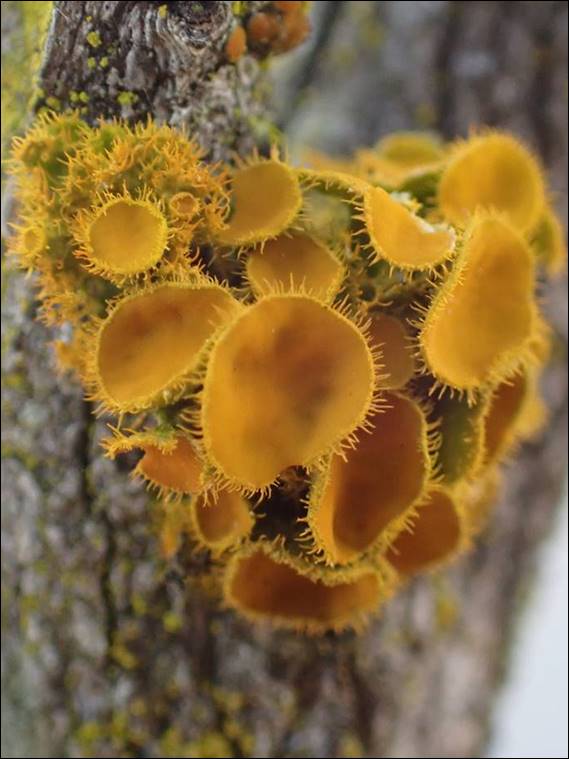
This is why lichen often resembles a form like a fungus. This is a twig lichen and likes areas exposed to sunlight. Found in small clusters, and rarely see in abundance. The bright ‘cups’ with ‘eyelashes’ were less than a centimetre wide, some barely a millimetre, so you need to get close to see the detail. Time was moving faster than I was, so I had to put on a bit of pace with one last pit stop for this fungus. If I am right, having multiple names of Hemispherical Stropharia, The Dung Roundhead, or Halfglobe Mushroom (Protostropharia semiglobata):
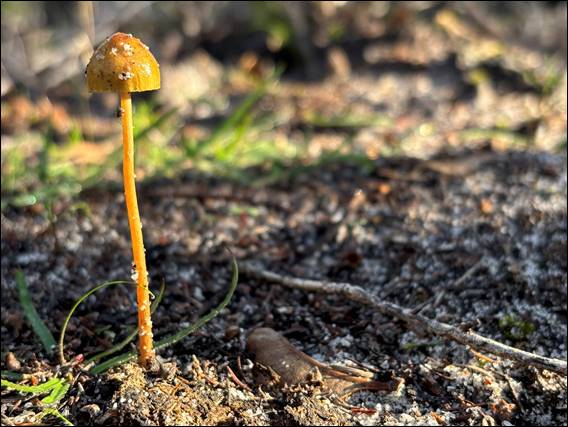
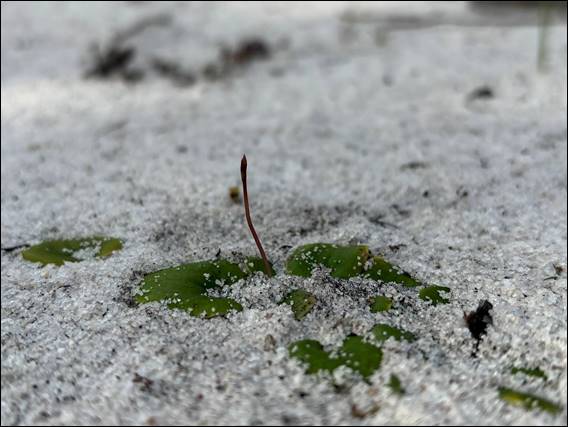
A hint my identification may be right is that it was growing out of a decomposing wallaby or kangaroo scat. Now I really needed to get moving, as I also wanted to check in on this cluster of Glossy-leafed Hammer Orchids (Drakaea elastica). In looks like only one plant may flower, so I do hope it survives and isn’t trampled. I’m not sure where the two and half hours went, but now it was time to get home. As this post started today we were going back to mini Pear Mill, where Lisa’s winning streak continued. Not that it is a competition, so we say:
 Sandbagged