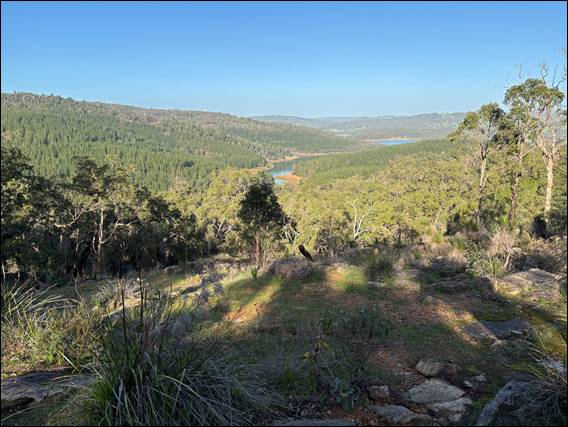
With enough daylight for a play, Lisa and I drove off on Wednesday after I had packed my laptop away. We were heading a couple of hours north, but stopped on the way at a short walk that had been mentioned on the orchid chat group at work. After our walk and look around Crooked Brook recently, I was not expecting to make any great finds on the Harvey Wildflower Ridge Walk. It is however high in the landscape so should provide nice vistas. This included the below patchwork of native bush and pine plantations round Harvey Dam:
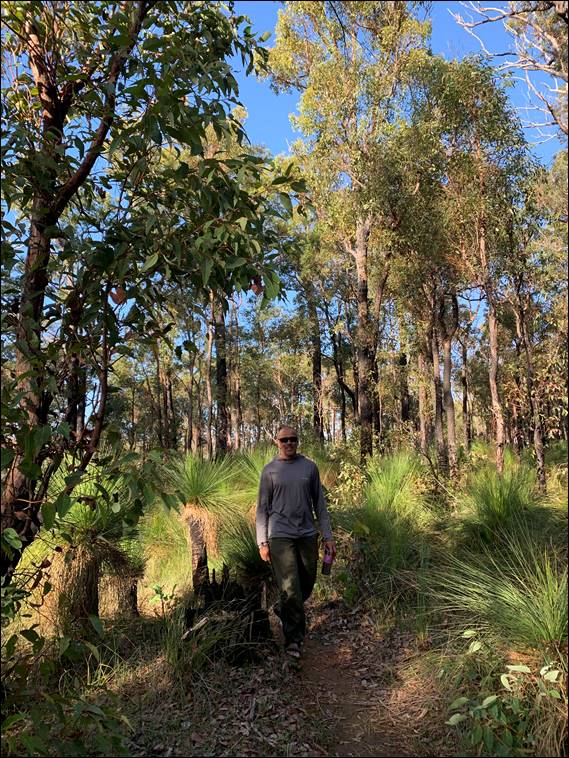
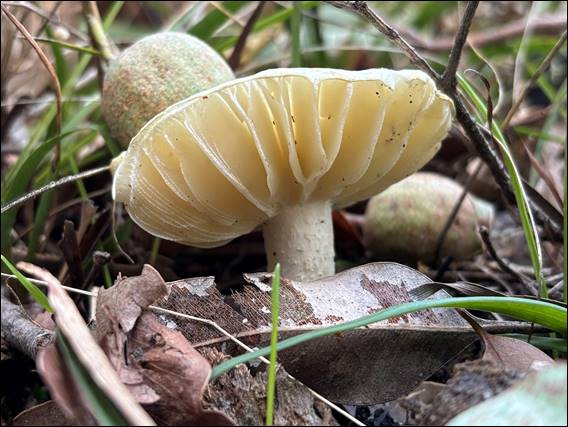
It really was just a quick stretch of the legs. The track passed a few rocky outcrops, which I couldn’t resist but to look around. No faces of note that were worth a revisit with my sticky boots. And as suspected there was very little in terms of flowers, and not surprisingly not a sniff of an orchid. That said the varied terrain could provide for a bit of diverse flora come spring time. It was also a little lacking on the fungi side too, looking a fair bit drier than the places just that bit further south where we live. With only one catching my eye:
And despite its very distinctive deep and well-spaced gills I have not identified it. I have to admit to also using Google Lens, as part of my collective of tools to research what I find. It is funny just how many times it will suggest that a white cap mushroom, regardless of scale or other features, could be a Death Cap. It would seem the app may have a high degree of risk adverseness, and it is not alone. I did wonder if it may have been from the Russula genus, also called brittle caps because the caps have a brittle chalk like texture that crumbles easily:
I did not however put that to the test. Back in the car we drove on, our destination was Serpentine. A place we have driven past many a time over the last couple of decades, but having been on the road somewhere we have never stopped. It is home of Serpentine Falls, one of the more renowned waterfalls in the South West of Western Australia. Not that there are too many to choose from, being mostly a relatively flat landscape. I was of course also interested to see the rock formations, just in case there may be a sneaky place to explore:
I have heard many a time there is nothing worth climbing there, plus it is a tourist hotspot so why would you anyway. But my curiosity had to be quelled. We planned to walk to the falls from Jarrahdale, which is famed for being Western Australia’s very first timber town. Now a scenic tourist town with quaint timber cottages, dating back to the early 1800s. That would not however be until the next day. We were staying overnight to avoid the need to cram the plus four hour drive, on top of what we hoped to be five or so hours in nature, all in one day:
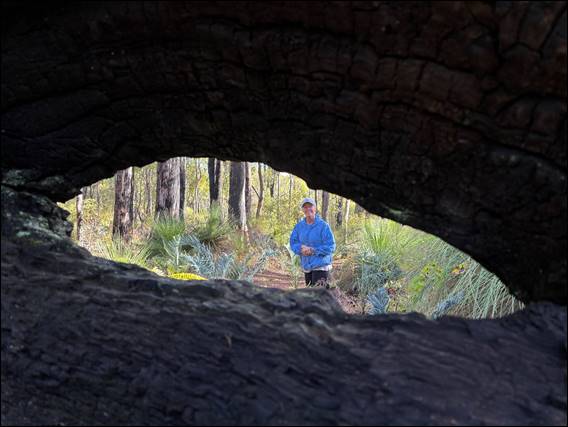
It was a good call, and we had a relaxed evening munching at the Serpentine Falls Tavern. Occasionally being asked by the staff who was winning the games we played. Not quite as old as the cottages of Jarrahdale, but still going back to the early 1900s. Built some ten years after the rail line through Serpentine was opened. The rail line serviced a thriving timber milling town back in the day. Unlike our local rail line that has fallen into disrepair a long time back, this one is still in use. It was strange to hear the horns of the engines during the night:
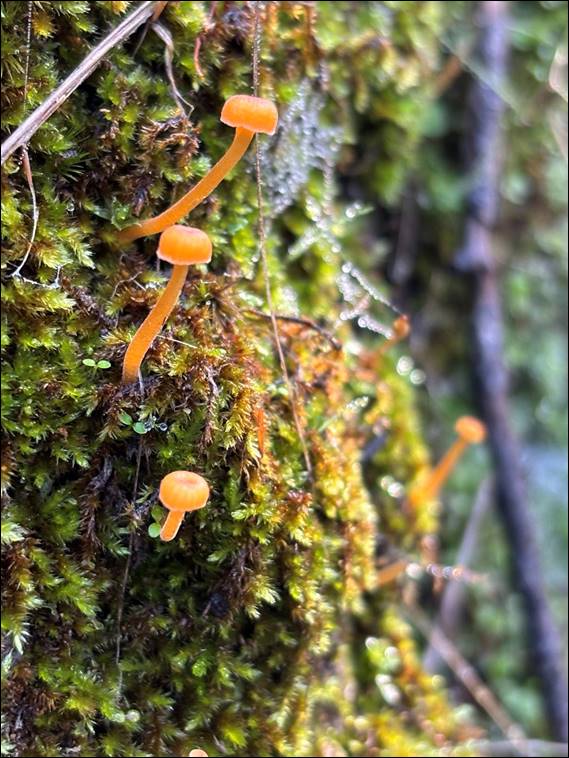
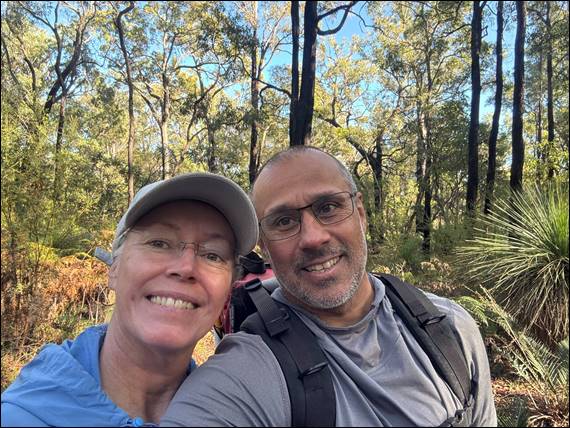
We awoke refreshed and not needing to rush about to get out the door. Instead taking our time, being able to pull out the scrabble and have a few cuppas before it was time to get sorted. Being less than an hour from Perth and during the school holidays, not surprisingly we were not the first to park up. Although we imagine the place would get much busier on the weekend. I’ve got behind on the images and the first image as we set off on the walk is of both of us. Today was going to be more of a walking walk, the trail we thought was 14km:
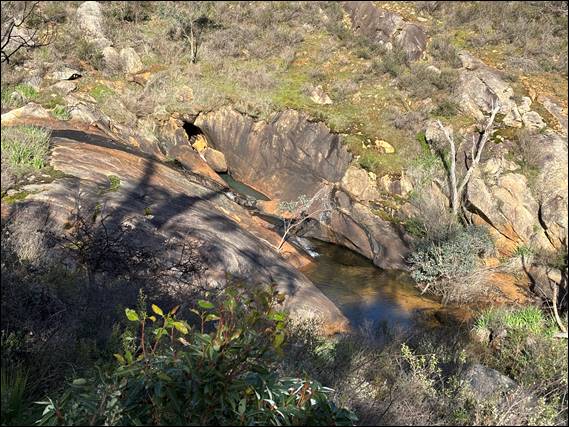
The Kitty’s Gorge Walk is a reasonable length and listed as a grade4 hike, so it was not one to dilly dally on too much. Just like the landscape at yesterday’s short wander it was relatively dry, the recent big rainfalls we had experienced had not made it here. As such while there was a trickle of flow in the Gooralong Brook, which the path first took us along, the falls along the way were not gushing with white water. Before we got to the Serpentine Falls the brook confluences with the Serpentine River, which would hopefully boost the flows:
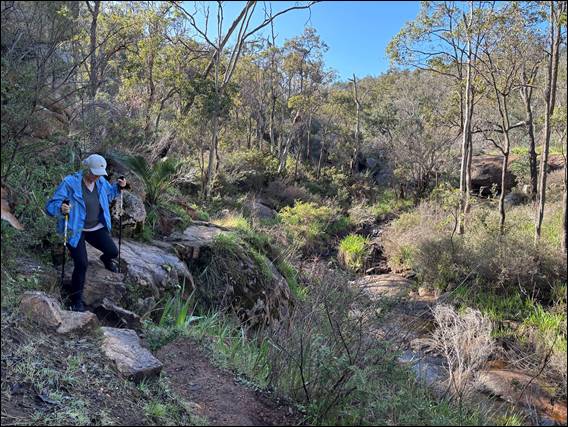
The hike down to the Serpentine Falls was never too bad, so the grade 4 status seemed a little overkill. But we were not to know that from the outset, as such I had suggested Lisa take my hiking poles. She’s got dodgy knees and while she wouldn’t say too much, a grade 4 hike of this length was sure to aggravate them. It took a bit of getting used to, but by the end of it she said they had certainly helped to take some of the pressure off the joints. So I think we may see them come out a bit more often on the bigger walks:
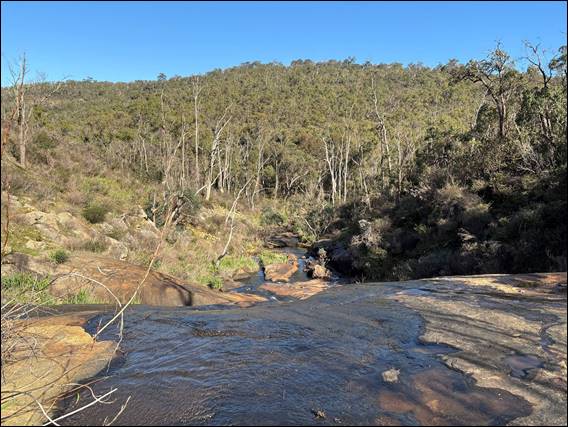
Along the way you pass Spencer’s Cottage, built in the 1860s by Joshua Spencer and claimed to be one of the first residences to be built in the Serpentine-Mardella district. The cottage looks pretty dilapidated, and is enclosed in an unsightly six foot high ring mesh fence. No doubt to avoid someone getting hurt, rather than to safe guard the building which really could do with some TLC. I though the name of the walk may have been linked to this cottage, but it is not and the only reference I can find it that it is named after a cow that got lost in the area:
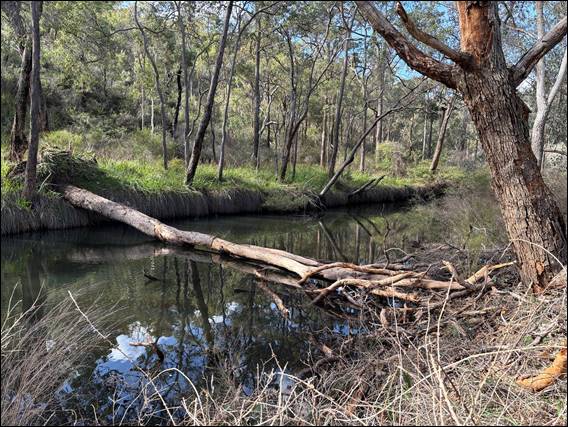
This seems somewhat unlikely, especially seeing this was supposed to occur in the 1800s and it is said the cow was found living a happy life over a year later. As we wandered on the trail didn’t seem to make sense, and we wondered if just like Kitty we too had got lost. But gradually more people were coming the other way. A sign we were getting close, and that we were not lost. It turned out that the last part of the original trail had been closed and was being rehabilitated back to bush. The new track followed an access track the long way round:
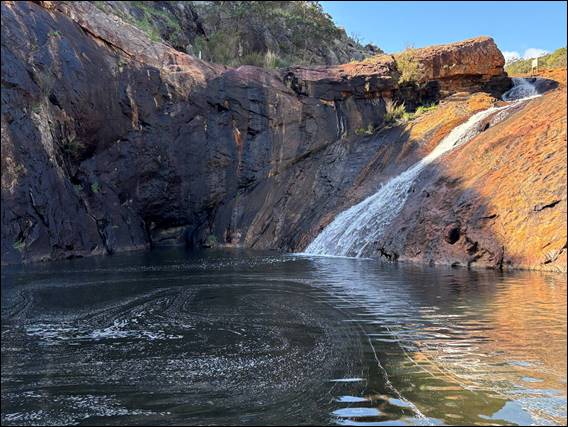
Adding an extra couple of kilometres it took us down to the main car park, heaving with people. Despite the crowds we had to get to the falls just to have a look, and while the combined flows of the two waterways was still not huge, it was a pretty sight. The waters cascading into an eight meter deep pool that suggests the flowrates get much bigger. We found a quite spot to pull out the flask and, what has become our tradition of, cheese sandwiches. Under the watchful eyes of a group of Australian Magpies (Gymnorhina tibicen):
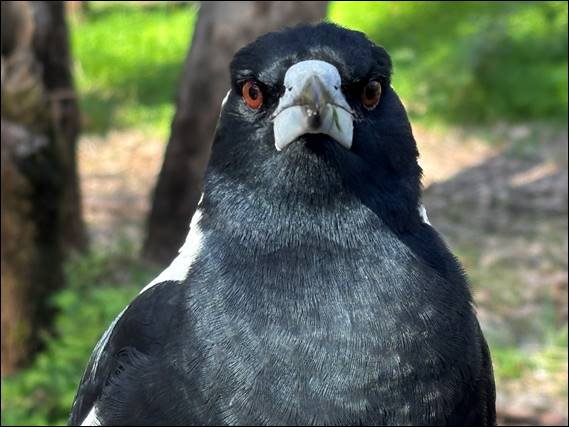
There are several collective nouns for magpies including a charm, tidings, tribe, conventicle, gulp, and/or parliament. The one that seemed most appropriate however is a mischief. As soon as we sat down at the bench, they joined us. Quite literally sitting with us. Using various tactics to win our favour, as they vied for morsels to feast on. They are after all not silly and are known for their high level of intelligence. Being capable of solving complex problems to access food, make use of tools to aid their cause, and remember faces for years:
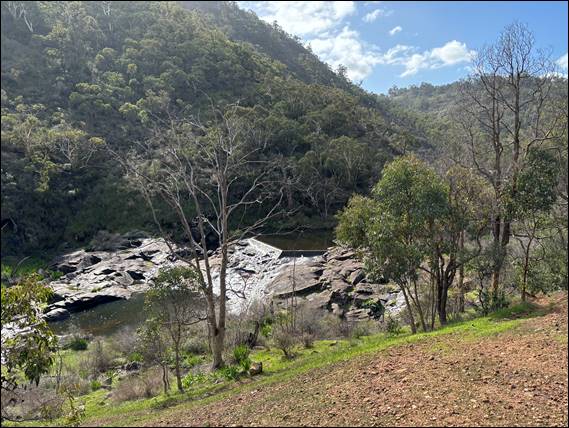
Refreshed and content we hit the track for the return journey. The further we got from the main falls the quieter it became. After the initial broader landscape we made it back into the narrower valley and onto the slightly more rugged track. Taking a slight detour at the end to allow us to take in a slight detour on Stacey’s Loop. I can however find no folklore to explain who or what Stacey may be. There was even less stopping on the way back, not that we had spotted much to distract my attention on the way down either:
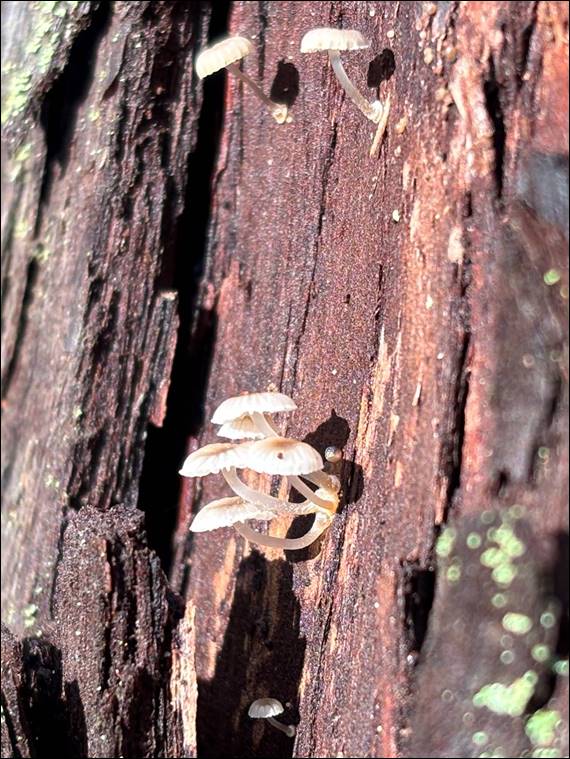
While I have not been able to identify the above delicate little fungi, I was able to work out the one sandwiched between the two unidentifiable ones. The dainty Orange Moss Navel (Rickenella fibula) is also called the Moss Sentinel, no doubt because it is grows amongst moss. It ended up being a neat ten mile hike. As we had hoped, with an extended lunch stop to enjoy the company of the magpies, we had enjoyed a lovely five and half hours in nature. On the drive back we already started to think about where we might go next:
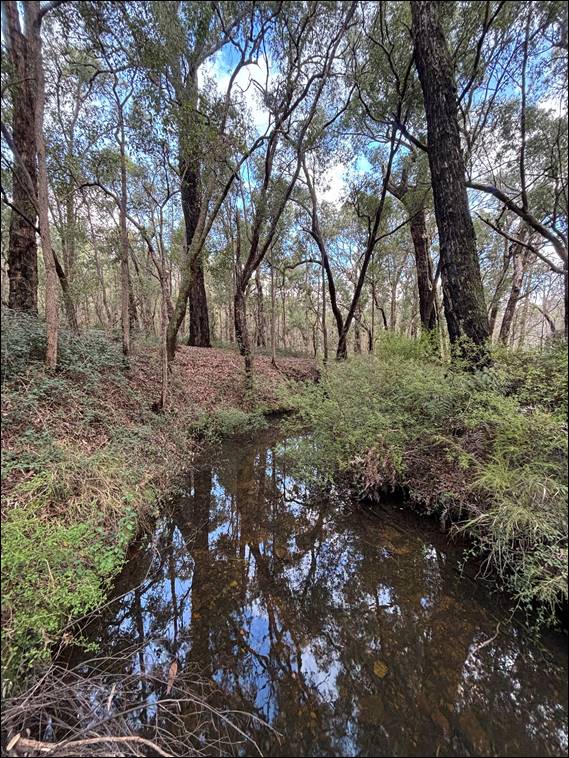
 Sandbagged