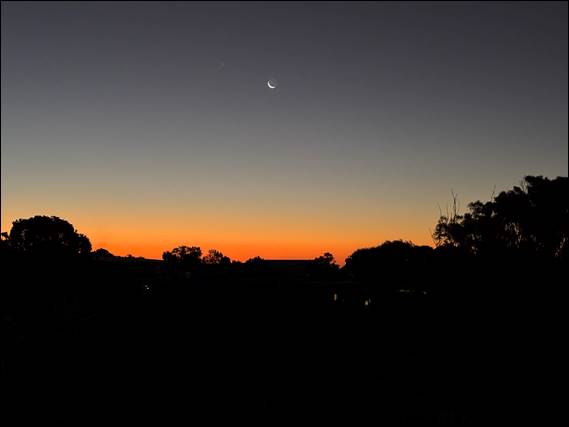
For a change this post does not start with an early morning, but a late arrival image. Lisa and I were sticking to our agreed plan, and were off for our next short getaway. Heading out on Friday Lisa struggled to leave work any earlier than normal, so by the time we arrived at our destination we were only just in time to see the last of the daylight fade away. Fortunately the pub was just a hop, skip, a jump away from where we were staying. And after a good pub meal and a game or two, which made me feel like I was back in England, we hit the sack:
Unlike in England it was a late start the next morning. Something we both welcomed and it took a few brews to get us going. More than happy to make use of our time away from home to chill out. Hoping that by slowing down for a few days our bodies might have a better chance of shaking the unwanted bugs, which seemed to be lingering on. Thinking back on our walk round Mount Frankland, we joked about how the stroll into town was on her kind of path. This was however just a short wander to a café to get breakfast, with a game of course:
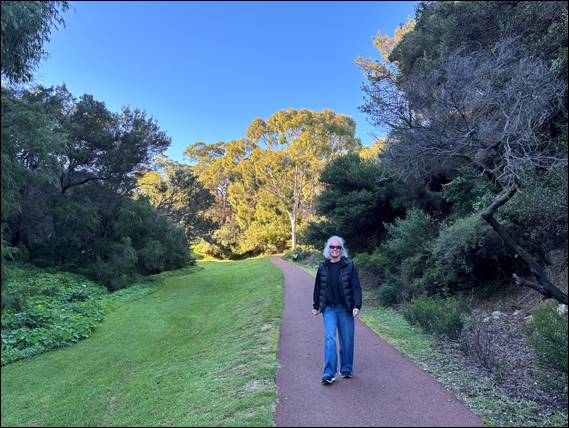
After we had our fill it was back to the room to pack a few provisions and head out on a proper wander. We had scored a blue sky day, raising my hopes of seeing a reptile or two. To start with however, our chosen route took us past a few fungi. I believe these to be Milky Conecaps (Conocybe apala). They emerge after rain, which we had plenty of last week, and only last a few days. I feel a little like the middle name of their other common name of White Dunce Cap, as I have been unable to work out nearly all of the others species we saw:

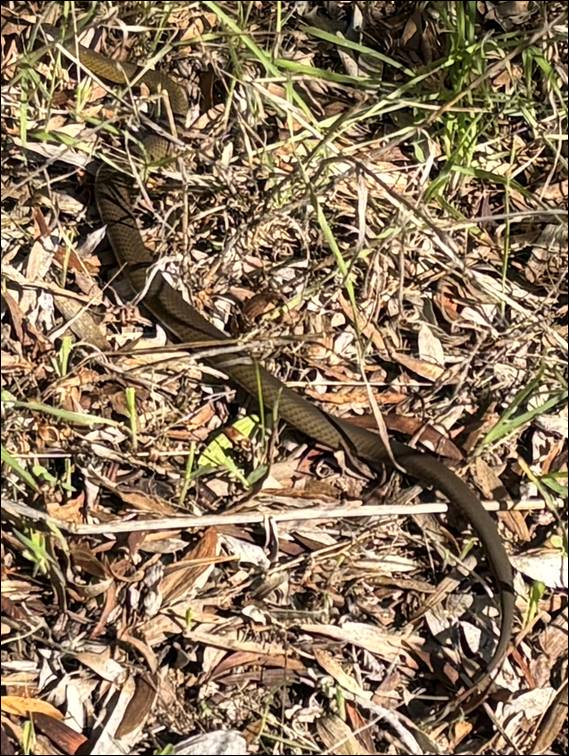
These have therefore been omitted. The path was a bit of a roller coaster working along the ridge, but at least it was level and wide. Allowing me to check out what was on offer, not much in the way of orchids and nothing worth including. Lisa was happy I was in front when I spotted this juvenile Dugite (Pseudonaja affinis). They usually lay their eggs between mid-December to the end of January, with the time required to hatch is temperature dependent. Almost doubling from 53 to 105 days, in response to temperatures of 30°C and 23°C:
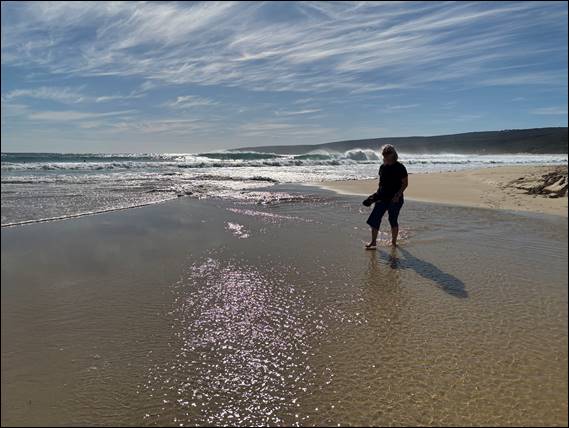
As hoped our scaly friends came out to play and we got to see a Bobtail (Tiliqua rugosa), a couple of South-Western Crevice-Skinks (Egernia napoleonis), and plenty of Buchanan’s Snake-eyed Skinks (Cryptoblepharus buchananii). Coming down off the ridge, a relatively long beach section awaited us. Someone would be forgiven for thinking we weren’t in the heart of winter, with such a glorious day and warm sun. But it was winter, and that meant we were likely to have to cross the Gunyulgup Creek:
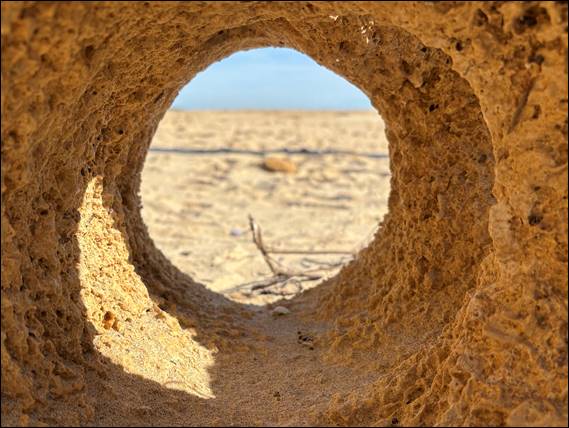
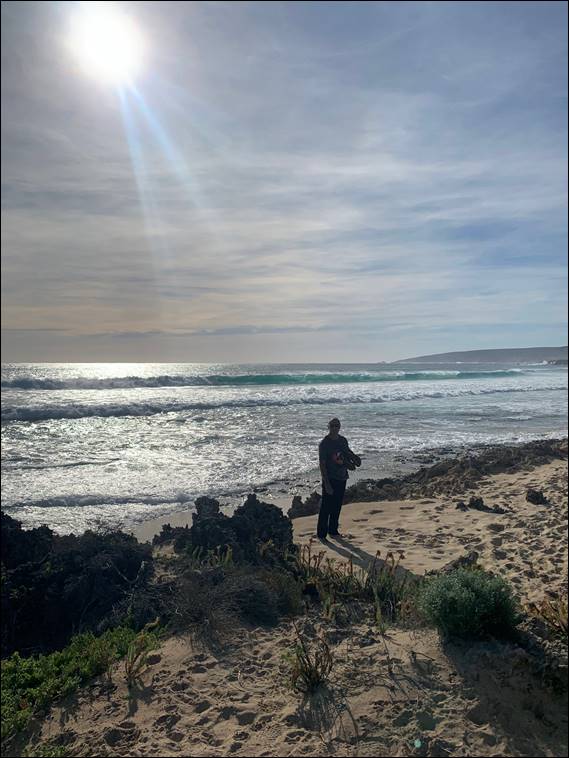
I already knew this, but had omitted to tell Lisa about it. Half expecting some resistance, she simply didn’t have the energy to say anything. Not feeling the best, but also wanting to make the most of our time away and carry on with the walk. Before we headed out in the morning I’d suggested it may be nice to reach the high point above Smiths Beach rocks. Allowing us a view back to Yallingup where we had started from, and across the bay to Canal Rocks. So after the beach the track became more rocky. I kept checking in to make sure she was OK with it:
She was keen to carry on, being rewarded with a great vista. And to boot perfectly angled rocks to lay back on to recuperate before the trek back. As Lisa kicked back I, not surprisingly, went off to a do a bit of exploring. Having been here heaps of times before I have never, as we had today, gone past where we climb in the zawn. As such I was keen to have a look round. Finding a small wall that may be worth a visit on another day to see what climbs it may yield, and also plenty of boulders that simply looked too inviting to walk past:

After my Friday out with Howsie, which hadn’t aggravated any niggles I couldn’t resist playing on a few of them. After which it was time to begin the wander back, which we made a bit easier by following the beach most of this way. Lisa will admit to loving being by the ocean, and walking along the crashing waves almost seemed to energise her. Or maybe it was the fact that there wasn’t as much uphill to negotiate, by avoiding the roller coaster ridgeline.. Whatever the reason she seemed to perk up a bit, which enabled her to enjoy it more:
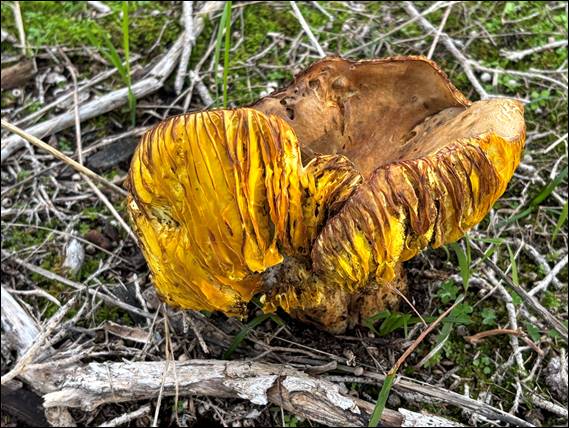
We couldn’t avoid the last uphill section but the draw of a cuppa urged us on. I only had to stop once for fungi, a specimen that simply looked too weird to walk past. Checking the citizen scientists sites it seem that I may have found a Gilled Bolete (Phylloporus rhodoxanthus), which unlike most other Bolete has a gill like, rather than a honeycomb, structure under the cap. However, I have read recent research has shown the species found in Australia is likely to be a very similar looking Golden-gilled Bolete (Phylloporus pelletieri):
Rewarding ourselves with some cake to take back to the room to have with a cuppa, we both thoroughly enjoyed the eight kilometre loop. It may have been shorter than we would normally go, but we agreed it was long enough and we both felt a little weary. So much so that we opted for vegging out by eating in. We didn’t even feel like the short hop, skip, and jump to the pub next door. No matter, as after all we had never said our mini breaks had to involve lots of activities and getting out and about:
 Sandbagged