Third time lucky, or at least I was hoping, as I found myself again wandering through the Capel Nature Reserve. Mind you I can’t say if I would have been too upset if there were no orchids out. Just wandering through the bush is reward enough. At times it surprises me how little can be seen on some of my visits. Making me wonder if I should have a wander one evening, to see what comes out at night. With a full moon tonight it would have been nice to be out, but it didn’t happen this time. If I had I may not have seen this little grasshopper nymph:
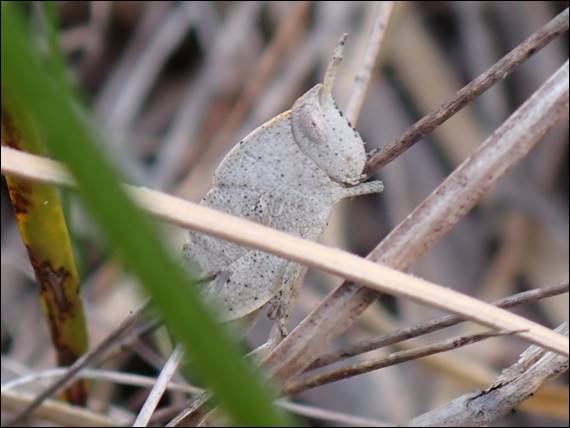
As they head up to feast on green leaves at night. It could be either a Gumleaf Grasshopper (Goniaea australasiae) or Slender Gumleaf Grasshopper (Goniaea vocans). The nymph and adult of each species being similar, but my gut tells me it was the latter. Resting during the day in the grasses, allowed me to see it when it try to avoid me. Close to this nymph I also spotted an adult. While I took a bunch of images, in my haste I didn’t keep any as it looked like any old grasshopper. If I had I may have been able to more definitively identified it:
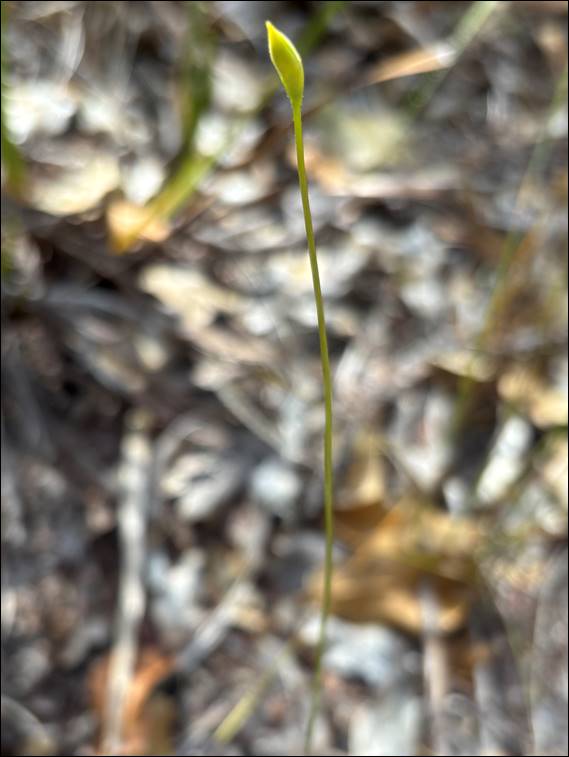
Haste cannot be used to describe how I wandered round the bush, I most definitely go slow. Careful footfalls to avoid stepping on something, pleasant or unpleasant. Not quite snail, but maybe tortoise paced. If I went any faster I would not have seen the above solitary spike. With no basal leaf visible it could be one of several species of orchid, getting ready to flower. The below shrub was easier to identify, having already started to flower. One of 150 plus species of Beard-Heaths (Leucopogon), the majority being found in Western Australia:
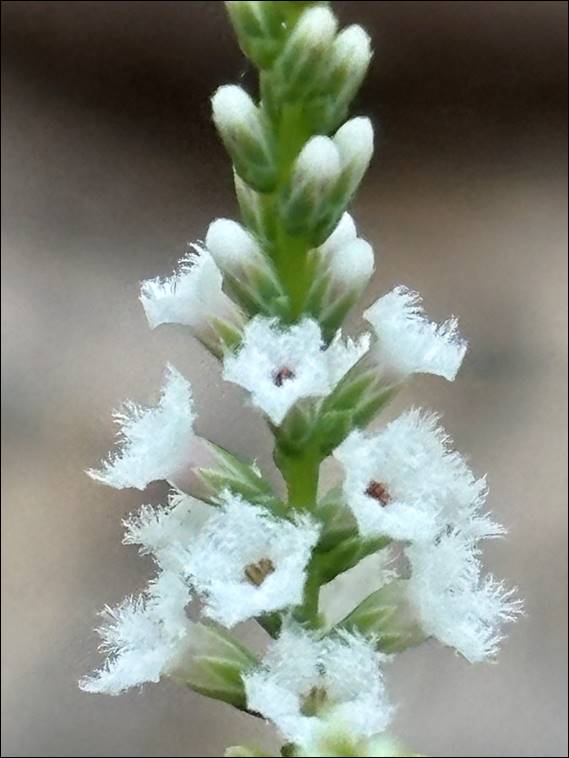
I’ve gone a step further, and pinned it down to Leucopogon glabellus a species endemic to the South West of Western Australia. The description of flower says inside the five petals there is a beard of white hairs. The petals fuse into a tube, with the tips rolled back. This facial hair is common in the genus, and Leucopogon comes from two ancient Greek words meaning “white” and “beard”. The genus name reminds me of the mischievous leprechaun, and Irish folklore creature said to reveal the location of hidden treasure when captured:
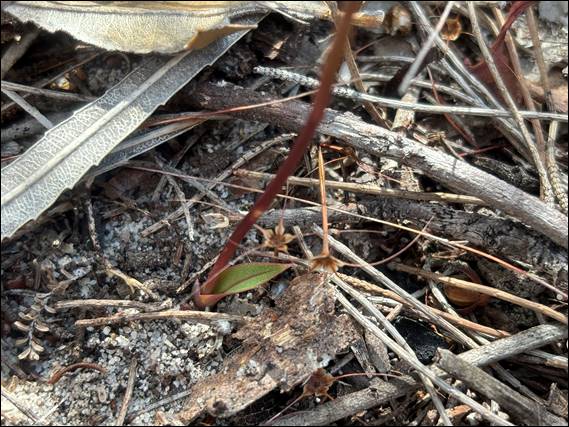
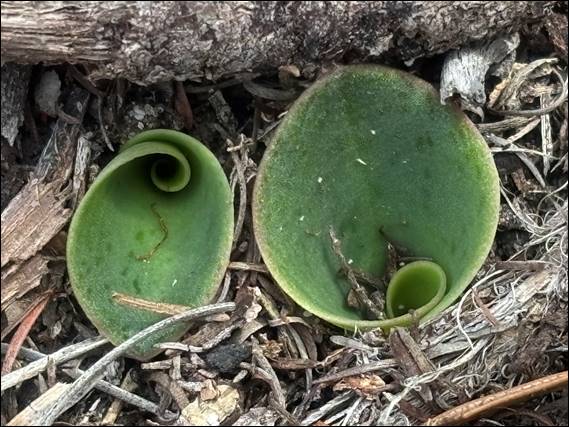
While it did not lead me to a flowering orchid. It felt luck was on my side when I soon after stumbled across a small clump of the same spike I saw before. This time showing the basal leaf, so at least I now knew what I was looking for now as I kept my slow pace. A pace that after an hour in hadn’t seen me go very far. More basal leaves came into view. Curling out of the ground with no stem visible, so again could be any number of species. I wonder if they take this shape to more effectively collect water from rainfall and/or dew to aid their growth:
My pace soon slowed to the point I sat down, to watch the legs of a Leaf Curling Spider (Phonognatha graeffei) as they awaited for the vibrations of their prey. At times it came out a bit more, but never fully. The ingenious house, built by the female, is usually silked shut at the top with the opening pointing down. This one may not look fully enclosed at the top, but was still a marvel to behold when you took in the intricacy of its work. It seems like a lot of effort for just a single year of life, especially seeing the female makes a second as a nursery:

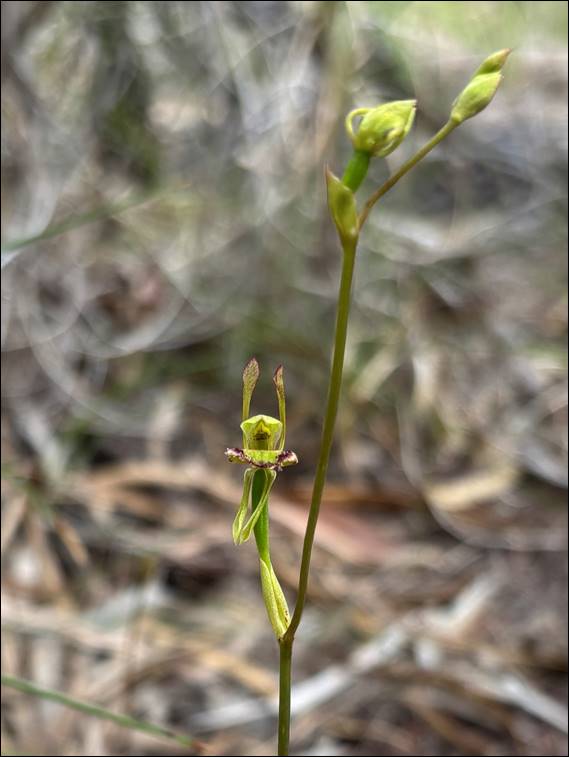
Ninety minutes in and with the finish line in sight, and this tortoise finally got to meet the hare. Or more precisely little hare, as the genus is derived from the Latin word lepus with the diminutive suffix of ella. Only one bud was in flower. Not fully formed and the labellum did not yet have its fringe on display, which is where the species name comes from. There is however only one species in this genus, being the Hare Orchid (Leporella fimbriata). It is one of the first orchids to come into flower as the year rolls in, and if pollination does not occur it can be found in flower right through to September:
 Sandbagged