Lisa and I hit the shed this week for the first time since we, probably, got hit by COVID. I’m not sure either of us were fully prepared for it, but we managed two sessions and also aim to get back in on the weekend. I also opened up the doors on Tuesday after work for a boulder, which David, Josh, and Craig popped along. It was clear the wall had not been used for some time. Webs crisscrossed between the holds. And knowing we have a family of them in the shed, what was likely to be the skin from the head of a King’s Skink (Egernia kingii):

Needless to say the body was certainly feeling it, but up until Thursday night I was still keen to head out with Howsie for another Friday escape. Our plans were however scuppered when a front rolled in, and we decided to bail. It was a good job as it proceeded to dump 40mm during the time we would have been out. Instead I worked, jumping back onto my wall in the afternoon as the rain continued to play tunes on the steel roof. It eased off later in the day, and then came back in early Saturday. Clearing up enough just in time to allow Lisa to bob:
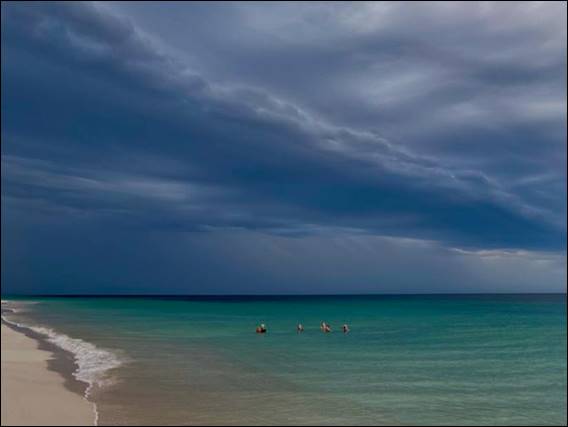
I didn’t bother trying to arrange a climb on Saturday knowing it would start wet. My thoughts were instead eyeing up the Capel Nature Reserve, wondering whether any orchids may have started to appear yet. None had, or at least not that I saw. But it was still nice being out, especially as it felt a little chilly. This time I stumbled across a Australian Garden Orb Weaver (Hortophora transmarina), usually hiding in the day time this nocturnal spider was building its web so I took the chance to get a bit of footage:
Unlike the Golden Orb Weaving Spider I saw last time, this one constructs, takes down and rebuilds their web on a daily basis. So adept at it, that it only takes them about half an hour to build one from scratch. There was much fauna to be found, but this ant stood out being approx. 15mm long. I believe it is a carpenter ant, possibly Camponotus rufus. Like termites they munch on wood, but unlike termite they do not consume the wood but discard a material that looks a little like sawdust. Making them important in the process of decomposition in forests:

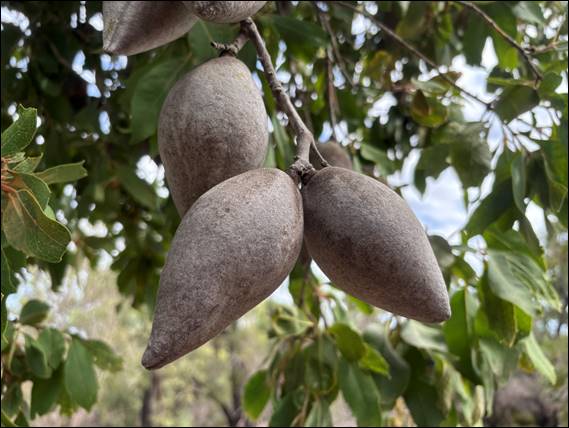
I also kept an eye on the trees, the reserve has an impresses variety. This image is of the seed pods of the Western Woody Pear (Xylomelum occidentale). The name occidentalis quite simply means ‘western’ in Latin, and this species is endemic to the south west corner of Western Australia. The reason for the common name is obvious. However, while the three inch long pods have a thin outer layer that is soft and slightly furry inside the are solid. As they ripen they dry out, split open to disperse the seeds, and what is felt looks like a pair of wings:
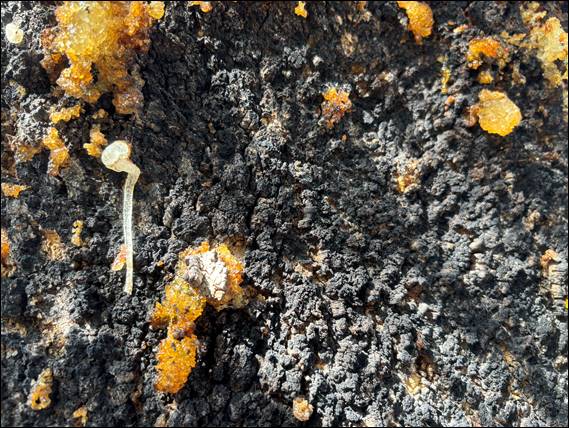
I found other great seed pods, but the next image is of the bark of the Western Sheoak (Allocasuarina fraseriana). I’ve read that these trees are known to produce a jelly like caustic sap, but haven’t found out what triggers this. The leaves of this tree are spines, that fall and create a soft flooring. So soft that these areas were used for giving birth by Noongar women. This practise may have stopped, but the tree itself is still sought after for its wood. It has a lace like pattern, ideal for wood-turning and carving of decorative ornaments:
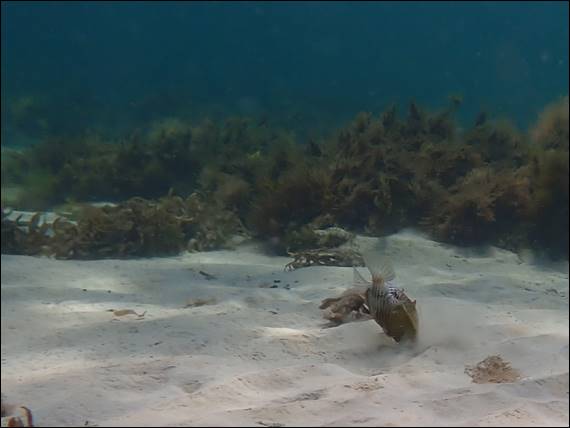
After an hour or so I headed home and drove past the beach to a surprisingly flat looking ocean. Not wanting to waste the opportunity, I was soon jumping in the water. Under the surface it was clear and calm, there was hardly any swell which seemed like a first this season. I got closer to this female Shaw’s Cowfish (Aracana aurita), but liked the picture as it showed it blowing jets of water to search for invertebrates buried in the sand. I’ve often seen this, but rarely manage to get close enough before they notice me and swim away:
The next image is of a Spinytail Leatherjacket (Acanthaluteres brownie) swimming away. I again got some great shots as I swam next to a few of them. This image however allowed the light to emphasise the structure of the caudal fin, or tail, which I really liked. It took a bit of working out to identify these, despite seeing males and females. The males didn’t have the expected bright colouration round the head, but clearly displayed the yellow patch around the spines on the caudal peduncle, which is where the body narrows and the tail attaches:
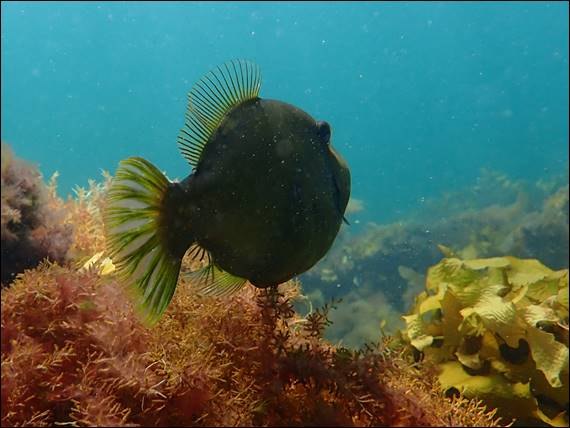
They get to about 46cm, and these were 30cm long. Clearly not juveniles, as they are more of a mustard orange colour. Therefore, the mystery of why the males were not putting on their usual colourful display remains. The water column had Comb Jellies (Ctenophora) floating about, and also these string like filaments that I have not been able to work out. They may be a type of Apolemia, but I am not really convinced of that. What I did know is that they stung, and it was impossible to avoid them. Maybe a wetsuit would have been a good idea:

The last image is of a Globefish (Diodon nicthemerus). The name means night and day in Greek, coming from nyctos and hemera. It is suggested this was given due to the silvery-white underside and dark upper side. The colouration is presumably camaflauge, but this fish has another defence. Being able to suck air or water in to quickly inflate, and in so doing all its spines stick out. Something I have never seen, despite getting very close to them. If you look carefully there looks to be an opaque lens over the eye that looks a bit like a contact lens. I have not been able to find out any information as to whether this is normal or not:

 Sandbagged