While Howsie has for many years played in skater/surf punk bands, he has a wide range of music taste. I am not however sure this would extend to knowing Adrian Gurvitz. An English singer songwriter whose music career began in 1968, and is still recording and touring to this day. Not surprisingly his style has varied over the decades and has included pop, rock, and yacht rock. His biggest hit was a ballad that became the most played ballad on radio in England in 1982, despite only reaching number eight in the charts, which is why I know of him:
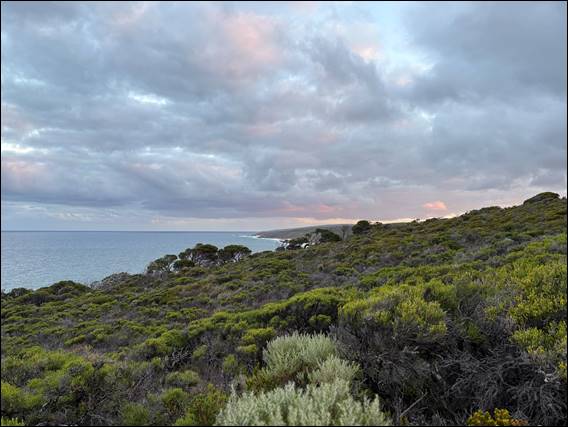
This song was quite simply called ‘Classic’, and today Howsie had an idea in mind to only jump on classic climbs. No doubt this was not inspired by Adrian Gurvitz, but it did bring the tune back into my head. And now knowing about the impressive near sixty years of recording achieved by this artist, I am delving into some of that as I type. So what makes a classic climb? There are many factors but it comes down to the technical challenge and aesthetic appeal, which may include the quality of rock, movement and sequences, or striking setting:

History also comes into it, and that is something that is becoming lost in time as we move from physical printed guidebooks to online guides. Online guides have however allowed everyone to be able to add their opinion based on their own experience. This is not a bad thing, as classic status should not be awarded until a general consensus has been reached that it is worthy, by the climbing community. It used to be a three star system, whereby one star is for a good route, two stars are for a notable route, and three stars is for one not to miss:

No stars would generally suggest you should only do the line if you run out of other routes at the grade you are comfortable to climb. However, in some places a five star system is creeping in just to make it more complicated, whereby one star can mean the line is considered poor quality or not recommended. I didn’t use a star system in the guide for Central Australia, and got a bit of a bashing by some for not using one. My rationale however was many of the routes had hardly had any ascents to consolidate the thinking:
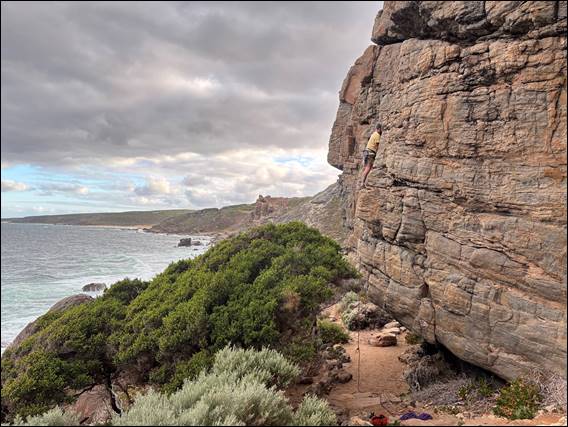
Furthermore, being a printed guide I included detailed descriptions providing more than enough information to entice or ward people off each route. When I wrote the guide for the South West of Western Australia I used the standard three star system, and even reached out to the climbing community to ask if there were any changes required to the existing records and ratings. This again sparked some discussion and at times disagreement, but it resulted in landing on an a mostly agreed allocation of stars for routes deemed worthy:
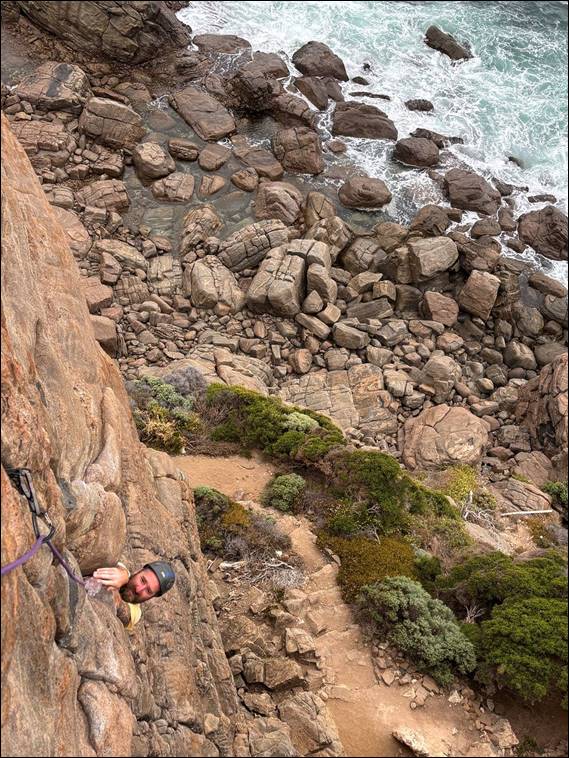
Howsie’s idea was therefore to only hit the classic three star climbs, as detailed in the climbing guide that went to print in 2016. Admittedly there may now be more listed on the online database provided by The Crag. After all Wilyabrup is recognised as a brilliant place to climb. It is highly rated far and wide, and is included in many a coffee table picture book. So it comes as a bit of a shock that when I wrote the guide the main area was only thought to have nine three star lines. With only three routes below grade 20 being awarded this lofty status:

Personally I feel this is a bit of a reflection of the fact that most climbers in this part of the world treat climbing as a sport, and strive to climb harder routes. Despite his challenge where each year he wants to try incrementally harder climbs, Howsie and I treat our outdoor sessions as an adventure. Enjoying the great outdoors and all its treasures, which today included a young Australian Sea Lion (Neophoca cinerea) frolicking in the waves and a Nankeen Kestrel (Falco cenchroides) that was guarding one of the classic climbs in the third image:
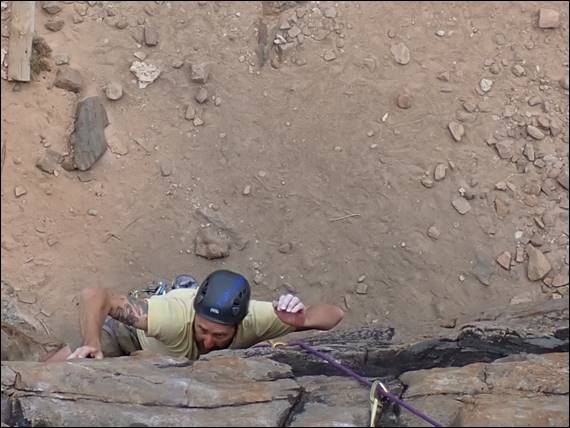
And during our ascents we also came across a few Southwest Crevice-Skinks (Egernia napoleonis) and several skins of Southwest Carpet Pythons (Morelia imbricata). This was despite it being a cool breezy day, something that was very welcome after all the hot muggy days we have had for what feels like a month or two. The conditions brought dry rock and great friction, which was in Daniel and Shawn’s favour. They had made the much bigger trip to get here, having flown from Singapore for a few days to sample the rock in our local patch:
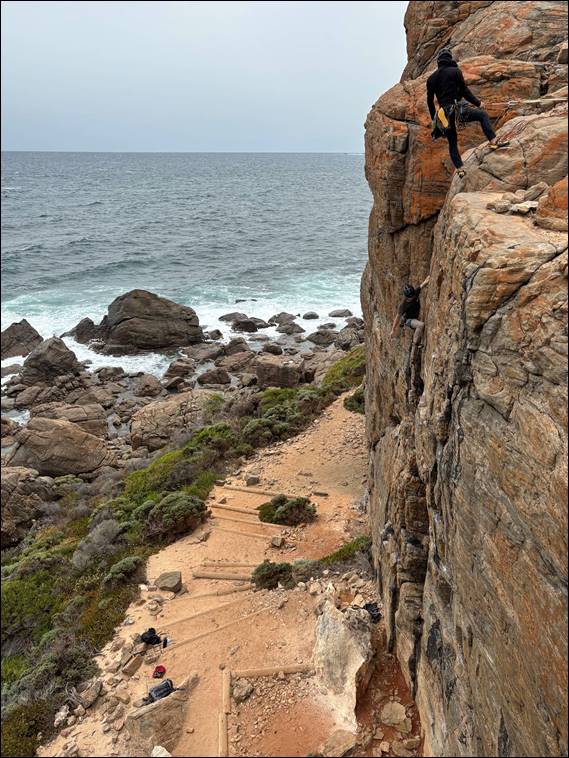
We picked off line after line, and after bagging five of the classics our arms were starting to tire. A change of course was required so we shifted our focus onto the two star routes. Opening up another thirteen climbs to choose from. Despite the choice of two star lines on offer, for the finale we dropped to a one star route mainly to allow us to climb out with packs. We had a choice of ten of lines awarded a single star, but we knew which one it would be and as with so many other routes here we reckon it deserves a higher ranking:

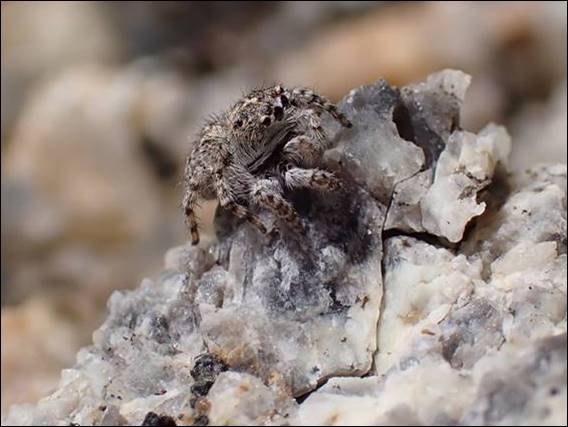
For more reasons than I can count it was another classic day out. We bagged as many routes as this little Bronze Rockhopper (Euophyrine), which I spotted as I followed Howsie up the final route, has eyes. Despite what my guide or The Crag may say, in our eyes every climb we jumped on today was worthy of being called a classic. Proven further by the number of people we see choose them. As I come to the end of this post, while a number of Adrian Gurvitz tunes may not be what I would regard as classics, I am however still enjoying them. At the end of the day that is what counts:
 Sandbagged