I can’t complain with the flurry of people that have been keen to get out over the last few months. This weekend however, I didn’t get so much as a nibble when I dangled the bait of touching rock to our group. This of course didn’t stop me, and I had every intention of walking in at first light. For several reasons it didn’t transpire. Maybe it was the workouts, when I joined Lisa for a couple of shed sessions this week, with the aim of building a bit more all-round fitness. She is a bit of a machine with the weights, not that she would admit it:
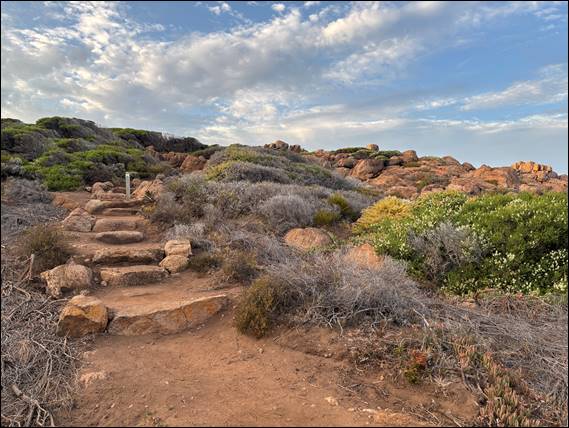
Or it could be the extra hours I’ve packed in at work this week. While I’m a desk jockey, I’m not great at taking breaks. Toxic by-products can enter the brain when you concentrate for extended periods, resulting in mental fatigue. Or maybe it was the later than usual evening and one beer I had last night, which is a pretty rare occurrence. Regardless of the cause, before I had even left the house I missed first light, and only saw glimpses of the sunrise as I was driving. Wanting to pay more attention to the road and possible kangaroos:
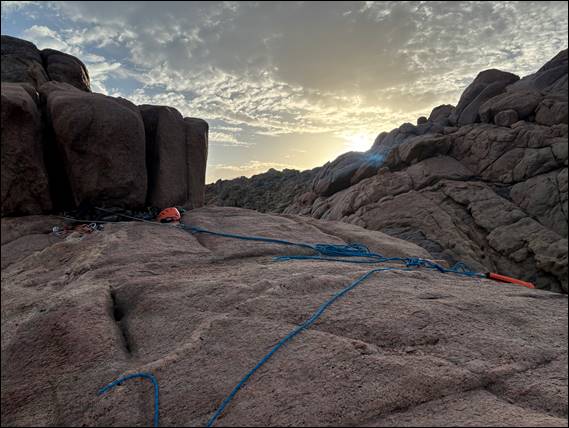
This meant that by the time I had set up the anchors and got myself sorted for the first line, the sun was already starting to creep down the face I intended to climb on at Smiths Beach. While it was already 20 degrees, the intensity from the direct sun was fortunately reduced by the thin and broken cloud cover. It was clear no one had climbed here for a while, which is no great surprise. The climbing is on a granitic gneiss headland, the surface of which has a tendency to become a little flaky especially over summer:
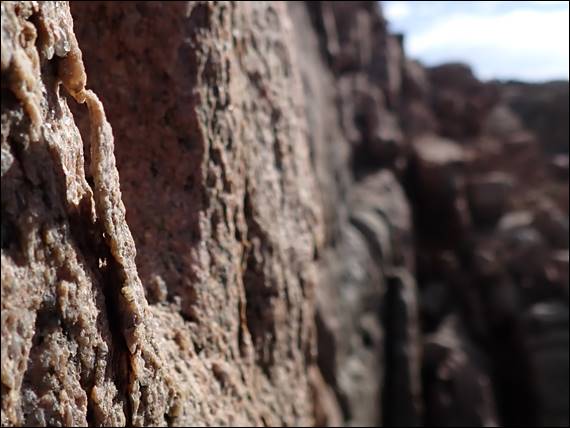
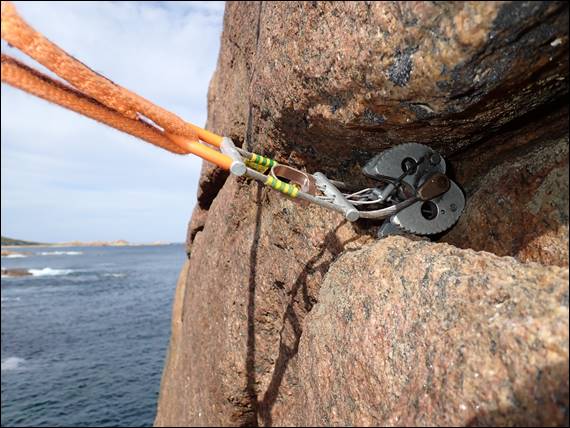
This can make the climbing that bit more nervous, adding to the already insecure feeling many of the climbs have here. That maybe why so few people venture to this place. Today the first couple of lines felt way harder than the grades I had given them, a decade and a half back. It may not have helped my cause when on the first lap of the first line a hold blew, sending me flying. But not as far as I might have gone. Many of the climbs take a slightly diagonal line. So to avoid taking a big pendulum swing, if I slipped, I had placed a number of directional pieces:
Luckily for me as the temperatures moved into the mid-twenties, I was warming to the climbing style and rock. And even the slightly stiffer lines I jumped on felt good. Enjoying myself so much that I continued to climb in the sun, even as the dappling effect of the clouds started to fade. Two and half hours later I felt like I had packed in enough climbing, plus it was starting to get uncomfortable to be on the rock with the sun on my back. After packing up I looked back down into the zawn and could make out the rocks under the water:
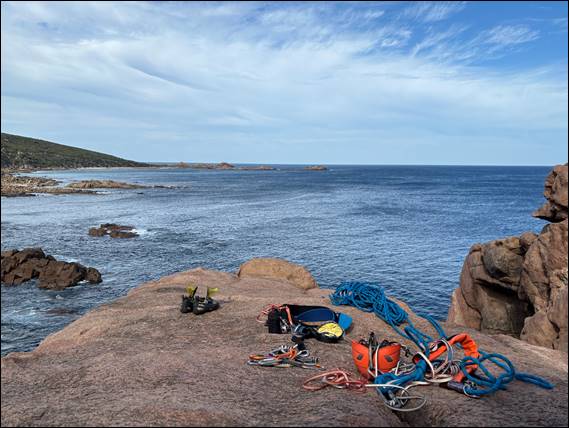
This was enough to encourage me to drive round to Canal Rocks for a dip in the ocean, and hopefully clearer waters. Having come prepared I had my wetsuit and weights, but looking at the swell and waves decided an unassisted dip would suffice. Several scuba divers were getting out of the water when I walked towards the beach by the boat ramp. They said they hadn’t seen too much and the visibility was okay, but nothing special. From what they told me it seems that their season in the water has been about as successful as mine has been:
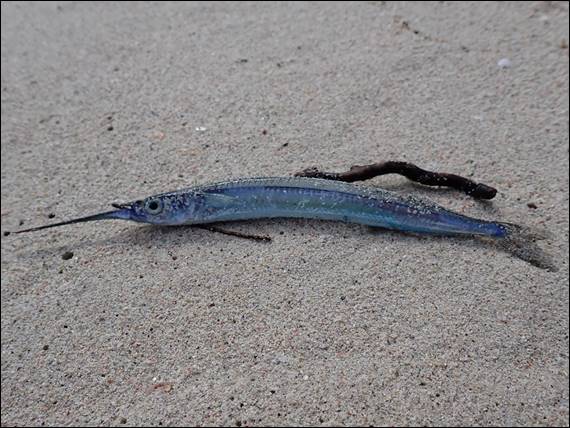
It wasn’t encouraging as I walked round the bay are saw scores of young Southern Garfish (Hyporhamphus melanochir) on the strandline. The strandline being detritus, debris, and for today dead fish left in a wavy line on the beach after high tide. When I got in I was greeted by clouds of sand rolling towards me. Not put off, as the cool water after the hot climb was very welcome, and being rewarded as the water clarity improved with depth. So much better than at my local beach, but nowhere near as good as it has been here in previous years:
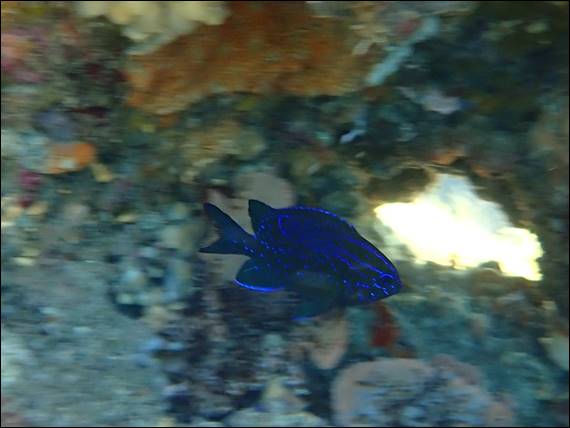
There were heaps of fish, but the imagery for most wasn’t great. The residual clouds in the sky and slightly cloudy waters wasn’t allowing enough light in. But I couldn’t resist the above image of a young McCulloch’s Scalyfin (Parma mccullochi). The iridescent blue patterning was stunning. Lot of adults were also about. Acting quite aggressive as they defended their territory. One of their behaviours is to thrash their tail, which makes a clacking noise and sends a pulse of water towards whatever they are trying to scare off:
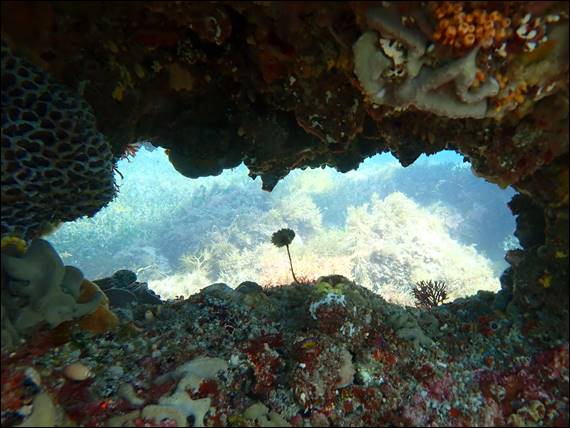
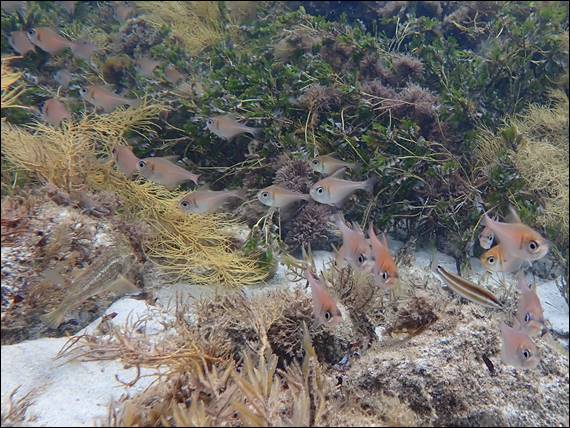
Below I came across a school of young Rough Bullseye (Pempheris klunzingeri), I can’t recall seeing these in the open water before. Having struggled to get any decent images when I have found them huddled in caves and under ledges, and they then move deeper into the darker recesses when I’ve approached. Today they let me come right up to them. The image also includes a juvenile Western King Wrasse (Coris auricularis), with horizontal brown and white stripes, and a young Snakeskin Wrasse (Eupetrichthys angustipes) in the bottom left:
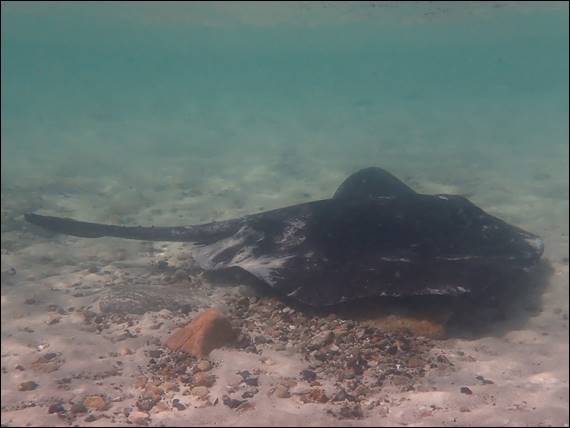
Due to the swell it was a bit of a drift tour, and when I finally got pushed from my entry point to the beach by the boat ramp a big dark shape appeared. A Smooth Stingray (Bathytoshia brevicaudata), with a disc measurement a tad over a metre it was still a young one. They can reach a disc measurement of 2.1m and total length of 4.3m, weighing a whooping 350kg. Being aplacental viviparous, meaning the eggs hatch inside the mothers body, giving birth to 6 to 10 live young, which pop out with an incredible disc measurement of 36cm:
 Sandbagged