One of the simplest forms of life on earth are sponges, which come is all shapes, sizes, and colours. Fossil records of some species go back approximately 600 million years, and there are over 8,500 identified species with many more yet to be identified. While sponges seem to have retained their simple form with no tissues or organs, they play a valuable role in managing water quality. As filter feeders they process waste products discarded into the ocean, such as nutrient. The by-product of this process being a substance other organisms feed on:
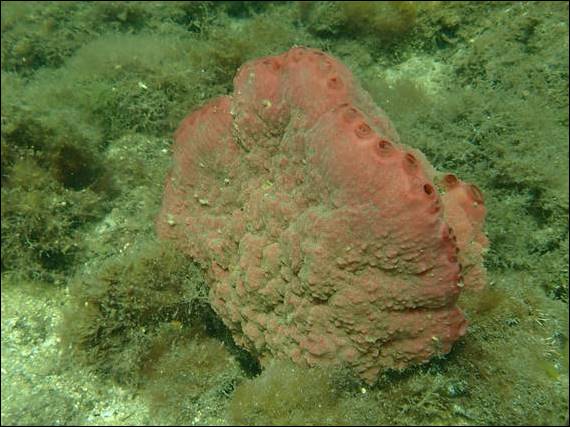
The above is a demosponge (Demospongiae), one of the most commonly seen classes of sponge that make up some 95% of all species. And as with just about everything else during my local dive on Saturday, it was coated in fine sediments that have been washed into the marine environment via the Capel River. The swell has hardly dropped below four foot this season, resulting in detritus being continuously mobilised in the water column. There are no river systems of note that drop into the bay at Meelup Regional Park, so I kept my fingers crossed:

Sunday morning Josh needed to be somewhere with guaranteed phone reception, as he was on call. We decided on Castle Rock, with the view of a climb and I was hoping a snorkel afterwards. Something that also appealed to Seb, who tagged along. Despite having grown up here, he confessed to having only seen Castle Rock from a boat. Never having approached it via land. Not that he would have been any the wiser about the climbs it offered, as he has only gotten into climbing in recent times while living overseas:
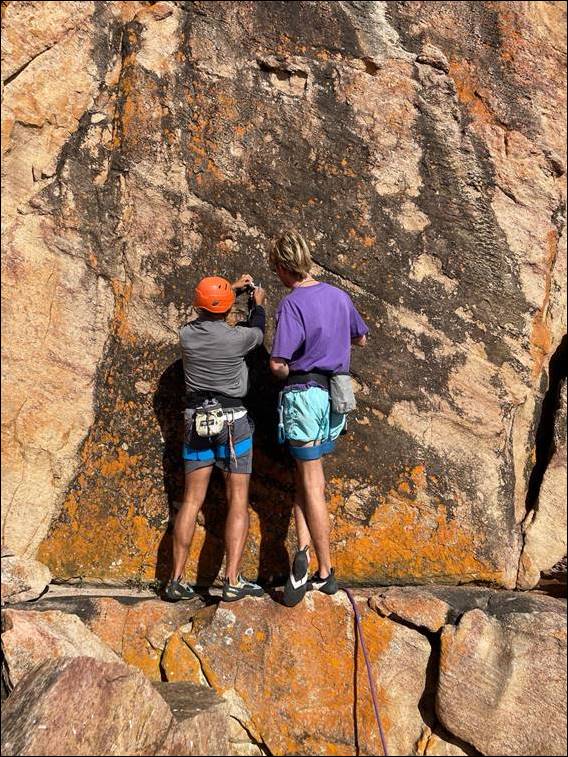
Living in Thailand his experience extended to the art of bolt clipping. Today’s location was to offer a mix of some bolts and some trad, but mostly trad. Offering an opportunity to expand his repertoire of climbing styles. Of all the forms of climbing, trad probably requires the most knowledge transfer. This meant a fair bit of time with me talking through this and that, and assessing how we was climbing. While not formal training, the consequences of getting it wrong are life threatening even on small crag like Castle Rock:

So teaching someone it is not something I take lightly. We started, as we should, with a couple of simple routes. Allowing me to place heaps of gear for Seb to inspect, but for his first lead other than a sling he was first introduced to the iconic Australian carrot bolt. Making short work of that route he then eyed off stiffer opposition. The harder climbing being protected by bolts, after which you need to place trad gear. It was the hanging about to fiddle the trad gear that worked him the most, despite being on the bigger holds:
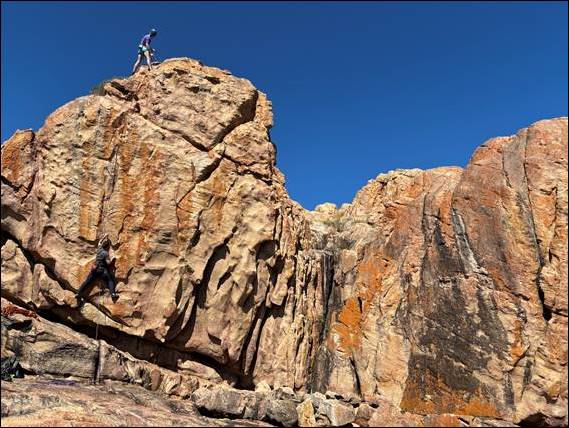
This didn’t put him off and he was keen for more, so we went full trad for the next two lines. Dropping the grade and this allowed him more time to work the gear placements. Both Josh and I following up inspecting what he had put in and provided advice as required. These two lines were on the northern face, which was in very welcome shade. You may also notice the water to the north was looking much calmer and cleared. A moderate southerly wind was whipping up the water, and so keeping my fingers crossed hadn’t really helped:

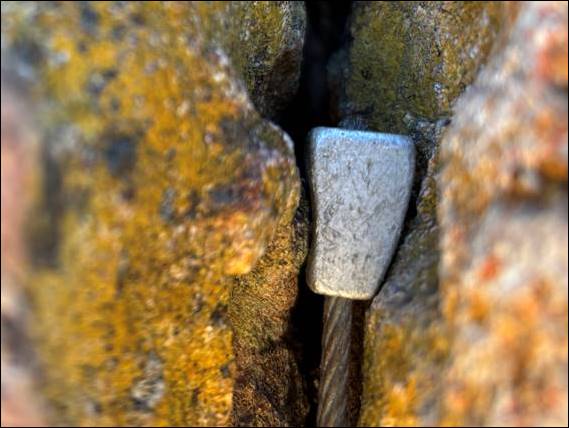
As for the gear placements, it was a little mean to introduce Seb to it at this place. The cracks can often be shallow and flared, making solid placements at times that bit harder to find. It did however make him think more, and for the most parts the gear he placed was bomber. It was good to see that he really took his time, trying different options until he found something that he was comfortable with. And not just crossing his fingers and hoping his first choice was alright. One of the many things I watch for, as I introduce people to this form of climbing:
Josh seemed to be content to follow up with the rope above him. Although, as can be seen a few images up we encouraged him to push himself, even getting him to try the hardest route of the day. And I think he surprised himself with the last route below. Having started the difficulties by yo-yoing the move, talking himself out of pushing through each time. Resulting in gradually becoming more and more weary, forming a mental block that get increasingly harder to push past. But with encouragement from Seb above and me below he pushed through:

It was then time for Seb to bite off more than he could chew, with another bolted line. Not making it very far at all, admitting defeat and then being happy to follow Josh’s lead. Who had decided he’d happily sit this one out, and was already in the water. Despite the water being a little choppy all three of us went in, and it felt lush. The visibility was better than my local beach, but deteriorated as we swam round to the southern side. As such there was nothing new to see or report on, but the morning was rounded off perfectly during my return swim:
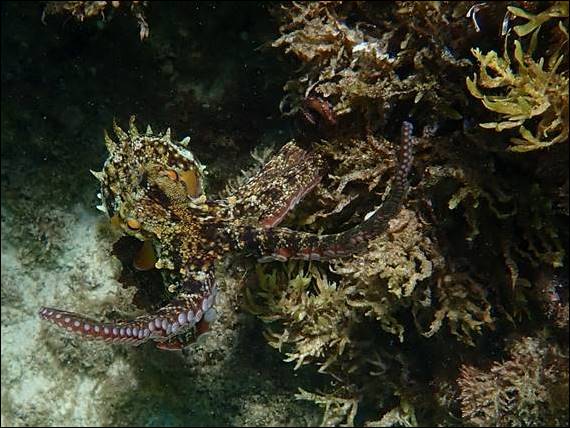
I recognised the eyes of the Western Rock Octopus (Octopus djinda) immediately. Expecting it to slide further into the crevice as I approached, but glad to be proven wrong. Initially reaching one tentacle out as if to test the situation, and then swimming out into the open water for a play. Suckering onto my hand, arm, and covering the camera. So it was that my underwater adventures, which started with the one of the simplest forms of life ended with one of the smartest creatures in the sea:

 Sandbagged