With a solid climbing session at Welly Dam under my belt on Friday morning, the weekend was set aside for other adventures. Starting with what I was hoping would be fun snorkel on Saturday morning. I was encouraged to head to the river mouth end of our local beach, by what looked pretty good conditions. On paper, or should I say in digital form, at least. Walking past the few remaining seaweed sentinels, the last reminders of winter, it was clear the water was not clear. But I went in anyway:
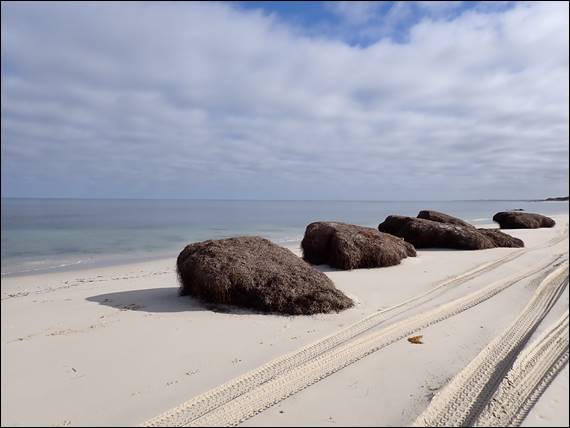
Needless to say it wasn’t the best, despite heading way out to get away from the near shore murkier conditions. In my hour plus swim a few of the usual friendly species followed me, and I spied some of the shyer species hiding as I approached. Back home, there was no need to sit at the computer researching my lack of finds or to write up a post. This left the rest of the day for something I felt my body needed, a day of nothing. I’ve burnt both ends of the candle a bit over the last months, and it felt good to slob for a change:
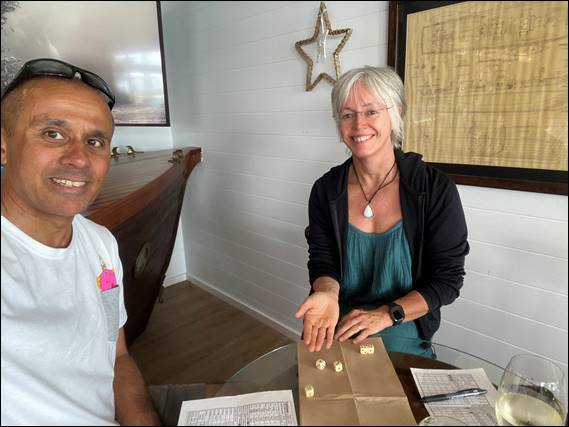
After our fun and relaxing trip away to Gnarabup in early November, Lisa and I had booked another night away. School holiday was however upon us making it tricky to find anywhere at a reasonable price, other than for a Sunday night. We got a place in Augusta, in the hope of a bit of snorkelling in some new ground. Plus, if I was lucky maybe a bit of orchid hunting. Just like my local dip, things were not going in our favour. The wind was whipping up during Sunday, bringing in a swell that looked likely to scupper our watery intentions:
On arrival, we wandered down to what we had been told would be a great place to eat out that night. And those plans were also dashed, when they advised that they would not start opening on Sunday evenings until after Christmas. We had a drink and game of Yahtzee ay the bar, as we contemplated our options. They seemed even slimmer when the barman told us that there weren’t any other worth places he could recommend in Augusta. So it was we broke tradition and got fish and chips, our usual Friday night meal, on Sunday night:
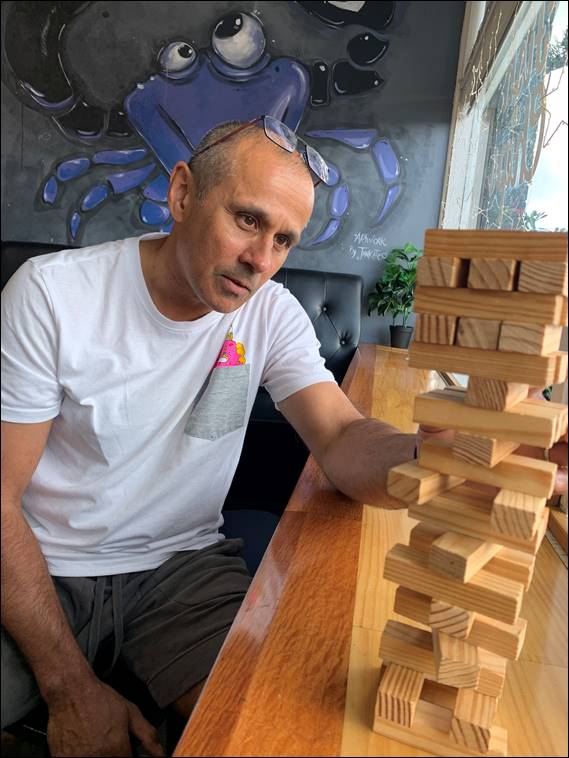
While we did not find ourselves sat in our restaurant of choice playing a boardgame, as we waited to be served, the take away at least had Jenga on offer. This kept us entertained until our number was called, and wandered back to our digs. Being the start of the school holidays it usually takes Lisa a few days to bouncy back from her hectic and demanding job, which never seems to be confined to office hours or weekdays. This resulted in me ready for the world bright and early, with Lisa being more interested to dip into her book while dozing:
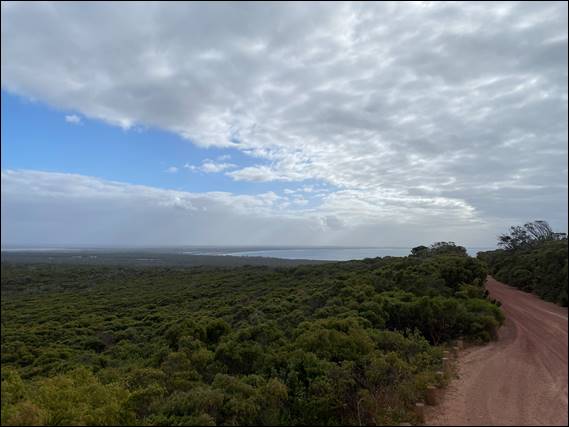
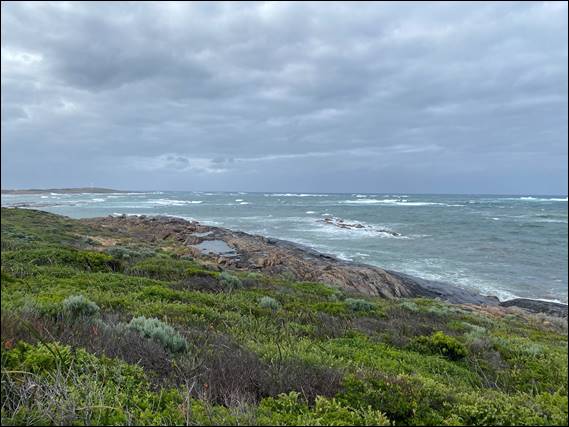
After making a brew I headed out, to allow her to continue to snooze. My first stop was a dense patch of bush, so thick it was a bit of a struggle at times to walk through. The chances of seeing the ground, let alone anything nice, was very difficult. Finally I gave up, and went for a short drive to check a few bays along the west coast, where we had hoped to have a snorkel. As shown two images up, the water was a little less and ideal. Looking back east at Flinders Bay, see above, the waters were calmer but no less gloomy looking:
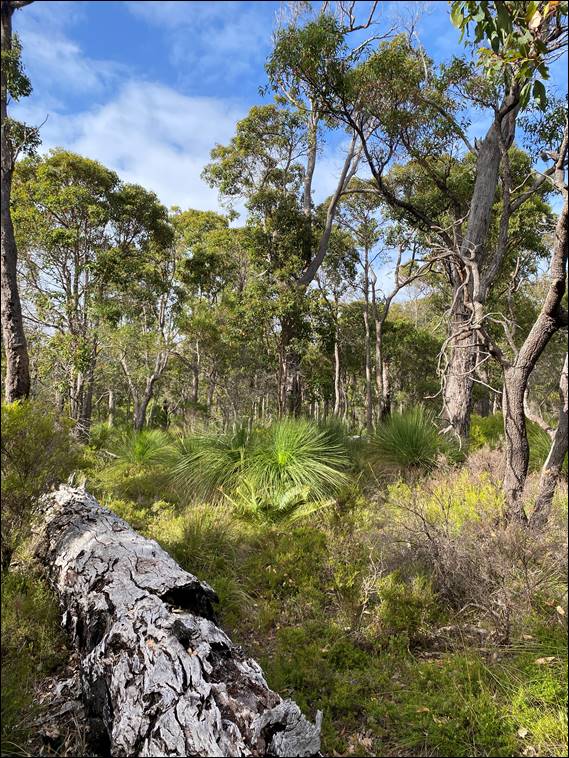
Too early to head back, I looked at the satellite imagery and took a punt. Stumbling across a much more open patch of bush. One I could walk through while look around at the same time. Out of the corner of my eye I spied a Variegated Fairywren (Malurus lamberti). I got a great look, but not picture, of the bright blue head and rich chestnut shoulders. Being found across most of Australia, this is the most common of the nine species of fairywrens. Although, it is absent in a few places including the extreme south-west corner of Western Australia:
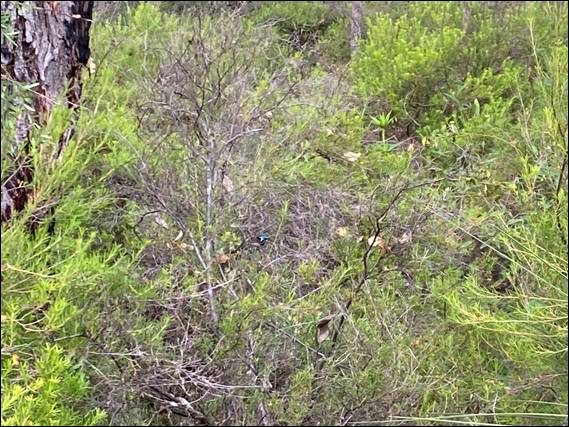
A fact I had to dive into. Checking the Atlas of Living Australia and iNaturalist both only had one observation recorded in the Cape region. So was this may well have been a very lucky find. My next find was not so rare but equally beautiful to see. A dragonfly called a Blue Skimmer (Orthetrum caledonicum). The powder blue abdomen with a tapered dark tip, giving away that this was a mature male. Like the males of this species, the females change colour with age. Being a brownish grey while fertile, and eventually turning a dull powder blue:
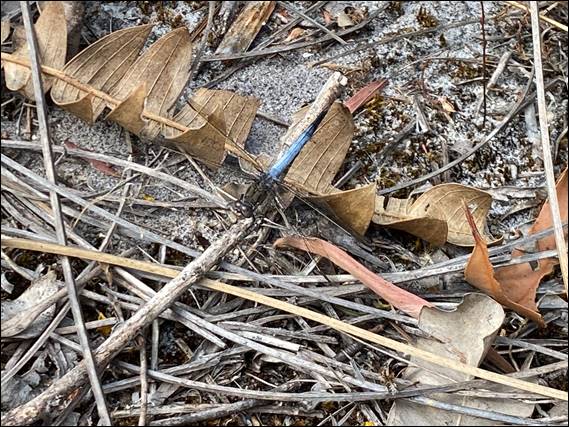
They never attain the glowing colours of mature males, and only turn blue towards the end of their life. Eventually I spotted an orchid that was very much not at the end of its life. I had been quietly hoping to find a couple of late flowering spider orchids that my books tell me could be found in the Augusta area. My search was not helped when I had forgotten to take the book with maps of where they had been previously seen. While they alluded me I was pleased to find the last species of the Prasophyllum, or leek orchid, genus to flower:
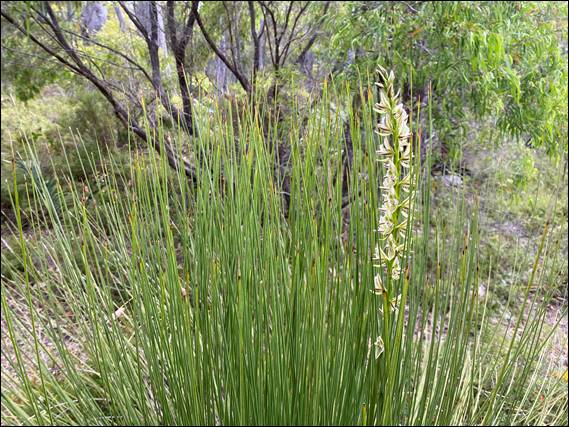
The aptly called the Christmas Leek Orchid (Prasophyllum brownii) it can have up to eighty pale green and fawn-coloured flowers. Arranged on a tall stem, which I have read can often be found growing out of a rotting log or stump. Or as I found today out of a plant with a live log or stem. It was reluctantly time to get back, where I made Lisa a second cuppa to aid in her recuperation. Eventually we had to vacate the room, taking a leisurely drive back. Stopping in at a few spots along the way, including this specky spot to take in the waves:

 Sandbagged