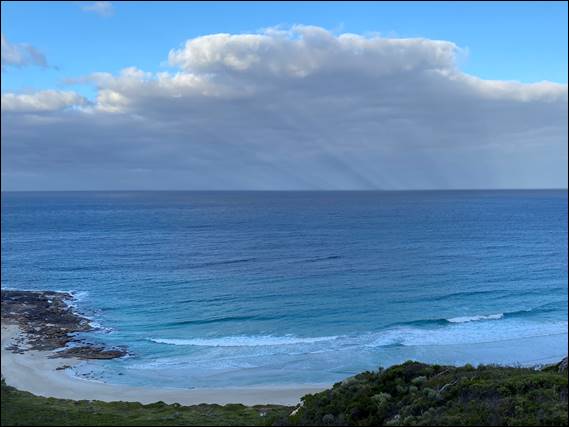
The moon looked extra special this morning. Unfortunately the view didn’t last, as it slipped below a doona made of clouds. A bit like Lisa’s face did after I had popped a sippy mug of tea on her bedside table, and said goodbye. I’ve just read that the moon’s orbit last night had brought it as close to earth as it comes, meaning it was a super moon explaining why it was so stunning. No less beautiful was the walk into David’s chosen destination for today. With a magical visit over the aqua blue ocean and the morning light forming streaks against the clouds on the horizon:
We were serenaded, as we walked in. The Carnaby’s Black Cockatoo (Zanda latirostris) is not a bird I normally associate with this location, but small flocks flew back and forth along the coast for the entire time we were out. At one point they got really close, before deftly adjusting their wings to veer off in a different direction. Being one of the five black cockatoos found in Australia, the Carnaby’s Black-Cockatoos are also known as the ‘rain bird’ due to moving to higher rainfall areas in their range, for summer. It was mostly cloudy today, so the chance of rain was minimal:
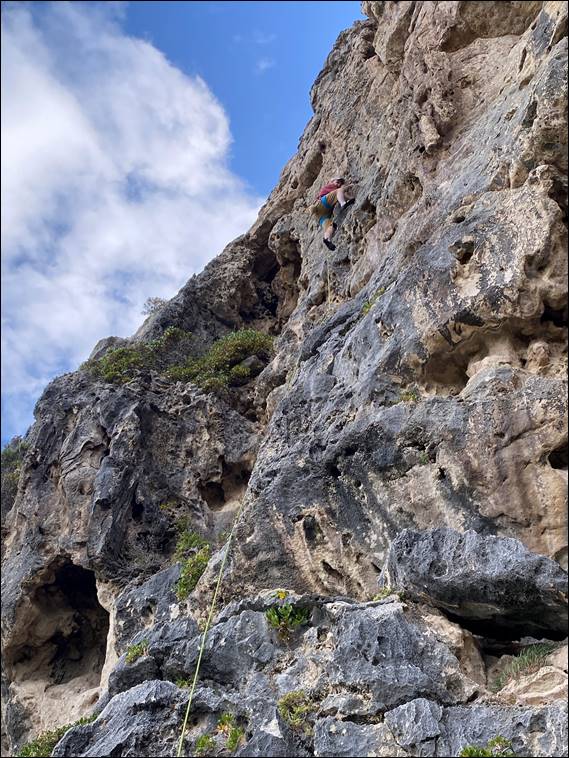
You may recall David is still getting back into lead climbing, and he will confess his head space on the sharp end is a major obstacle. The last time he led was at The Playground and Lost Buttress, where the easier climbing allowed him to lead every route. Today we were at Bob’s Hollow and there isn’t a crag in our little slice of the South West of Western Australia that isn’t more contrasting. Well maybe Welly Dam is up there too, which is where he last climbed with Adrian and myself. He didn’t lead there, and it didn’t take many lines before he was shattered. I therefore wondered how we would go at Bob’s:
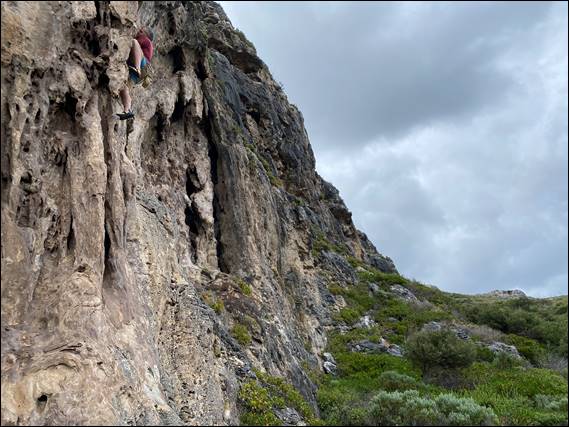
David had checked Bob’s Hollow out online in a fair bit of detail, so had a fair idea of what was to come. He also told me that he had been dreaming about the session here. And in his dreamland he was concerned I was getting disappointed, because we didn’t bag many lines. From my perspective, each time I head out I adjust my expectations of how many and what routes we may get up based on who I am going with. Not in a bad way, but there is no point in being overly optimistic from the outset. And as a result I can’t recall ever losing patience with someone when out on rock, but am happy to be told otherwise:
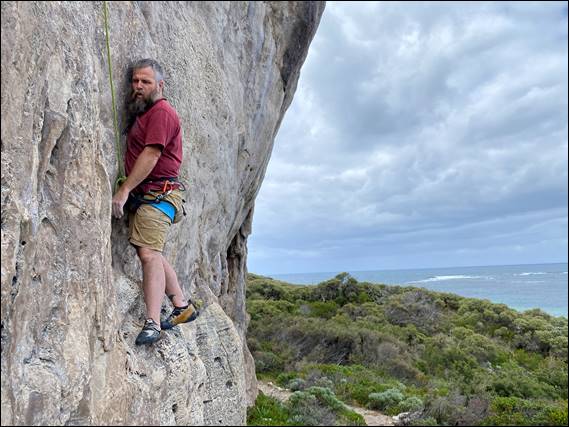
Climbing for me, after all, is about the experience and not what we achieve. Unlike what seemed like most of the near twenty other people that rolled into the crag during the morning. Several large groups, of true sport climbers, bringing their chairs to watch the action from, some of those above blasphemed whenever a move proved too hard for them. Ropes hung from almost every line at the northern end of the crag, so we stuck to the southern end. Having it to ourselves until the last route, when a couple also looking to avoid crowds came over. It is of course good to celebrate what we do get done, and what we see:
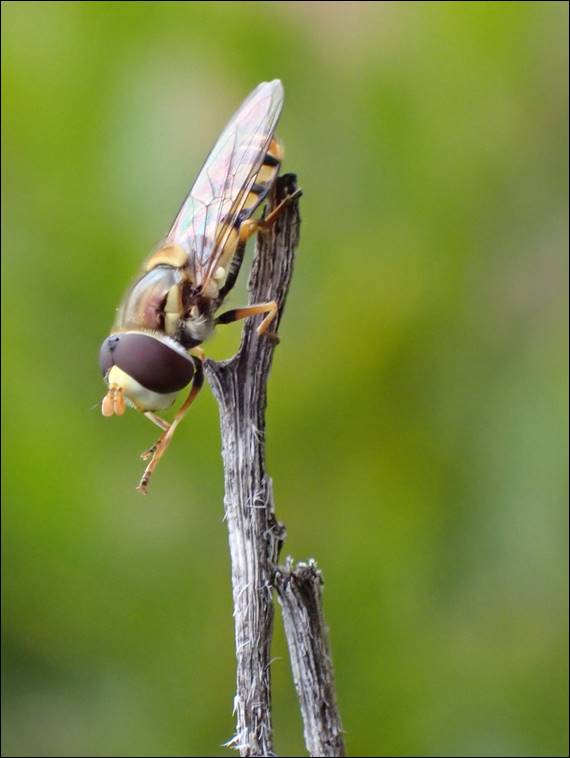
With the clouds about, and a reasonably blustery and cool wind the chances of seeing a reptile were low. I also wonder if due to increasing popularity of this place, being like an outdoor indoor wall, I may see less snakes here now. I did however spot one Southwestern Crevice Skink (Egernia napoleonis), which was quick to scuttle away. So instead, above is an image of a Yellow-shouldered Stout Hover Fly (Simosyrphus grandicornis), which I watched delicately using its front legs to wipe down its face. This is one of the two most common hover fly species found in Australia, of which there are some 160:
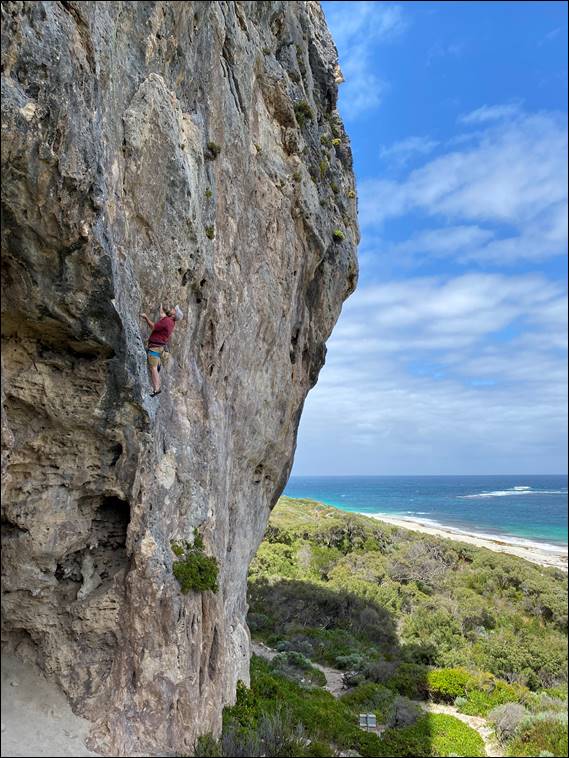
Hover flies, not unexpectedly are often found hovering in the one spot. And can suddenly move forwards or sideways and then just as quickly come back to a stationary position. The wind seemed to be making this a little more difficult today, which may also be the reason why at one point a pair of Carnaby’s Black Cockatoo had got so close to us. We were also lucky to see a pair of Australasian Osprey (Pandion haliaetus subsp cristatus), which hung about for a while moving between the cliffs and ocean. There are four subspecies found round the globe, with the Australasian Osprey being the smallest in size:

By now you may be wondering how the climbing went. We started on the two easiest routes here, which really don’t get too steep. When first established the holds were very sharp, but having become very popular I noticed the sharpness had significantly reduced. David ate up the first line, but as the second one steepened up his head started to play games with him. It was definitely his head that was the issue and once there was a rope above, he walked up it. We then moved to the most heavily bolted line, which is steeper and more akin to the style here. He was happy to go second again:
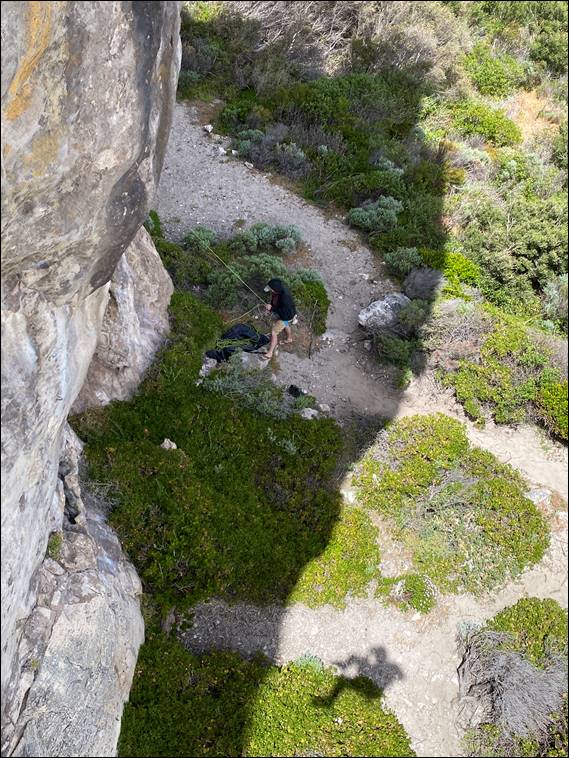
The steepness hit him, but he got up it. Then we did something a fair bit harder. The crag classic, a route everyone comes here to climb. It felt sustained and pumpy on lead, so once at the top I looked down and asked if he was game. To which he said yes. This meant the draws stayed in, and he had no choice but to get up it. All I’ll say is that he made a piecemeal ascent, and by the end of it I was feeling pretty chilly. It really wasn’t surprising. The route is pretty stiff, and the hardest thing he has climbed in our time of getting out together. But he was not put off, so we picked a route that doesn’t get much attention so still has razor sharp holds:

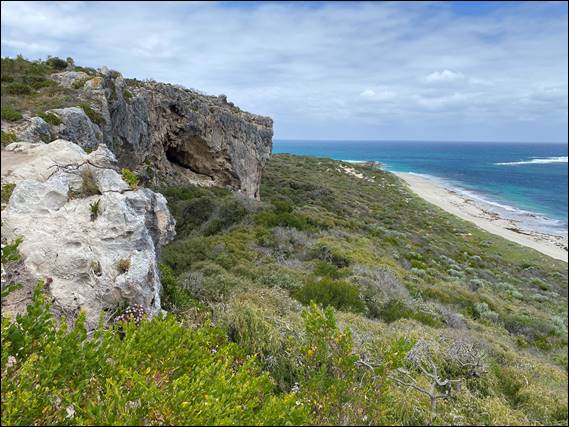
Chosen due to being restricted to the southern area, but also despite the vertical finale it has a relatively gentle rising traverse. It was a great choice and he loved it, as did I. So much so, that with eye’s bigger than his belly he wanted one more. The best choice left was a line devoid of bolts in the bottom half, so I had to pull out my slings. Making for a long adventure and traditional style route, which goes up some very impressive and steep looking terrain. David made it to the point above, which is when his body started to agree with his head. So after I cleaned the route we wrapped the session up, both being very satisfied:
 Sandbagged