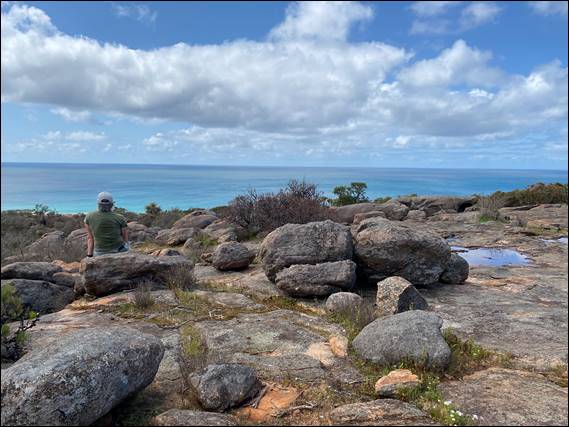
A weekend of not climbing was on the cards last weekend, to allow the body to relax and recover. But the weekend cried out to include some outdoor time, resulting in Lisa and I going for a Sunday wander with the poodles out at Crooked Brook Forest. Allowing us to balance some outdoor time together and provide the poodles with an adventure full of interesting scents. And for me also the hope of maybe having a bit more luck than my last visit here, which was not particularly productive from an orchid perspective:
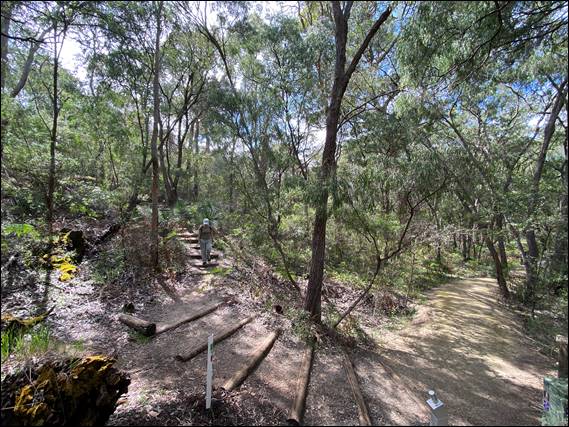
The carpark was overflowing more than ever, but we came across surprisingly few people on the two walk trails we plodded round. Our slow pace was more due to the poodles intently sniffing every few meters, than me wanting to stop and look at orchids. A few of the usual suspect were out, but we really had to look hard to find them. And as for anything particularly new or unexpected it was very light on, and even when we found something there was only one or two plants of the species. A few other groups were out looking, and they fared the same fate:
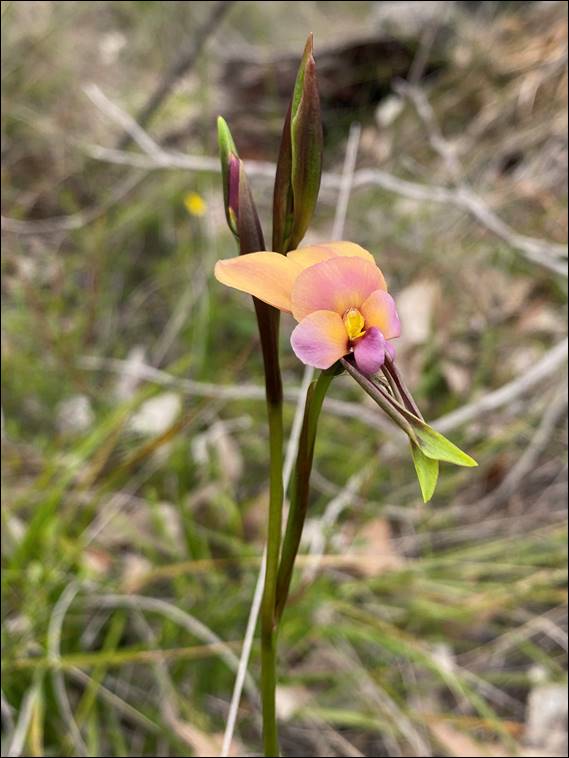
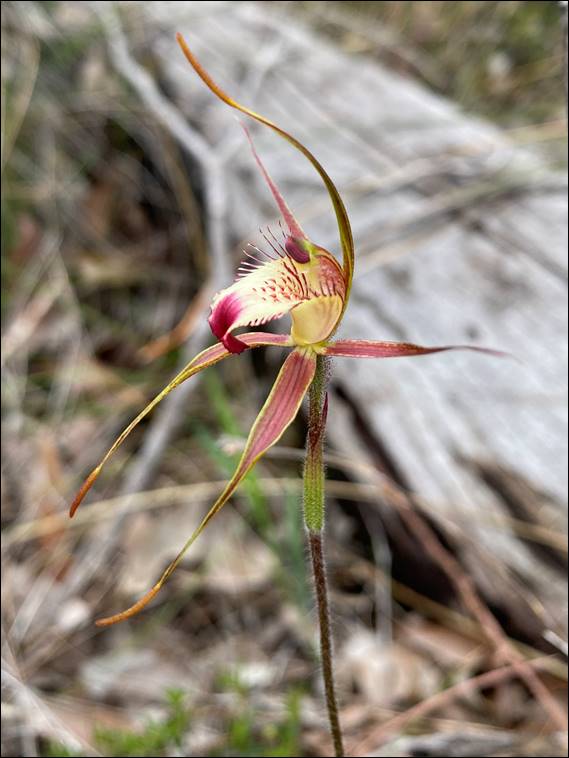
On the plus side we came across a single Rusty Spider Orchid (Caladenia ferruginea), which I mentioned in my last post as a species we have in previous years found at Ambergate Nature Reserve as a bit of a companion spider orchid to the Swamp Spider Orchid (Caladenia paludosa). Above we also found a single flowering Purple Pansy Orchid (Diuris longifolia), one of many donkey orchids species. The species name selected due to the length of its leaves that protrude below the flower head, with longifolia meaning long-leaved in Latin:
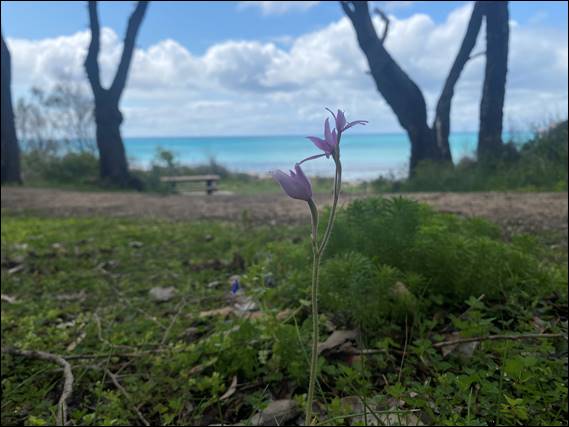
It wasn’t a total whitewash and I tallied seven flowering species in all. It didn’t however fill me with confidence of finding too much when Lisa and I went for a walk along the eastern coastline of Cape Naturaliste, from Dunsborough to Eagle Bay on Friday. My last trip here was in mid-August, and I didn’t even write that visit up, despite going orchid hunting and climbing. That had been a very wet visit, with the paths flooded and most flowers either looking battered or closed up. This included a couple of Blue Fairy Orchids (Pheladenia deformis):
Blue Fairy Orchids are a common and wide spread species that can tolerate a variety of habitats, for which I can’t recall a year in which I haven’t seen them in good numbers in many places I visit. This year however I’ve only sighted those two bedraggled specimens. The reason for returning was not to try and find them again, but for Lisa to get a decent walk in. The Peppy Plungers are book in for a Coastrek charity event in a few weeks’ time, which will take in a 20km walk along this reach of the coastline. Raising funds for the Heart Foundation:
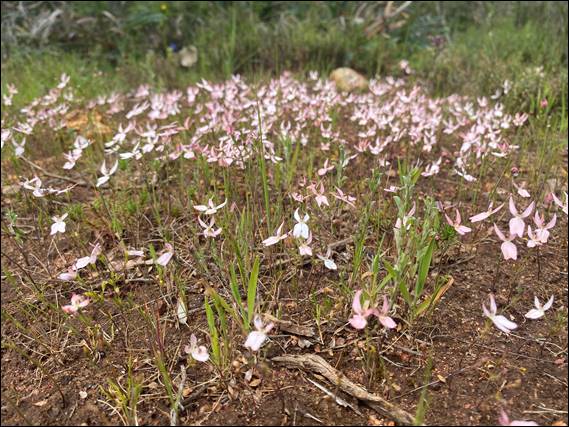
To get a bit of training in they had organised to head here for a trek on Wednesday, but a cold front came through with strong to gale force winds and belts of rain. A couple of them then decided to head out on Friday, but Lisa and I had already organised to get out ourselves. Our plan included a night away to celebrate her birthday. After we had parked up in Dunsborough we spotted the other Peppy Plunger’s car, who had just happened to decide to start at the same place as us, but were an hour or so ahead of us:
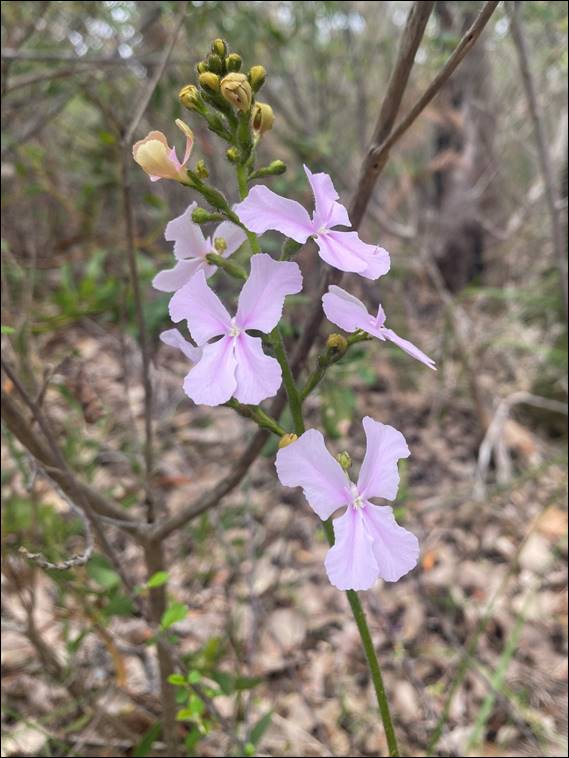
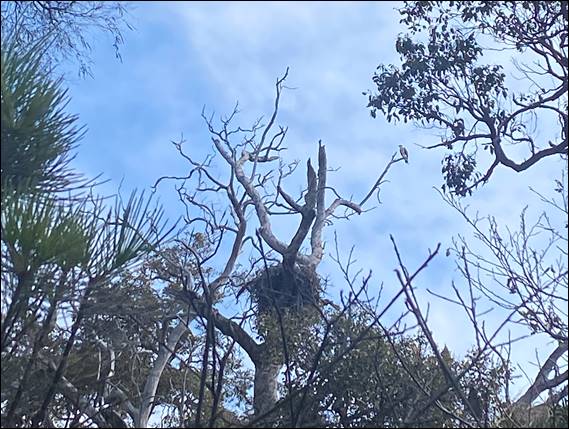
With the intention to get a few miles under our belt, the pace was a little quicker than my orchid walks. Reducing my ability to stop and look about. Certainly on the walk northwards there seemed very little to see, with only a few specimens of species previously sighted this season. Having tempered my expectations I was prepared for the faster pace, and likely low species count. Three images up we did however get to watch a White-bellied Sea-Eagle (Haliaeetus leucogaster), perched above its huge nest of tangled twigs and branches:
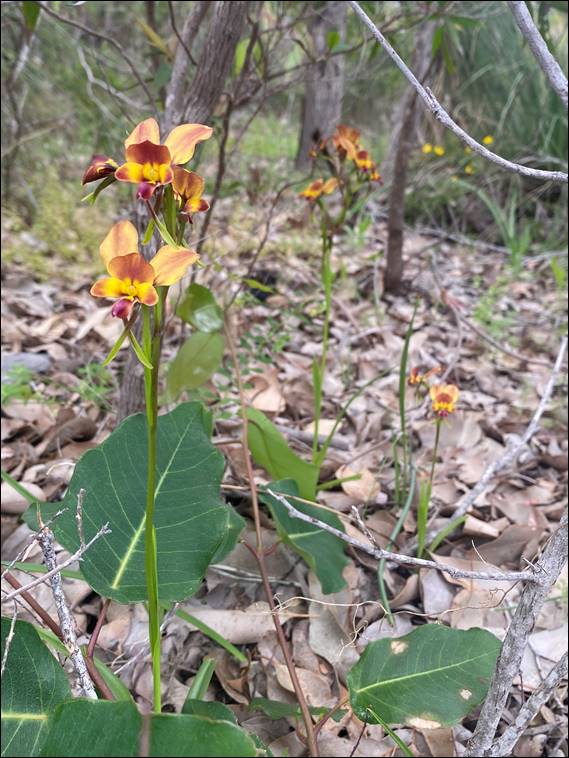
And despite there not been many orchids, there were lots of other flowers out including a wide variety of triggerplants, of the genus Stylidium. The smaller species of this genus formed large colonies close to the ground, but they come in a wide variety of forms. They are described as being protocarnivorous. Meaning they trap and kill insects, directly digesting or absorbing the nutrients by dissolving the bodies using enzymes or bacteria. The most well-known plant to use this technique is probably the Venus Flytrap (Dionaea muscipula):
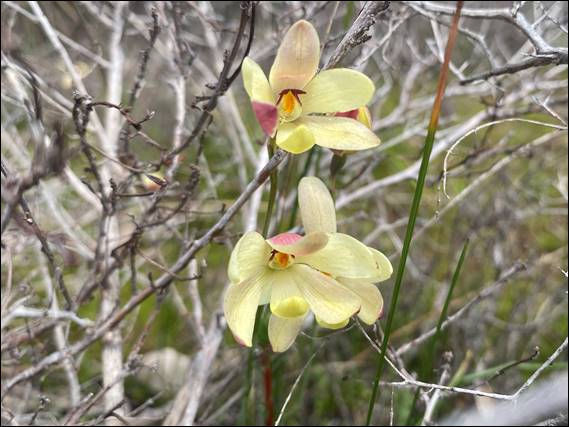
After only scant repeat finds over five to six kilometres, we bumped into Lisa’s fellow Peppy Plungers Linda and Jenny. We were a kilometre or two from Eagle Bay, and they were on their return trip. As we chatted they said quite a few orchids were in the last stretch, raising my hopes. They also referred to a pale pink donkey orchid like looking flower. The latter was in fact the Queen Triggerplant (Stylidium affine). The flowers being several centimetres long, much bigger than the ground cover trigger plants, both shown several images up:
They were however not wrong about the orchids, and as we closed in on Eagle Bay several clumps of Dunsborough Donkey Orchid (Diuris jonesii) appeared. These have relative large flowers, for donkey orchids, being in some instances two inches long. And with the more colourful petals and sepals they are a very pretty sight. Endemic to the south-west of Western Australia, they are not confined to Dunsborough and can be found all along the Leeuwin-Naturaliste National Park and along the Great Southern coast as far east as Albany:
I also got pretty excited when I stumbled across a patch of some twenty Lemon-Scented Sun Orchids (Thelymitra antennifera), all clustered in a small area. These bright yellow flowers, three images up, are very distinctive so I am pretty sure that we would have seen them if they had been more widespread along the walk. This species is very wide spread being found across the biogeographic Southwest Australia region, from Geraldton to Esperance, as well as the southern areas of South Australia and Victoria, and rarely in Tasmania:
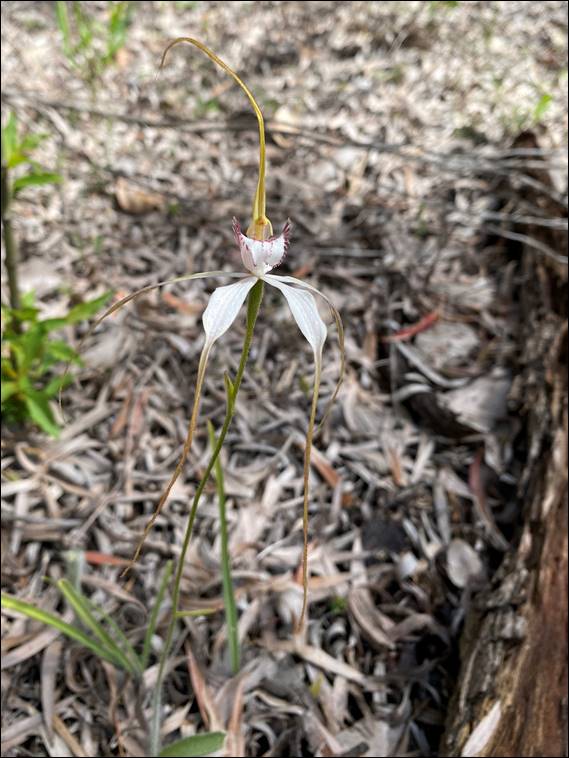
On the return walk, the pace was kept up although we did take five when we diverted on the Meelup Beach lookout loop. Waiting for a whale to spout, tail or flipper splash, or if we were lucky a fully beach. Lisa thought she saw a few whales break the surface, but it was too far off to be sure. After staring out to sea for a while we continued, down the steps and back to the coastline walk. And here the finds continued, with the above Hills White Spider Orchid (Caladenia longicauda subsp. Clivicola) and below Blue China Orchid (Cyanicula gemmate):
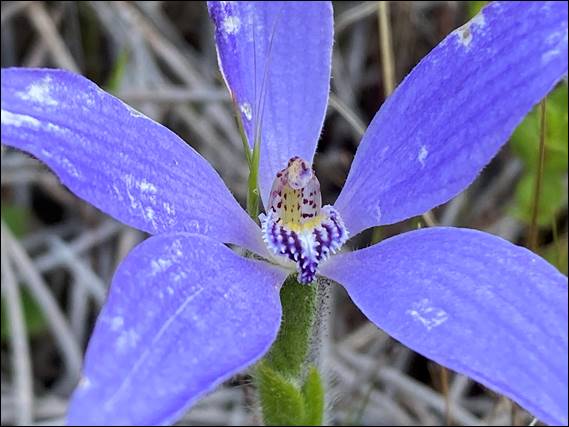
We only spied a couple of Hills White Spider Orchids. They are also known as the Darling Scarp White Spider Orchid, as they grow in a restricted area mostly on the Darling Scarp near Harvey. There is however a population that grows near Dunsborough, which is where the greatest concentration of finds have been recorded according to the Atlas of Living Australia. The Blue China Orchid is yet another widespeard and common species I would expect to find all over the place. So far this is the only sighting I’ve managed this year, and it was a little tatty:
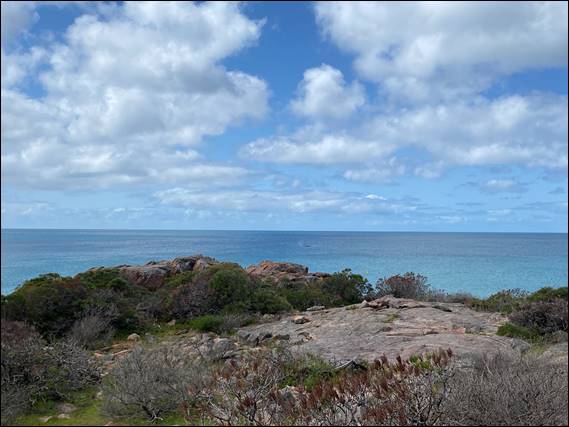
While I was taking images Lisa walked onwards, lunch was calling. This meant that she missed out on seeing two Humpback Whales (Megaptera novaeangliae) cruise northwards seemingly close to shore when I saw them. It is however very hard to see the one that has broken the surface and just spouted, above. Later we both got to see one breach, even if it was quite a long way off by then. By which time my focus was back on the ground, looking for smaller things. This included a single Dunsborough Spider Orchid (Caladenia viridescens):
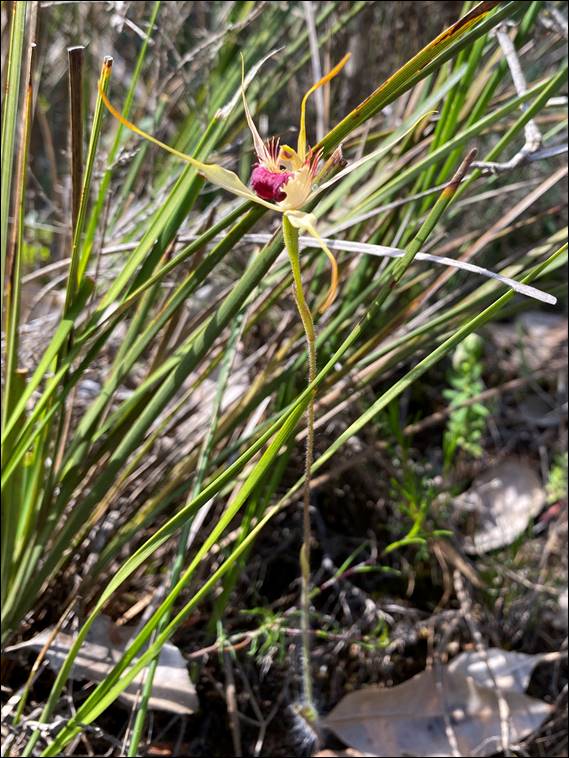
This time, as the name suggests, this spider orchid is only found locally between Yallingup and Busselton in the Jarrah Forest biogeographic region. While not in the best of conditions it was an exciting find being classified as critically endangered by the Western Australian Government, and listed nationally as endangered under the Environment Protection and Biodiversity Conservation Act 1999. You may assume right that this was a fist time find for me, as was the below Broad-Lipped Spider Orchid (Caladenia applanata) making for two lucky last finds:
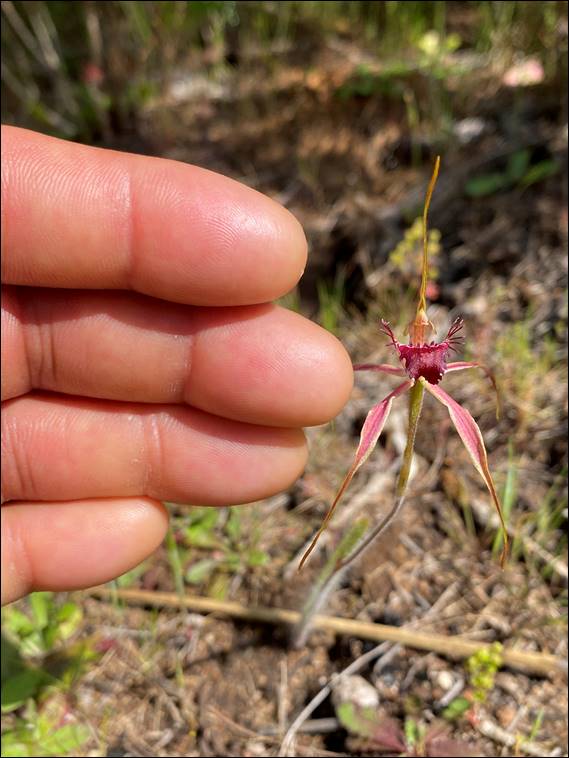
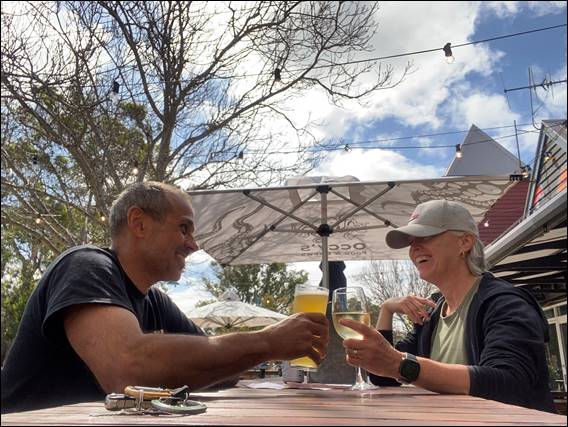
I again I only found a single plant, taking the time to ensure I had enough images to be able to distinguish it from similar species. Before having to keep moving to catch up with Lisa. Finally returning back to the car after having walked ten miles in well under four hours, spotted legs eleven orchids species in flower, and taken the time to spot some whales as well as heaps of birds and assorted flowers. Lunch and a well-deserved drink awaited us in Dunsborough, before driving onto our hotel to continue our short but very lovely and relaxing min-break. Cheers to that:
 Sandbagged