A lot can happen in a week in the orchid world, so I was very keen to get out and look about as soon as returned from Queensland. I’ve often heard how people travel from far and wide to experience the ‘big’ months of Western Australia’s South West orchid season, when many species come out. Something I am lucky to have right on my doorstep. That’s not to say there aren’t many orchids in other parts of Australia. There are reported to be some 1,900 species found across the country, a quarter of which can be found in Western Australia:
There is a two volume book for the 461 known orchid species in Western Australia. This was recently revised and reprinted this year, with a couple of new finds. Authored by none other than the person who verified my recent find in the Capel Nature Reserve as being a hybrid. It certainly seems to be big business, but with approx. 30,000 species found worldwide what sets Australian orchids apart? It may be that most species found outside of Australia are epiphytes, and often found in more tropical environments:

And while I discovered both epiphyte and lithophyte orchid species in my recent trip to Queensland, which happens to have a tropical and subtropical climate, orchids found in Australia are mostly terrestrial. Furthermore, many of these species will only flower for a short period. Ranging from days to months, so if you are really keen to see a specific species you need to be committed. Like my persistence at Wilyabrup this year. Added to that there are orchids out most of the year, so if you are really keen you can keep searching year round:
However, spring is the time of the year when more species are likely to be seen. It is however not guaranteed they will come out, seasonal conditions need to be right and can affect whether they flower and then for how long. Germination is also dependent on fungi for many orchid species, with which they have a symbiotic relationship. Each species being reliant on very few, and at times only one, fungi species. With our changing climate, as well as other land use impacts, this fragile environment and the relationships within are at risk:
It was originally though that orchids may have originated from Australia, but the Kew Royal Botanical Garden 2023 State of the World’s Plants and Fungi report, the firth in a series since 2016, has changed that thinking. I do wonder how they can be sure, but it is now considered that orchids first came from the northern hemisphere round 83 million years ago. It is suggested that they spread across the globe, with the origins of approx. 60% of the Australian orchids dating back more than 40 million years:
That is in contrast to many of the species across the globe, which have been estimated to have originated more recently in the last 5 million years. The DNA studies and investigations to inform all this work came from 200 international researchers across 30 countries, is it not likely to be biased. About 2,500 new plants are discovered each year across the globe, however it is estimated that 45% of all known flowering plant species may be under threat of extinction. Amongst the most threatened families is the Orchidaceae (orchid) family:
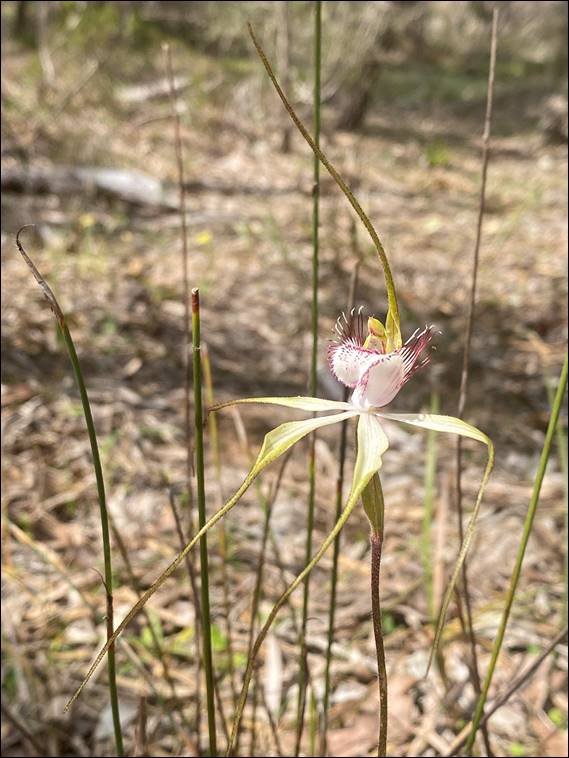
Well that all took a bit of an unintentional dark turn. And certainly not in keeping with the plethora of colours, shapes, and sizes of orchids I have found during my week back. I started with a local spot, being the Capel Nature Reserve where I stumbled across two other orchid parties hunting these plants. Like I said it’s a bit of a hotspot here, and springs time especially brings out like-minded people. Often willing to share snippets of information about what they have found and where to look for them:
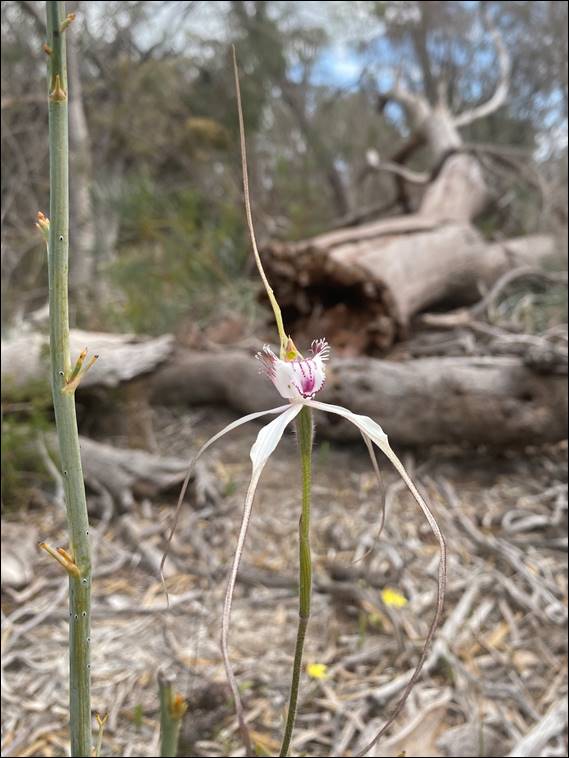
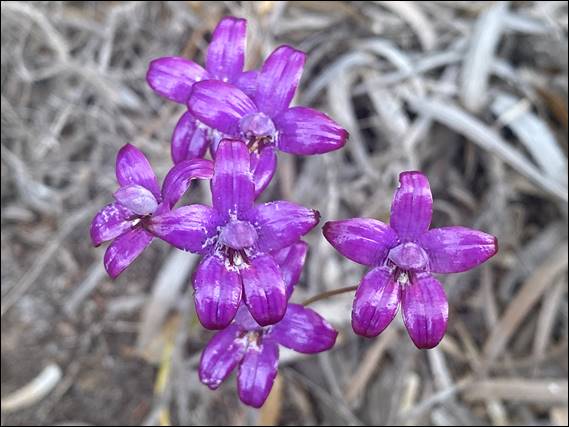
I’ve started this post with a splash of colour, finding a clump of Purple Enamel Orchid (Elythranthera brunonis). Lisa’s favourite species, and which I usually find one or two plants at most together. This collection however had four plants, making for a more spectacular image than usual. I mentioned earlier the occurrence of each species is dependent upon conditions, for both the orchid and related fungi species. We’ve had a wonky year with a dry start to the year, very wet August, and relatively hot and dry September:
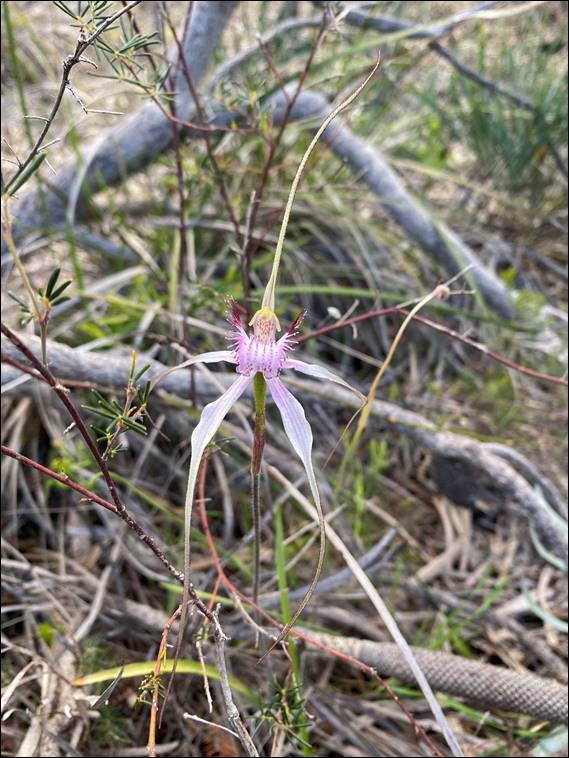
This may be why, unlike at the Ruabon Nature Reserve, the usual abundance of King-in-his-Carriage Orchid (Drakaea glyptodon) and companion Flying Duck Orchid is greatly diminished here. I only spotted a couple of lonely King-in-his-Carriage Orchids, and one cluster of two Flying Duck Orchid plants. These are shown in the second image and I believe are the Hort’s Duck Orchid (Paracaleana hortiorum). Based on the labellum, which resembles the bill, not being humped and having a limited number of calli concentrated towards the end:
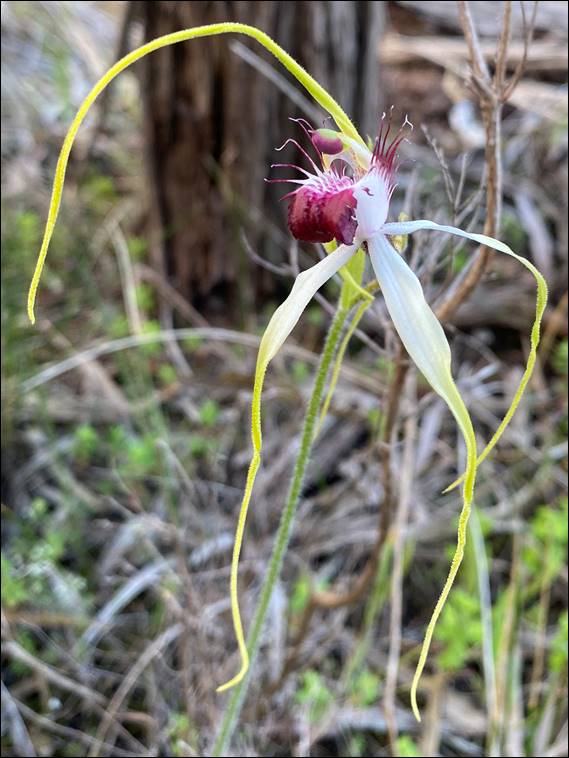
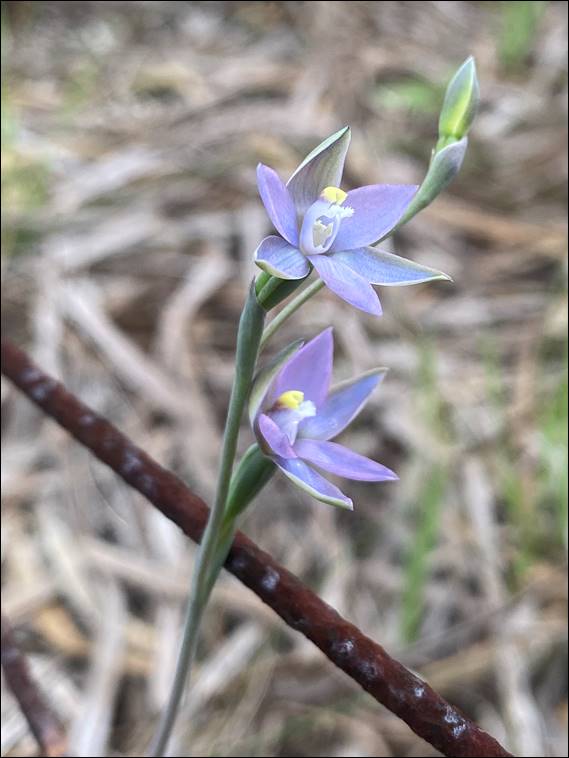
I make this statement about their absence off the back of two visits here, which has included hours of scouring areas I have seen them previously. I did however come across the Slender Sun Orchid (Thelymitra vulgaris), which I was told about by one of the other parties. Endemic to the south-west of Western Australia, it has a smaller flower to most sun orchids found locally. Not to be confused with the most widespread and common orchid species in Australia, the Slender Sun Orchid (Thelymitra pauciflora) that is found everywhere but Western Australia and the Northern Territory:
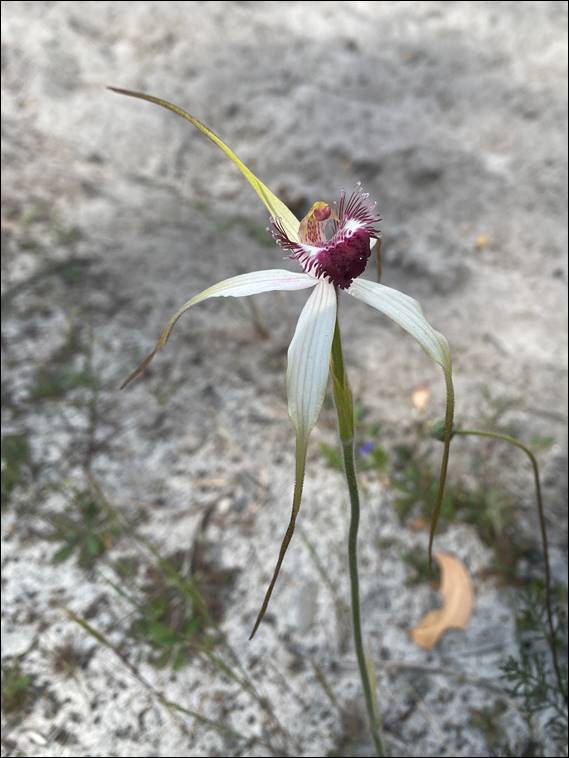
I was lucky to be out on a relatively hot day when I saw the Slender Sun Orchid, as they only open their flowers on warm days and even then for short periods. Indeed on my second visit here, which was cloudy, all the flowers were closed up. It is all about being in the right place and right time, and for orchids also to be looking in the right direction. This was my first sighting of the Slender Sun Orchid, even if it was an assisted find. After the first three finds included in this post, all the others from the Capel Nature Reserve are of the Caladenia (spider) genus:
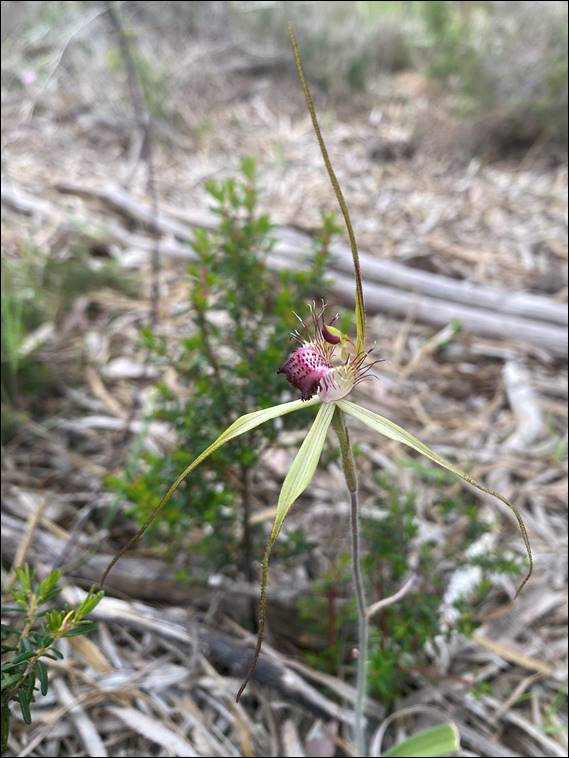
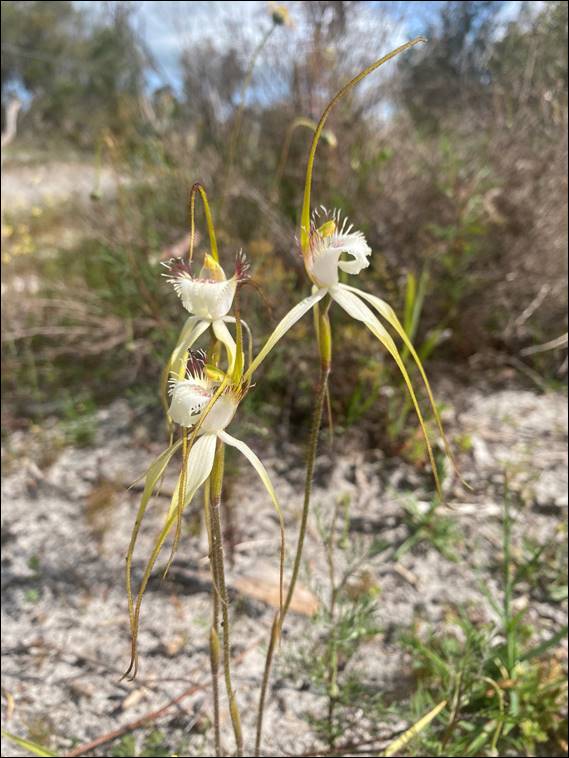
There were so many out including lutea, albino, and hybrid forms, making their identification extremely hard. There are nine images of them in this post, and I could have added more. Each has subtle differences, in the fringe lengths and neatness, number of calli, petal and sepal width, length and colour, and the colour of the labellum. I’m simply not skilled up enough to work it out, so have sent a range of images to one of the authors of my orchid guide for assistance. For now I’ll have to sit tight and wait to see what I’m told about them:
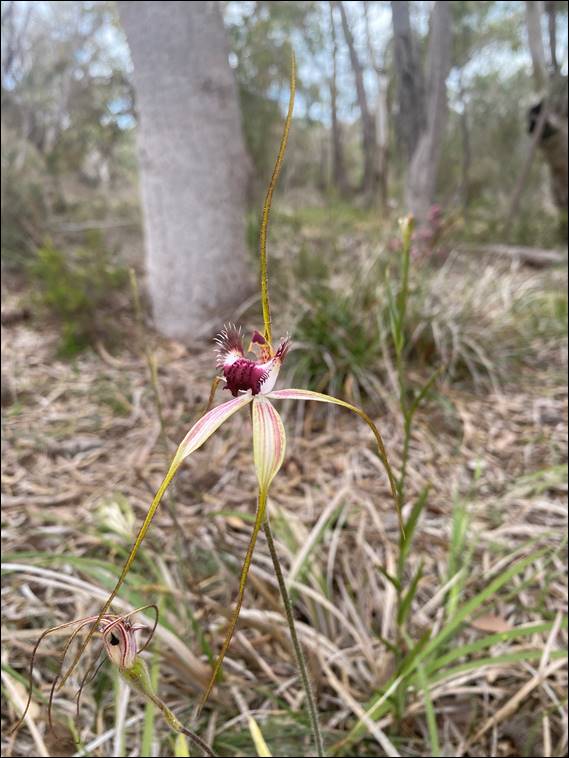
I can see traits of the King Spider Orchid (Caladenia huegelii), Scott River Spider Orchid (Caladenia thinicola), and Tuart Spider Orchid (Caladenia georgei) in the specimens found with more colour. The first two of which would be a good find, as they are threatened species. After such an amazing time at my local spot, I was full of hope and expectation when I went to check out the Ambergate Nature Reserve with Lisa. It was however a very different story there, and while we did have a few good finds they were few and far between:

The only species of spider out that we found was the above Swamp Spider Orchid (Caladenia paludosa), of which we found quite a few. In past seasons this one has come out at the same time as, and in similar numbers to, the Rusty Spider Orchid (Caladenia ferruginea). We were however unable to locate any of the second species this time. Below is the only Little Pink Fan Orchid (Caladenia nana subsp. nana) on offer, which was getting close to its maximum plant height of 10cm:
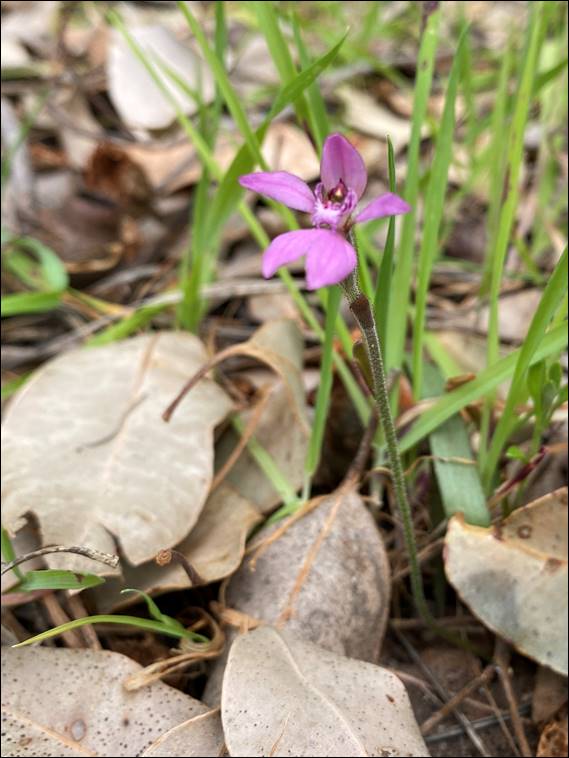
The height being the only physical characteristic to distinguish it from the Pink Fan Orchid (Caladenia nana subsp. unita). Although this other taller subspecies flowers later, between October and November, and prefers wetter and heavier soils. The reason for having an image of the above, which I included in a recent post, was that I found the following Cowslip Orchids (Caladenia flava). Based on the petal and sepal shape this plant looks to have cross bred with the Little Pink Fan Orchid, which is not an uncommon thing to happen:
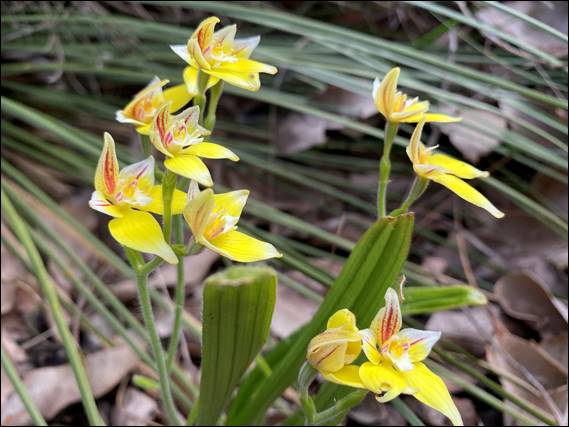
I had my first day back to work on Thursday, a day I would normally work from home. But during the school holidays, to provide Lisa with a more relaxed feel at home, I go into the office five days a week. Seeing I was in Bunbury, after work I decided to have a look at patch of bush on the edge of the highway heading north. This had a fairly big fire go through it a year or so back, and fire can be another stimulus for orchid activity. Indeed, a local enthusiast has been suggesting this place could go gangbusters this year:
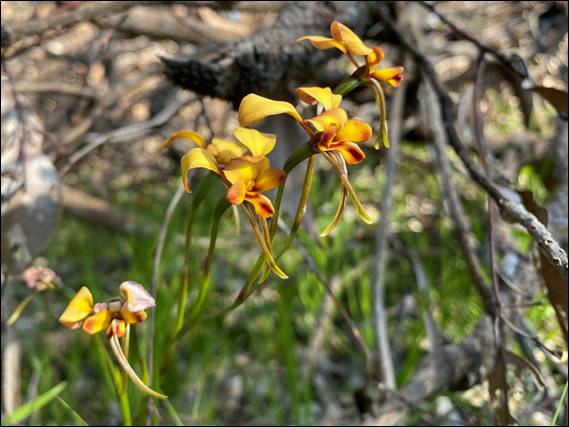
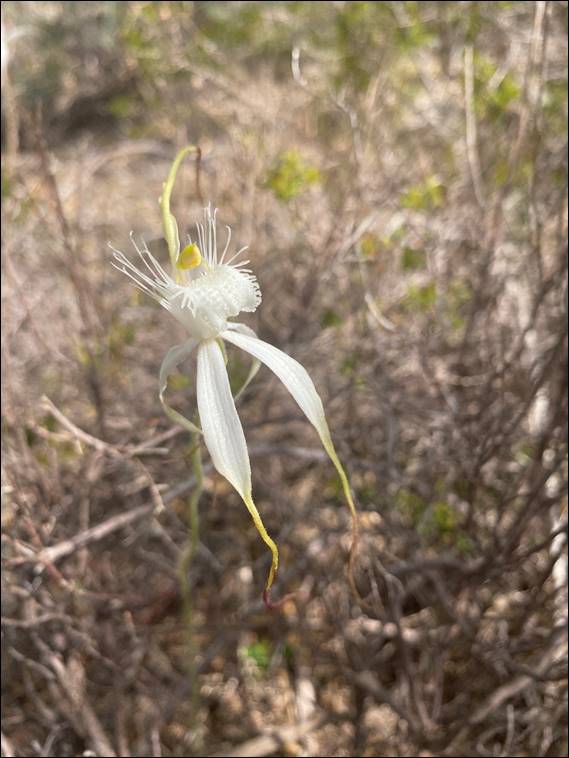
It was somewhat disappointing, and after forty five minutes I found just one White Spider, a heap of Cowslip Orchids, and the above small cluster of what I believe may be the Common Donkey Orchid (Diuris corymbosa). There was one more find, and the fire had at least done its magic and brought out a couple of Pyrorchis nigricans. I’ve known this as a Red Beak Orchid, but in reading up on it they say it is now called a Fire Orchid. The newly appointed genus Pyrorchis coming from the Greek word pyr and orchis; literally translating to Fire Orchid:
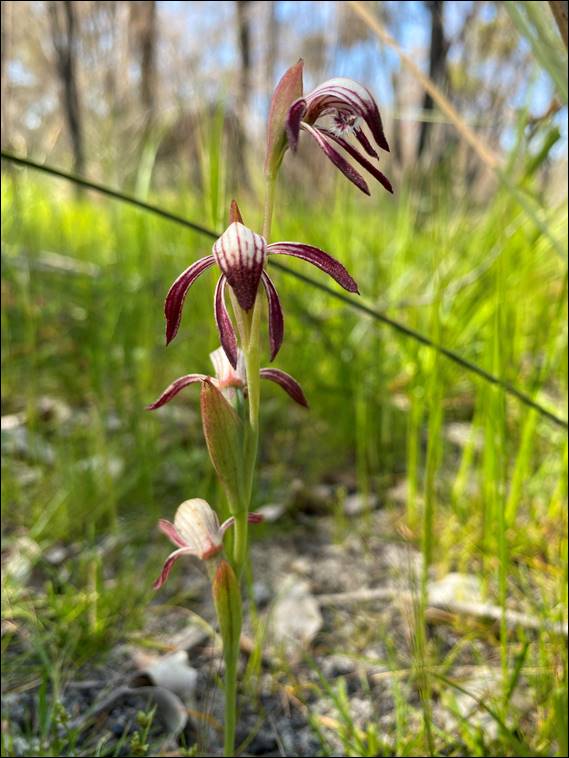
The large fleshy leaves of Fire Orchids can be found in many areas forming large colonies, but most populations will only flower after a hot summer fire. I have seen just a few plants flower, in the Stirling Ranges. These have been in poor condition, whereas the above specimen is in great condition. While the area really wasn’t all that good I was happy with this one find. There was evidence of lots of four wheel driving and fly tipping, and I doubt I’ll go back in a hurry. Having time up my sleeve I did however pop into Manea Park on the way home:
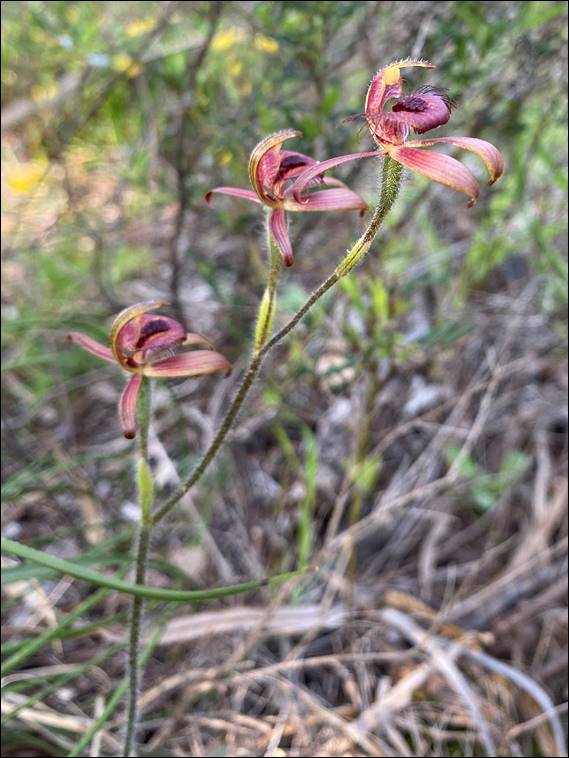
This was another place that for me seemed a little lean, it is of course possible that I just get to see too much so am a little spoilt. There was indeed a great variety just not in big numbers, and with quite a few repeat finds including the above Dancing Spider Orchid (Caladenia discoidea). It is one of the longer flowering species, and the colours have changed since I first saw it a month back, from mostly green to mostly a deep red. If you are keen to see what I mean check the previous post https://sandbagged.blog/2024/08/29/the-blue-armada/:

While the Red Beak Orchid has had its name changed and is no longer considered a beak orchid, the above is definitely a beak orchid. The Rattle Beak Orchid (Lyperanthus serratus) is endemic to the south-west of Western Australia, and there is only one other species in the genus. Being the Brown Beak Orchid (Lyperanthus suaveolens), which is not found here being endemic to the eastern states of Australia. If you look at the flower shape and configuration, it is easy to see why the Fire Orchid was originally classified as a beak orchid:
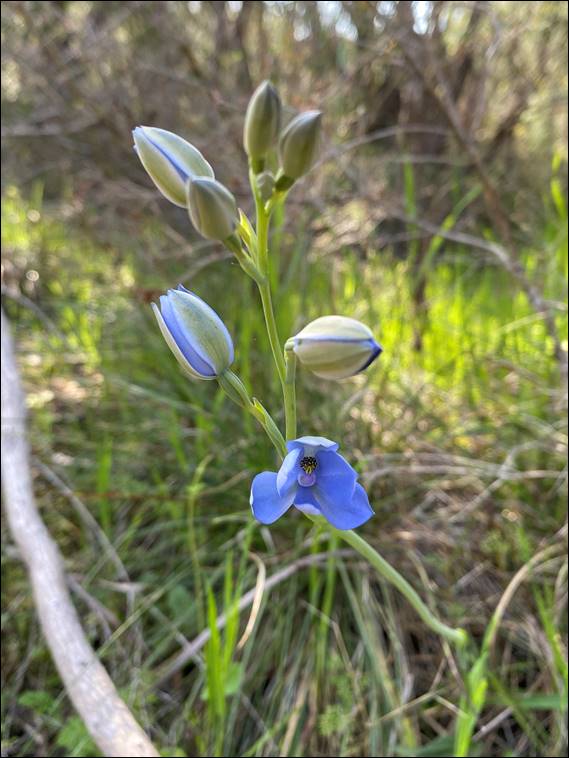
There are certainly plenty of similarities. The genus name for beak orchids means poor or wretched flower, being derived from the Greek words of lypros and Anthos. I feel this is rather unfair even though the rationale is due to the dull-colours, which the Fire Orchid definitely does not have. The above orchid is far from dull. It is one of the thirty eight species of sun orchids found in Western Australia, of which I have seen very few. The Blue Lady Orchid (Thelymitra crinita) is a seasonal regular and comes out in large numbers:
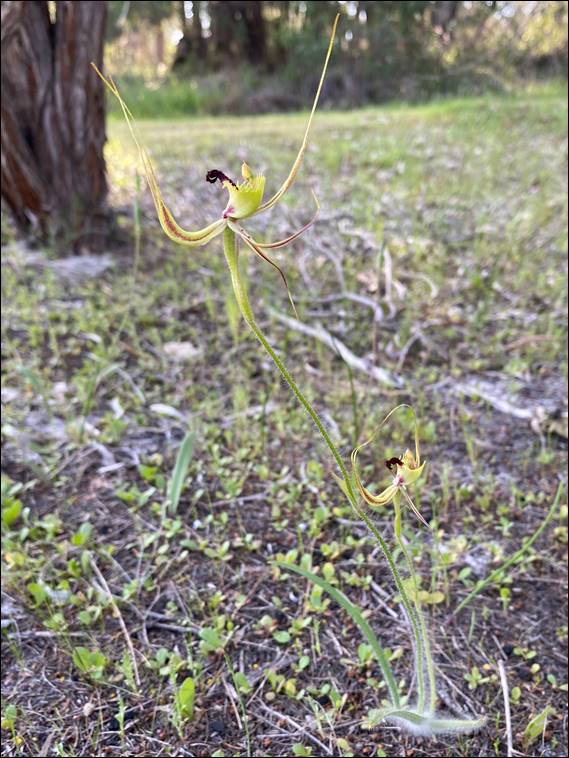
While I’m delving into ancient Greek, the genus name of Thelymitra is derived from thelys and mitra meaning bishop and headwear or hat respectively. Hence the name means a bishop’s mitre, referring to the plumed or decorated wings of the columns of many sun orchids. This species having yellow bristles on the top of the column, and a light purple tuff of filaments on top of the anther. There were also a few of the above Forest Mantis Orchids (Caladenia attingens subsp. attingens) starting to appear, the only subspecies of three found in this area:
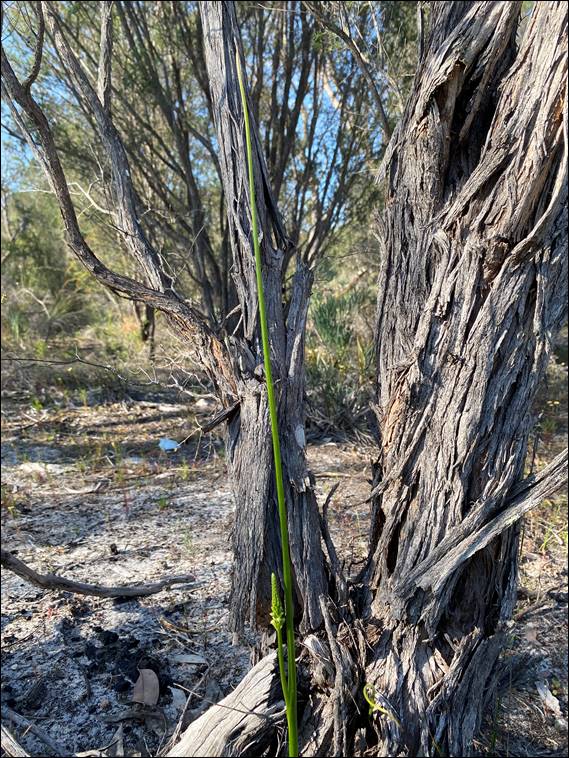
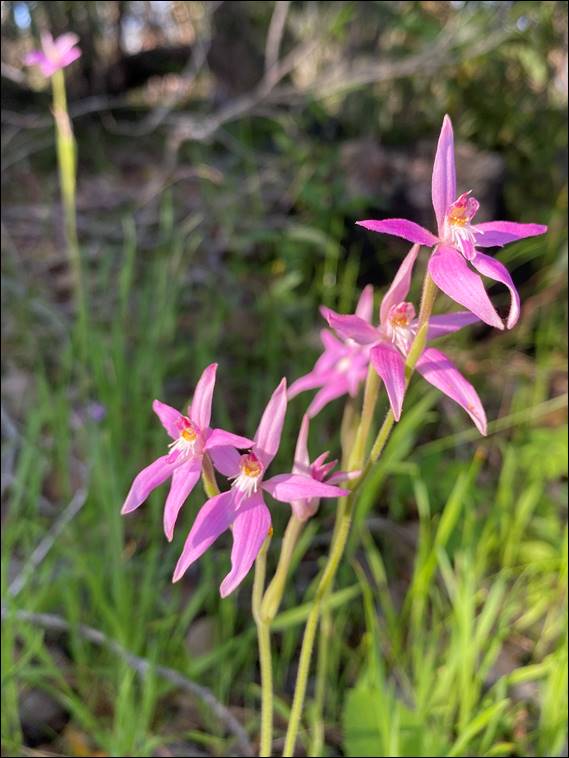
To wrap up this rather long post are the above Common Mignonette Orchid (Microtis media subsp. media) and below Pink Fairies (Caladenia latifolia). Both starting to make an appearance. Neither are particularly astonishing discoveries, being regular finds in abundant numbers. I however wanted to finish the write up, as I had started, with a splash of colour. I lost count of how many species I found during this week’s wanders, but it was well in excess of twenty. The Capel Nature Reserve providing the widest diversity, so there could be something in the old shopping adage that local is best:
 Sandbagged