Orchid season is great for encouraging me to get out for a few more walks than I would normally. I let that slip last week, so made a conscious effort to refocus my life to work balance, managing to get out for a wander three times. This was made in part easier by having slightly improved weather. Like the rest of the world things are all a bit topsy-turvy. The southern parts of Australia, which includes where we live, are being battered by strong winds, dropping the temperatures, and lashings of rain:
To date it has certainly been a year of contrasts. Starting with the longest and hottest summer on record. Then over the last week or so we have recorded the highest river flows on record in quite a few systems. While other systems have had very rare events, which have only been witnesses a couple of time over the last thirty plus years. It all sounds very dramatic, but most of the river catchments in the South West of Western Australia are relatively small, so we are not at risk of being flooded out:
Meanwhile the northern parts of Australia are being subject to a very hot August. The record for the hottest day in August, at many weather stations, are tumbling. In some cases the record has been exceeded on successive days, as the temperatures creep up. Many places up north are baking with forty degrees or more, and I know which part of Australia I would rather be. While it is windy, and at times cold and wet, I can more easily cope with that than shearing heat. The conditions might also just might help with the orchid season:
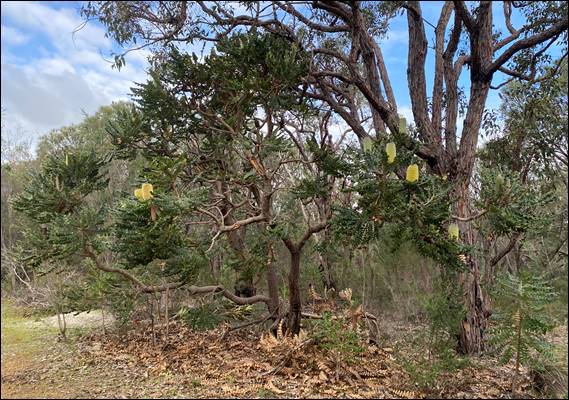
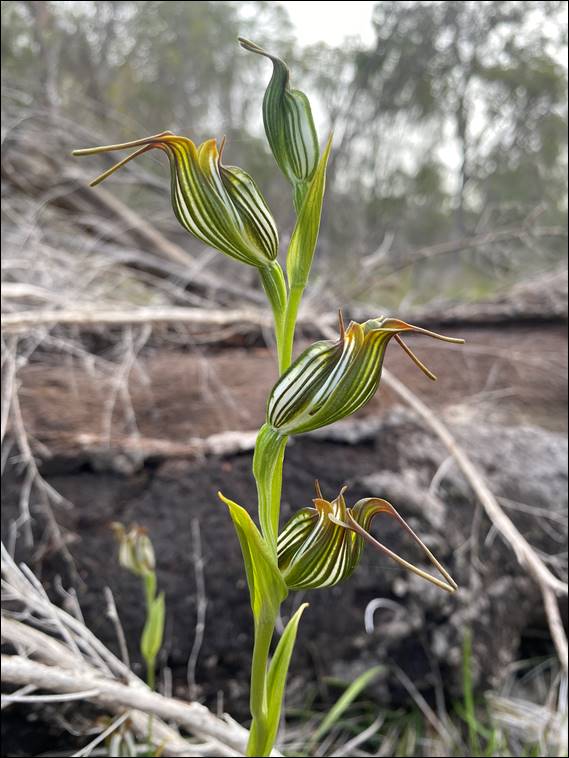
My species count at Manea Park crept close to double digits. But I’ve started with an image of a beautiful old Bull or Giant Banksia (Banksia grandis) in flower. Many of the Banksia woodlands are suffering badly, with trees being knocked off by a plant disease called Phytophthora Dieback caused by a microscopic organisms present in the soil. So it was great to see this tree going so well. Many of the orchids I saw are repeat finds for the season, such as the second image of a rather specky looking Jug Orchid (Pterostylis recurve):
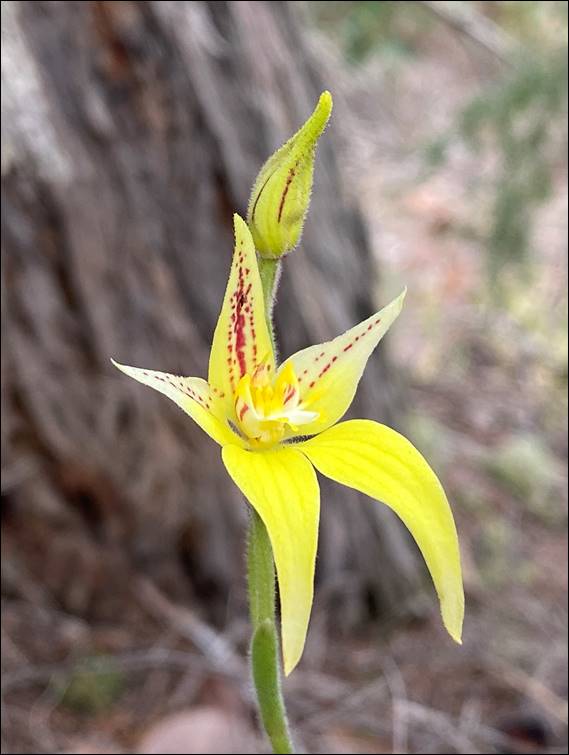
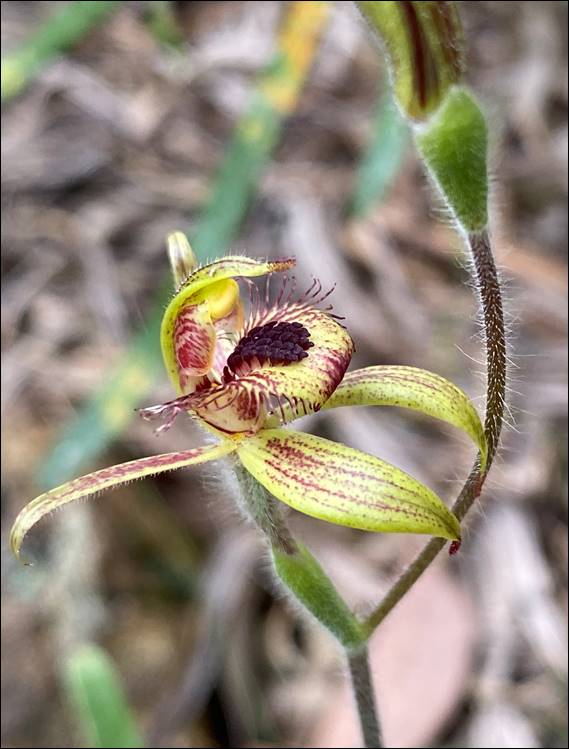
The third images, as I start to catch up with myself, being a Dancing Spider Orchid (Caladenia discoidea). I spotted these last year but only in one location. After unsuccessfully trying to find them anywhere else I went back to where I knew, or hoped, they would be once more. It took me a little off the loop I had chosen, but that worked in my favour a second time when I spotted my first Cowslip Orchid (Caladenia flava) of the season, above. No doubt in a few weeks many of the places I visit will be absolutely rife with these:
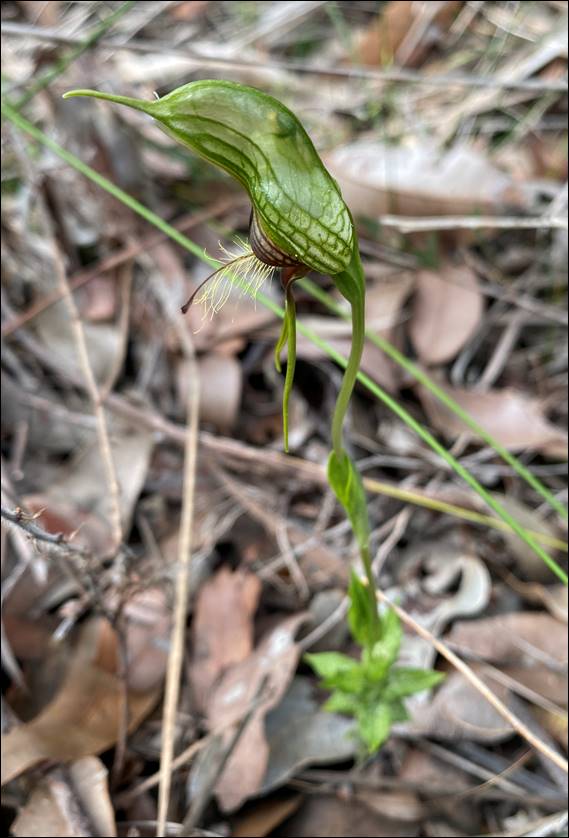
It was a bit that way with the Dwarf Pink Fairies at Crooked Brook, during my second wander on Wednesday. Everywhere I looked they were popping up, along with the blues, purples, and yellows of quite a few other shrubs and plants starting to bloom. Hidden amongst them I spotted three Bird Orchids (Pterostylis barbata). An orchid that I feel I will never tire from seeing time and time again. I still recall the first time I found one, a walk that is sadly also when I lost my Buffalo (https://wordpress.com/post/sandbagged.blog/6738):
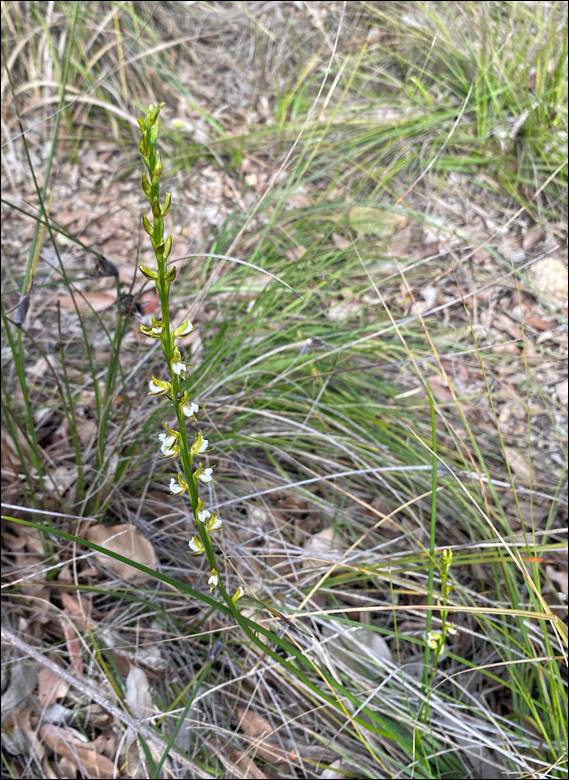
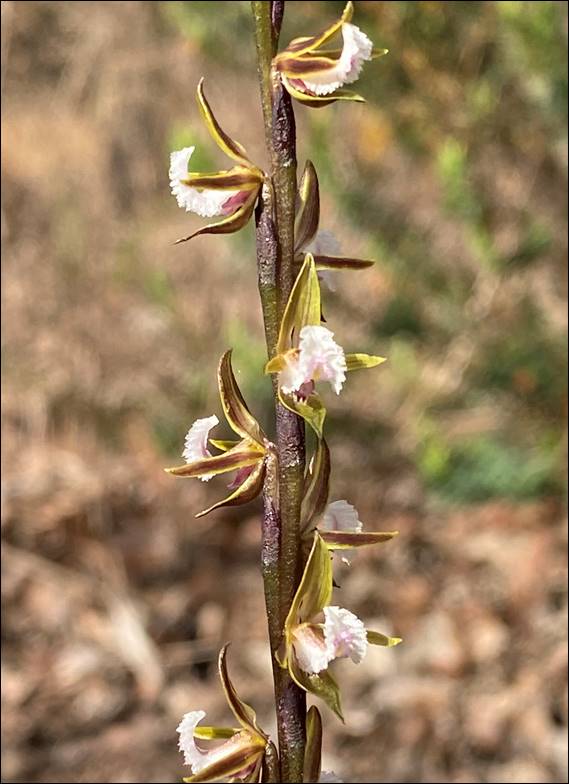
Crooked Brook also had a few Frilled Leek Orchids (Prasophyllum sargentii) out on display. Looking quite stunning on their near one meter tall stems. I’ve not seen these before so spent a fair bit of time looking at the intricate detail. Staring more intently as I thought I had found two species because of the different coloured stems. The petals and sepals were also differently colours, but the shape and colours of the frilled labellum was the same. Despite them being the same species it was certainly a worthwhile trip:
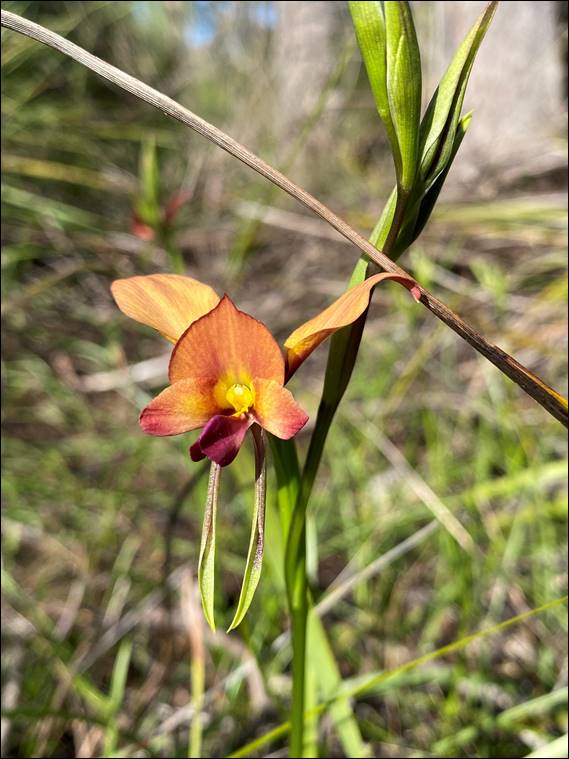
This afternoon I wandered out to Ambergate, hoping something might be coming out. My last visit here over threes back with Lisa yielded Buckley’s. This trip wasn’t much better with a couple of small clumps of Kemerton Donkey Orchids (Diuris cruenta), below, and not much else. On the plus side this image made me revisit the species I found at the Capel Nature Reserve, realising for that trip I incorrectly identified some Sandplain Donkey Orchids (Diuris tinctoria) as Kemerton Donkey Orchids. This has now been corrected in that previous post:
Going back in time, I went down the beach with Lisa and the poodles this morning. It’s rare to spot a crab on our beach in the daytime, but she had done just that a few days back. The chances of a second sighting was slim, but we did see a bunch of By-the-wind Sailors (Velella velella) and Blue Bottles (Physalia physalis), which had been left high and dry. These get washed up during winter on our beaches, and in summer over on the east coast of Australia. And like our Western Stingers that arrive in our summer, they can deliver an unpleasant sting:
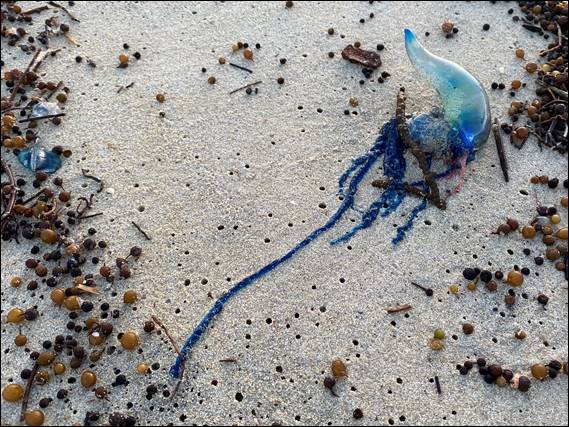
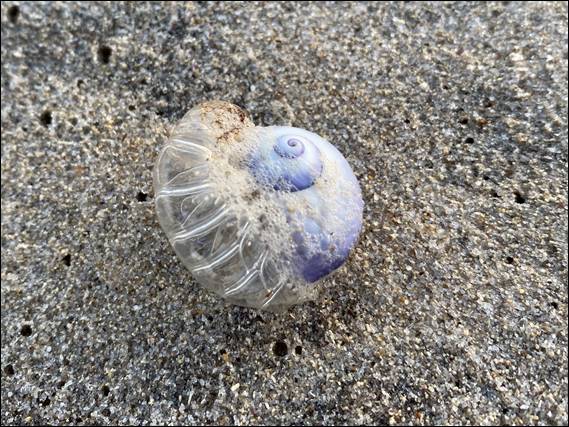
When this happens over east they are joined by another blue floating colonial cnidarian, being the Blue Button Jellyfish (Porpita porpita). This blue armada is also joined by Violet Snails (Janthina janthina), shown below, and a very alien looking creature called a Blue Sea Slug (Glaucus atlanticus). These two float on the surface with, and feed on, the cnidarians. Even ingesting their stinging cells, resulting in becoming toxic themselves. All five of the full fleet can be found where we live, but the Blue Button Jellyfish and Blue Sea Slug are a rare find:
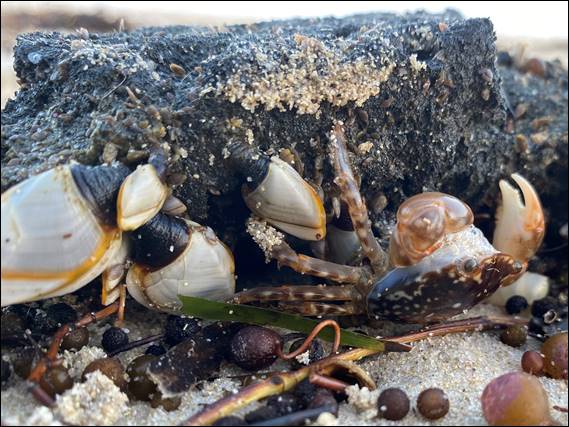
As lucky would have it I also found a crab, the same species as the one Lisa had spotted. A Smooth-Handed Ghost Crab (Ocypode cordimanus). During the day they normally live in burrows deep in the sand, reaching all the way down to the water table. They usually forage on the beach at night or early and late in the day, which is why it is such a treat to see one. Maybe one day I’ll have to head down just after dark with a torch, to see who else might be out and about:
 Sandbagged