Things are heating up, and the number of images popping up on the orchid Teams chat group at work are increasing. Josh and Elspeth managed another lunchtime wander late last week and found a few more in flower. But it was an image taken by Josh’s young son, it seems that his whole family enjoy hunting these little flower, that really caught my eye. During a trip to Crook Brook they stumbled across an absolute beauty. So good that I headed there on Tuesday after work, despite a storm front approaching:
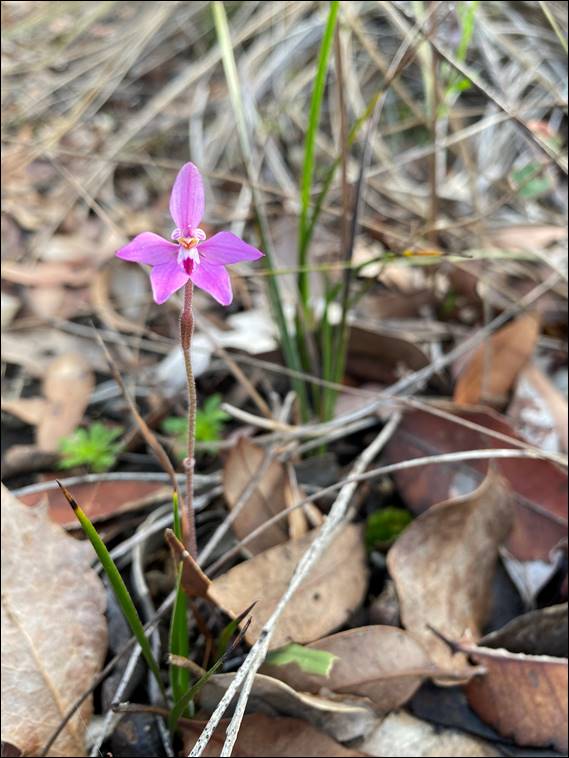
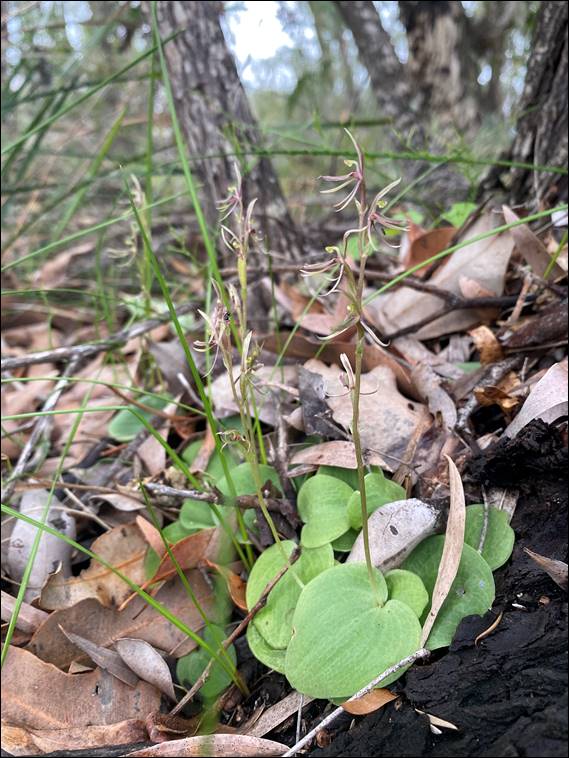
This was my second visit to this delightful place this year, and the first visit in June didn’t yield too much at all. So little that I haven’t made a mention of it in any of my posts. Having been in the dry period between the early orchids that come out around Easter and those that winter starts to draw out. On the drive out I stopped at Lisa’s school, which is conveniently on the way, to pick her up. Walking slowly and looking all round, it looked fairly quiet. There were the usual winter flowering greenhoods, and quite a few Pink Fairies out but which ones:
As can be seen in the first image the petals, which are the two that sit to the side of the flower, are slight downward pointing. This flower had a total height of approx. four inches and looked relatively dark in colour. These characteristics indicated to me it may have been the Little, or also known as Dwarf, Pink Fairy (Caladenia reptans). I’ll have to pay a little more attention next time, as another and more distinguishing feature that will assist in a true identification, is the smaller basal leaf usually has a purple hue on its underside:
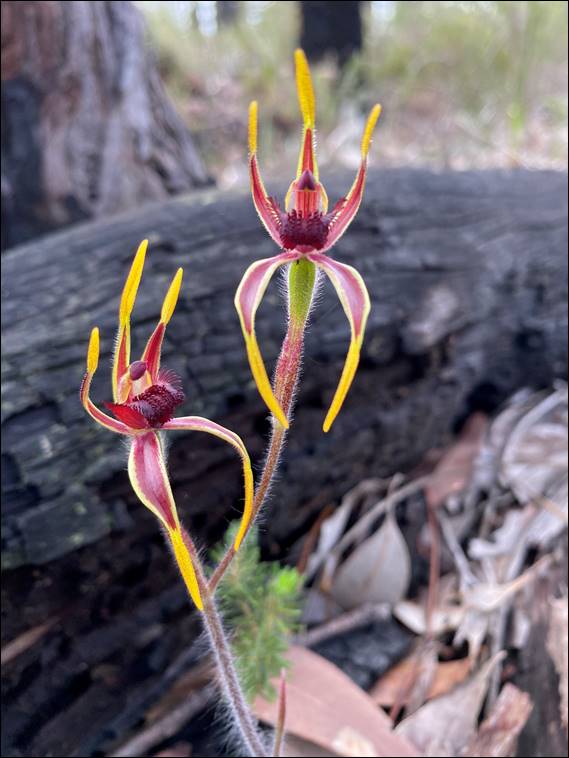
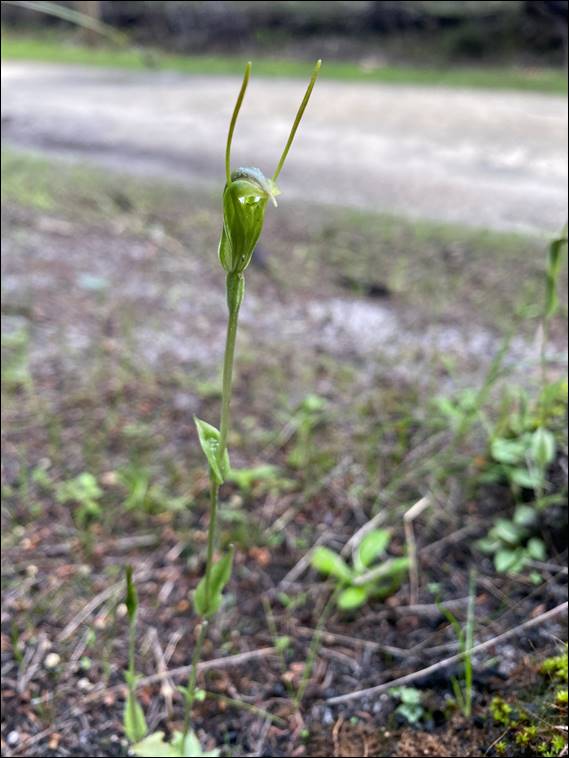
The real gem that I was hunting was the second image, and I was lucky Lisa joined me as she spotted the only one we saw on the short three kilometre wildflower loop. It is my first ever sighting of a Reaching Spider Orchid (Caladenia arrecta), one of the earliest flowering spider orchids with amazing eye popping colours. Made more striking by the heavily clubbed bright yellow sepals and petals. And unlike the petals on the Little Pink Fairy Orchid, the petals on this flower reach up towards the sky, further adding to the visual impact:
We sat and admired it for a while before carrying on. There may well have been more out, but halfway round the sky darkened, the temperature lower, and as expected rain started to fall. Our pace quickened and we didn’t look round anywhere near as much. No matter I was very chuffed and grateful to Josh for sharing, who I mentioned had got out for a lunchtime walk with Elspeth. Because it is right on our workplace doorstep, they had wandered round Manea Park, which is where I went on Wednesday on my way home from work:
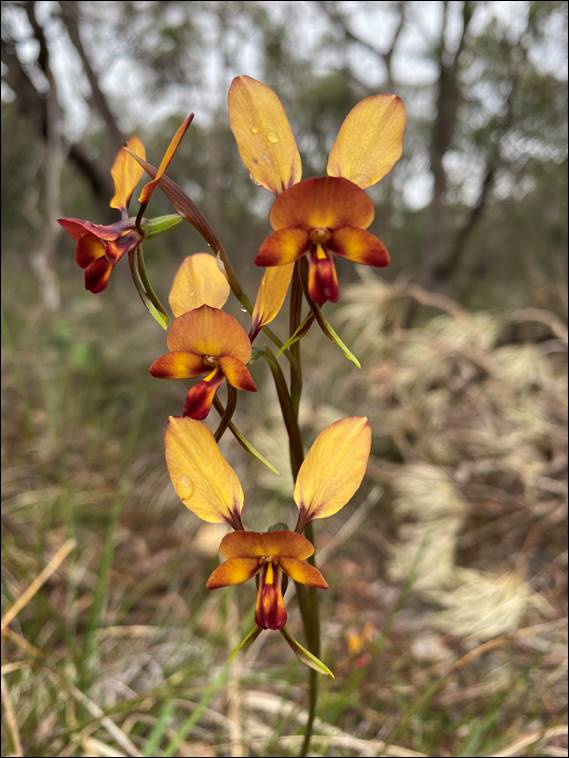
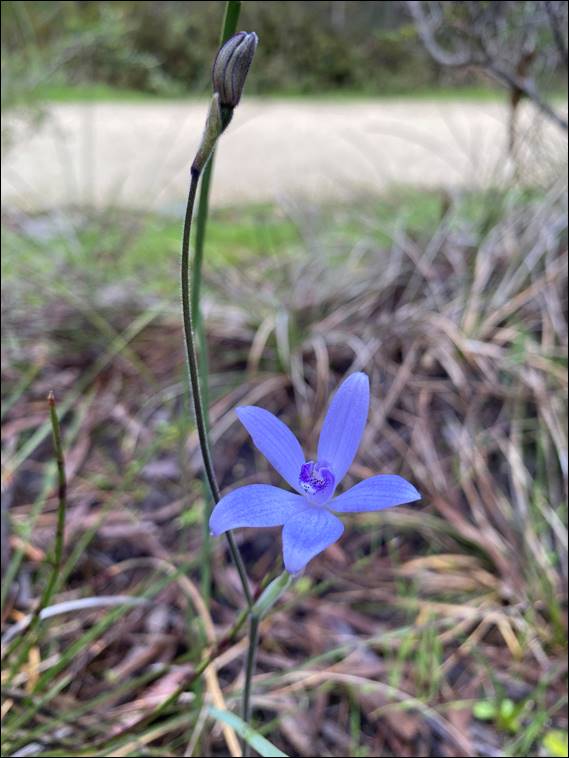
They had spotted a single Yalgorup Donkey Orchid (Diuris porphyrochila) in flower, but plenty more spikes looking to be on the verge of flowering. And in the short five days since they had gone out, I did find heaps more in flower. It is a common and plentiful orchid that comes out almost every year, distinguished by having more colour variation to contrast against its orange base colour. I also spied a single flowering Silky Blue Orchid (Caladenia sericea). An orchid that I have never seen in great numbers, so it is always lovely to see it again:
I advised the orchid crew at work of my find, and Josh went out there a few days later finding three flowering plants. He said our recent knowledge sharing, between the Reaching Spider and Blue Silky Orchid, was a fair trade. Mind you I somehow feel like I got the better deal, this time. Continuing on my wander round the two and a half kilometre circuit, I found a small patch of Midge Orchids (Cyrtostylis huegelii) and the Slender Snail Orchid (Pterostylis crispula), with its long sepals and small basal rosette of leaves. Shown in the two above images:
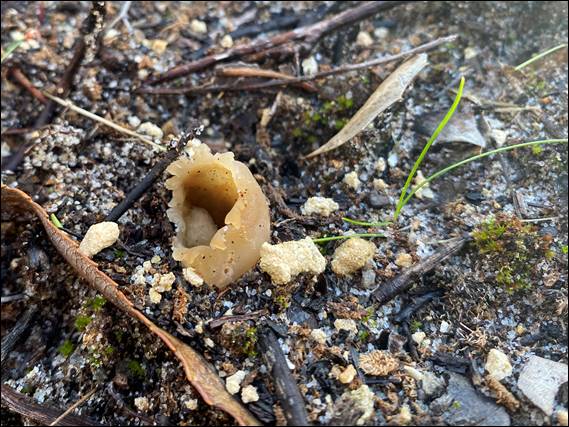
My last find was the above fungi, breaking through the soil with an opening that look like it had been torn open with ragged edges. My first thought, which Howsie agreed with, was a cup fungus. Many of them are above ground. But this one looked to be more of a geophyte, which is a posh word for plants that have growing parts below ground. Remembering of course that fungi are not classified as plants or animals. It took a while and I think it may be Peziza austrogeaster, with a bit of luck Verity will use her networks to confirm if I am right:
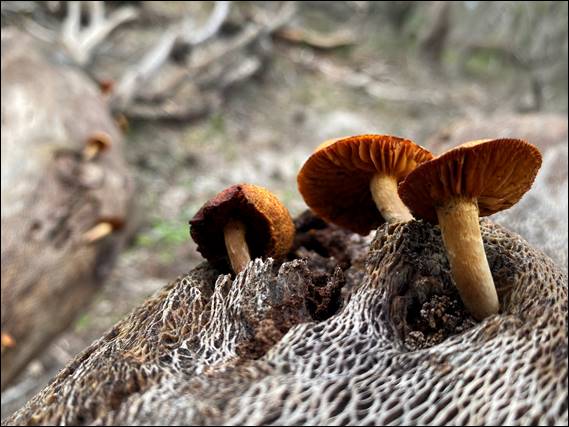
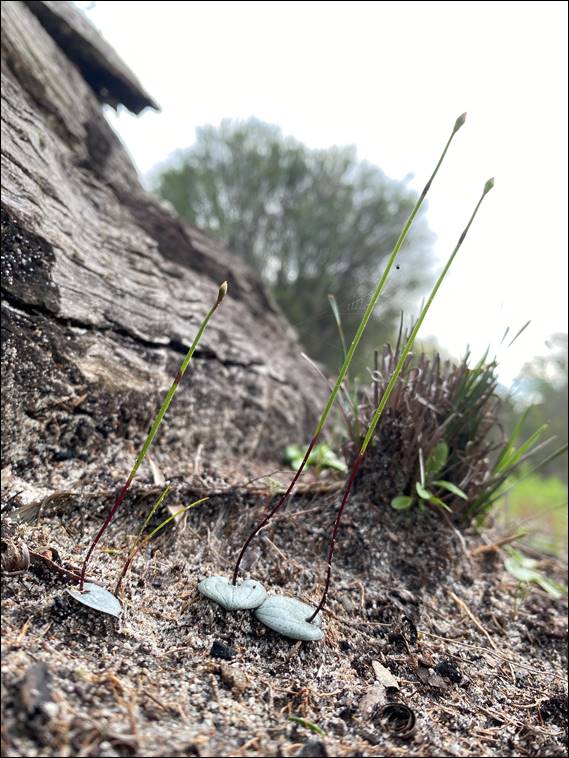
To wrap up the weekday wanders I popped out to the Ruabon Nature Reserve on Thursday, where things were still pretty well under wraps. Having exhausted my research stamina I’ll let the above fungi slip, but liked the image enough to include it. There were of course positive signs about, including these three orchids. My guess is that they are likely to be the King-in-his-Carriage Orchid. However, the basal leaves looked different so it could be one of the lesser found hammer orchids. I’m not willing to place my bets just yet, and will wait till they flower:
 Sandbagged