It has been an unusually long spell since I’ve been on the sharp end of a rope. Being just shy of a month. While winter took a while to getting going, it is fully here and feeling like a winter of the old days. That is no bad thing for the environment. It does however put paid to the ability to find someone willing to get out each week, come rain or shine. Truth be told today’s forecast was also looking a bit iffy. Maybe through oversight or intent, I omitted to mention this to Howsie and David when we organised a Friday trip out:
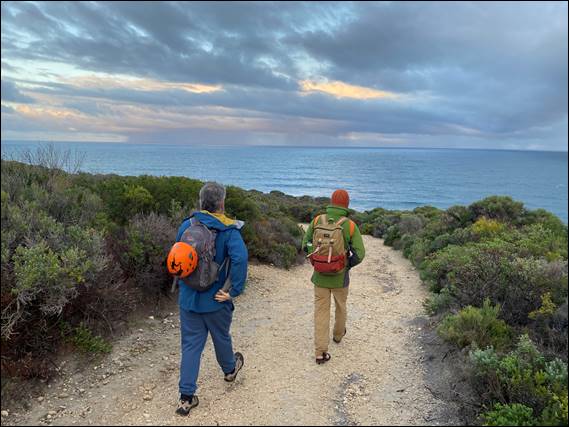
I did mention it would be worth rugging up, with fresh onshore winds forecast the whole day. Driving out rain hit the windshield, neither of them seemed phased. The draw of touching rock seemingly taking precedence, over worrying whether it may be a little damp out not. Things cleared up as we got to the carpark, the roads were however soaked and big puddles were everywhere. As I mentioned last week, I knew where I would climb this week, and there was no objection to Wilyabrup. It was David’s introduction to my passion for orchids:
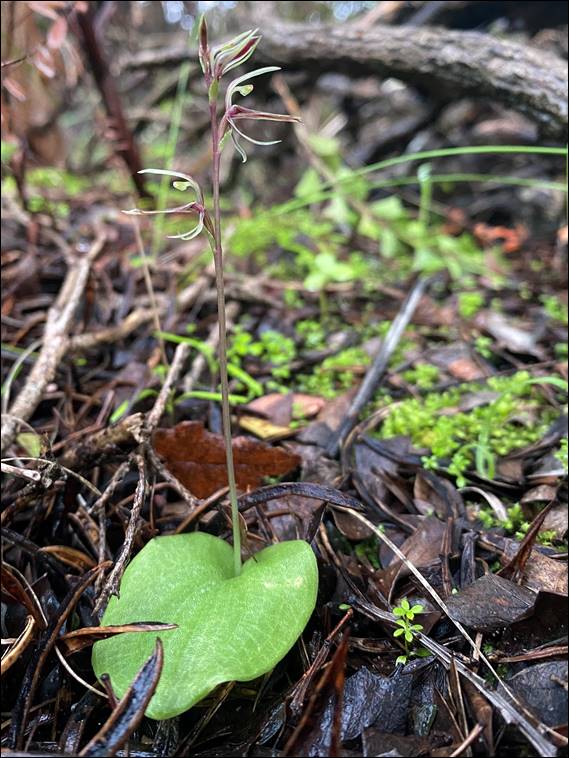
This meant the walk in was a little bit slower. Sadly the Sandhill Helmet Orchids flowers still hadn’t blossomed. Although we did spot what I stated was ‘just another’ Mosquito Orchid. However, it is a Cape Mosquito Orchid (Cyrtostylis sp. ‘Cape Naturaliste’). My orchid book indicting it was recently identified as a species, but I cannot find out when this occurred. Differing from Mosquito Orchids, by being a third of the height, having a slightly narrower labellum, and having the lateral sepals that are held slightly differently:
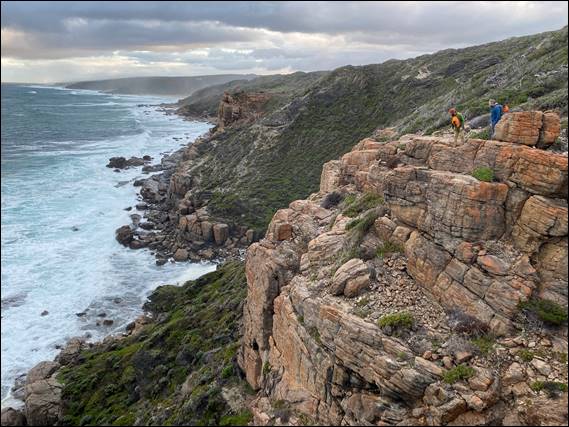
The fact that is was damp was not lost on us. And during on our journey in we discussed where would be best to head. Our choices including thinking about finding some good lower grade lines, to continue to build David’s leading confidence. While the ground was wet, the fresh onshore winds had, as expected, dried the rock faces. We had pondered on Driftwood Bay or the Organ Pipes. I was keen on the latter to enable us to also test Howsie’s metal on a few of the spicier lines, but let them walk ahead and choose for themselves:

The Organ Pipes won out, and despite having been here last week by myself I had no objection to this. On arrival the day was relatively clear, with the dark clouds out to sea looking to bypassing us. Howsie kicked off proceeding with a gentle warm up climb. David liked the route and rock and hinted he was keen to lead, just not yet. With the three of us, I could focus a bit more on taking images. As such Howsie jumped on lead again, hitting the crag classic and bumping the grade up a bit. We all topped out in time to see the above sight:
It was an incredibly vivid rainbow, and moving towards us fast. While it was wonderful to observe, as David said it was a harbinger of what was to come. And come it did. The video above shows that the rain didn’t just fall, but was driven horizontally at us by those fresh onshore winds. This continued for some time and when it eventually subsided, everything was completely drenched. Little waterfalls ran over the edge of all the rock faces, and yet no one even hinted that we should pack up and go:
On such a day the last thing I would have expected to see was any reptiles, but we stumbled across two Marbled Gecko (Christinus marmoratus). On the first route David managed to dislodge a rock and exposed one, which after the shock of being exposed so suddenly slowly slunk away into a crevice. Having missed out on seeing it I hunted all over and spotted one buried deep in a crack, too deep to get an image. The two we saw were both dark, dulling the effects of their marbled patterning, and Howsie hinted this was due to the temperature:
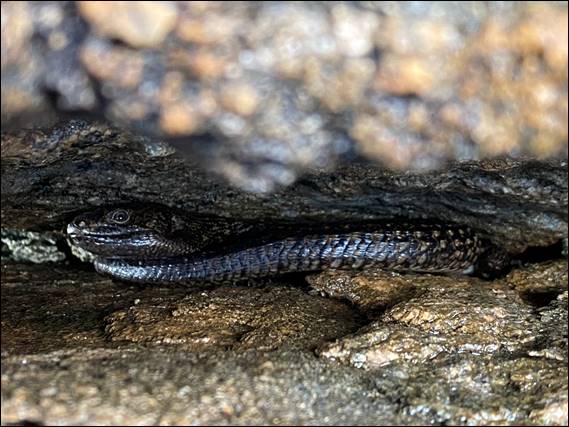
As Howsie continued to climb I ran round snapping images, and also looking for more creatures. Being rewarded by a second surprising find of two King’s Skink (Egernia kingii), which were more accessible for my camera as shown above. You may have guessed that David’s desire to lead had been washed away by the rain. I too was quite happy running round with the camera. At times I feel David was torn between keeping an eye on Howsie leading, and me scrambling round like a mountain goat in at times precarious positions:
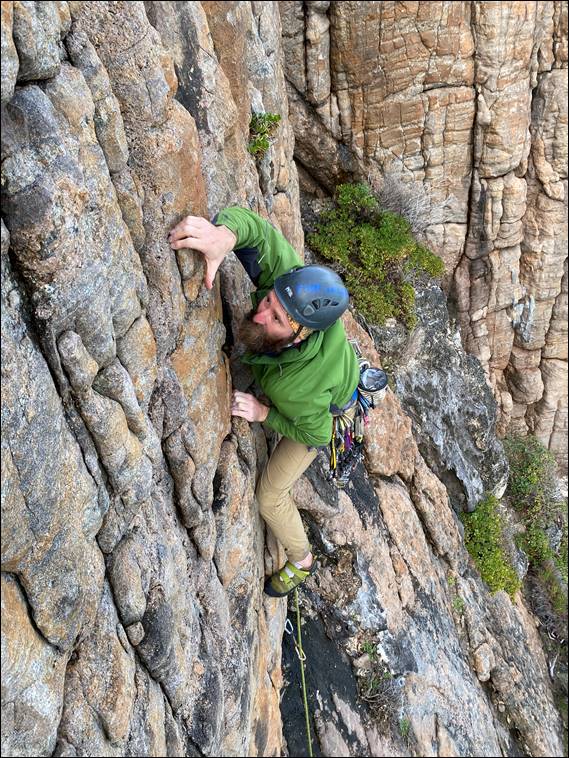
Not surprisingly Howsie didn’t mind taking the lead one bit. The next two he bagged were on a short wall. Despite the lack of height it offered slightly more heady routes. The intense feeling was due to the gear and dubious looking stability of the rock. The dodgy looking rock is enhanced by the natural flaky features on the wall. We found no loose rock, but it doesn’t change how the head plays games when you are on lead, needing to put full faith in the holds. The wet rock added to this nervousness, but it was dry by the time we hit the second line:
We then moved to a route I was super keen to see Howsie attempt. David reinforced he had no desire to lead, and was thoroughly enjoying following up. This climb was one I really wanted Howsie to try to on-sight. I recounted my fall the last time I climbed it with Craig (https://sandbagged.blog/2024/01/28/driving-with-confidence/). While I received no strains, sprains, or break from that fall, I got the biggest bruise I have ever had and it lasted for weeks. It is possible this story messed with his head, and he falter on the runout headwall:
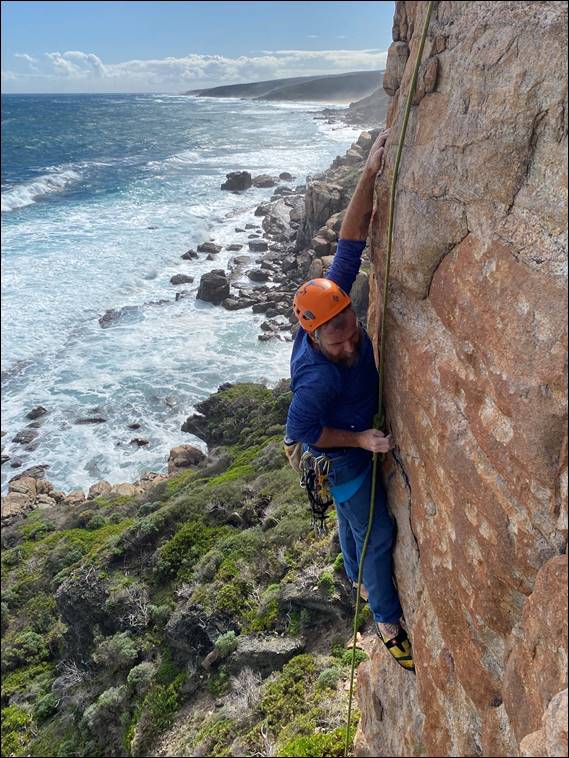
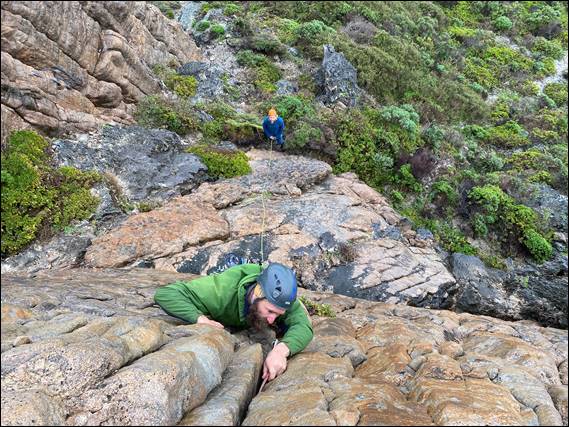
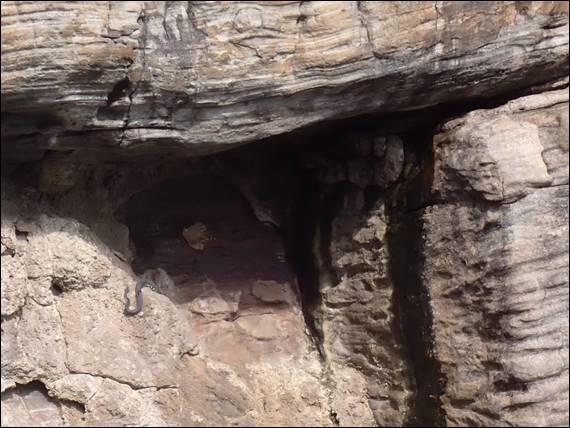
After a couple of failed attempts he admitted he wasn’t up to it today. Whether I had affected him, he was simply tiring from lead after lead, or that the route is harder than I had graded it didn’t matter and he was happy with how he went on it. As he sat atop belaying David who stretched to full capacity to make the above move that Howsie just couldn’t commit too, he somehow spotted one of the biggest South-western Carpet Python (Morelia imbricate) we have seen here. Shown two images up:
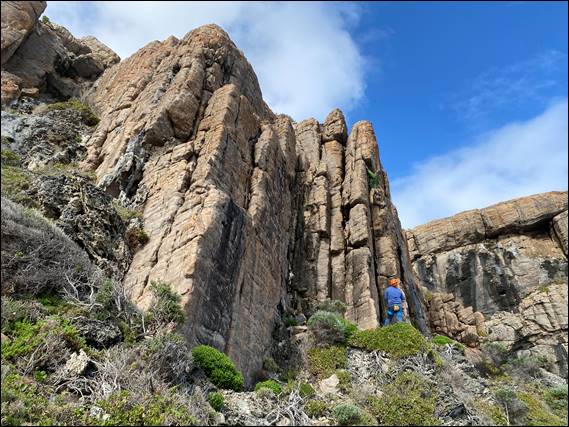
The python, similar to the geckos was dark resulting in its full glory being masked. I’ve read that geckos can change their colours depending on their mood and also the temperature, humidity, and surroundings. Some snakes also change their colour to aid heat absorption but I could not find any reference to indicate Carpet Pythons exhibit this trait. Howsie wrapped up our session with a more sedate route. In the background you can see the roof under which Howsie had spied the Carpet Python. I’m still impressed he spotted it:
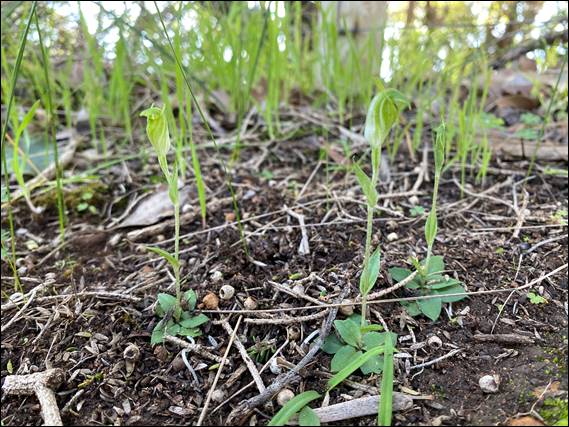
He was climbing in sun, as it started to hit the front of the crag, but we were still wrapped up to fence of the wind. The wind that had also managed to dry nearly everything, from the early morning drenching. Only the ropes had a slight dampness to them, as we packed up. I fell behind walking out, looking for orchids. Only finding a few more Murdoch Snail Orchids (Pterostylis ectypha), which we had already seen on the way in. While we had been lucky with what we had seen today, winter still had one more surprise for me:
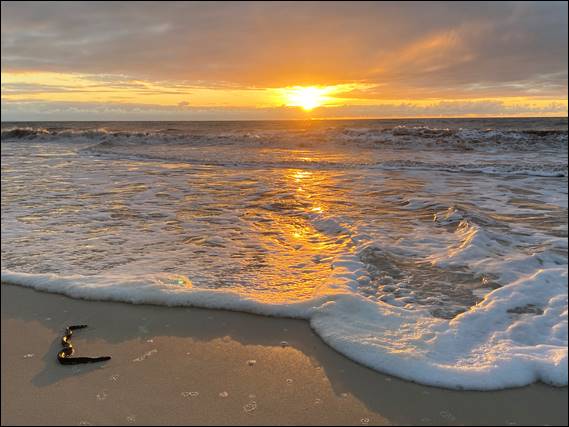
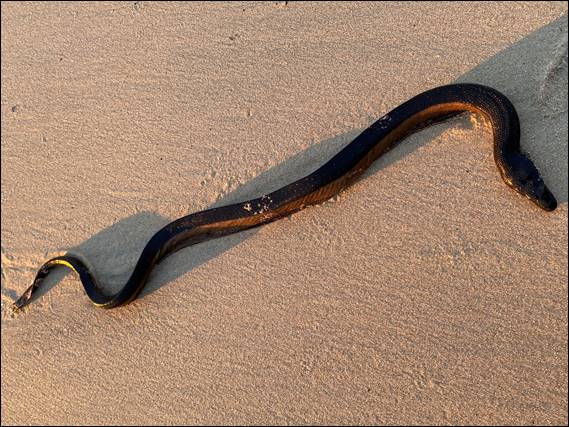
As the day was coming to a close, someone on Lisa’s Peppy Plungers Group posted about a snake on the beach, so I went to investigate. Finding a Yellow-bellied Sea Snake (Hydrophis platurus). The most abundant and wide spread of sea snakes, but I have yet to see one when snorkelling. They live their entire life in the water, but sometimes get beached like this one. As the rely on the support of the water to maintain an even blood pressure, when they are beached they are unlikely to survive. Being highly venomous it is dangerous to handle them, plus with only the slightest bit of life left it was too far gone. So I let nature take its course:
 Sandbagged