You may be wondering why I may be writing about a climbing trip, in view that the last time I went climbing I took a fall, injuring myself. I’ll start by saying we have not climbed with Pontus for some time, due to him being stuck in Perth for work. Some weeks back he mentioned his time in Western Australia was coming to an end. He was moving over east for another job, after which his travels would take him to other continents. Several weeks, or more, prior to that I had briefly been in touch when he hinted he wouldn’t mind a trip to Kalbarri:
A place I have only climbed once, but knew enough about to be able to advise the grades of the better climbs there were probably not for him. I should preface that by saying the grades of the climbs for which information has been made publicly available. There are other climbs but that information has been withheld by those in the know. Instead I suggested a place I have been to five times before. While I have climbed nearly everything here that I am likely to multiple times, it is a beautiful place to experience and so I really didn’t mind coming back:
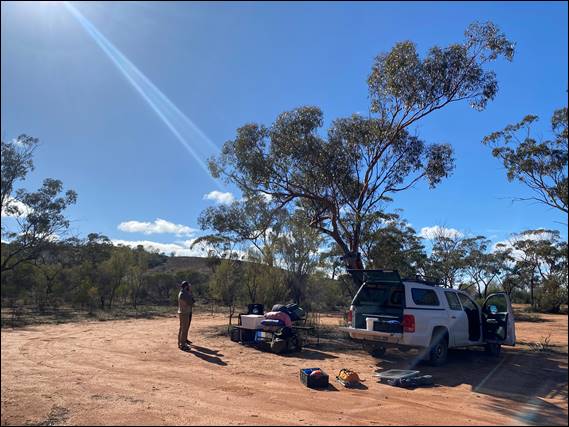
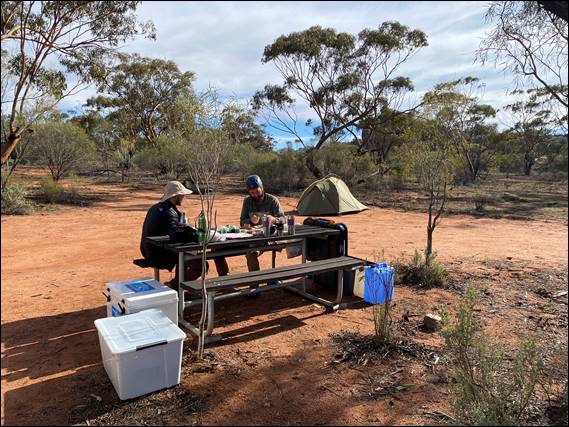
As such the trip dates had been set for some time now, and it was the last opportunity to catch up with Pontus before he left Western Australia. Therefore, regardless of my ability to climb, I felt compelled to stick to the plan. Plus Howsie was joining us, so even if I was unable to climb the two of them could. I was trying to convince myself that I would be equally content to just be there. It is a reasonable drive, which started at 5am and ended some six and half hours later, due to going via Perth, when we arrived at Eaglestone Rock:
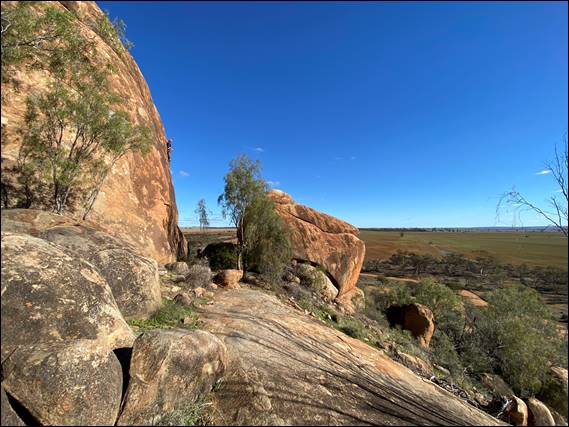
While it is locally known as Eaglestone Rock, presumably because the information online promoting the place says if you are lucky you will see a Wedge-tailed Eagle (Aquila audax) perched on top of it. It certainly seem plausible, as it provides the best perch to get a 360 degree vista of the surrounding landscape. And indeed, after setting up camp and having lunch, while we walked to the rock, Howsie spied a Wedge-tailed Eagle fly off. However, I’ve read the first nation people know it by another name being Turtle Rock:
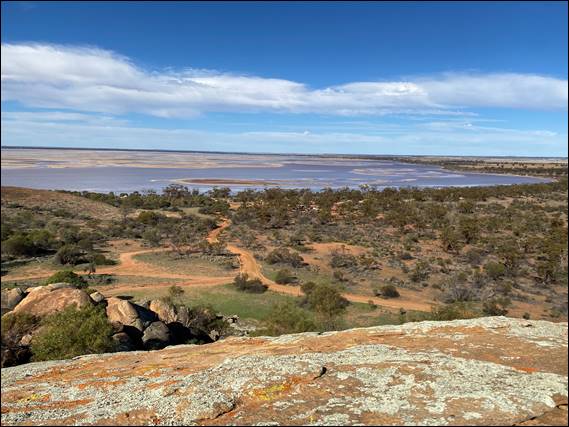
While it has a kind of shell like appearance, turtles tend to have a flatter shell and this rock looked more like a tortoise shell. Pickiness aside, it is located next to Lake Brown justifying the use of the aquatic species. Lake Brown is the biggest collection of intermittent lakes in the area, and just to confuse you even more Lake Brown is located in 610 hectare Lake Campion Nature Reserve. Furthermore, the geographical locality, used to define postcodes, of Lake Brown is north west of this area and doesn’t even touch Lake Campion Nature Reserve:
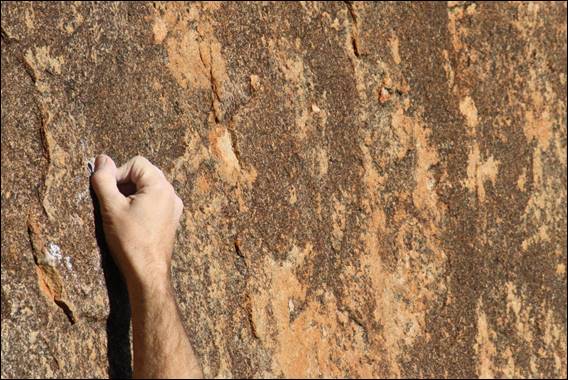
I hope I didn’t confuse you with all of that. In some ways I could suggest over complicating things is a bit of a Western Australian trait. In my line of work I often hear ‘it’s different in Western Australia’. Effectively suggesting approaches used elsewhere, to resolve or manage issues, won’t work here. I accept there are some differences, but have also found this argument is often flawed and used to make things seem more complicated than they need to be. Used in part to either fleece the system or resist changing practises:

Overcomplicating things is something we were not doing on this trip. Sticking to reasonable grades. In part due to wanting to ensure Pontus had a great time and didn’t feel completely beaten, but also because I was keen to have a bash at following. We joked that he would be leading everything, as we had both climbed everything here before. I wasn’t sure if he believed me, but that afternoon he led three routes. Enjoying his first two before Howsie attempted one. Howsie tried, and tried, and tried but never managed to clip the second bolt:
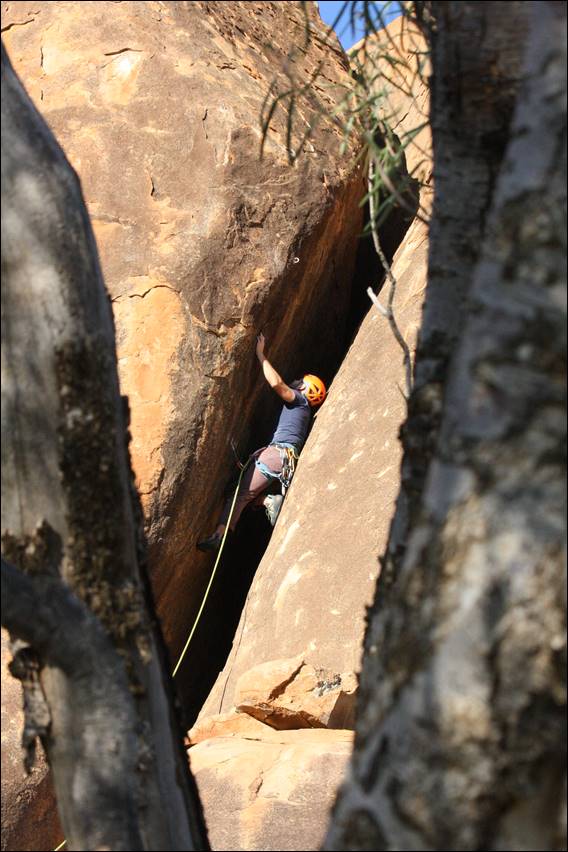
Needless to say, Pontus nor I attempted to beat Howsie’s high point. Instead, feeling rested, Pontus led his third and final route of the day, and as with the other two he thoroughly enjoyed it. As for me, my knee held up surprisingly well. No doubt due to the support brace. I did however squeal on the first climb, when I used my right foot in a way it really didn’t like. Being stubborn, I continued, carefully and gingerly testing each foothold before committing. My approach allowed me to follow all three of the lines Pontus led, with only two squeals:
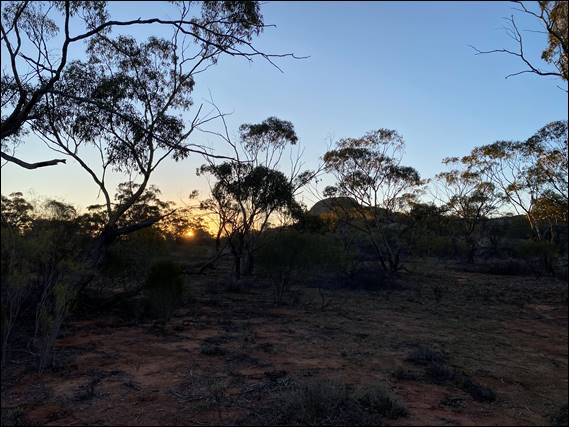
It was probably not the smartest move, and after each climb I had to sit down to take the weight of the foot. Hobbling back to the campsite I felt it was bad enough for me to message Lisa and ask her to book me a physio appointment for Monday. The next important thing was to get a brew on, while Howsie started to prepare dinner. The timing was good and as the light faded we were tucking into a big bowl of yummy pasta. Despite daylight having left us, the moon was incredibly bright. It was also way too early to hit the sack:
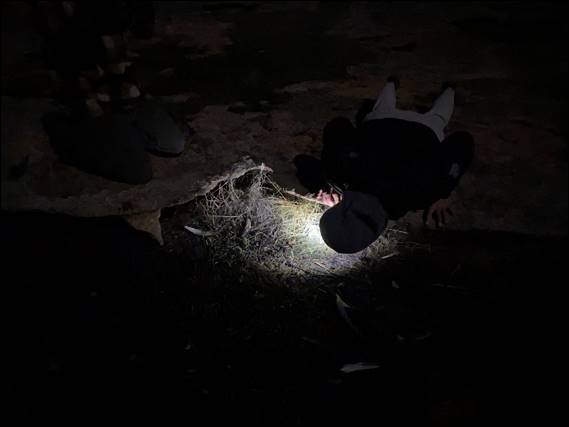
I suggested a wander, which after having rested my foot for an hour or so didn’t feel too bad. We walked to the granite slabs, and immediately started to look for the froglets in the gnamma holes. These are naturally formed holes created by chemical weathering processes. Research has shown these rainwater fed pools, which fully dry out in summer, can provide a habitat for up to 230 aquatic invertebrates of which at least 50 are endemic to these formations. These pools are also a water source to many other inhabitants and visitors:
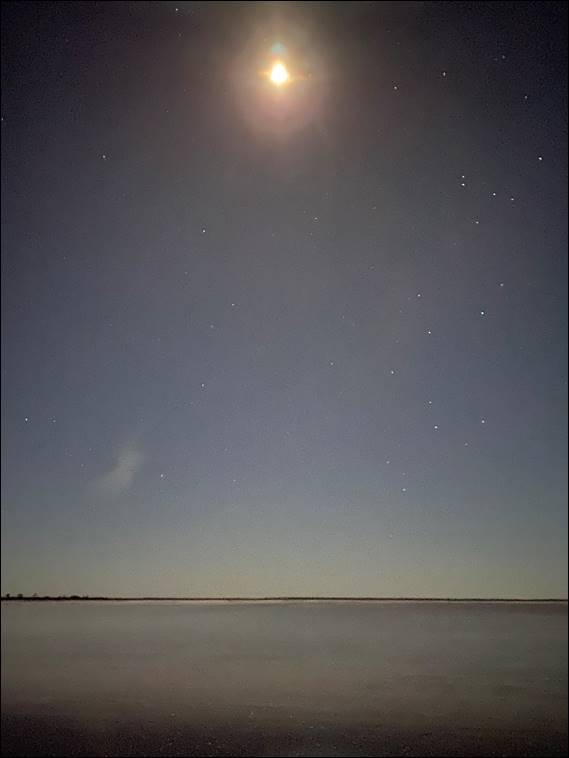
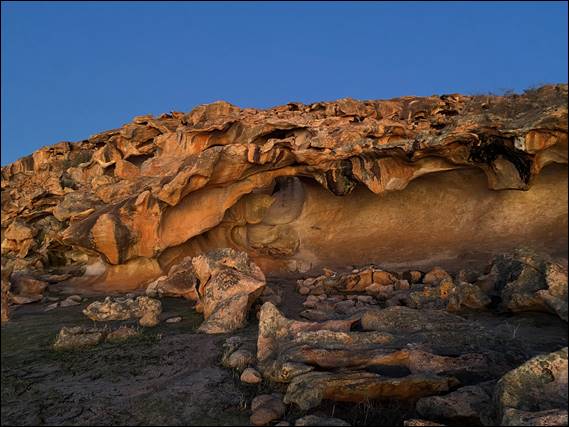
We never managed to see the froglets, despite their sound indicating we were looking right at them. Howsie, described how they often create a dish in the soil to help amplify their call. Resulting in the sound being unnaturally loud for such a small creature, being less than 1cm in length. We didn’t see any other fauna on our walk, but on the way back along the lake edge we found a series of amazing caves carved out of the granite. Back at the camp I was well and truly ready to lay down, and the other two were not far behind me:
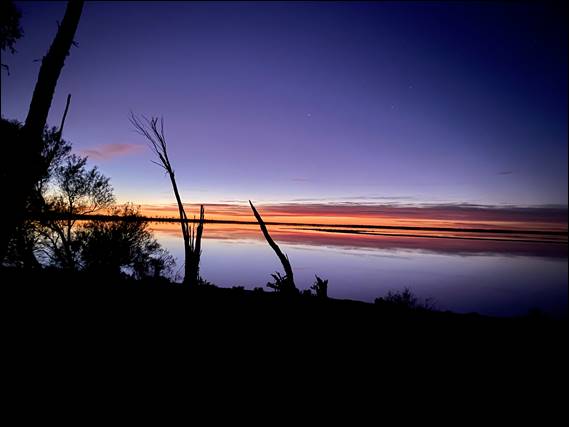
This area has a cold semi-arid climate, and this morning the empathises was on cold. Pontus said it was the coldest he has been since being in Australia. The closest weather station indicates it dropped to three degrees that night, and there was a heavy dew on everything. We woke up to the shortest day of the year, the winter solstice was upon us. When I say we, I should say I. Getting up a full forty five minutes before first light. That said the moon had been like a streetlight all night and even now, as it was hovering on the horizon, it was bright:
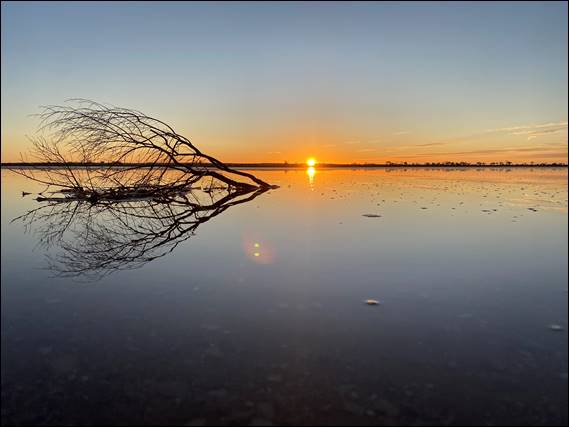
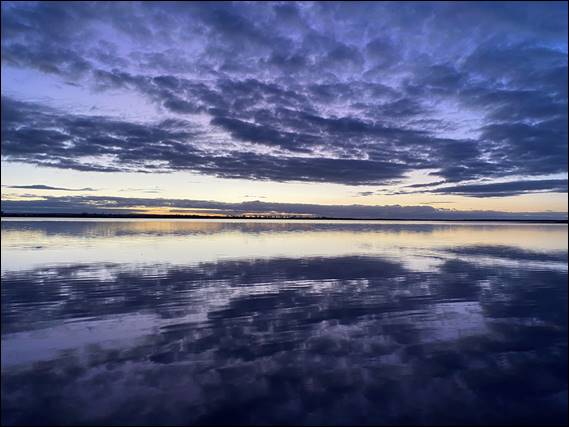
The kettle went on, and once the brews were made I roused the troupes. Despite first light being reported to be at 6:40’ish, the beautiful morning colours were starting to show in the east as soon as the moon dropped below the horizon. It was only ten past six when I took the picture two images up, a full half an hour before first light was due. So while it was cold Pontus nor Howsie minded getting up to a very welcome steaming hot brew, and a kaleidoscope of colour best observed from the waters edge:
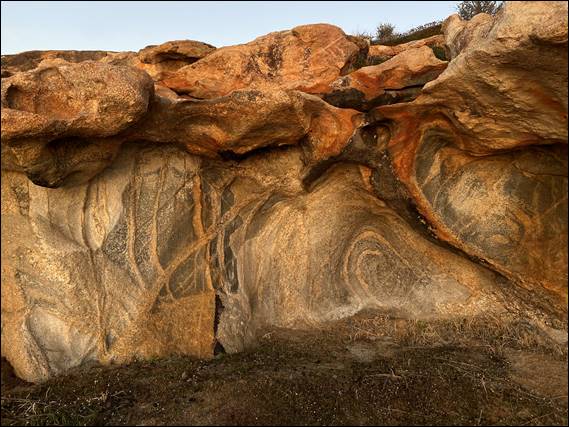
We wandered along the lakes edge to the caves we had seen the night before, looking even more spectacular in the morning light. Someone else at the camp stated the lake was alkaline. They had been told this was due to the chemical weathering processes that created not just gnamma holes, but amazing architectural features including caves you could walk in. This was true in a way, the area is part of the Yilgarn Craton. A huge basin formed 3,000 to 2,600 million years ago, with a base of granitic and gneissic rock with dolerite dykes intrusions:
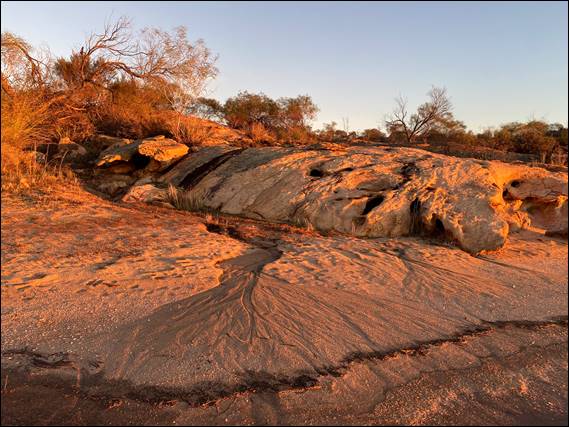
The soils have resulted from insitu weathering from the base rocks over geological periods, creating ‘alkaline grey shallow loamy and sandy duplex soils, calcareous loamy earths and saline wet soils occur on the valley floors’. So the alkalinity originally came from the base rock, but occurred long before the rock features we now see at the surface. During the week prior to our arrival approx. 20mm of rain had fallen, which is half the June medium rainfall for this area. Evidence of this rainfall could be seen in the sand between the rock and lake:
When the Lake is full it is used for water skiing. This is not uncommon for the salt lakes of the Wheatbelt, however the water body looked very shallow for as far as we could see. So it seemed a bit unrealistic to think it would ever be deep enough. There are probably deeper parts, which is entirely possible considering the lake is five kilometre long and five kilometres across at its widest point. We could only see a very small part of the water body. Then in complete contrast during long dry periods these watery features can turn into dry salt lakes:
The flat salt crusted lakes are enticing for four wheel drivers, but are very fragile environments. Buried below the surface seeds and eggs lie dormant, waiting for the right conditions to come to life. Similarly the granite features rising out of the landscape provide ecosystem havens for many species. Not just aquatic fauna and flora in gnamma holes, but also reptiles and insects. I have only seen the Ornate Crevice-Dragon (Ctenophorus ornatus) on my first visit here, which has discrete colonies on each outcrop across the Wheatbelt:
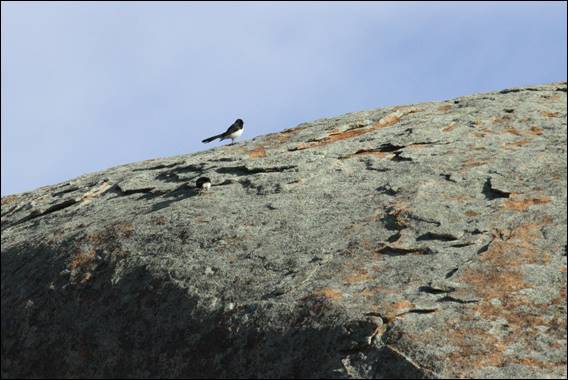
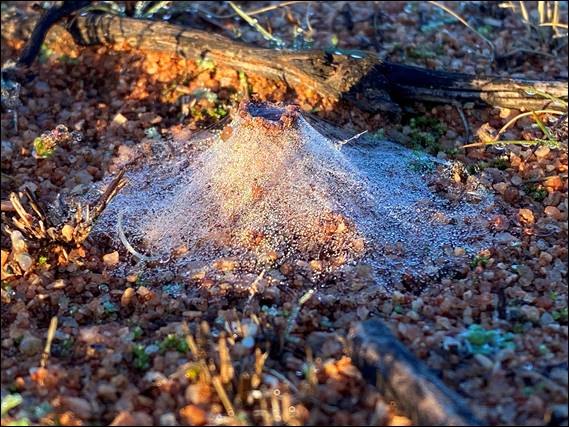
From an insect perspective I have had no luck in trying to find out about the web structure covering a small soil tower two images up. The soil structure being different to the ones ants create, to prevent water running into their burrows, in that they were considerably thinner. We also didn’t see many birds, the only positive identifications being the Wedge-tailed Eagle, Australian Ringneck (Barnardius zonarius), Australian Magpie (Gymnorhina tibicen), Galah (Eolophus roseicapilla), and the above Willie-wagtail (Rhipidura leucophrys):

Howsie said that the small birds are notoriously hard to identify, which I completely agree with as they rarely sit still. When they are doing bird counts these are often referred to as LBBs, meaning little brown bush birds. We saw heaps of LBBs, but I do not think we can add them to our tally. Therefore, we really did not do too well when compared to the 43 species that have been observed and recorded on eBird at the Lake Campion Nature Reserve. Regardless of what we didn’t see, we did really enjoy the morning stroll:
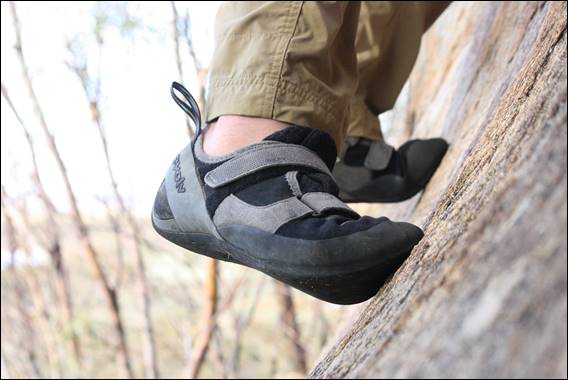
I could sense a distinct lake of urgency to get on rock. The fingers were still tingling from the cold, so it was back to camp for another cuppa and breakfast. Eventually making our way to the rock at a lazy time of nine. While Eaglestone rock is a blip on the landscape it is high enough to catch any breeze, and as we arrived we really noticed the icy wind. Definitely time to climb in the sun, on the west face. Pontus hinting that Howsie could start the day, but we somehow managed to convince him to jump on lead:
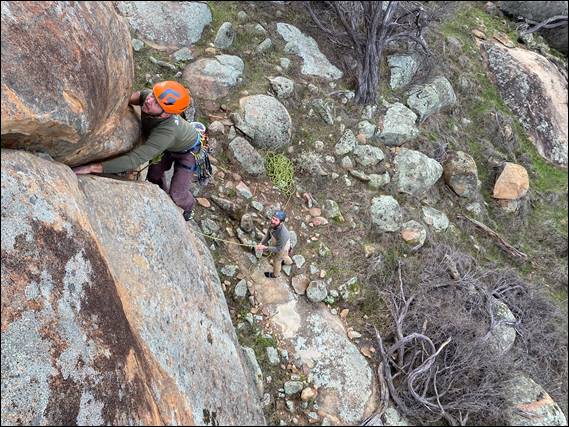
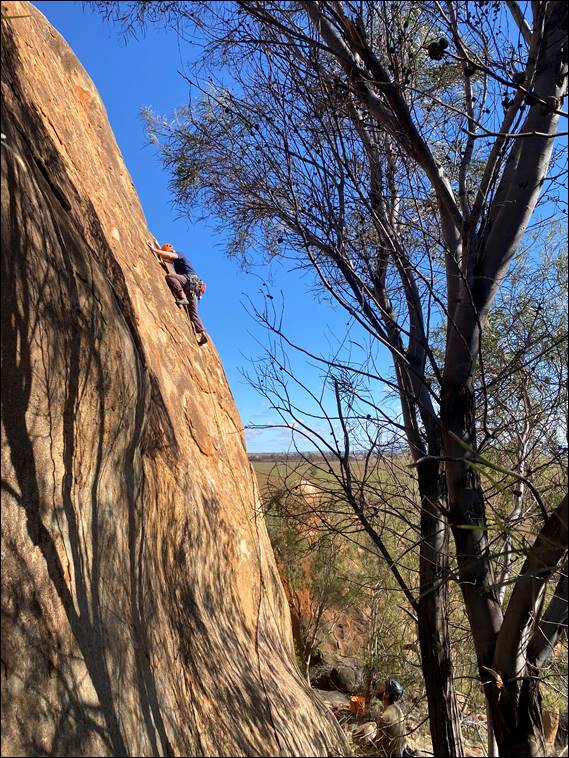
This he did and as you’ll see two images up, he was pretty happy that he did. He then took a liking to the easier of two traditional crack climbs. It didn’t take any convincing to get him to lead that and I was hoping to get a few images from above on this line. He was climbing too fast, so by the time I was set up I missed all the action. He enjoyed the jamming and three-dimensional climbing, in contracts to the faces we had mostly been on. Resulting in him be tempted by the harder crack. This time it took longer, allowing me to get a few images:
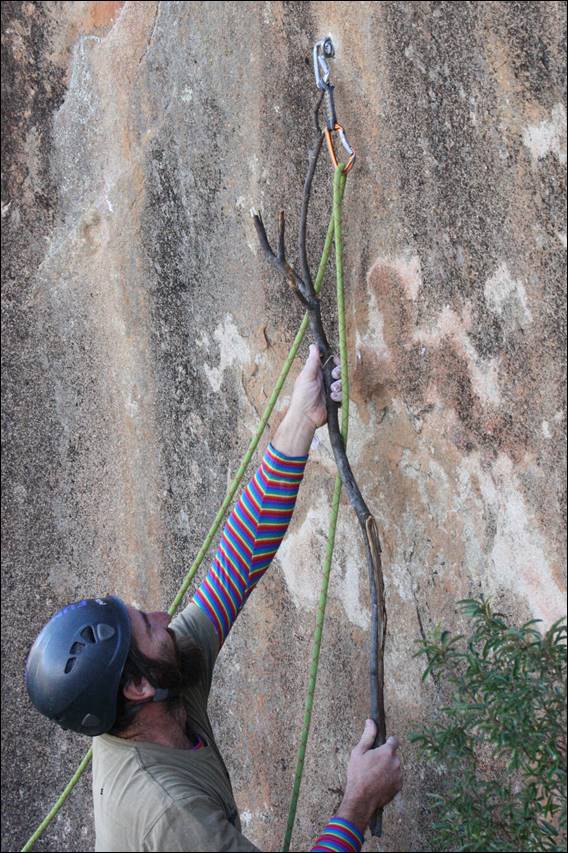
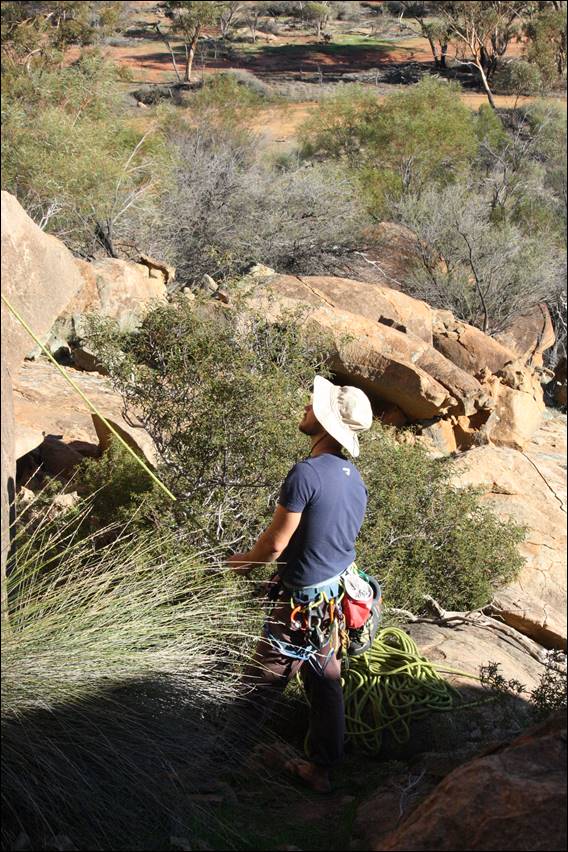
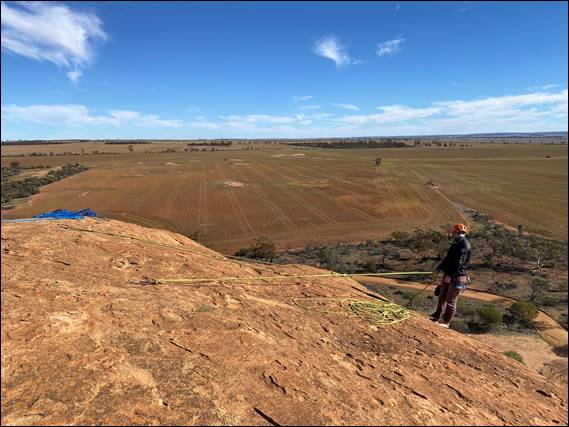
Three leads in and it was Howsie’s turn. And like yesterday he set his heights a bit higher. You could tell he was in two minds about it. Standing there looking at the route, trying to mentally climb it before he was even tied into the rope. He even opted to stick clip the first bolt, a clear sign that his nerves were getting the better of him. For the non-climbers, to stick clip a bolt means to put it in from the ground. There are purpose designed poles called a stick clip, but we don’t have one so reverted to the old school technique of using a branch as shown above:
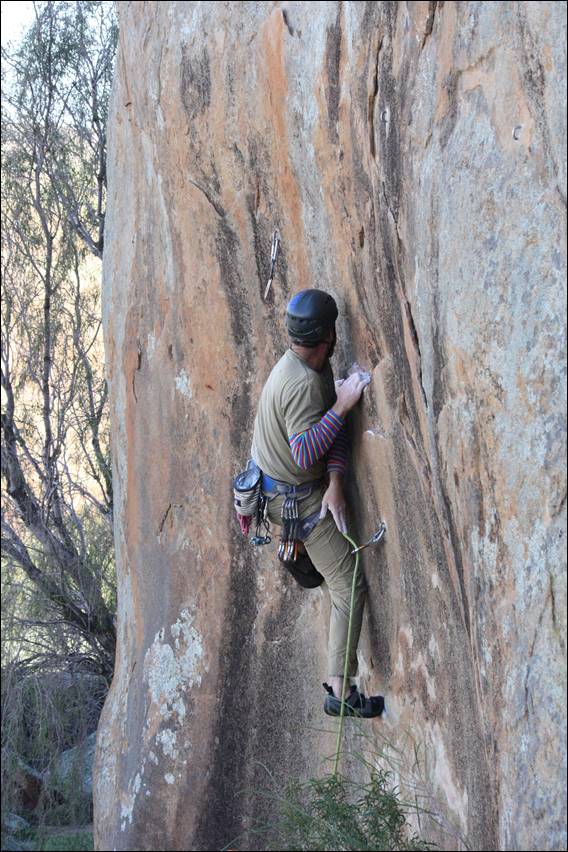
If you look at the draw that has been placed on the second bolt, to his left, you will see how it hangs away from the rock. This shows that the start of this climb is off vertical. Not only is it steep but it is a technical and a tricky start. Followed by a very big move to a huge jug of a hold, a foot or so past the second bolt. It took a few goes to get it, but he eventually got there. Then managed to get up the rest of the climb clean. Pontus straight away said he would be happy to have the rope above him for this one:

I on the other hand was being completely sensible and didn’t do any climbs. It took an awful lot of self-control to not jump on the rope. But common sense prevailed, primarily as all four climbs required more varied climbing than vertical faces. Four climbs in and it was lunch time, it certainly was a very relaxed pace today. No one was complaining about that. On walk we spotted the above trapdoor spider burrow, with the silken door unusually open. Using a little stick we checked but no spider jumped out, so it may have been abandoned:
There are over 200 named trapdoor spider species in Western Australia, with two new species named in 2023. Those two are open-holed trapdoor spider species, so do not have the silken door. Each species will use a certain type of leaf litter to build its burrow. Most living in the burrow their entire life, which can be up to 43 years. Many species are endemic to very localised areas, and as such I checked to see what had been observed here. The only one I found being the Tree-Stem Trapdoor Spider (Aganippe castellum):
They only occasionally make tubular silk nests in tree trunks. Therefore, despite the name it may be although I won’t put money on it. Based on the way this post is going it may seem like we only occasionally were on rock, but we were here to climb. So after a welcome hot brew and some lunch we wandered back to the crag. This time we went to the east face, chasing the sun. Despite the mostly blue skies the temperature never got too high, peaking at about sixteen degrees. Making climbing in the sun very pleasant:
This side meant it was vertical face climbing. A style I was feeling a bit more comfortable about trying without aggravating my foot, too much. I tied my climbing shoe that bit tighter. As it felt like the blood flow was being restricted, I hoped it would provide that bit more support. Pontus went first relishing the fine climbing, but then happy to let Howsie take the next lead. He could feel himself tiring. With me also climbing this slowed the proceedings down that bit, providing them with a bit longer rests:
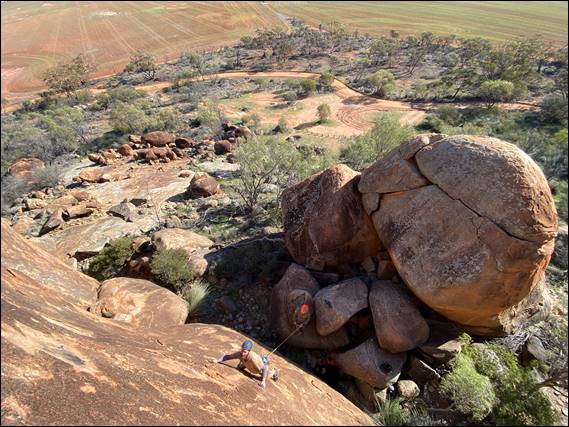
This was clearly required, as after the two routes, they were looking weary. The following image definitely wasn’t mocked, they were tired. Pontus hasn’t been climbing heaps recently, and Howsie had burnt himself out a bit on a couple of harder lines. Maybe the weariness was also because they hadn’t slept well during the cold night, or because I got them out of bed so early. So many reasons. It was however certainly was not from a lack of energy. We’d eaten well, and had taken snacks with us for every session:
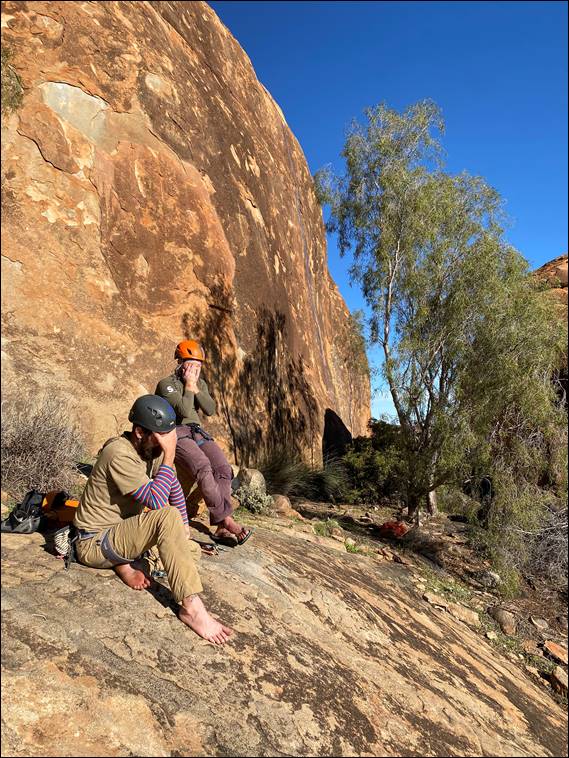
I joked that they were luck I wasn’t climbing fit, but didn’t push the pace. Pontus was up next and picked his hardest lead yet, a mighty vertical and sustained route. As I sat back on my perch, resting my foot still tightly contained in the climbing shoe, as Pontus started. Right from the start it challenged him. When you feel weary, the challenge is both mental and physical. All his other leads were managed quite efficiently and quickly. This time it was Howsie’s turn to be patient while belaying, as Pontus had to figure out his way up:

He dug deep and pushed through, eventually topping out and I think he may have been somewhat relieved to have got up the climb. Despite the higher grade, I decided to go up this one too. I didn’t have much feeling in my right foot now, but was still being careful with each placement. Testing it before fully pushing down, and on this line I had no choice but to put that bit more pressure on it. As a result of my changed focus I was holding on with my fingers that bit harder. I could feel it in my forearms, and have no doubt Pontus also did:
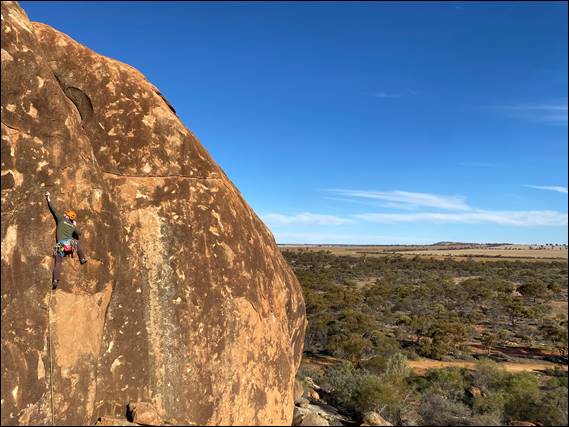
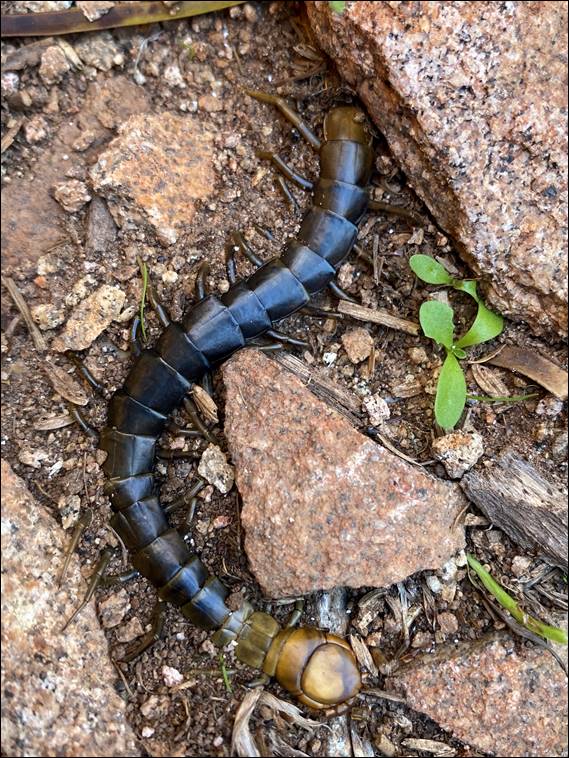
That he did, and he hinted he didn’t have enough gas left for any more leading. Regardless of that I reckon he should be pretty chuffed with the routes he led. He had enough energy to jump on second, so fared better than this Centipede (Cormocephalus) that was at the base of the climb he had just done. Sadly deceased, but in view of the lack of live creatures we spotted I have included it. It may have been an Orange-footed Centipede (Cormocephalus aurantiipes), which is a commonly found species, although I’m not completely convinced:
The two of them had another sit down and snack before taking on the next climb, Howsie was up and there was a little indecision as to which route he would do. Plumping for the route next to the climb Pontus had started us on yesterday. It was also the last climb Howsie and I did on our first visit here eleven years back. At that time he on-sighted it, but today the start had him foxed. As it did me, even though I had the rope above me. We could suggest the very small start holds have become a bit more polished, from all fingers that have used them:
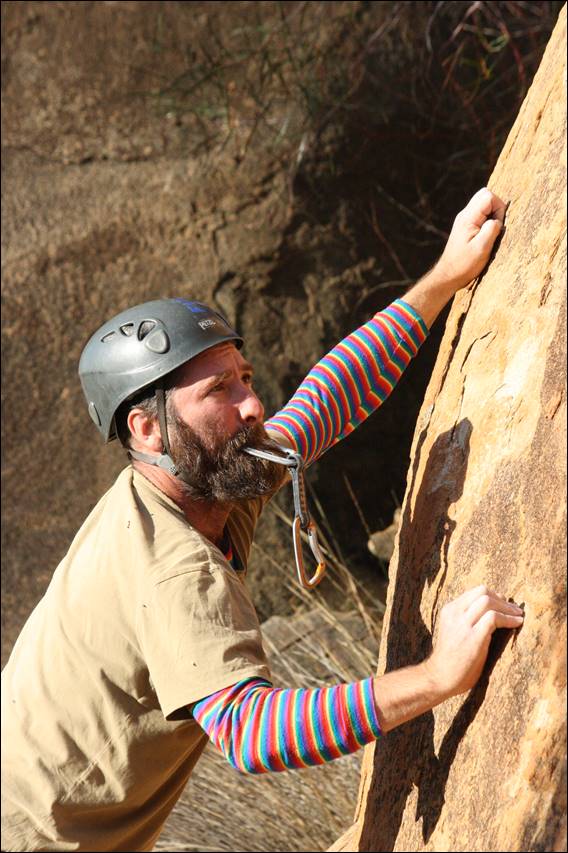
However, we both put it down to a lack of climbing fitness. With recent illnesses and injuries, while we have been getting out our general climbing fitness has suffered. Strangely, and injuries aside, my drive to train by getting on my wall is distinctly lacking. Pontus too found the start hard, so all three of us had to pull on the first draw. After that we managed to get up unassisted, but it was clearly a sign that the climbing for this trip was over. The rope was pulled for the last time, and we packed up:
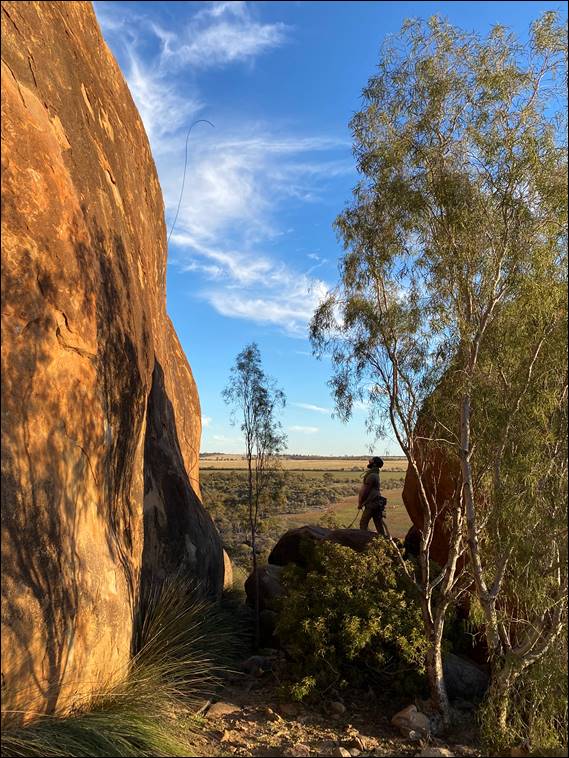
Howsie’s body had switched off, but his mind hadn’t. Looking at another line contemplating it, then another one, and one more. Pontus was a little harder to read, not pushing for it he may have been game to follow up one more. There was only an hour of daylight left, and common sense prevailed. We wandered back down admiring the moon, and we all remarked at how it had been so much brighter than usual. It also looked like it was a full moon, being very hard to see anything missing from its spherical shape:
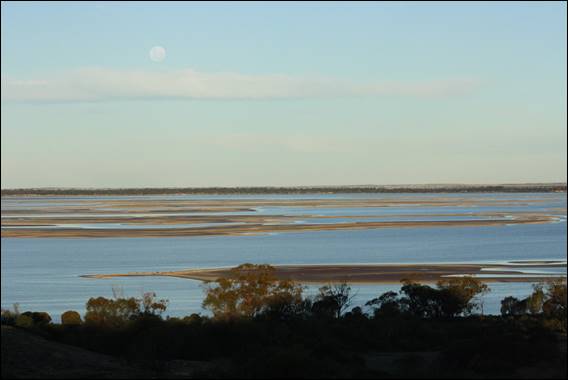
The only reason I knew it wasn’t a full moon is that it had come up too early. A full moon occurs when the moon is on the opposite side of the earth to the sun. The sun sets at the same time that the moon rises. We only missed it by one day, with the full moon due on Saturday night. The reason it looked so bright on this trip can be put down to two reasons. The first being that the earth is closer to the sun during winter months. The second is both the air quality and dryness here, both of which result in the light not diffusing as much:
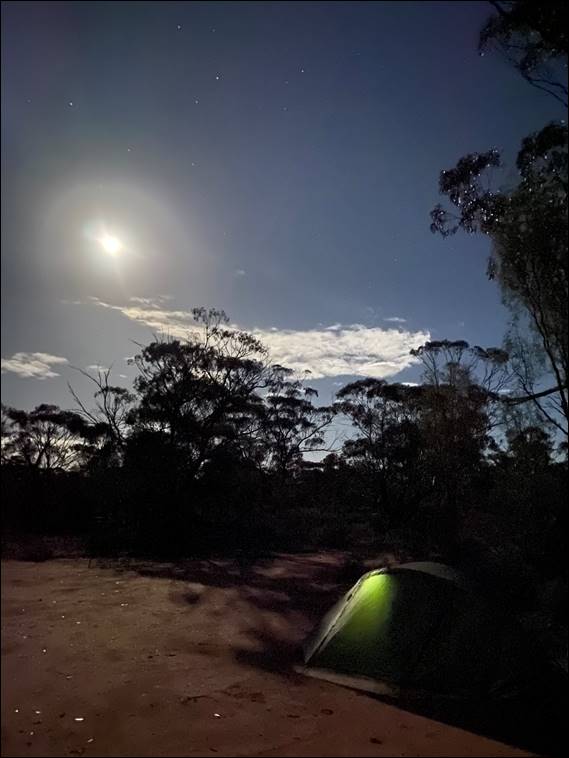
We managed to time dinner right again, and like the first night went for a walk before hitting the sack. This time heading further round the lake, taking in the rock sculptures along the way. It didn’t feel as cold a night, and amazingly in the morning there was no dew. A stroke of luck seeing we had to pack up the tents. I was up at 5 this time doing my usual of getting a brew ready, Howsie heard me and was up soon after and eventually Pontus joined us. The morning lights were not as specky as the first morning, but still great to see:
Seeing we were up so early, there was the chance to sneak a route in. There was no enthusiasm. Instead we hit the road at 7, before anyone else had even stirred in the campsite. The open roads heading west back to the City provided easy and relaxing driving, even when we drove through the rain belt that was forecast to reach Eaglestone Rock today. That changed as we got closer to Perth. It felt like the serenity of where we had been was smothered by the hustle and bustle of the City. Being one reason for writing these post, allowing me to rewind back to the good times and bring them back to the fore:
 Sandbagged