It’s an extra-long weekend for me, having taken Friday off and Monday being a public holiday. Not the best timing for Lisa to share her lurgy with Elseya and me. While I can feel that I am not bug free, I have not been struck down in the same way Lisa was all of last week and now it looks like Elseya may be next week. It may sound dumb but even when I don’t feel great, and I am able to, I feel a whole heap better in the fresh air. As such and despite the wild weather, Lisa and I managed to find a weather window to enjoy the great outdoors:

We drove to Ambergate Reserve. Heading towards the darkening skies, eventually seeing rain in increasing intensity hitting the windscreen. This was not unexpected and we had come prepared with rain gear, although we did sit in the car for a moment and I could feel a tinge of hesitancy from Lisa. Rather than focus on that I simply got out and Lisa followed suit. I kinda feel it seems like it is raining heavier when you are driving. My theory, right or wrong, being that more drops hit the windscreen driving at speed:
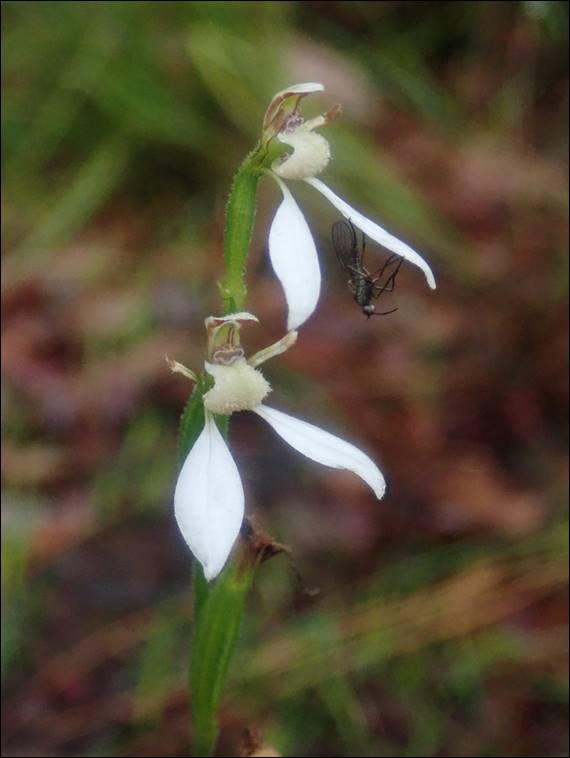
We timed it well. While there was a little sprinkle here and there, for the most part of our hour long walk it remained reasonably dry. During which time we only walked a couple of kilometres, half of the complete circuit on offer here. The slow pace was in part, of course, due to me stopping to check things out. However, it was also because neither of us were feeling completely healthy. Now it may get a little boring to include similar flowers so often, this is however one that I have not included to date:

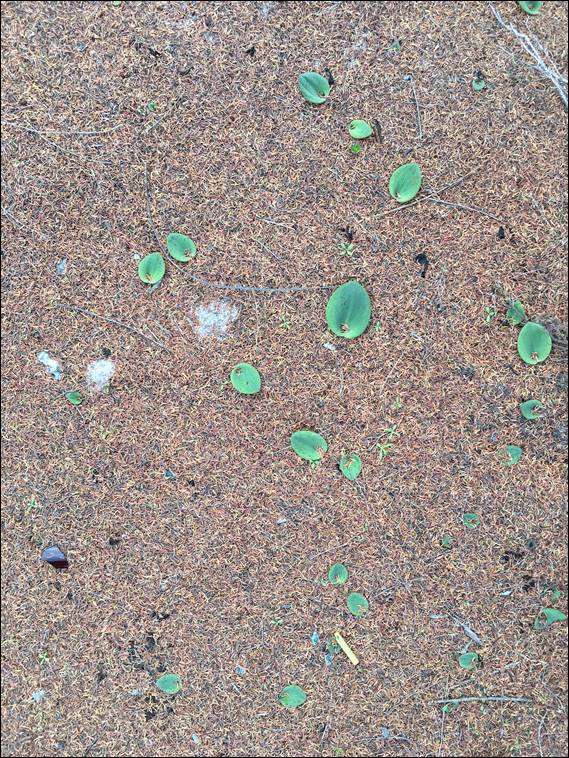
In previous seasons when I have sighted Bunny Orchids, they seemed to me to simply be Bunny Orchids. There are however six species and six subspecies in the South West of Western Australia. And this is the third different one I have spotted this year. The two I have previously included were the Swamp and Common Bunny Orchids, which are different species so more distinct from each other. However, I’ve just noticed an error in my orchid guide which led me down the wrong track. One of the characteristics to look is the leaf:
What I thought were Common were in fact White Bunny Orchids (Eriochilus dilatatus subsp. dilatatus). The one in this post is the Common Bunny Orchid (Eriochilus dilatatus subsp. multiflorus), proven by the small oval leaf. These are subspecies having lots of similar features, hence why one error led me astray. The South West, and for my orchid guide, extends from Kalbarri, 660km north, to Israelite Bay, 760km east, of where we live, as the crow flies. As such my chances of seeing all of the species and subspecies is non-existent:
There are a few more species and subspecies round here though, so I’ll keep looking and will be more careful. This includes paying a bit more attention to the finer details, but also double checking my sources even when they are in print. You will no doubt have spotted the mosquito in the second image. It has a distinctive curved proboscis, and using a great tool from the Department of Health I’ve tried to identify it. The image didn’t capture all the intricate detail required, but based on what I have available it may be a Culiseta atra:
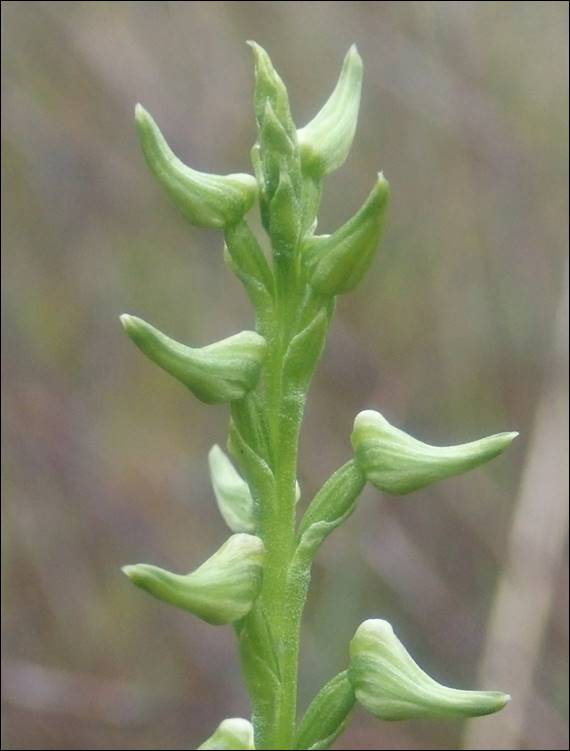
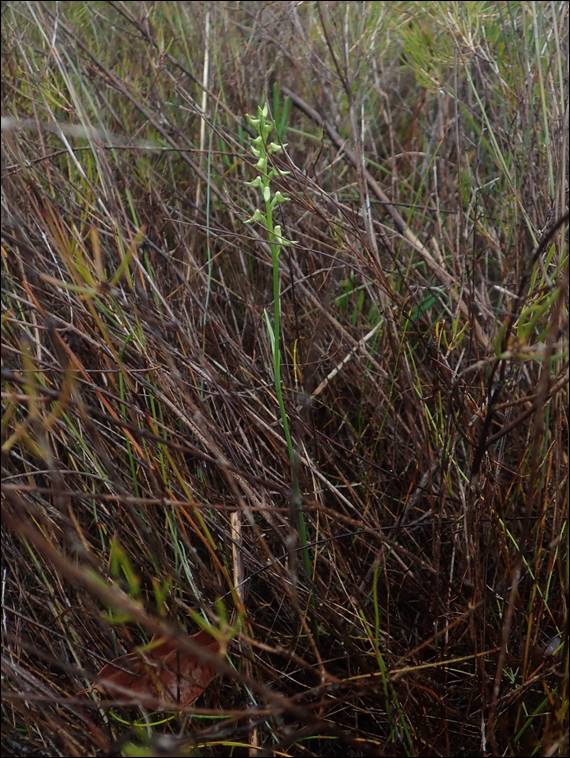
It was a very pleasant stroll, and we even spotted two Scented Autumn Leek Orchids (Prasophyllum sp. ‘early’). Yet to bloom, with their small flowers still tucked inside what looked a bit like duck heads. It is very similar to the Autumn Leek Orchid (Prasophyllum parvifolium), which you could argue is incorrectly named. I say that as the Scented Autumn Leek Orchid flowers in April to June, i.e. Autumn, while the Autumn Leek Orchid flowers in June to August, i.e. winter. That said being the first day of June, it is technically winter:
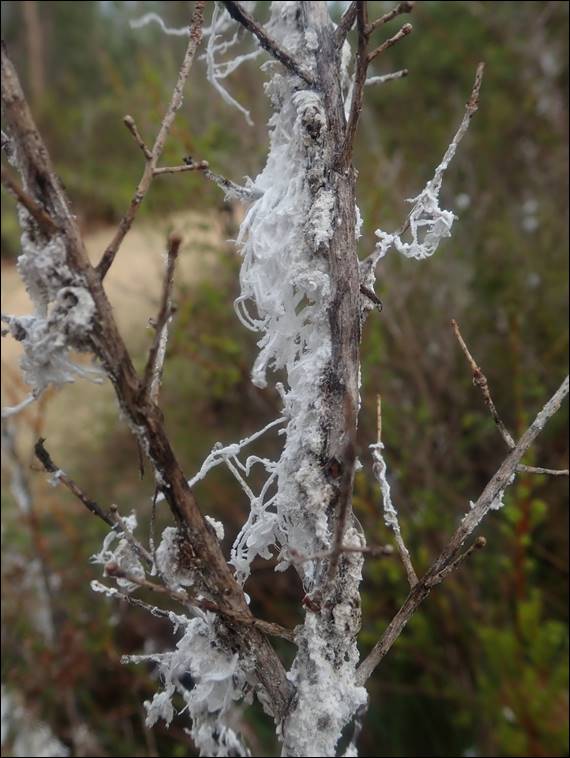
There is an image earlier in the post I did not mentioned. Showing stringy white filaments coating a plant. My first thought was a lichen of fungi, whereas Lisa suggested an animal. She had looked more closely and was on the money. The stringy bits have a pattern and look to be segmented, these could be eggs. I was at a loss and felt it could be a number of critters such as aphids, scales, or mealybugs. However, Verity used her social media contacts and has confirmed it was a Burgan Woolly Scale (Callococcus acaciae). Having enjoyed the morning amble so much, while Lisa stayed home to recuperate I went back out later:
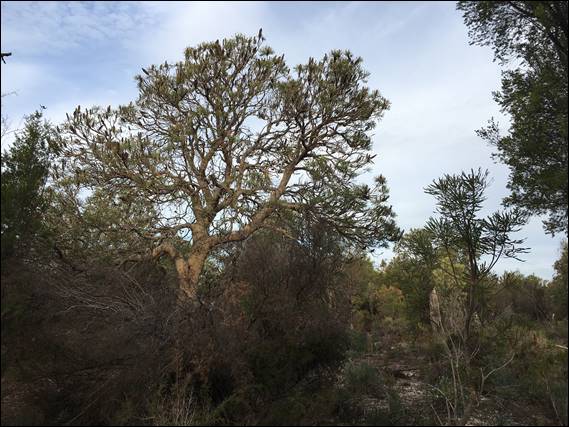
This time not going so far, and visiting a different section the Capel Nature Reserve from my last visit. Like the Ambergate Nature Reserve the ecosystems vary in different parts, and can include tall trees and shrubs such as marri, jarrah, peppermints, banksia, and snottygobble, to creepers and a multitude of ground covers. A sign of just how much we have changed the landscape, which would formerly have all looked like this. These remaining ecologies have been compressed into small pockets, still battling to survive and remain as pristine as possible:
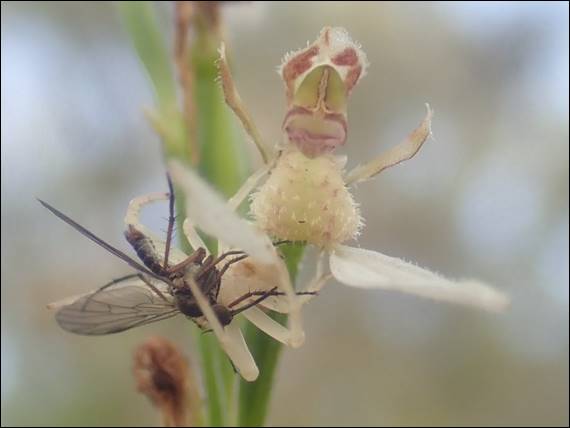
I didn’t find anything new on this wander, but did get to spot White and Common Bunny Orchids and Hare Orchids. These were massively outnumbered by all the Greenhood Orchids popping up everywhere. I did stop to watch another mosquito, on the above Common Bunny Orchid. Again I didn’t look hard enough at what I was seeing. Only noticing that it had been captured by a spider after I looked at the images back at home. Putting my new mosquito identification tool to use this may be a Southern House Mosquito (Culex quinquefasciatus):
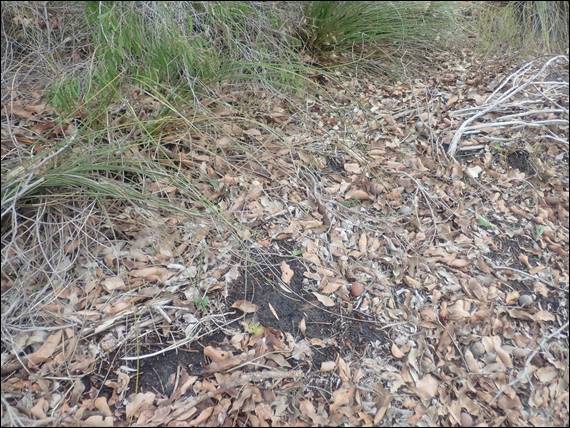
As for the spider, it is going to have to be a bit of a punt. The angle I was taking the image from didn’t capture the all-important body. It is definitely a crab, also known as flower, spider. With the limited detail, and checking which ones are common here it may be a Milky Flower Spider (Zygometis xanthogaster). On a final note it has been said the images can make it hard to gauge scale, a fair point. So to put my sightings into perspective for you, above are three Common Bunny Orchids with one in flower, and below three Hare Orchids all in flower:
 Sandbagged