The weather has finally broken after the hottest and driest period on record for the South West of Western Australia. Much to the relief of many, but the first rains is not always good news. While I was in England a local dump of 50mm of rain, approx. 7% of the average annual rainfall, resulted in organic rich soils from dry agricultural lands being washed into a major river system. This is likely it have been a contributing factor for the drop in dissolved oxygen that led to a significant fish kill. Something unfortunately not uncommon at this time of the year:
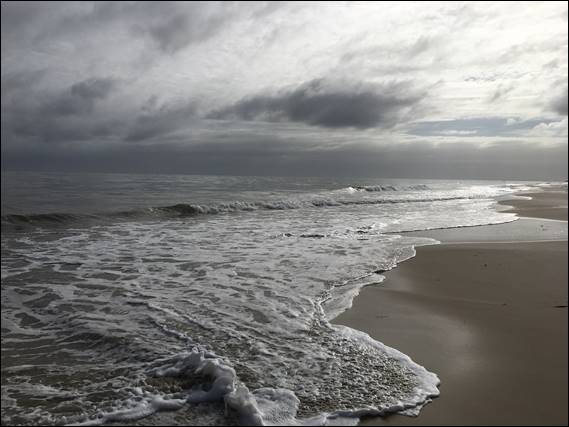
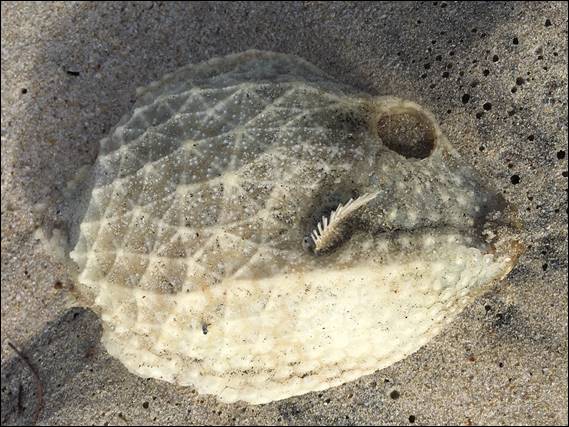
The change has also stirred up the ocean. The clear water I swam in on the day I flew out has turned brown. While the image doesn’t look too rough, the visibility is shot and my snorkel gear is packed away. The only fish I’ll see now being the ones washed up during the bigger storms. This Western Smooth Boxfish (Anoplocapros amygdaloides) was dead long before it was stranded on the beach. The exposed carapace clearly showing the protective shell-like bony structure of fused plates, with the only holes being for the eyes, mouth, and fins:
While the snorkel gear is packed away, it is the time of the year that the first orchids would normally appear. Not too many species are out this early, but there is one in particular that I am yet to find. While not filled with confidence, considering the preceding hot and dry six months, I went to check out one of the best local spots. What I didn’t factor in was the result of another weather induced phenomena, which again can result in negative outcomes for this time of the year and is again described by the Bureau of Meteorology as not uncommon:
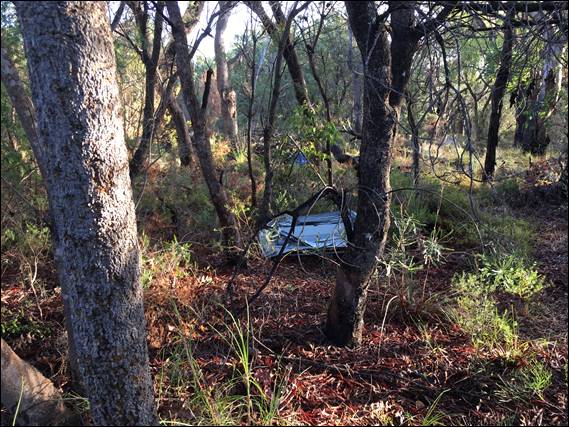
On Friday a cold front lashed the area, and a tornado formed. Wreaking havoc in its path, ripping off roofs and, along with anything not tethered down, lifting them high into the sky. The debris was scatter across a wide area. As I started my wander through Manea Park there were sizeable, twisted bits of corrugated roof sheets deep in the vegetation, as well as assorted household items. Along the path taken by the tornado trees with trunks up to half a meter in diameter had been twisted and snapped like they were twigs:
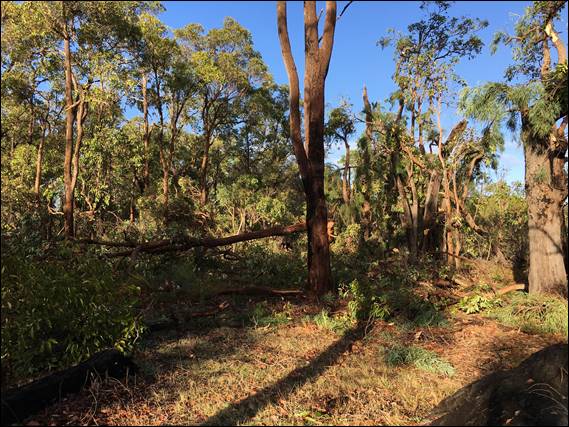
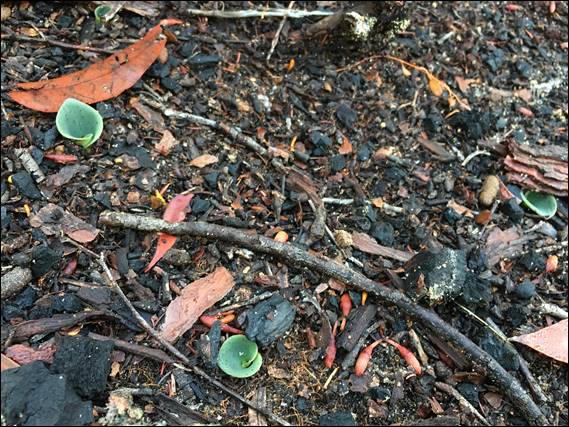
Despite the destruction, I continued with my walk needing to work round fallen trees and limbs that blocked the path in multiple spots. My initial thinking that seeing any orchids was unlikely, was correct. I kept my eyes mostly on the ground, and the only sightings was a small collection of leaves just breaking through the ground. They didn’t look like the basal leafs of the orchid species commonly found at this time of the year, being the Bunny, Hare, and Leafless Orchids. With the last one being the species I have not yet found:
Something else I have always been keen to see is the aurora australis, or southern lights. This weekend with the first extreme geomagnetic storm in twenty years, it seems that half the world has had the opportunity. The aurora australis being on display in the southern and aurora borealis, or northern lights, on display in the northern hemisphere. These displays come about due to something that sounds like it has come out of a SciFi film. With plasma and magnetic fields, which have erupted from the sun, travelling across space to earth:
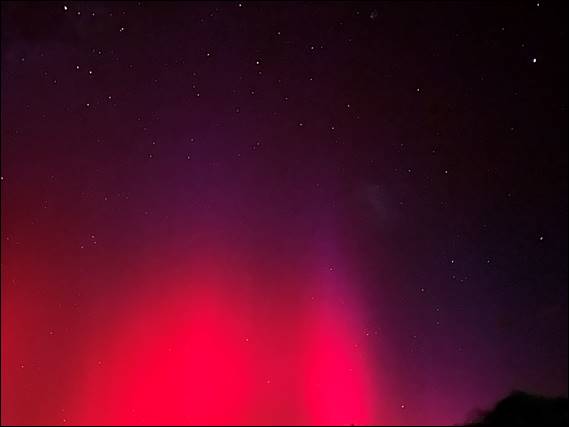
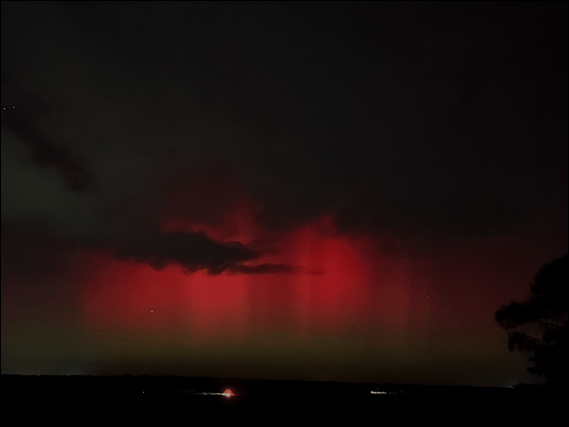
Verity, who writes up and sends out her recount of her many adventures, has travelled to Antarctica where she witnessed the aurora australis. She said that to the naked eye it wasn’t anywhere near as spectacular as the images people take. And tonight while it was great to see, it was as she had said. These two images being taken by my daughter, on her phone. The plasma and magnetic fields were obviously not interfering with the technology of the phone, as it transformed the faint glow in the sky into a dramatic and uncommon sight for where we live:
 Sandbagged