Was it me or were there no April Fool pranks this year in mainstream media? It may have been because it coincided with Easter Monday and was considered inappropriate, or that the pranks have moved to social media platforms that I don’t use. Being a public holiday I could afford the time to have a dip. While the world above the water didn’t seem to make anything of pranking today, the life below the water seemed on the most part hiding. Maybe they were sniggering at me, as I searched high and low. The only image included from that dive being a close up of some juvenile Striped Eel Catfish (Plotosus lineatus):
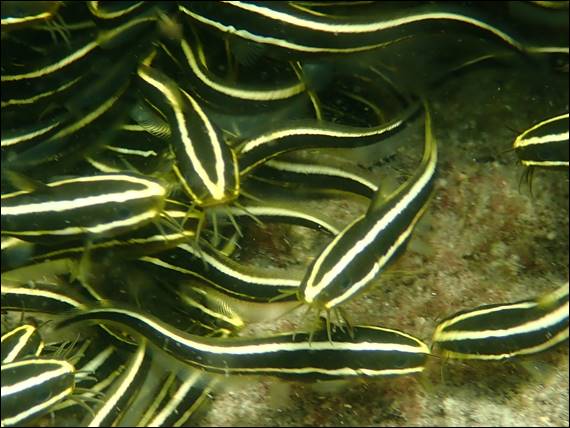
I’ve seen these bait balls quite regularly this year, and the fish are starting to get to a size where I can capture an improved close up image of their barbels used to forage in the sea bed for food. These fish tend to be solitary as adults, and have a venomous spine on the first dorsal and each of the pectoral fins. But this defence mechanism is not as developed in the young, which is why these bait balls are thought to occur. Watching them, they roll a bit like a ball. The fish take turns in foraging on the seabed before moving up the column to be the watchful eyes of the group, looking out for predators:
What I have not been able to identify is how long they live, and at what stage in life they cease to move about as a group as a bait ball. While native to the waters of Australia, other than along the southern coast, they are on the European Union’s list of invasive alien species of Union concern. One of only 47 animal species currently listed. After the lacklustre events of my local reef I fancied sampling somewhere different. The next four images are taken from two dives at Wave Walk, on Tuesday after work and then to cool off on Friday after my climb at Welly Dam:
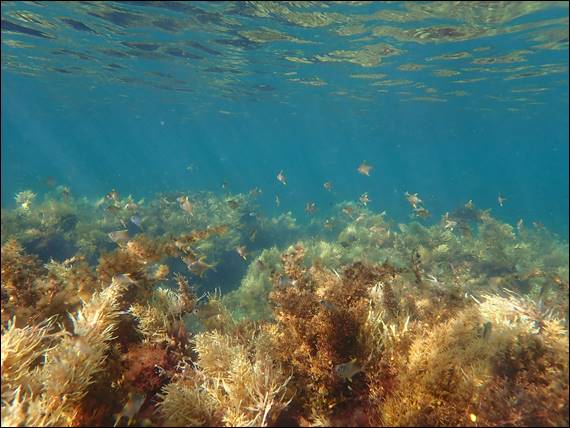
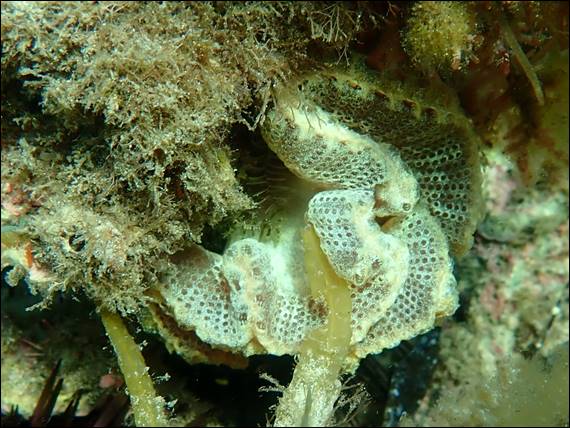
It is a bit down the road, but still off Peppy Beach. As the above image shows it has some quite shallow reef. The first of the images is of something I often see but have not to date included in a post. Brain Ascidian (Sycozoa cerebriformis) come in various colours and I’ll have to take a few more images when I see the more colourful ones. Ascidians are created by a colony of zooids, which in this case come together in two rows stacked vertically. When first forming this creates a small flattened fan shape, and as the colony increase the folds start to form and eventually mimics a brain like form:
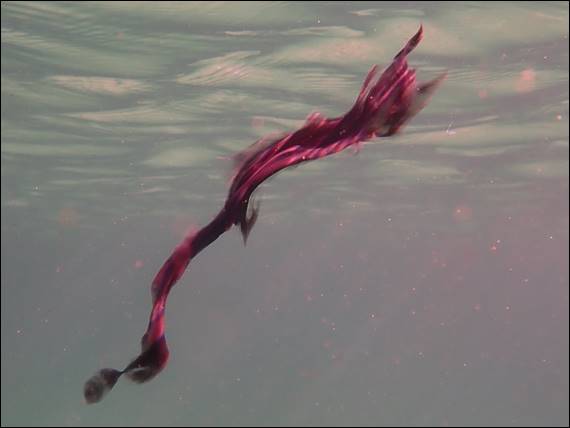
The above had me stumped for a while. I came across two of these, and watched as they slowly spread out before breaking up and eventually diluting until it was no more. My first though was it could be an excrement, but after checking what this looks like for likely larger creatures this was off the cards. Eventually I worked out that it was the ink from Southern Calamari Squid (Sepioteuthis australis), something I have never seen before despite seeing these squid many times. It is a form of defence of most species of cephalopod, creating a diversion while they make their escape. Of the three cephalopod I see I’ve read that, octopuses, squid, and cuttlefish will generally produce ink that is a black, blue-black, a shade of brown respectively:
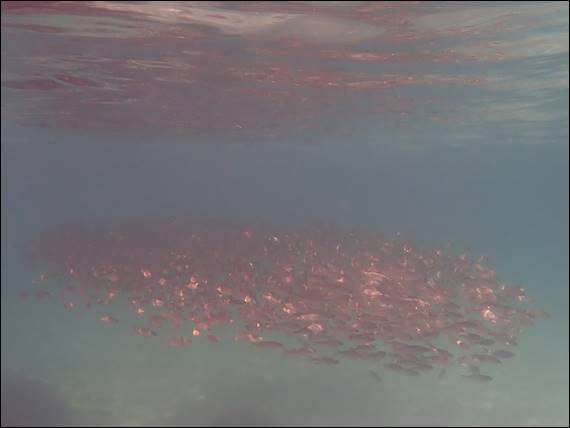
The second dive at Wave Walk wasn’t as clear or fruitful, but still offered a change. It also provided me with a fun and slow paced interaction with the above large school of Western Striped Grunter (Helotes octolineatus). I’ve been lucky to have these experiences before, but today they seemed to hang in the water column like a cloud, drifting rather than swimming towards me. I stayed put allowing them to slowly come my way, parting as they got to me but keeping within arm’s reach. They seemed to observe me, as I watched them, without slowing or speeding up their journey:

For those that have read my last post, Craig had picked Smiths Beach for a climb on Saturday so we could also have a snorkel. With a forecast slight swell at only one meter I was hopeful that we might be able to jump in from where we climb. The water is a bit deeper but on a clear day the ground looks interesting and we might see some bigger fish. Sadly it was not to be this time, and we instead drove round the bay to the more protected area, off the boat ramp at Canal Rocks. Even here it wasn’t as flat as I expected, but we went in regardless and were greeted by way to many species of fish to count:
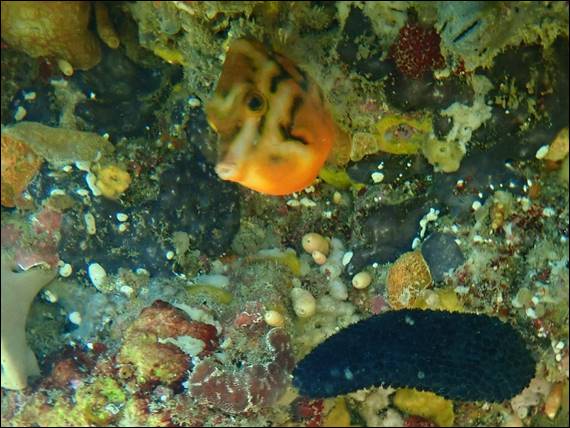
The first image is of a school of what I want to say are Yellowtail Scad (Trachurus novaezelandiae), however I can’t be certain of that as they did not display the distinctive dark spot just behind their gills. Unlike the slow moving cloud of Western Striped Grunter, this school of maybe Yellowtail Scad were on a mission. Moving fast and not stopping for anything, so I was lucky to be close enough to have spotted them. Checking in their wake I didn’t spot any predators that may have resulted in them turning up the speed, and the image included was the best I could manage. The next image is also not the best but I had to include it:
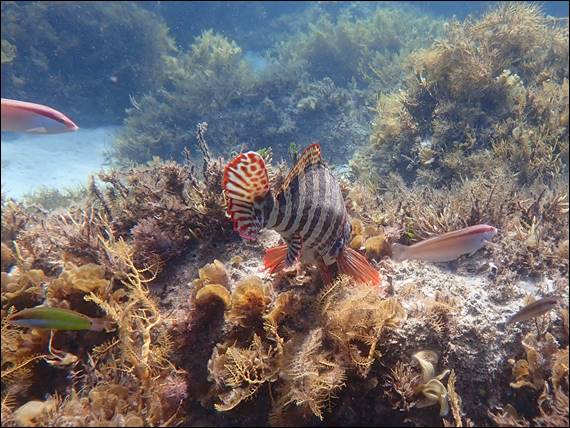
Once spotted, the juvenile Whitebarred Boxfish (Anoplocapros lenticularis) didn’t hang about. I’ve seen adults before at a foot in length, this one was a mere couple of inches tops and clearing starting to showing the markings of a female. I also enjoyed observing the above Redlip Morwong (Goniistius rubrolabiatus) grazing through the substrata looking for tasty benthic invertebrates. Creating clouds of debris. Through which various Wrasse, including juvenile and adult the Brownfield’s Wrasse (Halichoeres brownfieldi) and female Western King Wrasse (Coris auricularis), swam picking out morsels that were released into the water:
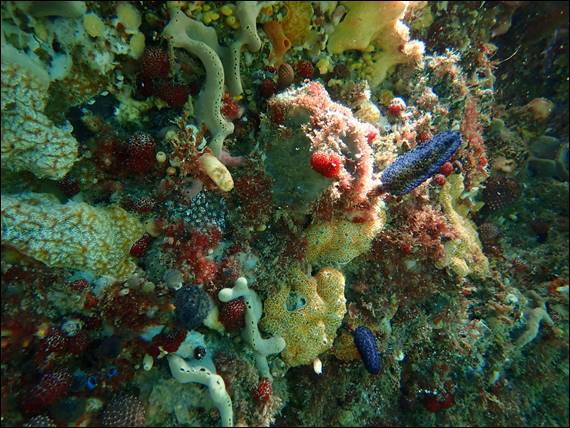
I’ve included a similar image to the above before. The sight of these amazing underwater gardens still stun me, full of sea squirts, sponges, and other wonders. The Cyan Ascidian (Sigillina cyanea) resembles a tall skinny mushroom, and in the bottom left the stumpier and duller coloured balls may be Southern Ascidian (Sigillina australis). It is however the strawberry looking ones I really like, which could be Synoicum sacculum and for which I cannot find a common name. Then there’s the sponges that I have had less success in identifying, although I did spot this Redfin Threefin (Helcogramma gymnauchen) resting on one of them:

 Sandbagged