‘Picture perfect’ is the only way to describe this sight, but it is not one I saw. Lisa is down the beach most mornings walking the dogs before she heads to work, and also on weekends since she has started cold plunging. The frequency of her visits provides more chance of seeing the beach in such tranquil conditions. And inspired by such sights, she has even dropped hints that she might get out on the paddleboard this summer, and only time will tell about that:
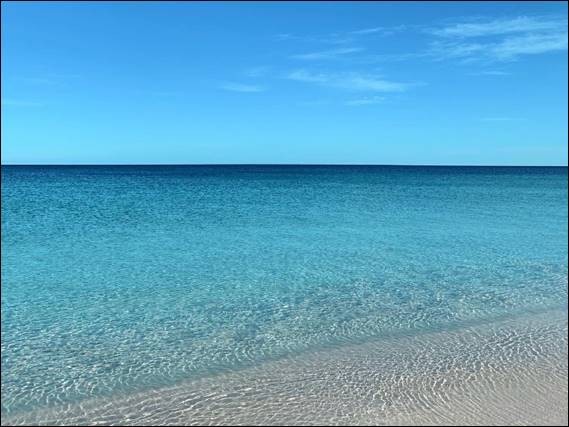
The above image was taken last weekend, while I was climbing down on the south coast. And based on the relatively settled and almost summery conditions we are experiencing, even though it is still spring, I was hoping for similar sights this this weekend. Summery may not be the right choice of words, and it has been described as a heatwave. Something that in Australia is based on the ‘excess heat factor’, which is assessed the maximum and minimum temperatures over a 3-day period against the thirty day average. Fair to say it has felt warm:
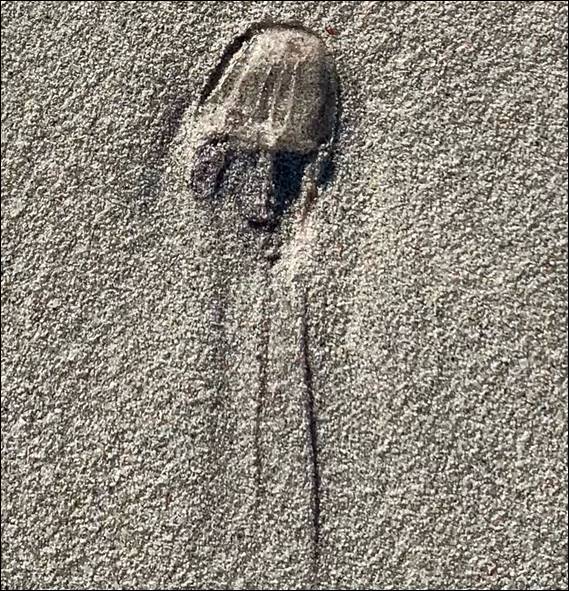
Last weekend Lisa also captured the above image that I really like, and don’t like. From a photography perspective I love it, having only ever taken images of them in the water myself. But being a South Western Stingers (Carybdea xaymacana), I’m not so thrilled. They normally make their first appearance much closer to Christmas, when the summer school holiday starts. Their presence, and the not as idyllic conditions as the first image, didn’t however stop me from dipping into the water twice today:
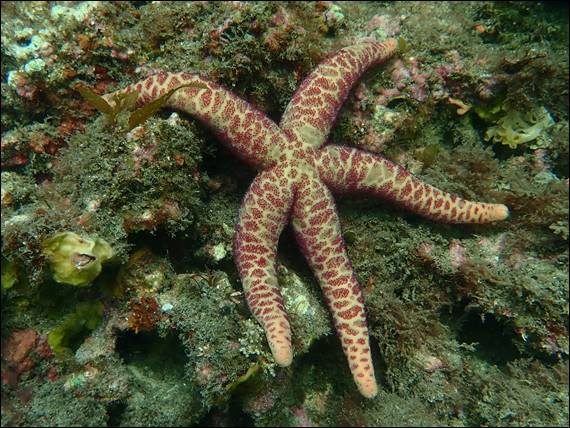
I was fully expecting not to see the abundant fish life I saw of Meelup Regional Park or at Canal Rocks, and was not disappointed when my expectations were met. But the ease of walking down and diving in, without driving, makes it worthwhile. I was happy to find the above Pale Mosaic Seastar (Echinaster arcystatus), one I have mentioned before so started digging for interesting facts about it. I read, again so it seems now that I have looked back at past posts, that some say this species resembles the Mosaic Seastar (Plectaster decanus):
Making me wonder if that was the seastar I found, and failed to identify, the last time I wrote about the Pale Mosaic Seastar (https://sandbagged.blog/2021/11/20/a-biology-lesson/). Many seastars are carnivorous and prey on molluscs, but both of these two species feed mainly on sponges, but also other sessile animals. The term sessile meaning they are not able to move about, being attached to a solid substrate. Marine animals, other than sponges, that are sessile include corals, bryozoan, truncate, and barnacles, with the last also found on boats:
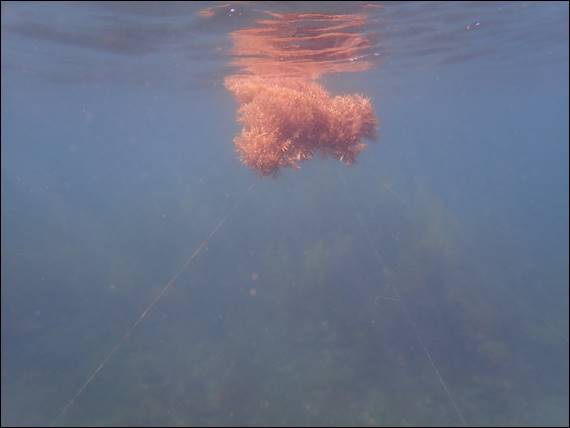
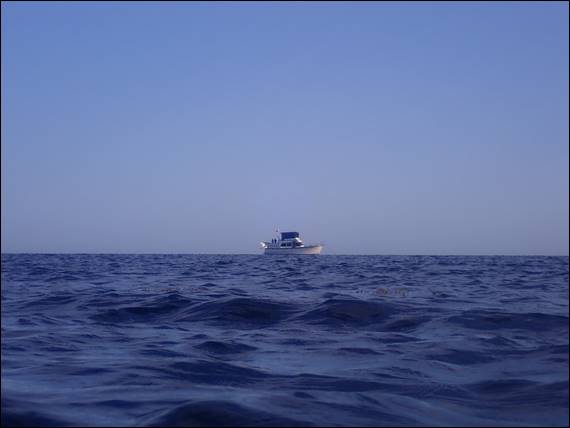
And there have been plenty of boats out, with talk of bountiful amounts of Western Rock Lobster (Panulirus Cygnus) for the picking. Not that Rongy had much success recently. The people on the boat a few images up were however not diving but fishing. The weed floating in the foreground of the same image, being the above weed. Entangled in fishing line that had snapped, or been cut, due to the hook and weight being caught in the reef below. Not something I like to see, or leave behind, so spent some time retrieving all of the line:
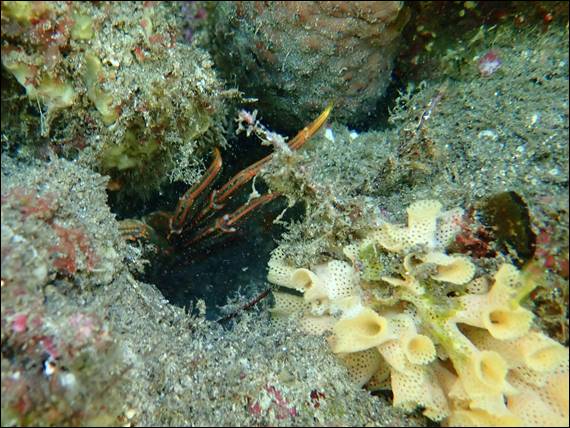
I found one Western Rock Lobster, above, who was not game to sit still for a picture. And this seemed to be a similar theme, when I spotted what I am sure was a Red Bait Crab (Plagusia chabrus) grazing on the reef. I didn’t bother going down, knowing how skittish crabs can be. Sure enough my presence floating above was enough to make it crawl deeper into the reef. I also briefly saw the very distinctive shape of a juvenile Port Jackson Shark (Heterodontus portusjacksoni), of which I have only ever seen one before:
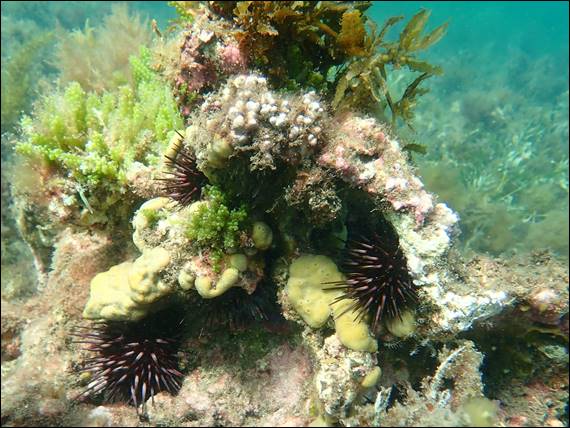
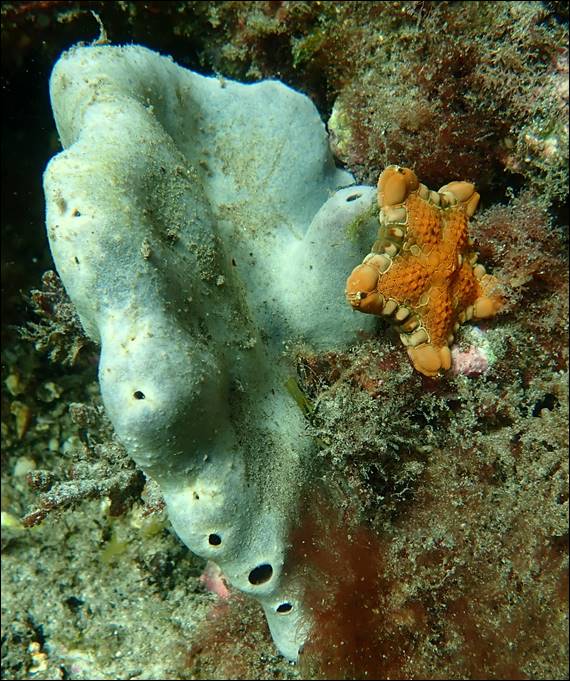
As soon as I saw it, it disappeared into the crevices of the reef. If I saw right, it came from one of the lucky 10% of eggs laid by these sharks. The other 90% get eaten by predators, during ten to eleven months it take for the eggs to mature. My last image being of a Biscuit Seastar (Tosia australis). They come in a multitude of colours and patterns, but the distinctive shape and six to eight knobbly plates along each arm makes it easy to identify. While it may not have been picture perfect above, below the surface it was still possible to get some perfect pictures:
 Sandbagged