Being keen spy a whale or two, Lisa was up for a wander on Saturday. The obvious place to head was Cape Naturaliste Lighthouse from where a number of walk trails head out. One of which takes you to the point of Cape Naturaliste and a whale watching platform. Here you can in 180 degree views of the south Indian Ocean. While this is a great spot to be, you are only able to observe the ocean when you get to the platform, so having been lucky with recent whale sightings both in the bay and off the west coast I suggested those locations. We plumped for the closer location of Meelup Regional Park, for several reasons:
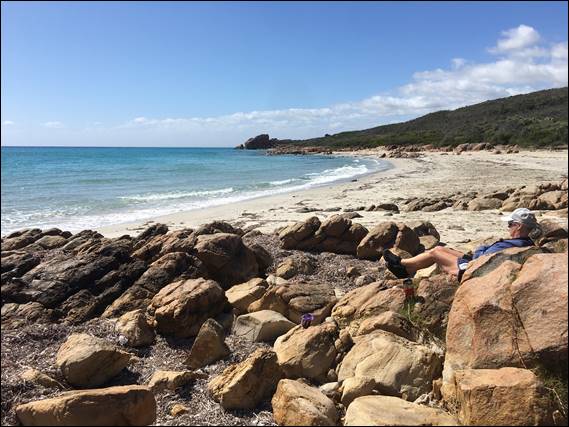
Firstly, it is generally calmer here than on the west coast, making whale spotting that bit easier. Secondly, the meandering path is lovely and takes in stunning views of the bays with their aqua blue waters before then branching out up on the ridge for views from on high. Lastly, we could stop in Dunsborough on the way out to grab a feed from the bakery, allowing us to start the walk by sitting down and taking it all in. The plan worked well, and as we laid back on the rocks munching away we were greeted to a few whales travelling northwards up the bay:
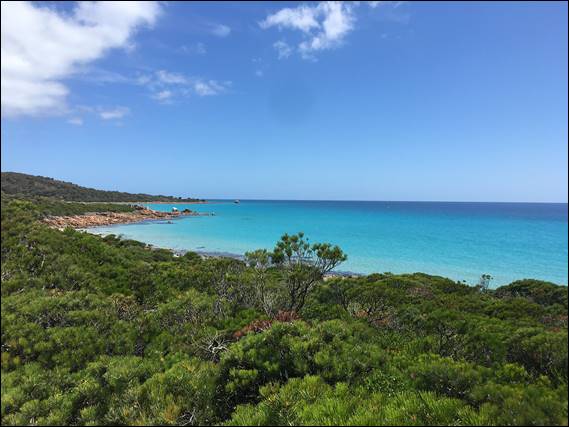
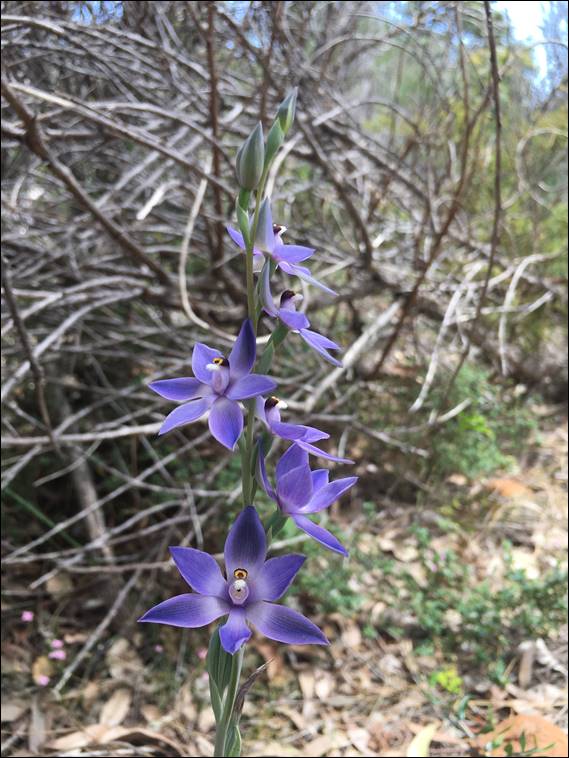
They were some distance out and did not give us an acrobatic show. Based on the shape of the tails and way the bodies arched out of the water it is possible that they were Blue Whales (Balaenoptera musculus). Geographe Bay is claimed to be the most accessible place in Western Australia to see these whales, as they come in close to shore in relatively shallow and crystal clear waters. I’m pleased to say that we did go for our wander, but didn’t see any more whales. Also, and not surprisingly with the way the season is tracking, we didn’t see any orchids other than a couple of Scented Sun Orchids (Thelymitra macrophylla):
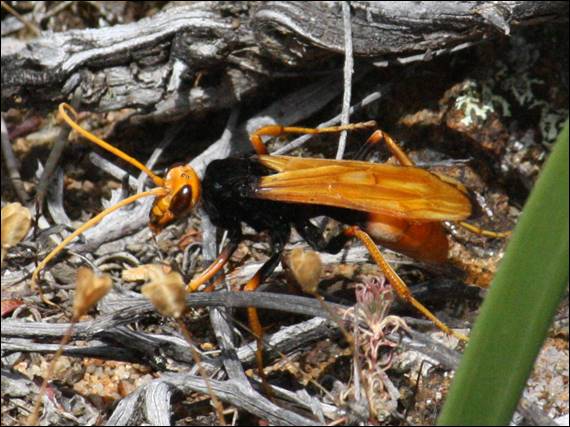
The heat did however bring out a few Bobtails (Tiliqua rugosa) and King’s Skinks (Egernia kingii), but no snakes. But for a change here is an image of an Orange Spider Wasp (Cryptocheilus bicolor), which we found busily checking under rocks and vegetation. No doubt looking for a Huntsman or Wolf spider to paralyse, before laying a single egg in its body and then burying the ill-fated spider. This is the most common species of spider wasps, growing to an inch and a half and looking pretty fearsome. They are however not aggressive so will only waste their venom on humans, by stinging us, if extremely provoked:
Sarah was back in town for a few days and keen to get out, so for Sunday we made plans to head to Moses Rocks. Driving out the clouds along the western coast looked dark and ominous, whereas to the north they were more broken. This kinda aligned with the forecasts I had been tracking for each location, so we changed plans. This resulted in me finding myself parking at Castle Rock beach for a second day. The bay at times looked as stunning as yesterday, although every so often a bank of clouds would come over ridge and the amazing colour of the water dulled, as rain started to drizzle down and soak the rock:
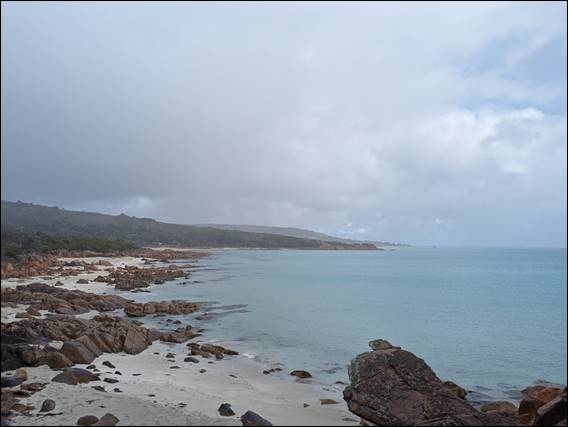
It was warm and there was a moderate wind, so in-between the showers the rock dried up just fine. Not that there was a need to stop when the water fell, as the coarse grained granite provided great friction whether dry or wet. As Sarah found out, as she willingly followed me up one, two, and then a third line on the north facing side of the castle. I had offered her the chance to have a lead, and she was at first keen but as we racked up quick climbs her desire faltered. Maybe dampened by the weather, but also may be put off a bit by the lack of a break between each climb, which didn’t allow her arms to recover:
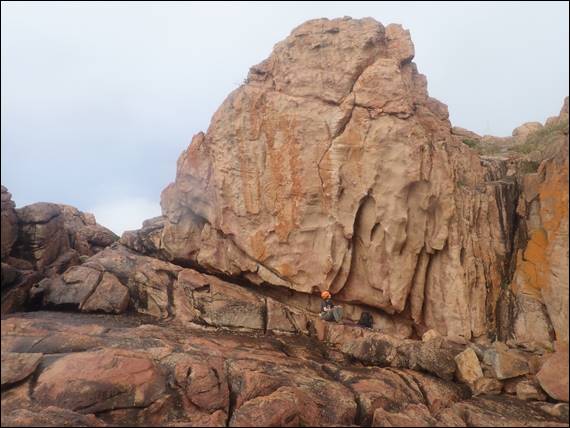
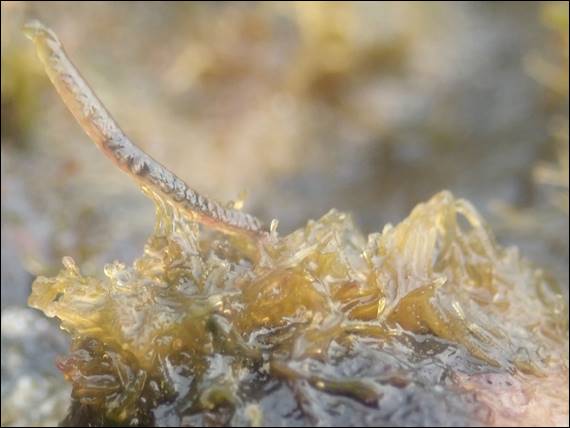
When we moved to the southern face we did take a break, and as she sat up the wall protected from the rain I went looking about. Thinking there was nothing to see a movement caught my eye. In the weed and algae that was within the wave wash zone there were heaps of worms, seemingly reaching upwards but I have no idea what they were searching for. I also have no idea what they were, and my best guess is a type of sandworm. Possibly, based on some of the body characteristics, juvenile Blow Lugworms (Arenicola marina). The larvae of which are known to settle on firmer ground to further develop, before moving to more sandy areas where they can burrow:
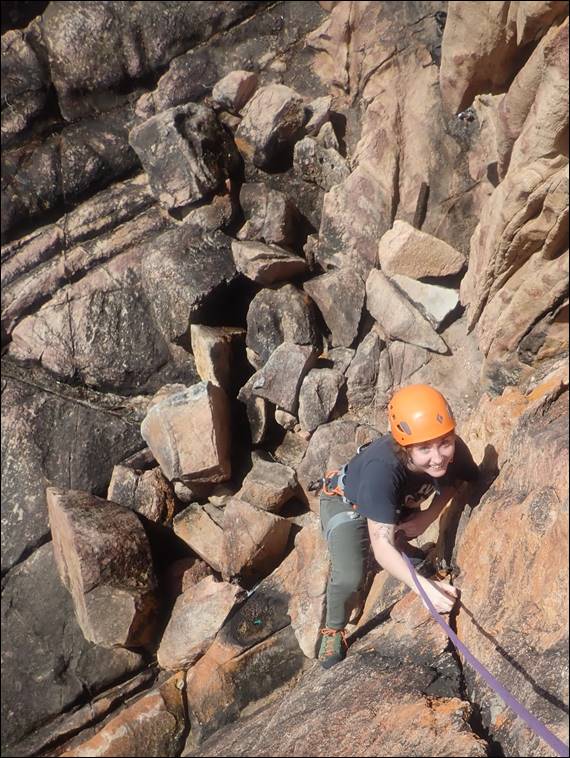
It may seem that there was not a lot of climbing going on, but after the short interlude we cracked on. The climbs from here on were a bit longer and certainly more technical, and I could sense Sarah’s self-doubting nature creep in. But with a bit of gentle encouragement she followed me up another three fun lines. Even keeping going when her brain was telling her she couldn’t do it, or her arms were telling her they were done. All up it was a very successful second visit to the area, and there were smiles all round at the end of both of the back to back trips here:
 Sandbagged