The Capel Nature Reserve was calling me for a little nature boost. And I went there despite looming clouds that threatened a sprinkling of rain, which did eventuated but didn’t dampen my spirits. I parked in a different location this time and wandered off into the bush at some random spot. Hoping that by taking a completely different path, and not being drawn to the familiar locations, where I have previously seen particular species, I might stumble on something new. The groundcover, like at Crooked Brook, was a wonderful sight:
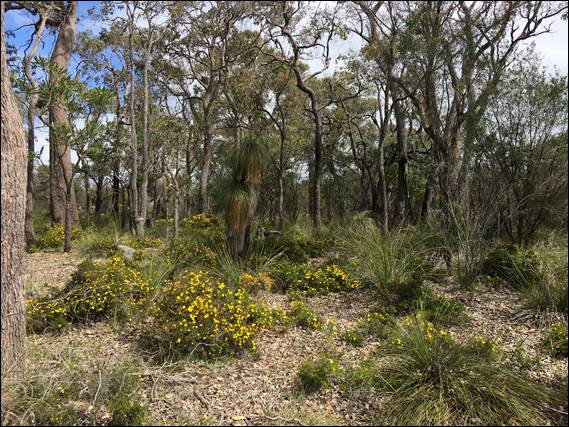
The main shrub in flower being the Yellow Buttercups (Hibbertia hypericoides), there are some 400 species of Hibbertia in Australia although I can’t find out how many of these are found in the SW of Western Australia. Regardless of how many there may be I’m taking a gamble with my identification, but it looks about right. One of the drawcards for coming here was not the blanket of yellow, but the Chapman’s Spider Orchid (Caladenia chapmanii). When I last came here just three weeks back, they were only just starting to come out:
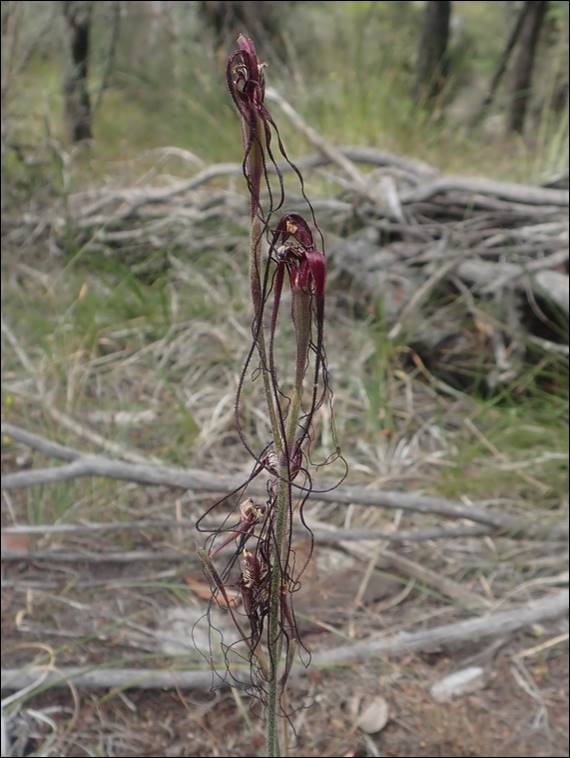
Sadly however every specimen I stumbled across was wilted and on its way out. And if you want to get an idea of the display that I had missed, check out my post from last year https://sandbagged.blog/2022/09/18/the-multi-coloured-picture-show/. Walking on aimlessly with no idea of where I was going or indeed where I was, other orchids were scattered about. The most common being the Cowslip Orchid (Caladenia flava). This particular orchid, while common as muck, can pop up with quite a wide range of petal and sepal sizes, shapes, and hues of yellow, white, and pink:

There were also a fair few Sandplain White Spider Orchids (Caladenia speciosa). It was when I spotted the first one of these and put my bag on the ground, that right next to it I spied this Burton’s Legless Lizard (Lialis burtonis). Several things made it obvious that it wasn’t a snake, including the shape of the face and ear openings. It stayed completely still, as I took a few images getting very close. So close that I thought it may have been dead, that is until I lightly touched it. When it shot off into the undergrowth, slithering like a snake. This particular legless lizard has no front limbs, and only tiny hind limbs that are hard to see:
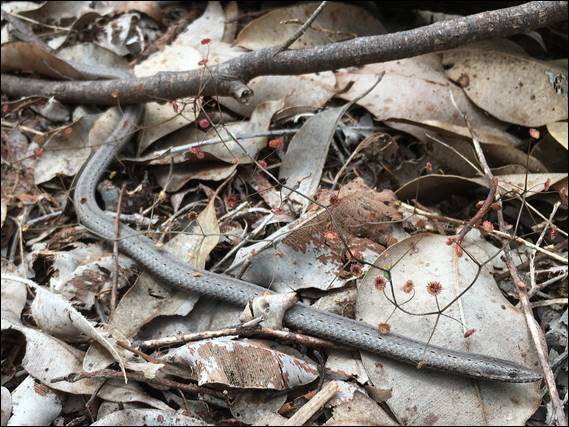
While in warm climates they are nocturnal, in cooler climates they can be active during the day. Today for me was one of those lucky cooler periods. These lizards wrap themselves round their prey, suffocating it. Then use a special hinge in the skull that allows it to dislocate its jaw and swallow its prey. Carrying on there was a swampy area, with no snakes that I could find, but heaps of Dense Mignonette Orchids (Microtis media subsp. densiflora). These look similar to the Common Mignonette Orchid (Microtis media subsp. media), but its spike has a far denser arrangement of flowers:
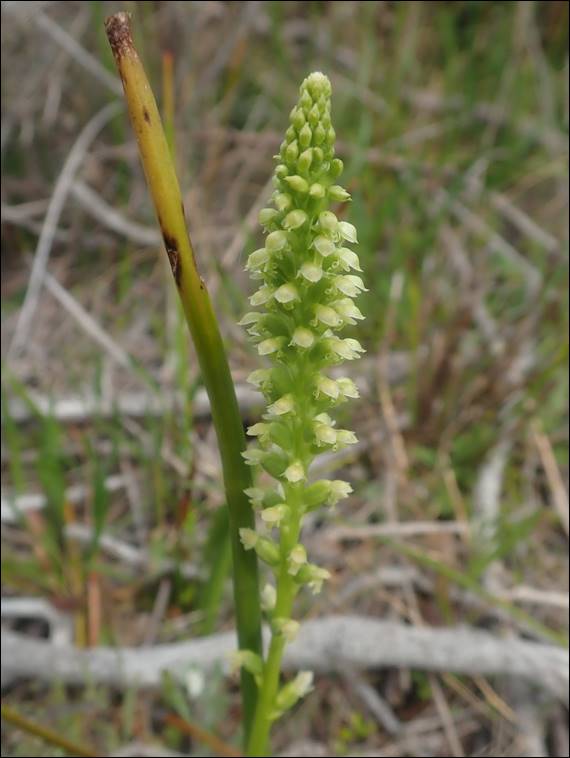
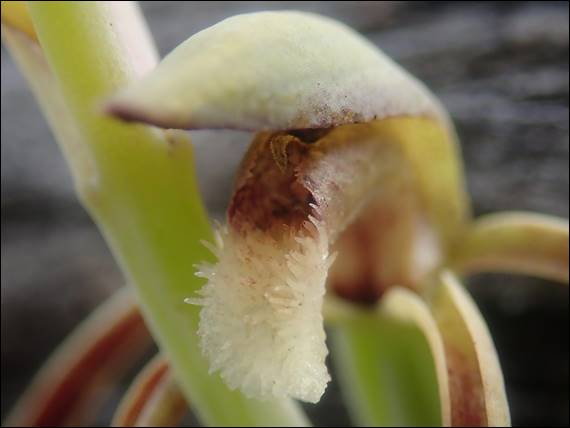
It has up to one hundred and fifty small yellowish-green flowers, that have a less elaborately fringed labellum to the Common Mignonette Orchid. There are a number of different Mignonette species and I’ve read they are often overlooked, even by orchid enthusiasts. This is due to the seemingly dull and insignificant flowers, when compared against the many other varied flowers of other genera of orchid. But just like the drably coloured Rattle Beak Orchid (Lyperanthus serratus), below, when you take a close look at the flowers they are in fact just as pretty in their own unique way:
 Sandbagged