As to be expected I have been out and about for a wander to look for orchids since our return from overseas. My first jolly in nature was not in fact climbing related, being a walk at Crooked Brook where I drove to full of anticipation of seeing a heap of orchids. You may wonder why I have not reported my findings, especially as this trip out was before my post about Howsie and my trip to Wilyabrup. Quite simply it was due to not seeing many orchids, although I did have a lovely walk round a couple of the circuits:
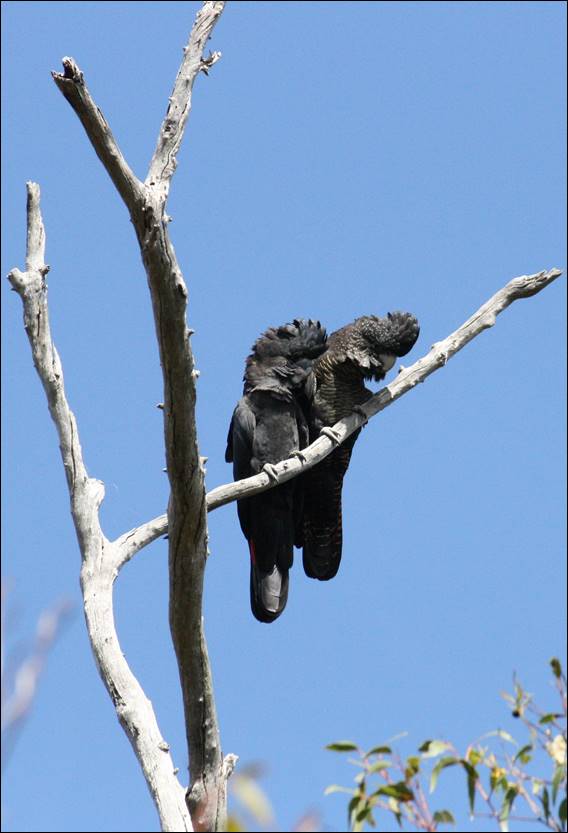
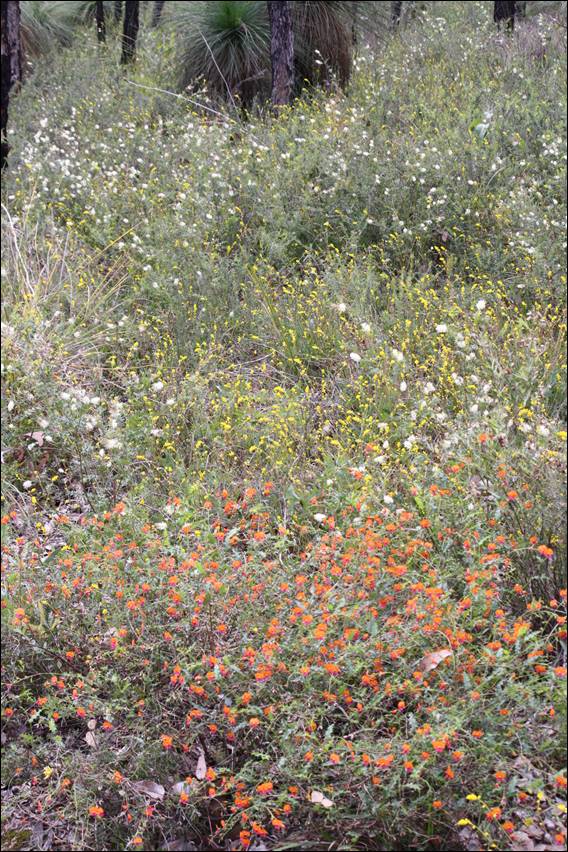
And despite the abundance of cars, which was not unexpected being a long weekend and the start of the spring school holidays, I didn’t bump into too many people. My eyes were however mostly glued to the ground, but I also looked across the colourful groundcover to take in the beauty of all the flowers in bloom. At one point in particular I also spent a long time looking at a flock of Forest Red-tailed Black-Cockatoo (Calyptorhynchus banksii naso) who seemed unperturbed at just how close I was to them:
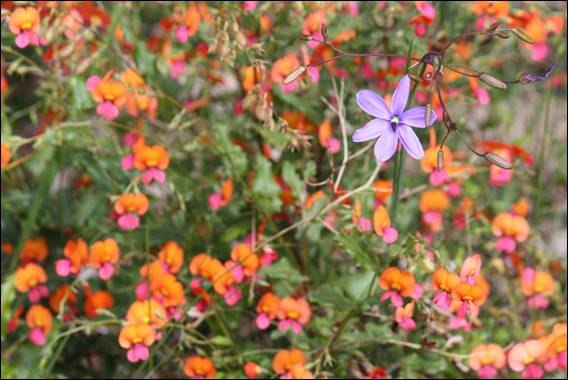
There were of course some orchids out, but I really had to look hard to find them. Sadly some of the beauties I found on my last visit here had already disappeared or were wilting. While a couple of the more commonly seen species were coming out to keep the numbers up a bit, such as the Purple Enamel (Caladenia brunonis) and Cowslip (Caladenia flava). The only new find for the season was the Forest Mantis-Orchid (Caladenia attingens), of which I only spotted one despite being described as a relatively common orchid:
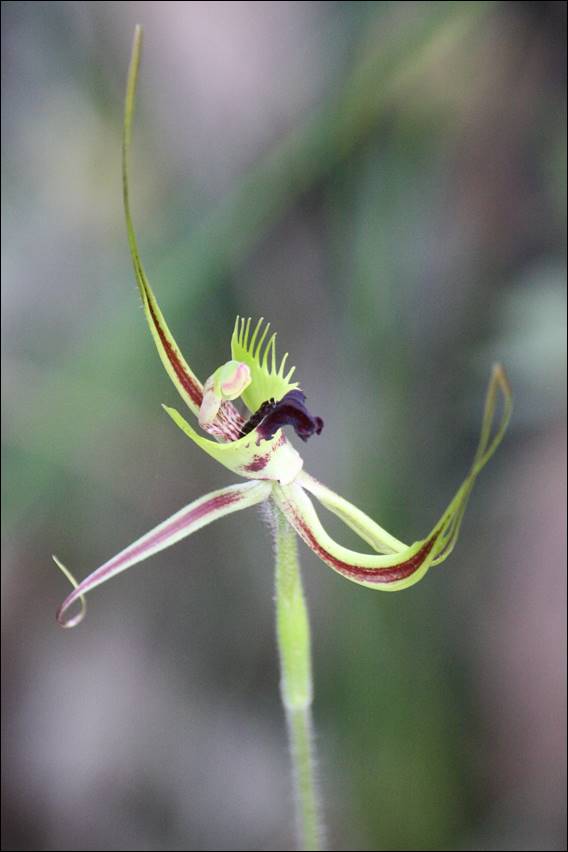
The common name is self-evident, and the Latin name also seems appropriate for the same reason with attingens meaning “reaching to”. This was not however intended to refer to the sepals at the front of the flower that are reaching upwards like a praying mantis. It was instead used to describe how the calli, or fleshy lumps on the upper surface of the lip, were said to extend as far as the tip of the labellum. However, as seen in the image above they only reach as far as the green portion, and do not extend into the tip where it turns purple:
Despite the lack of orchids I managed to spend a very relaxing couple of hours scouring the area, and even took images of different ant nests with an aim to identify them for a post. Spotting amongst others Bull Ants (Myrmecia gratiosa) and Green-Head Ants (Rhytidoponera metallica), which have very different entrances to their nests. But when I discovered there are over 500 species of ants in the South West of Western Australia alone, I abandoned that idea. And we will finish that walk with an image of a flowering Grasstree (Xanthorrhoea):
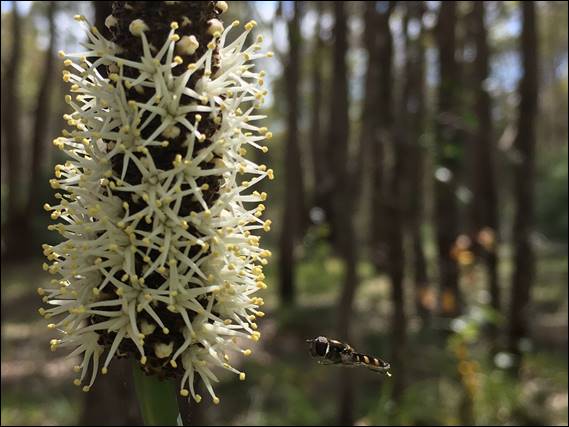
The order of insects Diptera covers flies, and Hoverflies are considered the most important pollinators of all fly families. You may notice in the above image a Hoverfly, possibly being Melangyna collates or Symosyrphus grandicornis both of which are common native Australian species. These two species have been identified as being pollinators of orchids. My hunt of which continued on Thursday, when after three days of being back in the office I really needed to get out and declutter my brain, so popped into Manea Park on the way home:
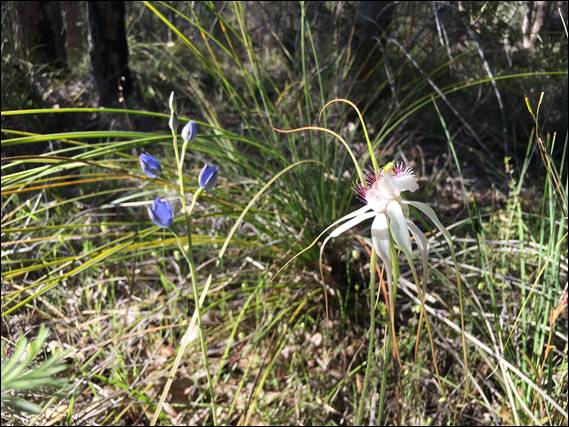
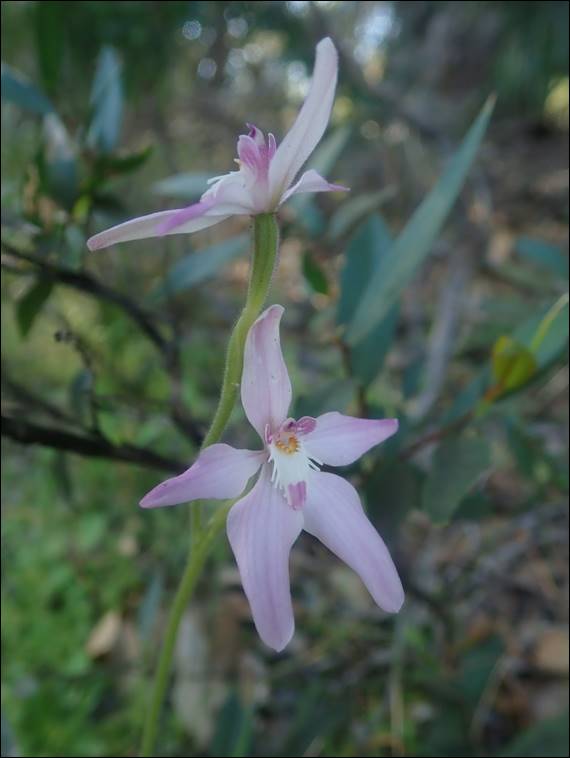
This time I had a fair bit more success with several new species for the season including the Blue Lady Orchid (Thelymitra crinita) and a number of hybridised Pink Fairy Orchids (Caladenia latifolia). While this restored my faith that there could be more to come, chatting to a friend in Perth, Verity tells me that the orchid season up that has also been somewhat lame. With many of the usual species that are commonly seen being hard to find this year. All I can do is keep my fingers crossed for down here, and keep heading out:
 Sandbagged