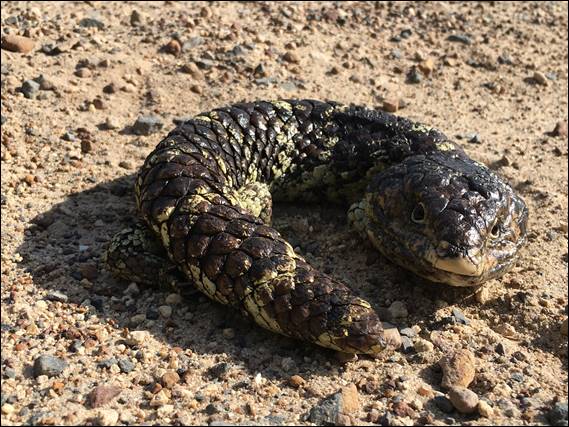
On Saturday Lisa and I headed out for the morning, but that had been a town visit and as such did not satisfied my desire to be outdoors. Orchid season could be considered a little early, but regardless of that I headed to the Capel Nature Reserve later the same day. Before I got there, and to avoid it being squashed, I stopped and encouraged this South Western Bobtail (Tiliqua rugose) off the road. The thick plates of the heavily armoured body, can vary considerably in colour from dark brown to cream. If you check the one we recently saw at Wilyabrup that had an almost entirely orange head https://sandbagged.blog/2023/08/05/blurred-vision/, a colour that was completely absent from this one:
Once parked up and on foot proper, I spotted heaps of orchids. Some still yet to sprout, some with buds, and several in flower. The pick of the flowering ones was this Bird Orchid (Pterostylis barbata), the species name of barbata being a Latin word meaning “bearded”. There are twelve species of what are sometimes called bearded greenhoods. And to date I have only come across this one, which is the most common species and was first formally described in 1840. The bearded nature of the labellum is not only used to name this species. It also plays a very special role to ensure pollination occurs:
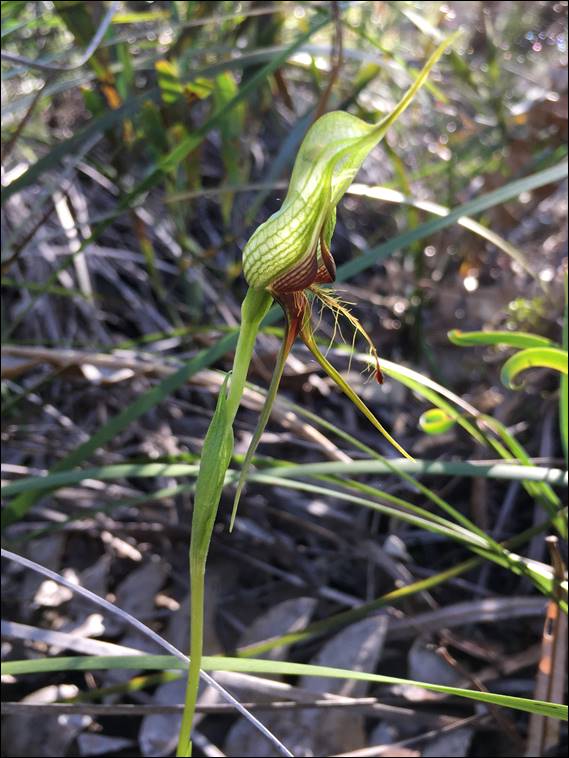
The labellum is very sensitive to touch. When a gnat, having been attracted by a scent the orchid releases lands on it, it springs up. This pushes the unsuspecting gnat into the cavity formed by the fused petals and dorsal sepal, which forms the bird’s body. The labellum stays there blocking any exit and forcing the gnat to crawl up through the body so it can escape via the opening at the birds throat. On this journey it passes the sticky stigma (female organs) that take any pollen the gnat may be carrying, before then having to pass the anthers (male organs) and as it brushes past them fresh pollen sticks to its body:
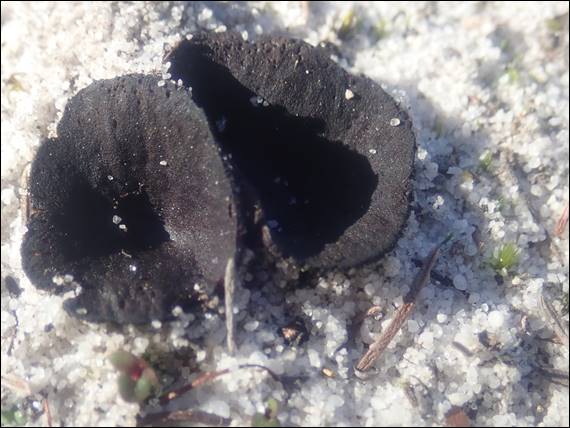
I also spotted a few of the above small black disks in the sand. I believe they are Flat Black Cup Fungus (Plicaria cf. alveolata), which is mycorrhizal. This term derives from two Greek words of mýkēs and rhiza, which mean fungus and root. These words are apt as mycorrhiza is the name for a fungus that has a symbiotic relationship with the roots of a plant. The fungus colonizes the root tissue of its host, from which it takes carbohydrate. And in return the fungus provides the host with nutrients, which it has absorbed from the soil. This particular fungus is quite fragile and easily broken, so needed to be careful and look down as I walked along the open tracks:
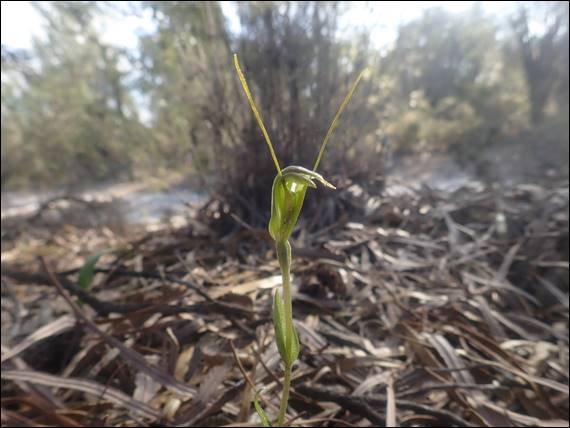
Seeing I mentioned the Slender Snail Orchid (Pterostylis crispula), in my last post I thought I would include an image of one I found at the Capel Nature reserve. Being easily identified by the long sepals that look like the snail’s antenna. I managed to get another trip outdoors on Sunday. Seeing no one was available, I decided a solo top-roping climbing mission was in order thinking I might sneak a visit to another reserve for more orchid hunting on the way home. I was tossing up between going a bit harder or just kicking back on more moderate routes, and opted for the latter:
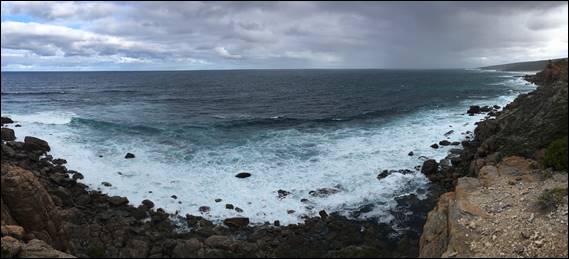
Fortune was on my side as a big rain band passed to the north and no more than a few drops fell where I was. The cloudy sky and stiff westerly wind kept the temperatures down, so I wasn’t really expecting to see any scaly friends. Although, that didn’t stop me checking every crevice with no joy. Partly due to opting for more moderate routes, but also due to the chosen crag, I quickly clocked up my normal six routes and was feeling good. So I kept going and eventually doubled my usually tally, and Bob you’ll be happy to hear I bagged close to 1,200ft. Better still, as I rapped down the last route of the day I had a lucky find:
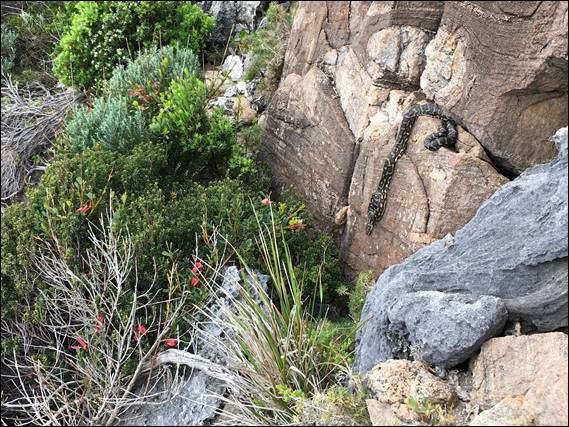
Looking about, it was hard to miss this South-western Carpet Python (Morelia imbricata). These snakes can grow up to four meters long over their fifteen to thirty year lifespan, but most only grow to a little over two meters. It was hard to say how long this one was. I’d say it was easily one and a half meters, but I’m tempted to say it was closer to two meters. The thickest part of the body looked to be almost as thick as my wrist, and it is easily the biggest specimen I have seen. It was a great way to finish up the session, and it didn’t end there because I spotted quite a few snail orchids on the side of the track on the walk out:
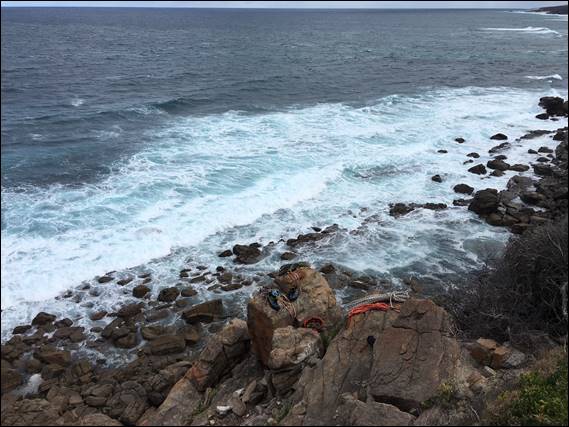
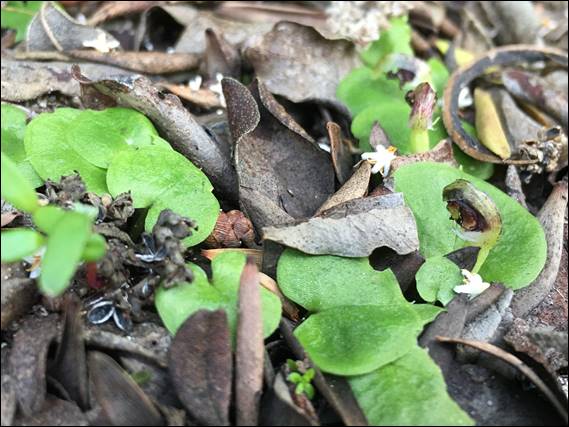
Upon closer inspection of one I noticed these Sandhill Helmet Orchids (Corybas despectans), which is a first time find for me. They are known to flower between June to September, and sadly they looked to have only recently passed their flowering period. I have walked this track literally hundreds and hundreds of times, and have never spotted these before. Maybe in part because I don’t wear my glasses when I come here, whereas this time I was. Mind you these were tiny, the basal leaf being no more than 15mm across and the flower was half the size of that. If the flower had been in full bloom you would have noticed that it faces downward, which is why the Latin word despectans has been used for this species meaning “look down upon”:
 Sandbagged