When given a challenge Howsie is always keen to give it a go. So after a lunchtime walk on Wednesday, with Josh and Mark, I sent him the following image. We were of course primarily orchid hunting and found a few, including the first Pink Fairy (Caladenia latifolia) and Slender Snail Orchid (Pterostylis crispula) sighting of the season. But it was this seedling, looking a little like a butterfly as it was just starting to germinate that we really liked. Being at such an early stage made it hard, and Howsie came back with three possible genus:

This was narrowed down to one genus and two species, after I told him where we had found it. Being the Candlestick Banksia (Banksia attenuata) or Bull Banksia (Banksia grandis). Banksia trees are highly susceptible to Phytophthora dieback, which is found in some areas around Manea Park. And what with all the visitors this place attracts there are shoe cleaning stations to prevent the spread of infected soils between areas. Hopefully, lots of the seedlings we spotted will flourish and over time replace the, too many, mature trees that have been struck down:
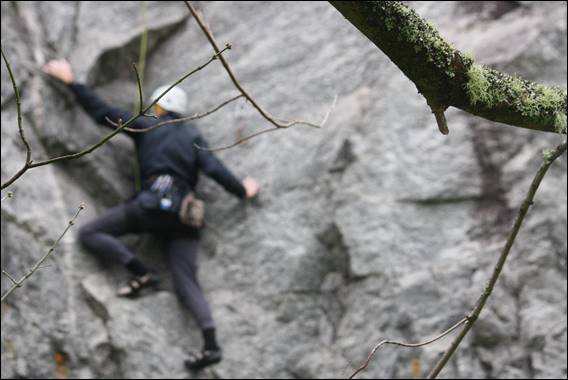
It has been a good week. Kym was up from Albany and he popped over for a catch-up and feed on Monday evening, after which he headed to the west coast to visit friends. Sadly the rest of his family did not make the trip, for one reason or another. However, we agreed that a weekend adventure down his way was long overdue. We pencilled in October to rectify that, when I’ll hopefully catch up with the whole crew. Seeing he was up our way I suggested he may want to venture out for a climb with Howsie on Friday morning, after which he was due to head back:
I had assumed he was staying in Dardanup with family, so Welly Dam would have been ideal and close. It also happened to be Craig’s birthday this week, and he was home from his FIFO job. This allowed the opportunity to get him out on Friday for his usual present of a climb. And as you can no doubt tell I once again took advantage of my flexible working arrangements. Opting to join the motley crew on Friday morning, before heading back home to work for the afternoon. As is sometimes the way, not everything pans out as planned and Kym didn’t make it:
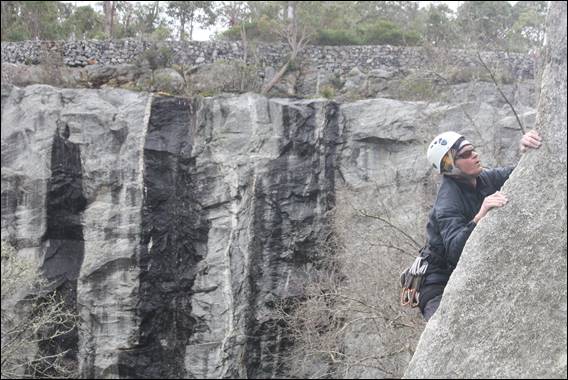
Partly down to my assumption of where he would be staying on Thursday night, and we all know what assuming things can lead to. As it happened Craig had also assumed he would not be leading anything at the fearful dam. A thought that was more deeply embedded in his mind when he saw the conditions, with the black streaks running with water. And like my assumption his was also wrong. With surprisingly little persuasion we steered him to some of the more gentle and shorter, but still worthy and heady, routes at the dam:
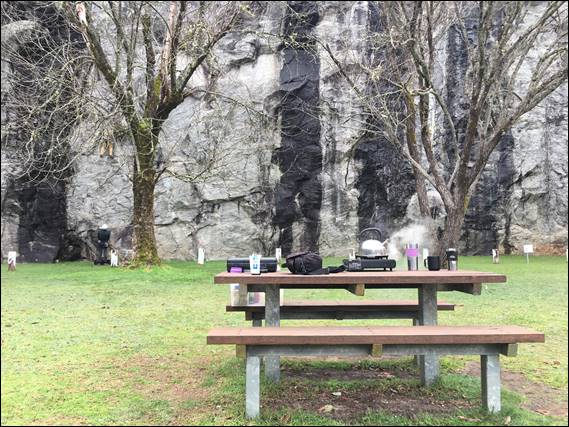
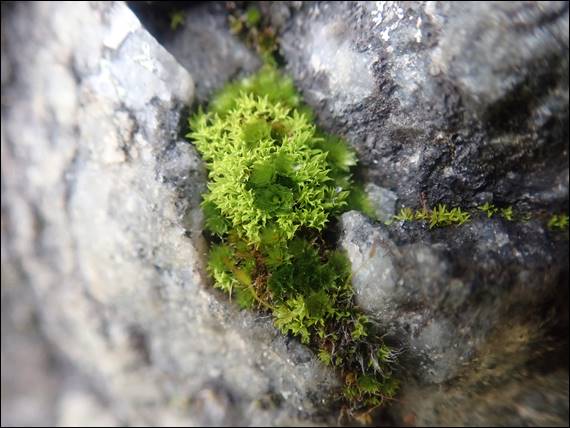
Having three allowed time to find a few different angles for photos, making a brew, and checking out the wetter parts of the crag to marvel at the small habitats, like the one shown several images above. Hoping to find some critters of interest, which finally paid off with this Australian Emperor Dragonfly (Anax papuensis). Being as cold as it was, I was able to get close up and personal to have a really good look. The dragonfly didn’t even flinch. Howsie and I pondered how long it would live for and got it very wrong:
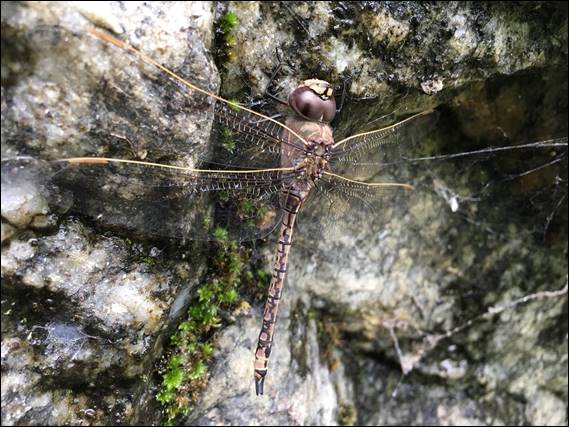
Generally moths will live for a few days, butterflies for two to three weeks, but dragonflies can live anywhere from a week to six months. They are one of the first winged insects to have evolved. Being around almost 300 million years, which is a thousand times longer than humans. There are some 5,000 species found all over the globe except Antarctica, with +300 species in Australia. The Australian Emperor Dragonfly is found all over the country, and at up to 70mm long is one of the larger species. Living, in its adult stage of life as a dragonfly, for two to three months. As for us at Welly Dam, we lasted about four hours:
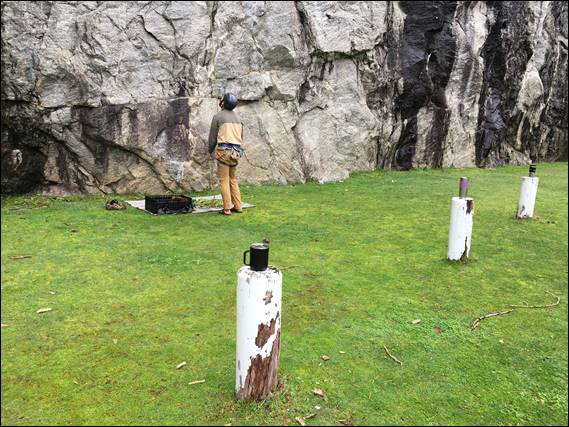
The pace was relaxed, interspersed with drinking tea, and hanging about during some relatively slow ascents. But the steep walls, as usually happens here, didn’t take long to sap our strength. So even with the rests between our individual battles on the cold hard granite we were all very satisfied with the time we spent here. And as the last lap on the last line was being completed the temperature had seemingly risen enough for the insects to finally come out. And this drew out a mob of hungry male and female Splendid Fairywrens (Malurus splendens), who hopped about right under Howsie’s’ feet dressed in their eclipse plumage. But there are no images to share as I was too busy enjoying just observing:
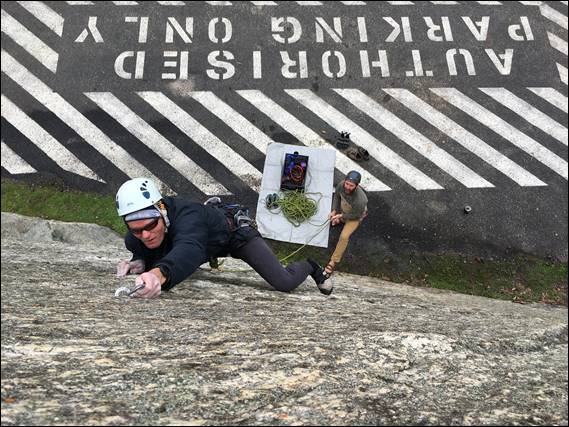
 Sandbagged