In early 2012 I wrote an article that made into the third or fourth edition of the Australian magazine Vertical Life. The article was called Wait Awhile, named because it took time for me to transition from bagging first ascent on almost every trip out in the mighty and ancient Red Centre, to finding my way on the more established areas of the not so wild or remote but equally picturesque South West.
When approached by the current editing team, and having been so long since the last article, I was more than happy to help out again. They were after a short article to promote the South West of Western Australia as an alternative Easter getaway option for climbers. With a focus on the lesser frequented gems that provide quite places during a period when the popular cliffs would be draped with ropes and crawling with people.

Unsure of the level of detail they were after, I prepared double the amount of text required. They expertly crafted this down to the desired length that meant a couple of locations were left out, one unfortunately being Cosy Corner. The article was accompanied with images I had provided, while the full page lead image was picked from their own image library. This lead image was actually from a similarly named crag in the South Coast region not too far from Albany… oops.
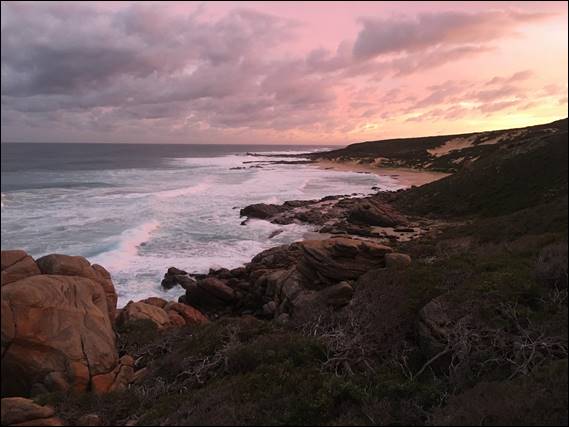
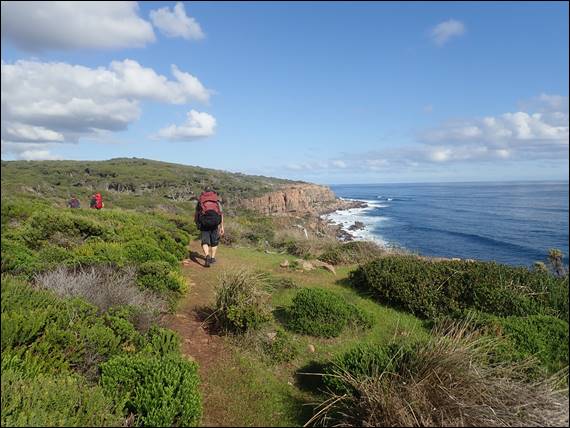
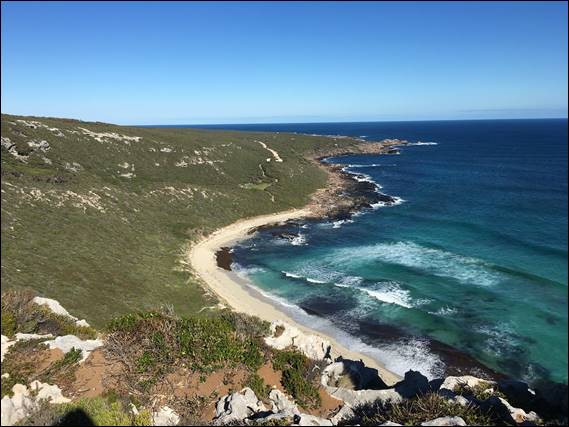
Below is the text from the article that was published in the Autumn 2023 edition, under a section called Local Lore and aiming to give a slightly more in-depth insight into specific areas. The images below are not the same as used in the published article, and I have chosen them to give what I personally feel is an indication of the atmosphere each place has to offer. While the images not linked to the specific climbing areas provide a glimpse of what you get to see as you walk to the areas or indeed just head out to explore the coastline.
Exploring WA’s Southwest Coastline
In the southwest of Western Australia lies Busselton—a small coastal city known to local climbers as a gateway to a multitude of crags. All are relatively small, but aesthetically appealing and within an hour’s drive of the town. Mostly spread out along the rugged coast, each crag offers a different setting, atmosphere, rock type and a day or more of climbing.
Visiting climbers often flock to the main cliffs of Wilyabrup, made famous by the iconic Steel Wall with its steep, finely featured face and Bob’s Hollow, which became a popular alternative to Thailand for locals during COVID, with overhanging, jugging up strenuous limestone sport routes on flakes, pockets, stalactites and columns.
These locations can be crowded, especially on long weekends, like Easter. But the hidden gems, in locations that you may often have all to yourself, are the focus of this article. Even though you may avoid the crowds at these crags, you are likely to bump into one or two of the local crew—the vast majority of whom are friendly, helpful and happy to have a chat and offer an opportunity to climb with them.
Welly Dam
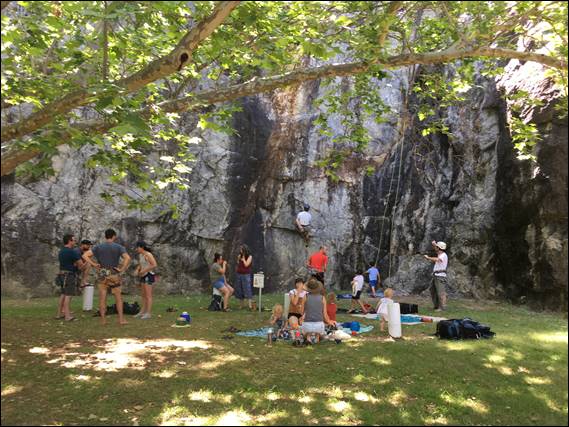
As all good stories should start, we begin with an area that has a chequered history. There are a few who may bag the bolting of the routes at Welly Dam, but I would risk saying that this may come more from envy of having missed out in the development of this crag than truth-based criticism. For many, the first time they climb here they find it intimidating and hard. The black and grey-streaked granite walls, carved out of the hillside to provide granite boulders for the dam that lies below in the valley, are hard to read. Steep, technical, sustained climbing awaits. And once you get a taste for this place, it is hard not to like it.
If you come over with the family in tow, this place is perfect with a grassy base for picnics. It also offers hikes, mountain bike tracks, and water sports on the reservoir.
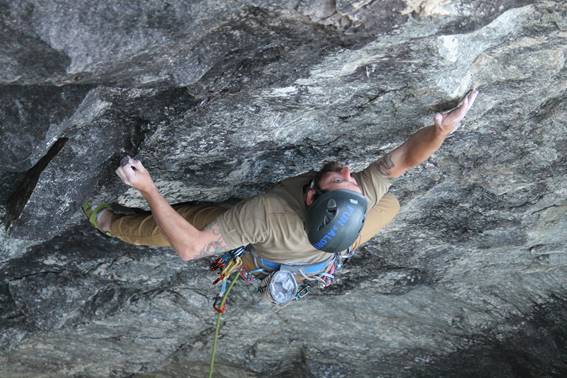
Dan Meester fell for this place and in the early 2010s, adding some quality lines, while maintaining the same bolting ethics of the original routes. So passionate was Dan that he would at times drag a generator and flood lights up, to climb as you can at Kangaroo Point in Brisbane, at night. He was not alone, and both Kym Hartley and Jonas Hollingworth also added some fine additions in the mid 2010s. I too added three more additions just a few weeks back.
While it is easy to say every route here is great, this is one place I feel that is almost true. Although there isn’t much for beginners—a few routes are below grade 18, but most are from 18 to 24.
Crag classics
Ear of Fear (22)—a fingery and nervous crux and delectable corner above.
T3 (23)—a great three dimensional climb that will give you a full body work out.

Castle Rock
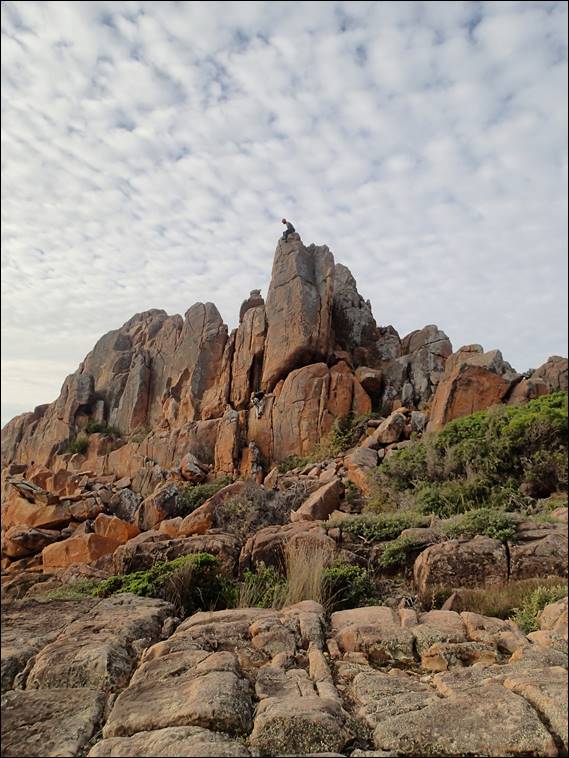
This granitic gneiss outcrop glows orange in the early and late sunlight. It may be small in size, but it’s right on the edge of the crystal clear waters abutting the Meelup Regional Park. It can get hot in the morning sun, but affords the perfect way to cool down with great snorkeling right off the rocks. Despite the low number of climbs, the rock has features unlike anywhere else in the region with rounded dishes and flakes that may perplex the gym climber. There are also a few hard test pieces, with routes in the high 20s.
Crag classics
Corn Flakes (12)—a classic for great exposed but well protected climbing.
Well Rounded (20)—this aptly named climb will have you struggle to work out how to use the holds and which way to tension your body.

Smiths Beach
These granite crags arguably have the best friction of all the outcrops mentioned here, but these come as steep walls with rounded holds. The gear is there, but at times is in flared cracks which can be off putting. Added to that, the proximity to the ocean makes this a perfect crag for those seeking an exciting trad adventure. Kym and I both stumbled across this crag in 2010, and it is how we first became acquainted with one another.
Kym was at the time hugely driven, seeking out new opportunities and hard problems, some of which are still awaiting a clean ascent. He had climbed a couple of routes at Smiths when I came across the area, and within the space of a month or so I sieged the place with anyone willing to join me. A bolt-free place, with all bar one first ascent being a ground up creation, in keeping with my British climbing ethics. One of my key partners in crime here was Craig Johnson. A wiry mechanic with an unnatural ape index, whose trade helps maintain great ability on crimps despite his now infrequent trips outdoors. But be warned, you need more than good crimping technique at Smiths; the crag requires body tension, an ability to smear, and a cool head.
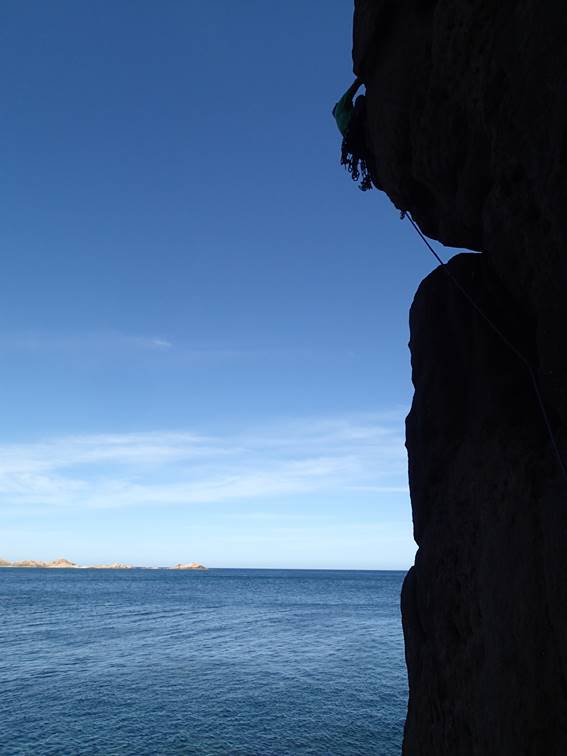
Like Welly Dam, Smiths is another crag that seems to instil fear in many when they first come here. Those who come back for a second taste become hooked, in part due to the friction holding up on wet days and very atmospheric coastal situation, with the rock sentinel at the end of the zawn keeping the rage of the ocean at bay.
Crag classics
The Billowing Sails (17)—consistent climbing in an outrageous position over the ocean.
Cape to Crack (17)—the leaning crack under a rooflet rams home the true meaning of rounded holds on excellent friction.
Moses Rocks
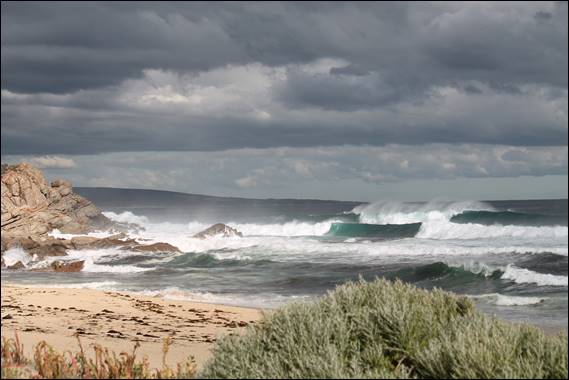
Without doubt my favourite crag has to be Moses Rocks, which I call Smiths’ little brother. Like many of the coastal crags it consists of granitic gneiss, but the texture and features at each location vary considerably. This place, like Smiths Beach, has rounded holds, flared cracks, and friction that is maintained even when wet, but is less steep and more forgiving.
Having spent my early climbing years in England, including many a trip to the Peak District, I can see similarities here that drew the early developers to the charms of this place. A key difference being that the boldness of the climbing here has been somewhat subdued with the addition of bolts, something you would never find in the Peak District. I have come to accept the bolts, as they help to ensure Moses Rocks always provides a chilled day out with a great atmosphere.

This place also offers a very fun zawn that includes a couple of routes that Ryan Doe (Rongy) and I established, which may never get repeat ascents. More than 10 years back we found the normally boulder strewn base of the zawn covered in a sandy beach and every wall bone dry; conditions we have never seen again.
Crag classics
Hathersage (15)—this Peak District namesake has a steep start on big holds, which leads you to a fingery headwall.
Wheely Things (15)—a climb that is true to the grade and yields much easier if you know how to jam.

Copper Rocks—bouldering
Nearby Castle Rocks in Meelup Regional Park is Copper Rocks, a rightly popular bouldering spot. Steep scooped formations on a wave washed platform make this just one of the many very good bouldering locations in the southwest of Western Australia. The area was first made popular by the classic problems established by Andy Lampard, and since then has gained much attention from young crushers coming out of the increasing number of boulder gyms in Perth.
More information about these crags is available from various sources, such as the printed book A Guide to Rock Climbing in WA’s South West, PDF mini guides available on the Climbers Association of Western Australia website, and of course online from The Crag.
Bio: Krish began climbing more than 30 years ago with strong British traditional ethics. Although, after moving to Australia in 2000, he has been known to partake in sport climbing—even bolting the occasional route. He is the author of South West ROCK—a guide to rock climbing in WA’s south west (2015) and Rock Climbing in Central Australia (2005).
 Sandbagged