Even with the best of intentions and early planning, things can unravel. We started planning several months back and the original plan for me to catch up with Kym and hit some south coast granite, picking the weekend such that it aligned with Rongy and Craig’s shifts. Kym and then only a week out Rongy had to drop out. Even on the day we were supposed to depart it was hit and miss as to whether Craig and I would actually get away. But get away we did and as the afternoon was coming to a close on Friday, we rolled into the Mount Trio Bush Camp:
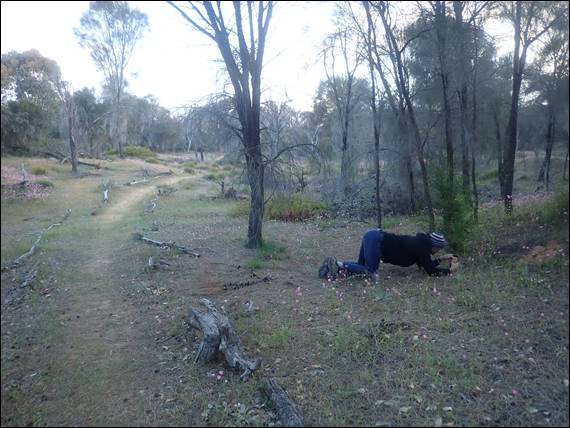
A new place for Craig but a familiar spot for me and one I will never get tired of coming back too. I snuck up on the owner John to surprise him and say a quick hello, and was soon after told by the resident orchid specialist Jarrod that there was nothing to see. Of course I didn’t believe him and was keen to have a quick walk round while there was still last half hour of light available, hoping to catch up with John and Margot the next evening. I am not going to include images of the orchids I spotted until the end of this post, except for two:
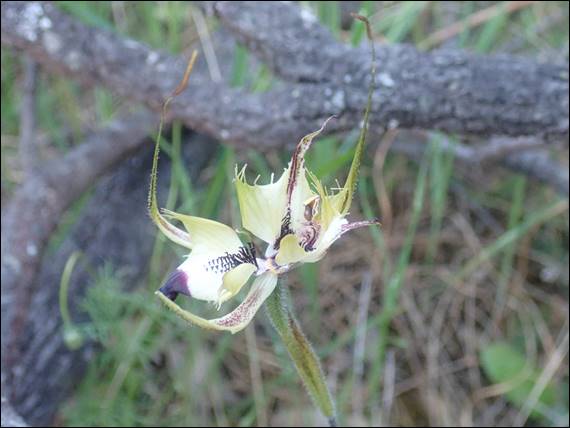
The above orchid simply has to be included now, and is yet another unusual find. It is the second time I have found an orchid with three, instead of one, labellum. This time being a Butterfly Orchid (Caladenia lobata). So it was a double whammy for me, as it is also the first time I have spotted Butterfly Orchids. You may ask why after mentioning that we were going to climb some south coast granite cliffs, that we found ourselves about 75km inland at the Stirling Ranges:
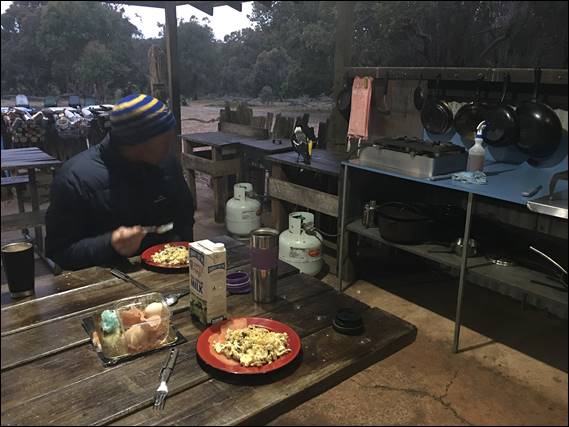
Some may feel that I steered the trip this way drawn by orchids, and while it would be a very plausible reason it is not the case. Craig is not particularly climbing fit, and we were after some long mid-grade climbs. Added to that and having tracked the weather it looked like the coast may not have been as dry as inland. It was an early night, with the hope of an early start for a big day on Saturday that was forecast to be good. In the morning and despite camping in the Stirling Ranges, we aimed to drive approximately half way towards the coast:
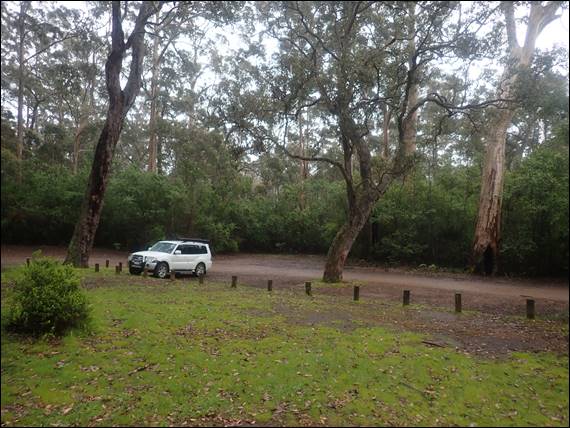
Getting up in the morning was easy. I am a light sleeper and now that watching the sunrise from the top of Bluff Knoll is a bucket list thing for so many people, the campsite has quite a few very early risers. Bluff Knoll is close to a half hour drive away and then there is a two hour hike, and with the sunrise being at 5:30 people were up and about from 2:30 getting ready. Add to that sound seems to travel well, and almost feel like it is being enhanced, in the quiet darkness of night:
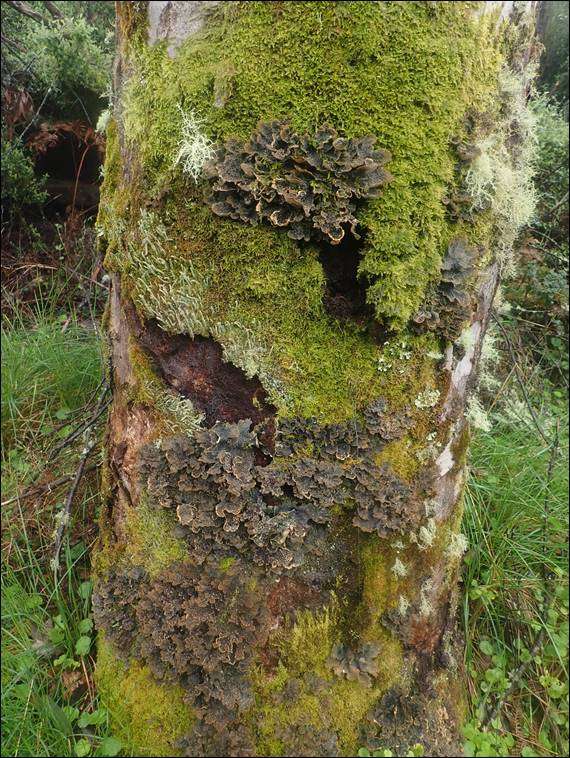
As such I could have been up at silly o’clock, but decided five o’clock was a more reasonable time for a cup of tea. This timing got us to the tree in a rock car park in the Porongurup Ranges, ready to hike in at seven. As it was this was well and truly early enough, as the Porongurup’s were completely obscured. I pondered whether I should call it fog or mist, and was thinking mist but that would have been incorrect. Now I known fog lasts longer and is denser, resulting in a reduced visibility compared to mist:
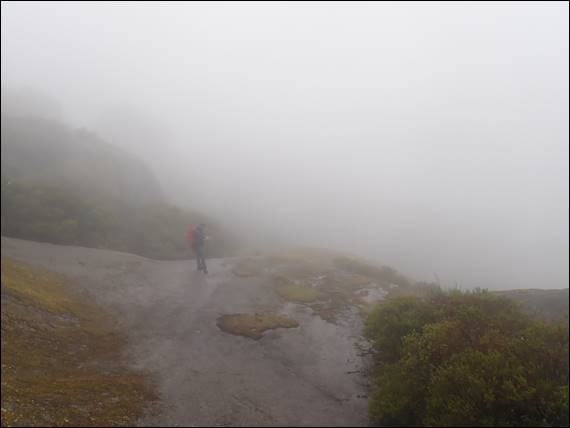
If you can see less than one kilometre it is fog, and at times we could barely see 100m. Even as we made the turn off Wansbrough Walk to head steeply up to the tip of the Devils Slide, with ever increasing elevation, the fog continued engulf us. It is well known that the Porongurup’s receive far more rainfall that the Stirling Ranges. The southern side receives on average 800mm per year, with the northern side getting 600mm. Compared to the Stirling Ranges southern and northern sides being dumped on by on average 575mm and 400mm:
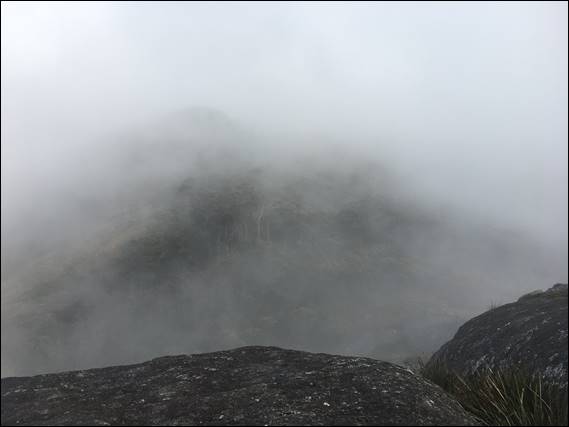
While there was a bit of rain, as we started the walk this soon stopped. However, having rained overnight everything was dripping wet. These conditions made it very interesting to find where we had to go. We had no idea where the 150m high cliff was and there were gullies separating tall and at time steep granite boulders that we had to negotiate. But taking things slowly we worked it out and eventually found ourselves atop Marmabup Rock, with ever so fleeting glimpses of the landscape below just starting to form:
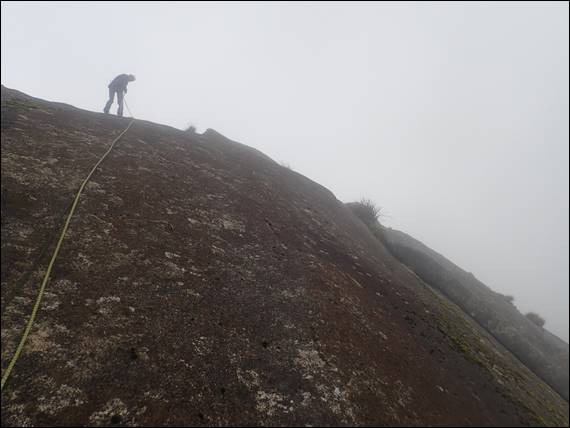
This is a place neither of us had been, so the conditions had made the hike up a real adventure. Comprising approx. 4km walking with 250m of ascent, and lots of pondering. Nothing too serious but with a pack full of trad gear my legs were feeling it on arrival. You might even be asking why we carried on, as surely the prospect of climbing was low. There is however one route on this crag that when developed was described as being an ideal climb for the not so usually misty and less than ideal conditions often experienced here:
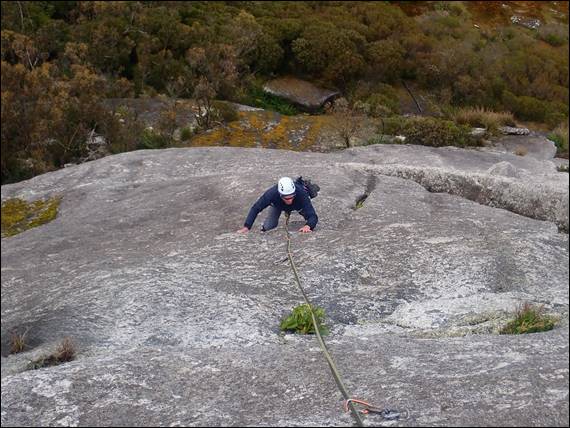
This route was a sport route, fully equipped with bolts. So the trad gear stayed in the pack as we rapped down 100m to the start of the climb. This line didn’t start from the base, which was a blessing as much of the base had dense vegetation right up to it and/or was covered in green moss, and it would have been a very soggy battle to get to it. As we rapped down the fog began to turn to mist, and soon the mist began to rise as the day was warming up. As I finished the first pitch we could finally see the landscape below, above, and to the side of us:
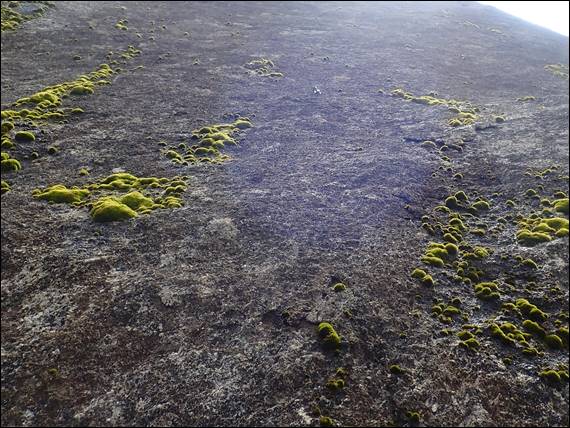
The views down the valley we had walked up, with Nancy Peak on the opposite side was spectacular. The gentle granite slabs were covered in moss that seemed to be in hues of yellow through to green and then red. A testament to the amount of rain this place has had, and continues to get despite spring being well and truly upon us. The rock on which we climbed was like a cheese grater, all you needed was faith that the soft rubber soles of our climbing shoes would stick to it. For much of the climbing there were no handholds, resulting in Craig not been too keen to lead:
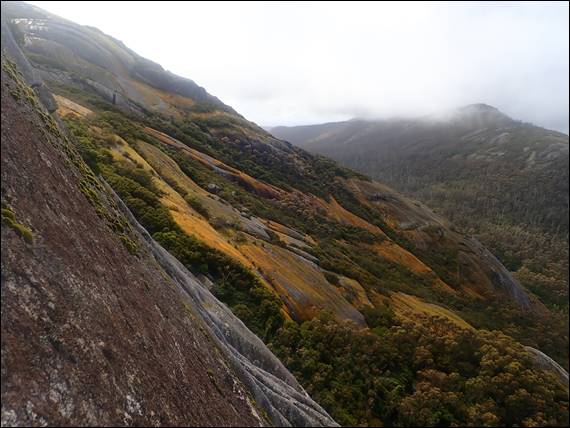
It didn’t worry me as I enjoyed leading all three, very fun pitches of Beckey-Gledhill-Swain. A route that wove a line, which on occasion had mounds of bright green moss scattered on the rock either side of where we climbed. A bit like landing lights on an airport runway, standing out when the sun hit them. It was not the trad climbing we had come here for, but all things considered it was the perfect introduction to the place. A place that was hard to navigate even when it was not shrouded in fog or mist, as there was no easy way to look at the faces from the top:
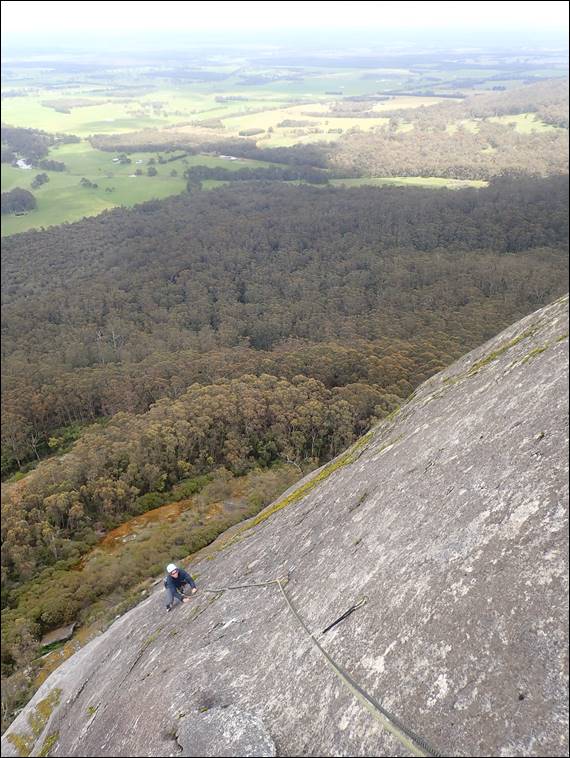
Before we decided what was to happen next it was time to have a spot of lunch. The hike, careful navigation on top, rap down, and climb had well and truly chewed into the day and midday was upon us. Sitting back and having a bite to eat allowed us some contemplation time, our only way down was to rap down the same line with no real idea of where any other routes were. The available guides did not seem particularly helpful on that front, and not having seen the cliff as we had walked up made things even more difficult:
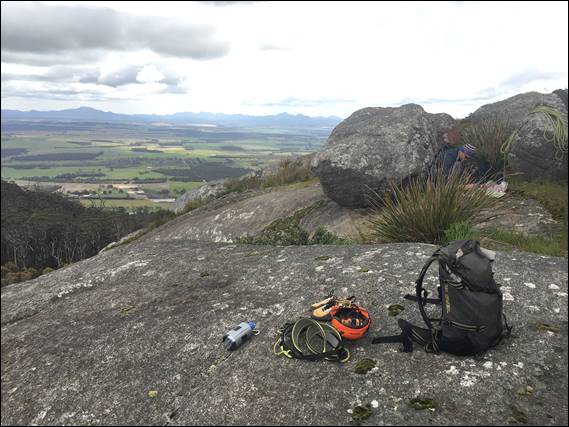
Craig had already hinted, as we prepared for the trip and drove down that he was after some good walks and a few fun long routes. And faced with uncertainty of what lay below us, and the fact that the cracks and corners the trad lines would undoubtedly follow, likely holding onto the water and being covered in moss, there was an air of reluctance to go back down. So it was decided that we would hike back out, but not down the same track. Instead we would continue on the Nancy Peak loop, taking us over the ridge that can be seen below:
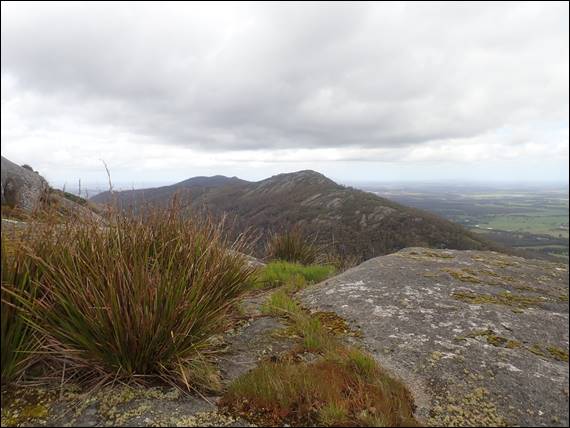
Nancy Peak is about the same height as Marmabup Rock, but we had to hike back down the valley between the two ridges and then all the way back up. The hike up the other side felt like it went on for ever. While I reckon I could easily have climbed another 150m route, hiking up the track with the full pack made my legs feel like they were going to burst. But it was worthwhile and provided us with great views back towards where we had just been, which was the large dome on the left hand side in the image below:
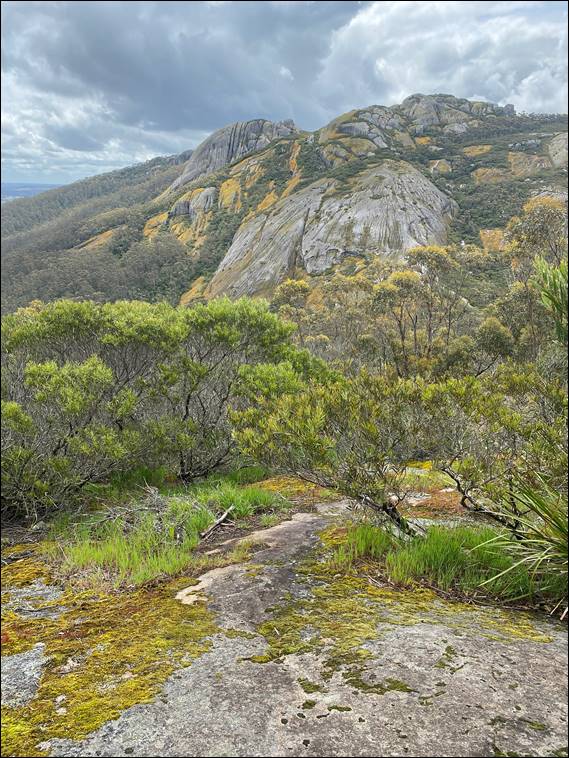
We could now see the features clearly and some of the other routes started to make more sense, something to put in the memory bank for the next trip out here. It is the sort of place that won’t get much traffic, so being quiet and with long multi-pitch climbs and views like this it will definitely be worth coming back to. It did surprise us that the ridge we had been on is flanked by Marmabup Rock on one side and Gibraltar Rock on the other. I have been to the latter several times, and never considered investigating Marmabup Rock:
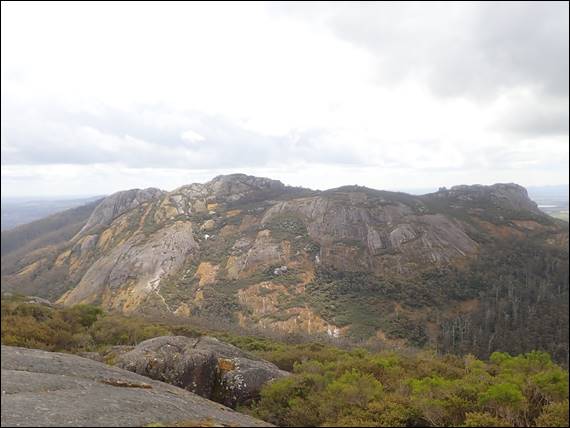
The other thing that surprised us, was that for all the talk about the Devils Slide it really wasn’t an obvious feature to be seen as you walked the Devil’s Slide spur. Looking back we can only guess it was the long slab to the left in the image above, but this is not visible from the hike up, nor the top. As we continued on the hike over Nancy’s Peak we saw a few orchids along the way, but only very few and nowhere near what I was expecting. In fact there were generally very few flowers out, and had thought it would be more colourful:
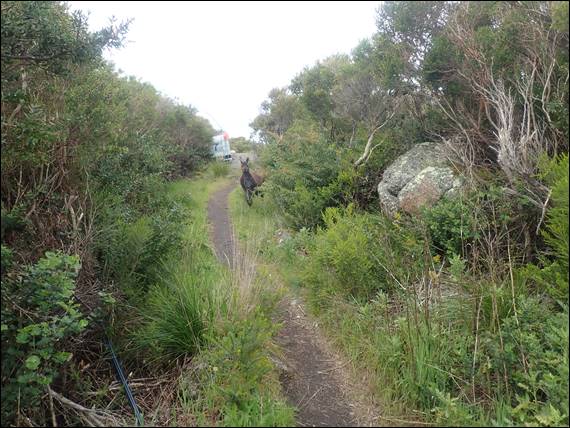
In past years when we have been here in spring time the Porongurup’s, with more rain, has had a lot more flowers than the Stirling Ranges. But this year it seemed to be the opposite way round, and I wonder if this is because it has remained cooler and wetter for longer this year. There were however plenty of small birds about in the dense vegetation, and when they all kicked off we knew to look about for a bird of prey. That on most occasions ended up being a Nankeen Kestrel (Falco cenchroides):
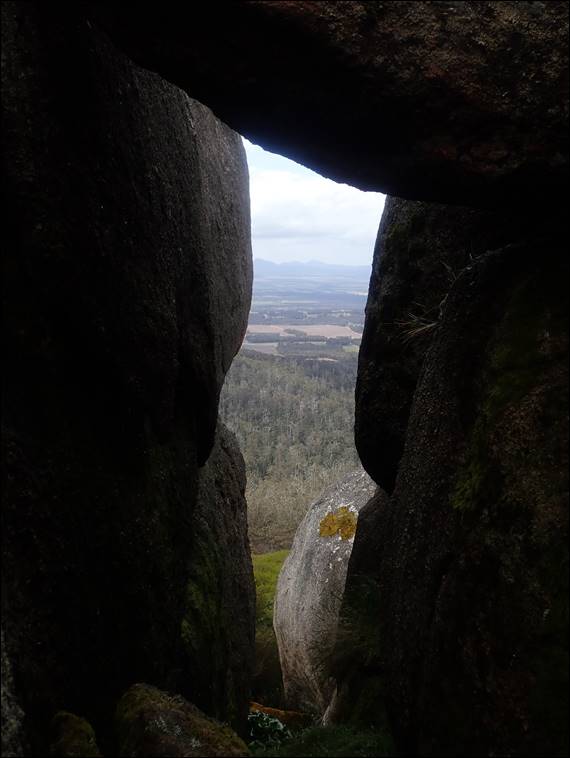
By the time we got back to the car we were very happy to take the packs off, and sit down for a bit. And with a few hours up our sleeves before the sun would sink down, I suggested we hoick it back to the Stirling’s and hike up another peak. This time without a pack on, which we thought might not be too bad. However, we neglected to take into account the hundreds of steps to take us up our chosen peak of Mount Trio. We picked it, as it is probably the quickest walk of the main peaks, plus there was one type of orchid I was keen to see:
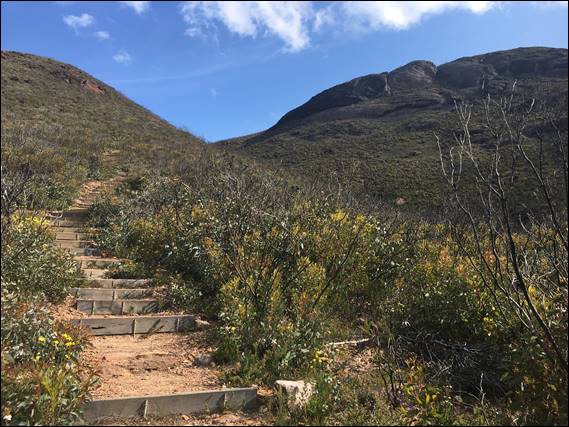
There seemed to be an abundance of flowers, and that included the one species of orchid I was keen to see here. The same one that Lisa and I found up here a couple of years back, which was very soon after the place had been ravaged by fires: https://sandbagged.blog/2020/11/02/ten-years-on/. Fair to say we were both pretty pleased to get to the top, enjoy the view of the many peaks stretching out west, and even better have the place with no one about. We were also both happy that we didn’t have to go up any more:
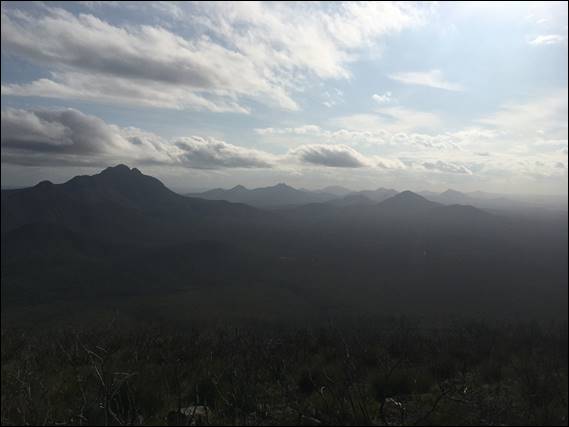
Instead it was just a slow and steady pace back down, being mindful not to rush and do any damage. While there was still a bit of light left at camp, we both had tea and food on the brain so we tended that need first. And then watched the evening draw on as we wandered out to the National Park to bag a few more orchids to add to the list. After which we had a well-deserved beer sat by the fire pit. Sadly John and Margot were nowhere to be seen and I knew we would be up and out early again the next day, so I’ll have to catch up with them next time:
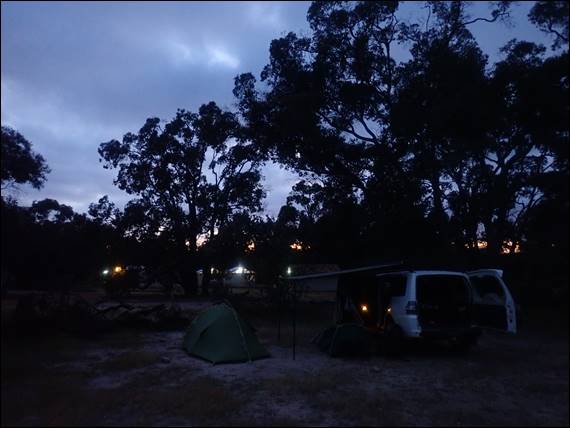
Sunday arrived and this time I opted for a cuppa at 4am. We had already decided we would climb in the Stirling Ranges, and had three spots in mind. First Mount Trio, but we decided against that as we had already walked up there and the routes were nearly all sports and hard. Barnett Peak was very inviting but that would be a 2 hour hike each way, with no defined track and we were not sure our legs would cope with that. Also the forecast indicated rain might be on its way by midday, and the thought of getting soaked walking out wasn’t too inviting:
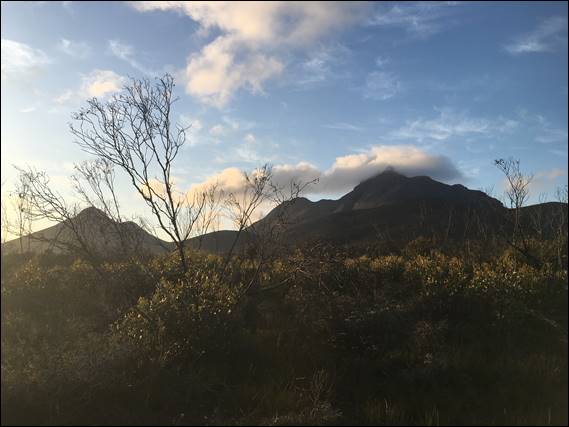
There were a few other contributing factors that resulted in us going back to the third place on our list, an old favourite. We knew the walk in and the climbs, so it added a factor of comfort and safety. You might be able to tell that this trip was not about going out on a limb, and it was more of a chilled trip. As we drove out, as shown above, Mt Toolbrunup was capped with cloud. I can still hear Elseya’s voice twelve years back saying “I want to walk up that hill and be in the clouds”. But today our focus was on Talyuberlup:
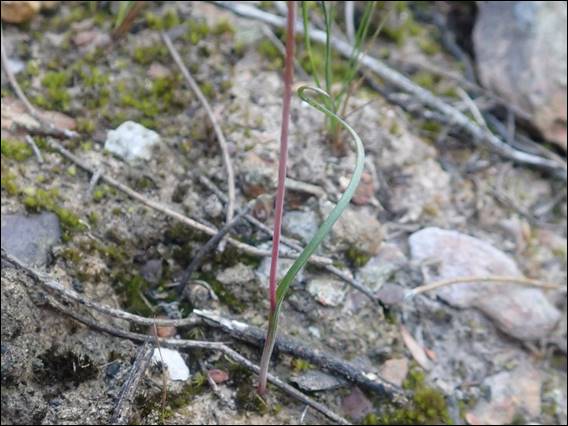
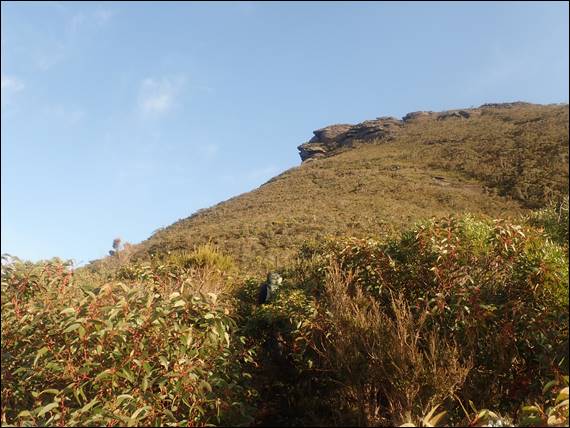
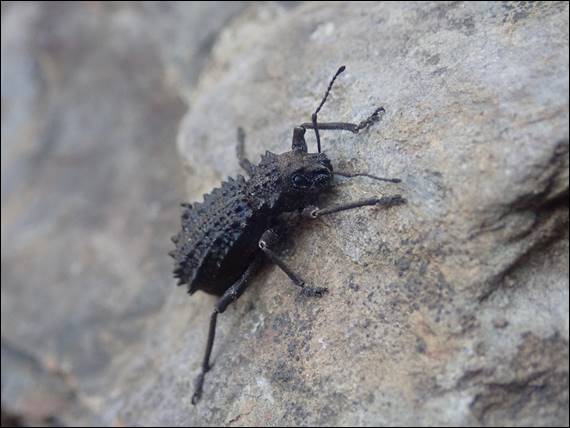
I’ve climbed here three times, and every time have done the same routes. The last time was with Craig and Howsie: https://sandbagged.blog/2018/04/28/a-pot-of-gold/, and on that trip it had been wild weather and we knew Howsie would love being on the pointy end. Today it was calm and clear, so I quietly hoped Craig might jump on lead. Before that, however, we had to hike up the steep incline with packs on again. It felt like a slog, but I did spot a few orchids in flower and also the above very interesting find, which I will come back too:
Craig also spotted this weevil, which I have not been able to identify with confidence. I believe I have seen them before and did wonder if it was one of the Amycterini weevils, which are supposed to be an iconic Australian weevil. It looked to be scaling its own cliffs, and like us as we observed it, it seemed to be having a rest from its upward journey. We left the weevil it to its own devices and continued on the final leg of our trek to the cliffs. Today at least the trad gear that we had hauled up would be used:
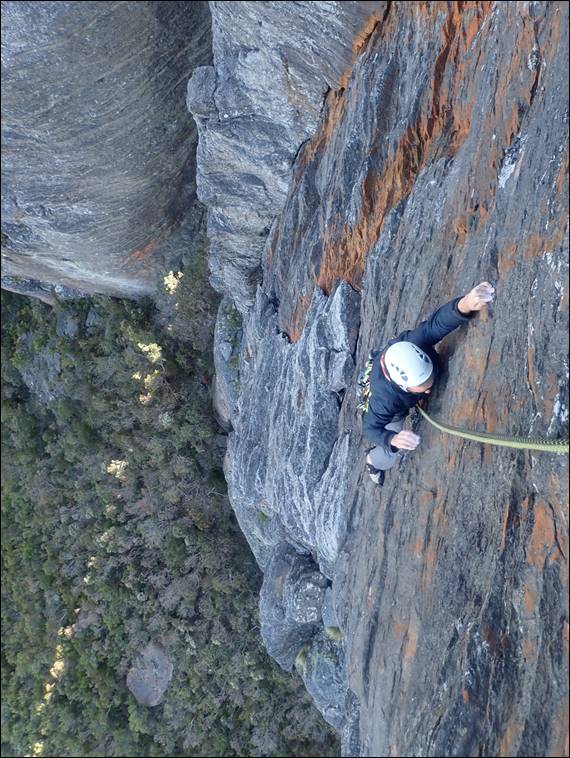
The two climbs we were aiming for are both recorded as multi-pitch routes, but I knew we could stretch the 50m rope and do each of them in a single pitch. Last time we came the conditions would have made the steeper, harder, and more exposed Nailbite a very scary proposition. But today was perfect, and so I set off up that, hoping to warm Craig up and get his mind straight for a lead on the second easier line. It was glorious, there is nothing better than a true rope stretching pitch:

I topped out as the rope ran out, but the belay ledge is perfect and has great gear close to hand. And better still it provides an eagle eyed view of the cliff below, allowing me to watch Craig’s progression up the towering face. There are heaps of climbs here, many of them are a very easy grades and a bit on the rambling side, but these two lines are clean and direct. With classy climbing from top to bottom, in a stunning position. And while I could see Craig was loving it, I could also tell he wasn’t in the right headspace to lead:
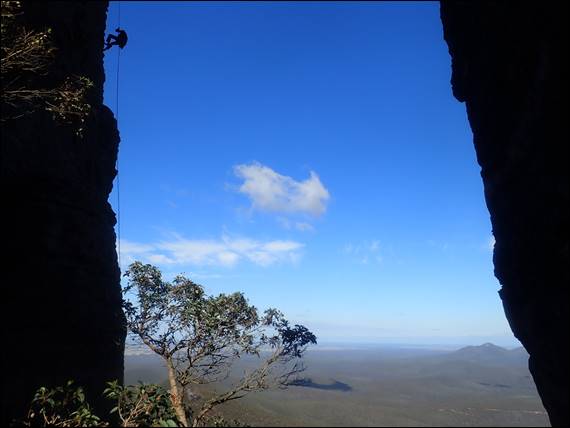
We sat atop for a while before setting up a rap anchor. I do not like abseiling at the best of times but will use it for access and ease. And in this case we could avoid a long scramble down, plus it provided a great photo opportunity as Craig came down second. The stunning blue sky above indicated that like yesterday the high peaks were once again going to make a fool of those brave enough to forecast what the weather would do here. So we didn’t need to rush into jumping on the second line:
While Manicure ends up at the same belay ledge, it follows the corner and as such feels completely different and bears no resemblance to the first climb. What with the ability to keep one foot on either side of the corner it does make for easier climbing, three grades easier, but just as good fun and again is in a great position. The only risk being that it is possible to put so much gear in, and run out of protection as you approach the final and steepest part of the corner:
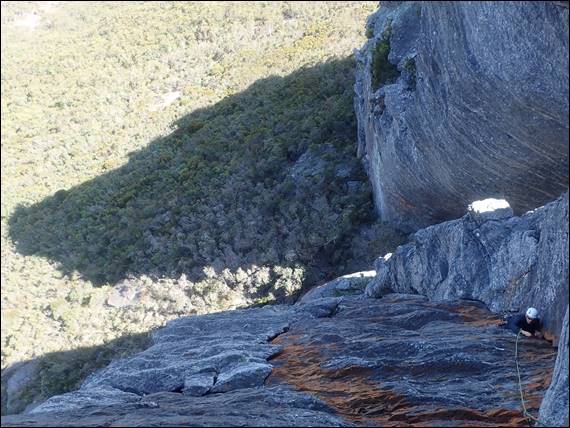
Howsie had almost fallen foul of that, but what with the conditions he had to deal with it was not surprising he put more gear in. Today in these conditions I was happy to run sections out a fair bit and half way up the climb I had only put my second piece in. Craig was looking very comfortable following up, and while he wasn’t kicking himself that he hadn’t led it he did commit to leading it if we came back. Scrambling down the back of the cliff, we came across two new bolted lines. We looked at them but compared to the awesome natural features we had just climbed they didn’t look too inspiring:
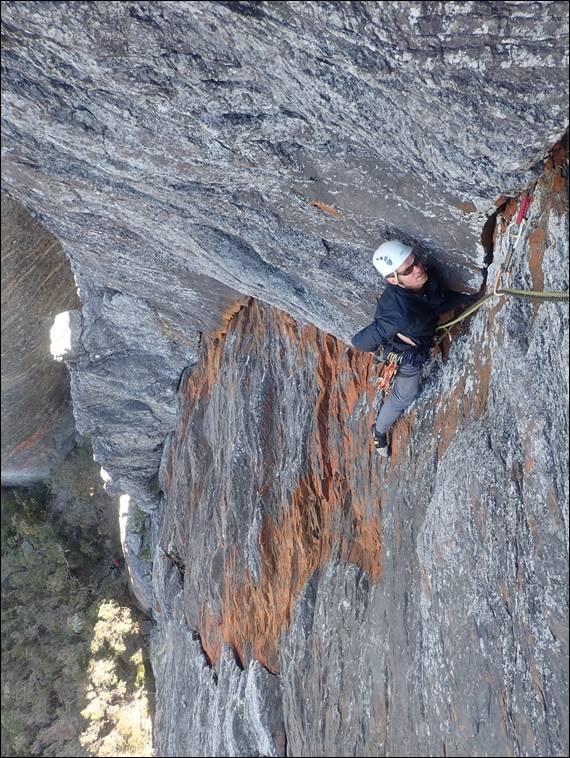
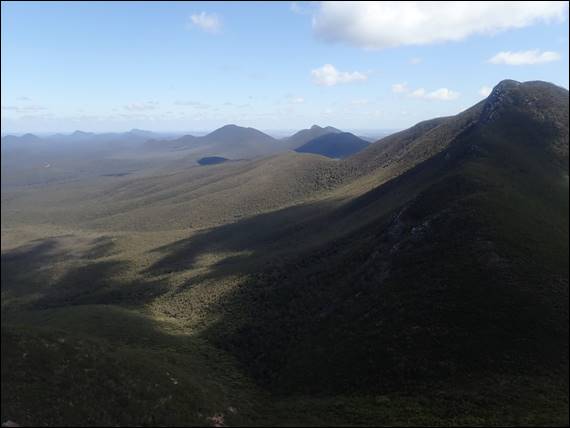
Needless to say we walked on by, and back to the packs. While I’m sure they may be fun they will have to wait for another day, our target of bagging the two classics was met and time was ticking. And we had definitely met Craig’s intention of getting some good hiking in and hitting a few great long climbs. So even though the weather was holding out, we still had to get a mosey on and head home at a reasonable time. There was still time for a quick snack, while taking in the views from up on high for one last time:
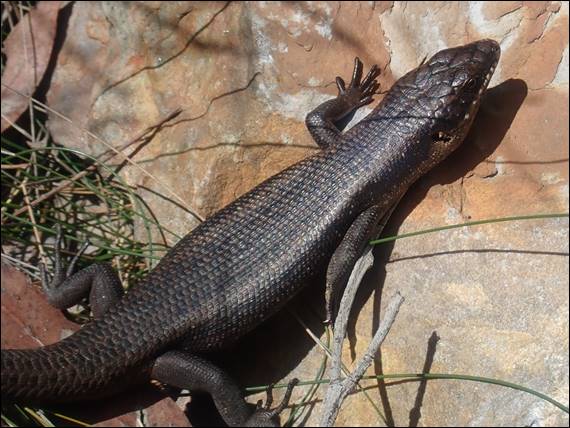
The sun was well and truly out and above us making for a warm walk down. As such the Southwestern Crevice Skink (Egernia napoleonis) were out and about again, but unlike yesterday when the broken cloud had made it feel a little cool at times, today they were warmed up enough to scamper away as we got too close. All bar this one that sat still just long enough for me to take a snap. I was also hoping that the sun would have activated something else, and on the way up we had purposely marked the spot to check:
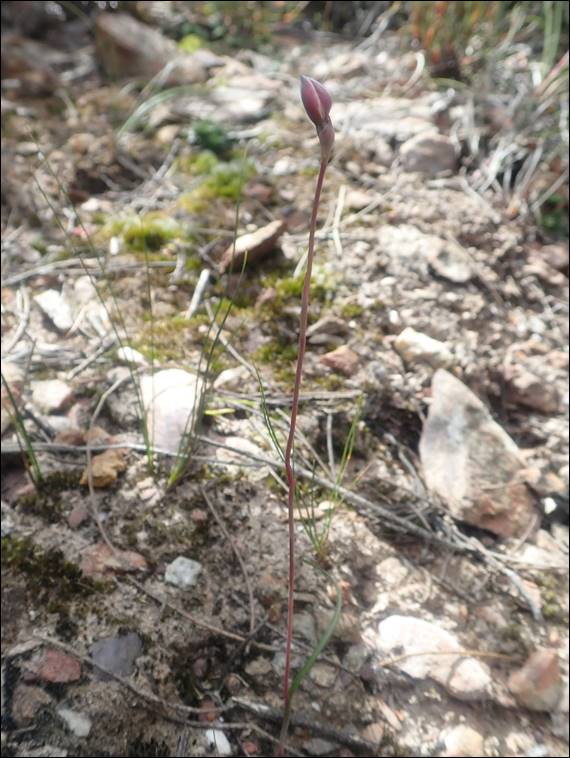
Unfortunately the sun orchid with that a single curly leaf, shown in the image before, was not giving any signs of opening up. I researched it when I got home and thought it could have been a Curly Locks Sun Orchid (Thelymitra spiralis), but the usual habitat of that orchid is near winter swampy land and this one was half way up a peak. I have sought some assistance from Noel, and while it is not certain until the flower opens he feels it may have been a Curly Locks Sun Orchid, making it a rare find in the Stirling Ranges:
And as promised for those floristic nerds (like me) I will leave you with images of the fourteen species of orchids we spotted that were in flower, and of which I took an image. We also spotted the ever present Cowslip Orchid (Caladenia flava), which I refrained from taking any more images of, but it does make it a nice round fifteen species. Not a bad tally considering the brief opportunities to take the time to look about. And I’ll start you off with the below Sugar Orchid (Caladenia saccharata), and then leave you to enjoy the rest with limited words from me:
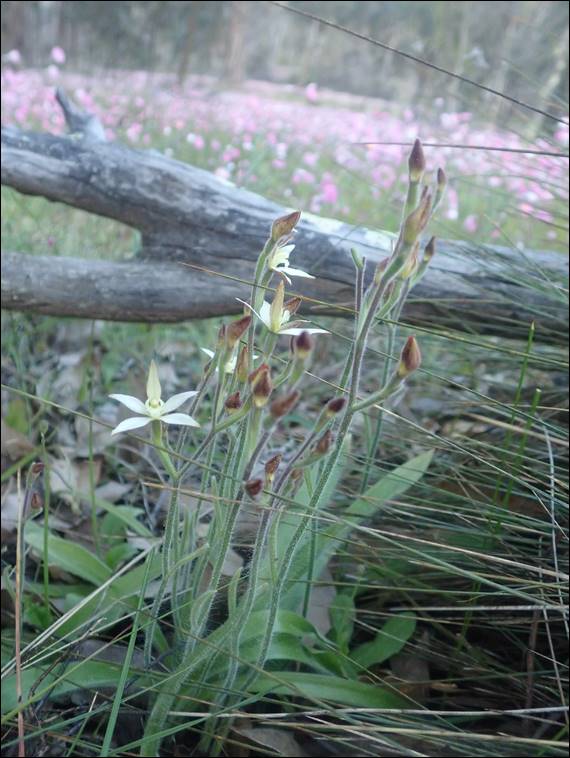
Fringed Mantis Orchid (Caladenia falcata):
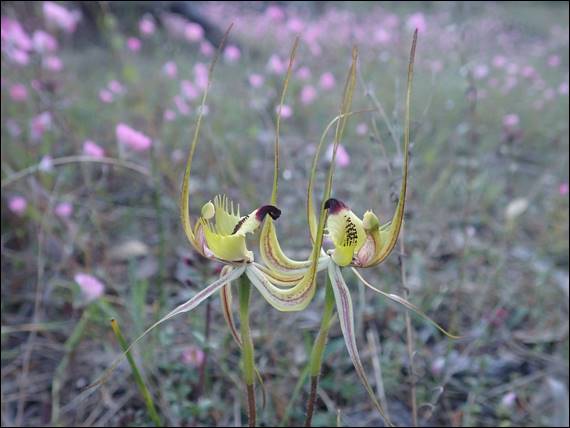
Dragon Orchid (Caladenia barbarossa):
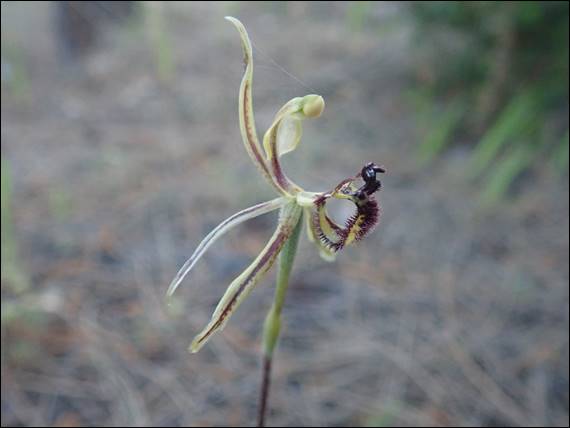
Zebra Orchid (Caladenia cairnsiana):

Cowslip-Sugar Orchid hybrid (Caladenia flava / saccharata):
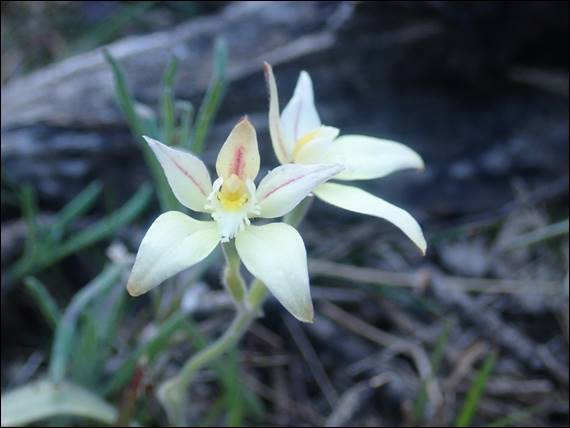
Butterfly Orchid (Caladenia lobata):
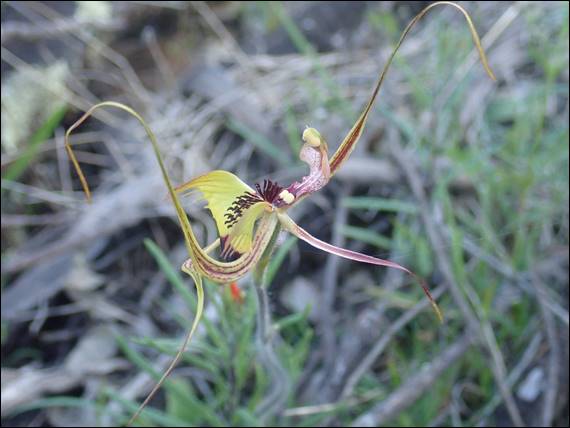
Purple Pansy Orchid (Diuris longifolia):
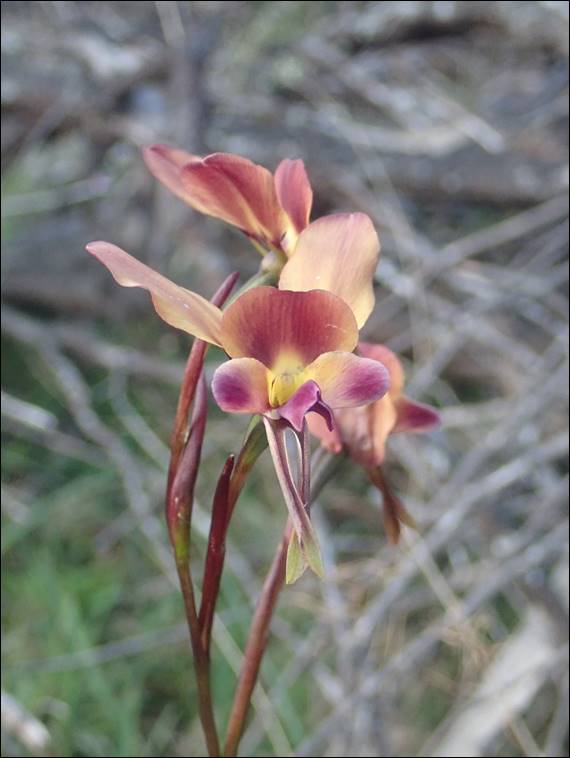
Joseph’s Spider Orchid (Caladenia polychroma):
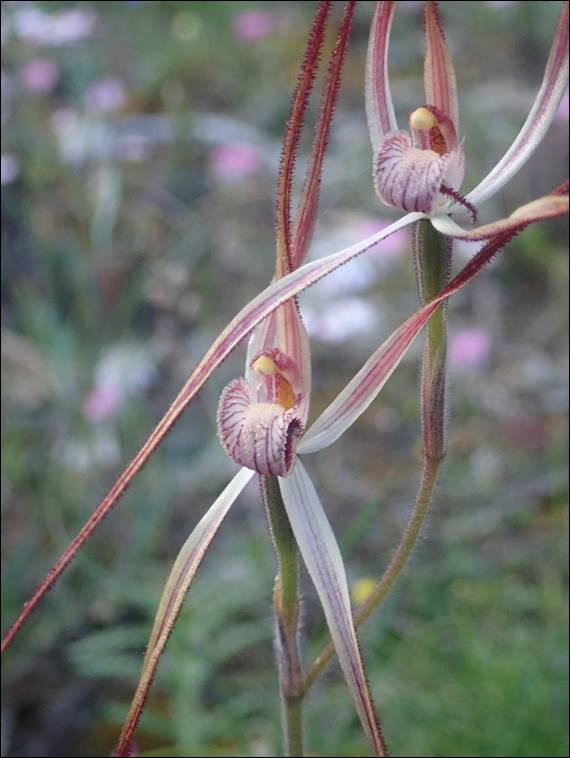
Redbeak Orchid (Pyrorchis nigricans):

Rabbit Orchid (Leptoceras menziesii):
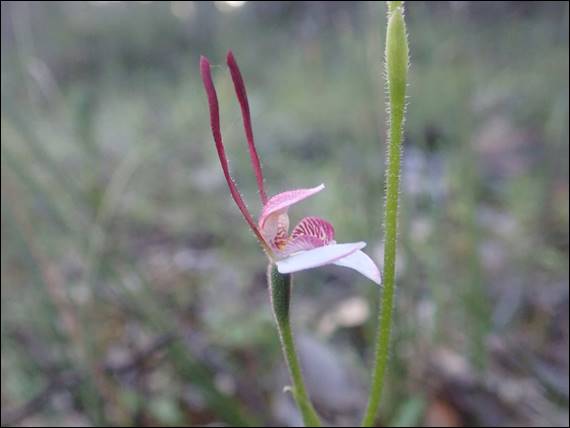
Little Pink Fan Orchid (Caladenia nana):
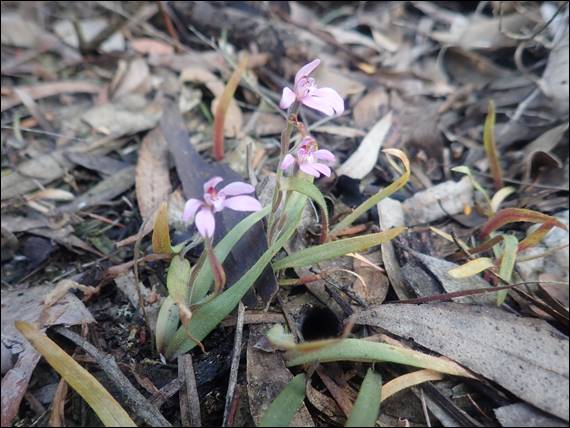
The next three I’m not completely confident with, but I have done my best to identify them.
Common Spider Orchid (Caladenia vulgate):
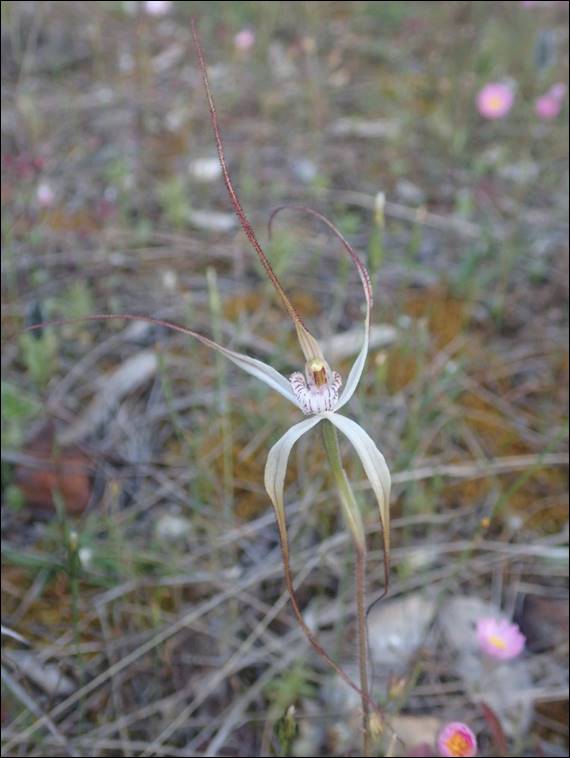
Christine’s Spider Orchid (Caladenia christineae):
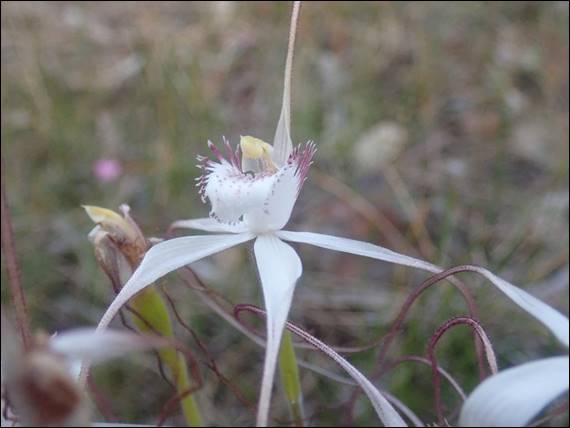
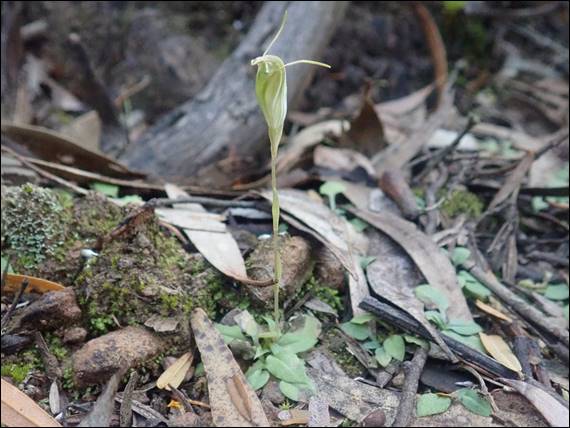
Robust Snail Orchid (Pterostylis dilatata):
 Sandbagged