Monday arrived and it was time to go hunting again. Lisa is convinced we can train the poodles to sniff out orchids, but I am not so sure. They certainly seemed way too distracted with all the other aromas, as we once again wandered round the wildflower walks near Nannup. Our rationale for this location was to avoid any highway traffic, being the last day of an extra-long weekend. Plus it is of course a lovely spot, and if you recall our last visit here I spotted some orchids yet to flower that I was keen to check out:
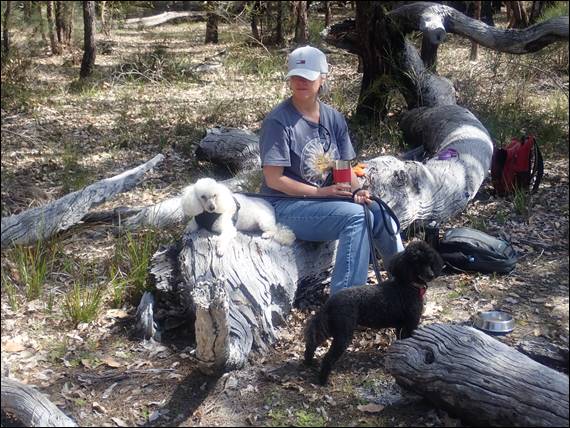
Lisa is quite happy to head out for a wander wherever. The only requirements being: not too early a start; somewhere nice, which is hard not to find; nothing off track or too adventurous; and if the poodle can come along that is an added bonus. Today they did, as did a flask of tea even though we would walk no more than 4 km’ish. It may seem a little boring heading to the same spot several times, but the vegetation at this time of year changes a fair bit, and quite quickly, so there is always something to peak my interest:
The walk started off quietly, other than bumping into others out for power, dog, or kiddie walks. We spotted orchids here and there, but nothing in numbers or new until we were about to stop for a cuppa. We picked almost exactly the same spot as last time for our refreshments, just moving into a spot where we could take advantage of some dappled light to avoid the heat of the sun. Approaching this area I spotted a few Duck Orchids, which Lisa had not seen before. And then we saw more, and more, and more so many that if they could fly they would have taken the ground up with them:
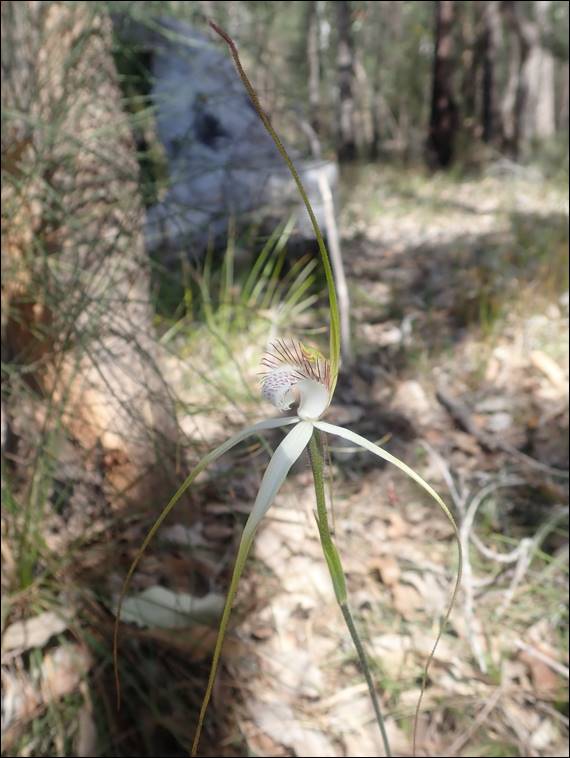
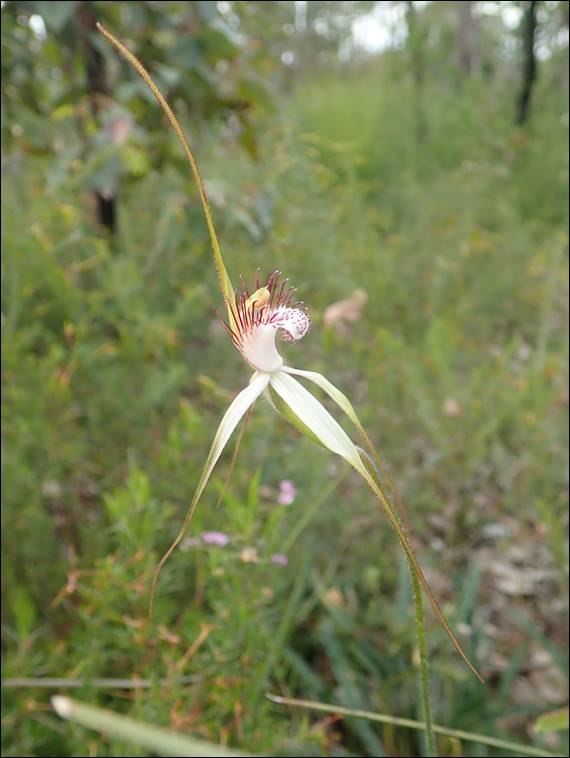
I also found the orchids I spotted last time, which were not in flower back then. They were today and happened to be Warty Hammer Orchids, so after all my childish excitement of finding this orchid for the first time at Manea Park last week I was now in a place that had more of them than I could poke a stick at. Between the Duck and Warty Hammer Orchids we had to be very careful with our footfalls. And it wasn’t till we settled down that I then spotted the Merritt’s White Spider Orchid (Caladenia longicauda), shown two images above:
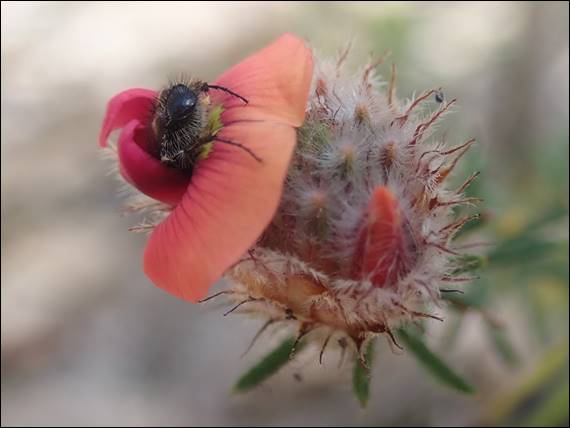
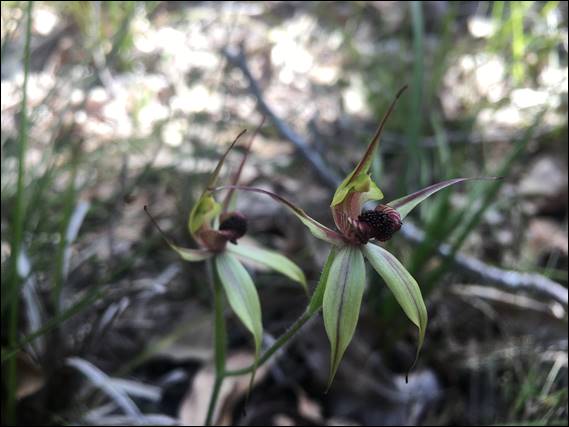
This spider orchid is found mostly between Augusta, Margaret River and Nannup in the Jarrah forests, which is where we were. A very elegant orchid recognisable by the slender and long petals. As I was taking the image and almost within arm’s reach I then spotted the Leaping Spider Orchid (Caladenia macrostylis), again two images up. Resulting in childish excitement starting to re-emerge. It wasn’t just the orchids that caught my attention, but also the many other small but pretty flowers starting to come out. And after all my research and talk about pollination methods, I couldn’t resist the above image of a beetle buried deep into a Pea flower:
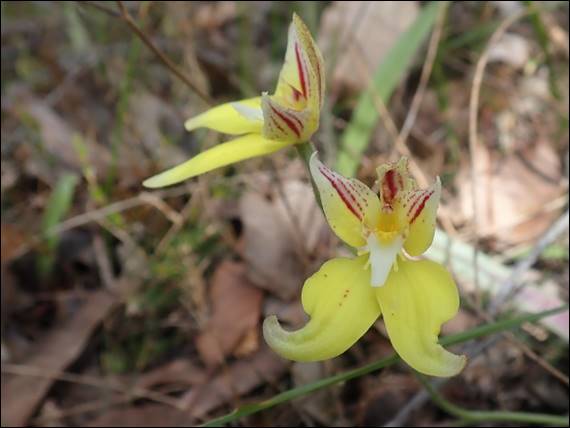
We continued out walk and as we made our way along I tallied how many orchid species we had seen today, which I was more than happy with. As we walked on nothing new jumped out. It doesn’t however always have to be new to be interesting, for example the above distorted Cowslip Orchid that caught my eye. It does not seem to be a hybrid flower, just having an unusually and quirky petal shape. I also seem to be spotting more Bird Orchids, and this one I have since found out has finished flowering and is going to seed. I noticed there is no colouration, and I cannot find any information that indicates they lose their purplish colour after pollination, but without the labellum on display I can’t tell if it is another species:
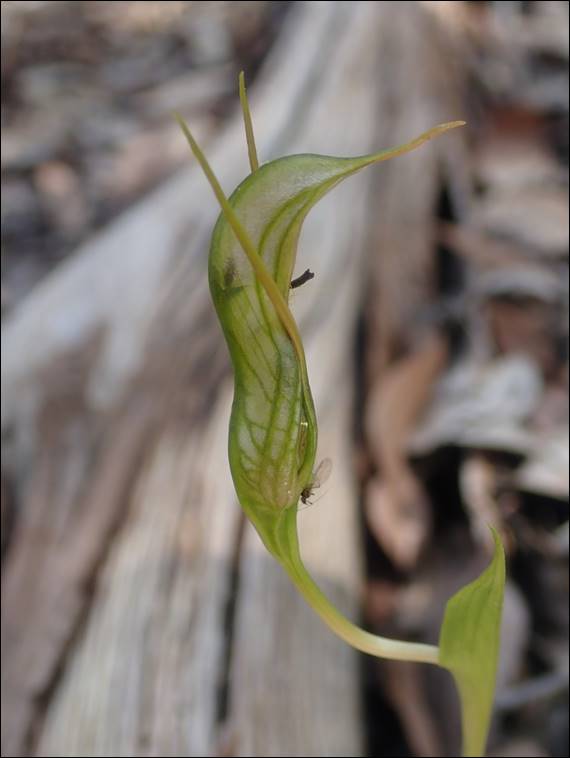
I checked the facts about the Bird Orchid with Noel, and I do wonder if he will consider me a pest. But each time I send him about request, along with images of our finds he politely responds. And I have just now sent another email to him, this time about a couple of my finds from the Crooked Brook wildflower walk. After work on Wednesday, my head was woolly and overloaded so rather than head straight home I decided a wander in the bush would help. So this time I was by myself, as I strolled the short 3km circuit to see what was on display and clear my head:
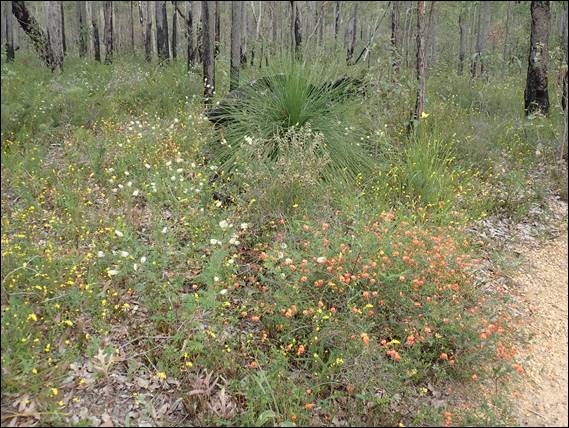
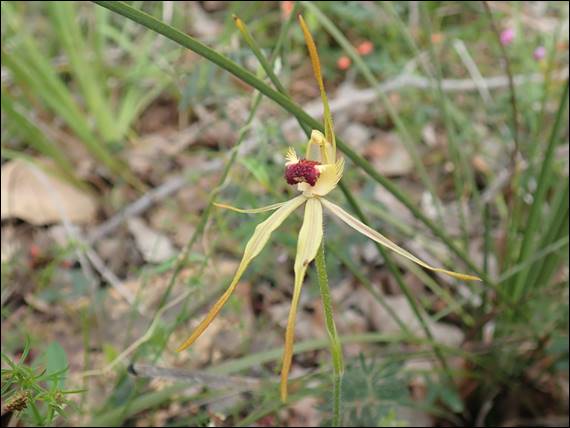
As seen above patches of the groundcover had come to life, speckles of bright and cheerful colours made it hard not to feel happy and smile. A corner has definitely turned, with temperatures heading into the high twenties later this week. And it is as if the warmth is drawing out the orchid buds, along with the flowers of many other plants. There were lots of orchids just about to flower but not being quite ready, I did however spot my first Forest Mantis Orchid (Caladenia attingens) of the season, the word “attingens” meaning “reaching out”:
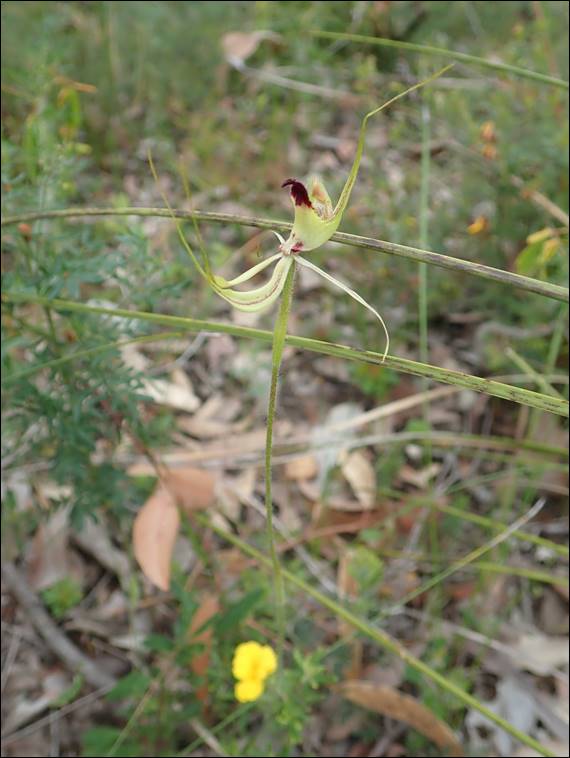
This is kind of relevant as it was October 2010 that we first camped at the Mount Trio Bushcamp in the Stirling Ranges. This was where I was first introduced to orchids. And indeed it was, what I thought back then, to be a Mantis Orchid that reached out and drew me into this obsessive pastime. Checking my images from back then what I had seen was the Green Spider Orchid (Caladenia falcata), also named in earlier guides as the Fringed Mantis Orchid. It is very similar to, but generally larger than the, Forest Mantis Orchid. The word “falcata” meaning “hooked”, so equally apt:
My early years were more fascination and simply enjoying what I saw, but in more recent years I have certainty become more hooked. In part egged on by having a blog on which to post all my finds. So much so that I am now pestering people like Noel when I am not totally sure, such as for both above and below finds. My best, and reasonably confident, guess for these two are a Diamond Spider Orchid (Caladenia rhomboidiformis) and a Rusty Spider (Caladenia ferruginea), two more firsts for me. Time will tell as to whether Noel will once again reply, and then if I am on the money:

Having now discovered the diversity of Spider Orchids in this area I am very tempted to head back in two weeks, when more will hopefully be out in flower. My new’ish orchid guide, which I only received last Christmas has certainly opened my eyes to this diversity and has started a worrying trend. I have however given up on the below Spider Orchid, no doubt one of the White variety of which there are simply too many with only very subtle differences. As I had on Monday I tallied up the species count, and once again I had found what some might consider an unlucky number, equal to a baker’s dozen:
 Sandbagged