This week it didn’t look like I was going to get out for a single weekday wander, a stark contrast from the week before. In part I had not received any images from ‘work’ Josh, as oppose to ‘climbing’ Josh, to get me all enthused; also the weather was a bit hit and miss; and to add to that lot I was a bit snowed under at work leading to longer days than usual. Then came Friday and encouraged by the sun I seized the opportunity for a quick trip out to the Ambergate Nature Reserve. A place where I have seen so much in previous years:
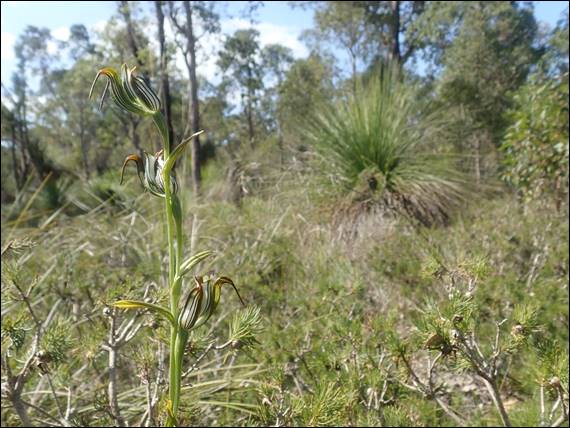
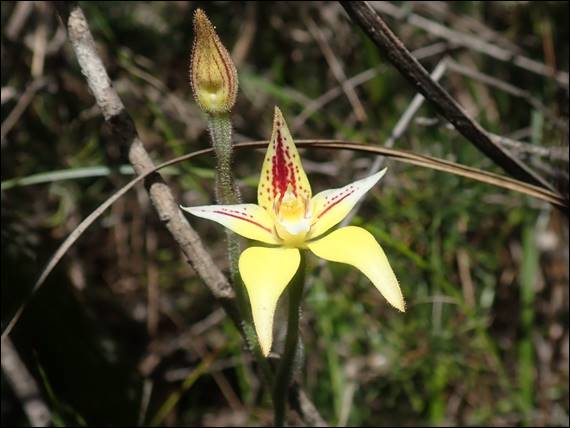
One reason for choosing this spot, is it has been a month and a half since I’d been here. I was also curious as ‘work’ Josh had been here the week before and said there was nothing to see, which I found a little surprising. It has in the last been a floral and orchid haven, so with things starting to appear in other locations I really expected to see something. A few usual suspects were about, as above and below. But sadly Josh was right and for the most part there was very little colour, and very few orchids to be seen. Still it felt good to focus my eyes on something other than a computer screen for a while:
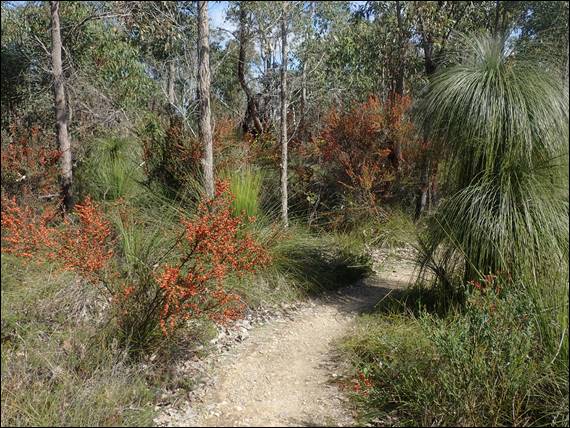
I only walked one for the four quadrants, taking my time and looking carefully. Scouring the bush on both sides of the meandering path, willing for something to appear. Which it didn’t, although there was at least one small area where there was a bit more colour. Here one of the pea flowering plants was coming into bloom. The family and sub-family classification of these plants being Fabaceae and Faboideae, with about 140 genera and 1,100 species to be found in Australia. Not surprisingly trying to pin down these delicate flowers can be a huge timewasting exercise, but I took some close up images just in case:
The image have led me to narrow it down to the genus of Daviesia, a small to medium sized shrub mainly found Western Australian, and comprising approx. 120 species. Digging a bit deeper it looked a lot like the Thorny Bitter-pea (Daviesia incrassata), of which the range and soils types it is found in matches quite well. Also on my last trip here I found some cool looking seedpods (https://sandbagged.blog/2022/08/03/a-bit-of-encouragement/), and one of Howsie’s guesses had been Daviesia. I have now confirmed that they do indeed look very much like the seedpods of the Thorny Bitter-pea:
While there were no new orchids to be spotted I did enjoy my time in the sun, and was also serenaded by the Carnaby’s Black Cockatoo (Calyptorhynchus latirostris). Their song can carry a long way across the landscape, but today it was loud and clear as they were perched right above me munching on gumnuts. And in the distance I could also make out the call of the Forest Red-tailed Black Cockatoo (Calyptorhynchus banksii). The respective songs are quite distinct, with the former sounding like a drawn out and relatively high pitched ‘wa-EEE-lah’, and the later a deeper and more guttural ‘karak’:
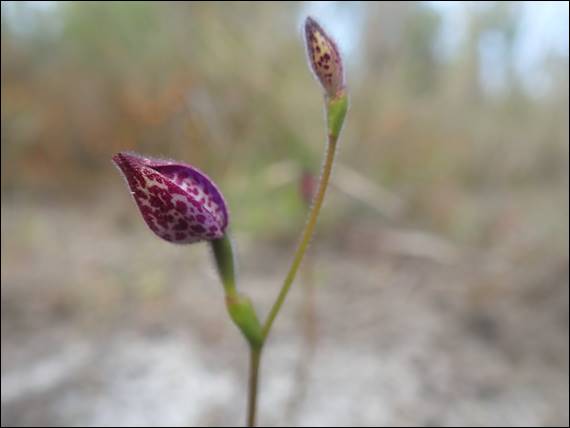
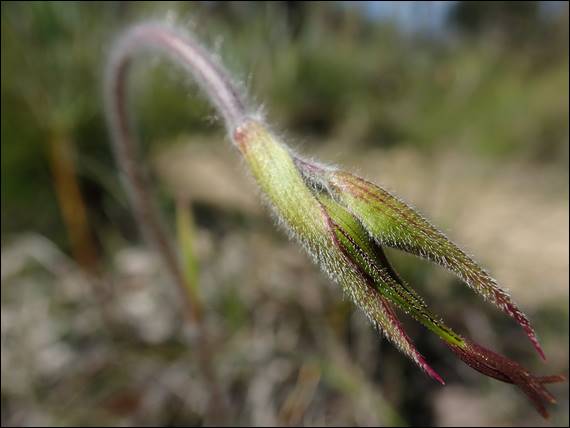
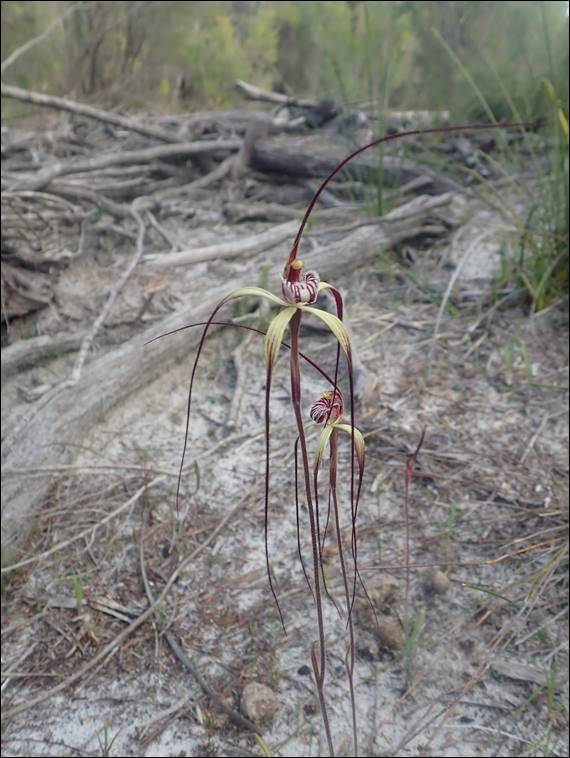
My last image from Ambergate Nature Reserve was the close up of the hairy green and maroon flower bud. Due to the long looking nature of the petals, I’ll guess is a spider orchid and it is likely to be different to any I have seen this season. It should come into flower within the week if not before, although I doubt I will remember where I found it and I only spotted one specimen. It did at least give me hope that more is to be found at Ambergate in the coming months, and I’ll probably head back in a few weeks. This morning, fancying a second trip out without too much of a drive, I popped out to the Capel Nature Reserve:
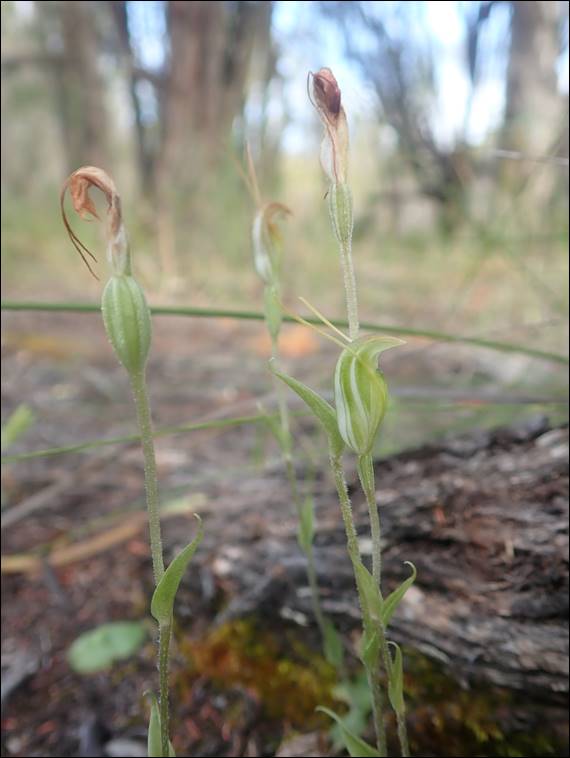
The first image from here being two flowers of a Purple Enamel Orchid (Elythranthera brunonis) both of which are yet to open. There were load of these all over the place in full flower, and while these are beautiful to see I also feel, like the unknown spider orchid, the patterned bud is equally pretty. Above is one of the Snail Orchids and the image also includes a specimen that is in seed formation stage of life, as proven by the engorged ovary at the top of the stem. Insects pollinate the majority of Greenhood orchids, which are nearly always tiny flies or mosquitoes. And like the Hammer and Duck orchids they use deception created by a chemical attractant:
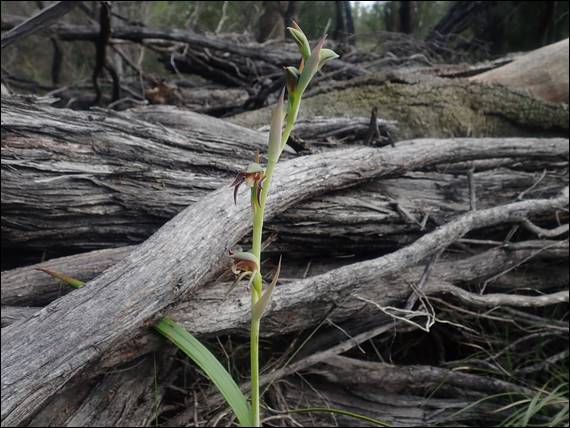
However, once the fly or mosquito has been attracted to the flower there is a second stage of the process that uses entrapment to seal the deal. The insect is encouraged to enter the flower to the point it loses balance and falls in, but in some Greenhoods the labellum will detect it’s presence and move forward to trapping the unsuspecting insect. Just long enough for process of pollination to be more likely to be successful, before allowing the insect to be released. Even though Capel Nature Reserve is less than 30km away from Ambergate, as the crow flies, the floor was littered with orchids including hammers, ducks, cowslips, enamels, greenhoods, and spiders:
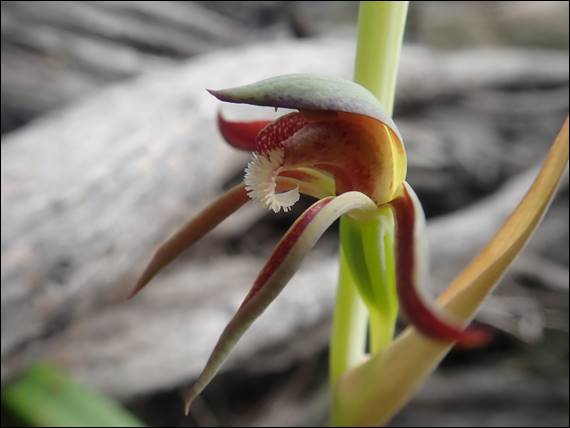
There were also, like at Ambergate lots of also the Rattle Beak Orchid (Lyperanthus serratus) yet to flower, but I did spot the above one that was ahead of all its colleagues. Being dull green and brown some feel this orchid can be hard to spot, but to counter this they are relatively big; have a tall, upright and distinct base leaf; and have multiple flowers on a thick stem. I haven’t tested the theory but the flowers are supposed to rattle if shaken, I am however unable to find out how or why this happens. In looking into this I did find out the scientific name serratus is derived from the Latin word ‘to saw’, serrare. This has been used to refer to the prominent white teeth like calli, spread on the end of the labellum:
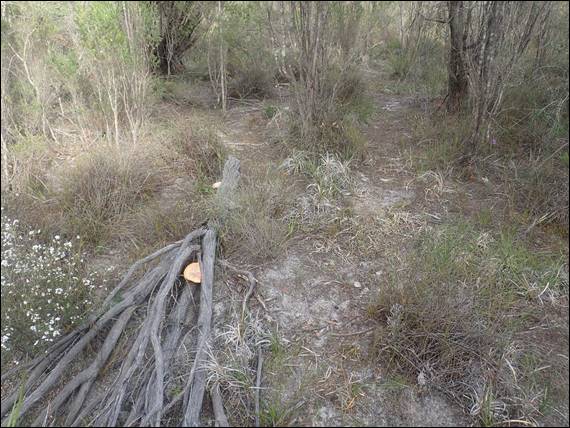
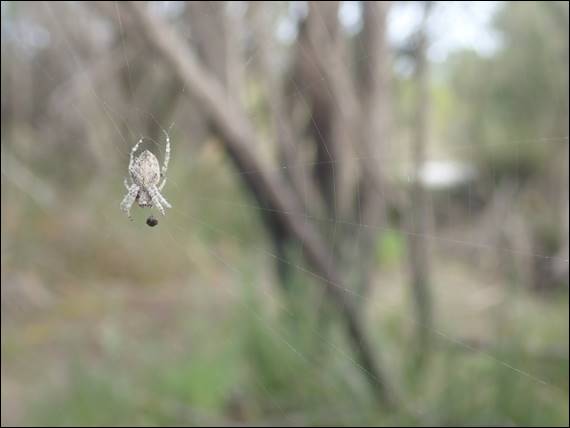
Unlike Ambergate, the Capel Nature Reserve has no formal paths. There are wide sandy tracks that criss-cross each other, although vehicular access is also restricted so I am not sure how these have not become over grown. At times they peter out and this leads to needing to tread carefully through the scrub, as above. Looking both down for what may lie underfoot, as some orchids and other plants are very small and inconspicuous, but also looking up to make sure you don’t end up destroying a spiders web. While you’d think the below spider would be easy to spot, the image is deceptive as it is a mere half a centimetre long:
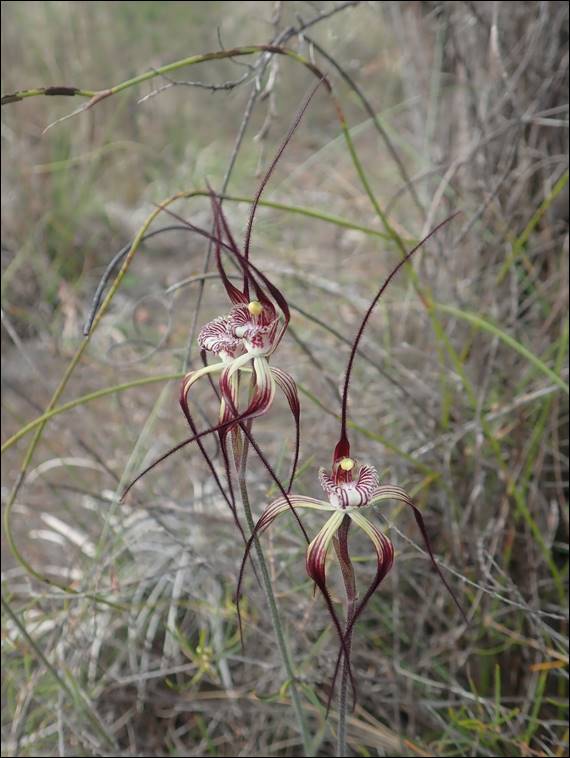
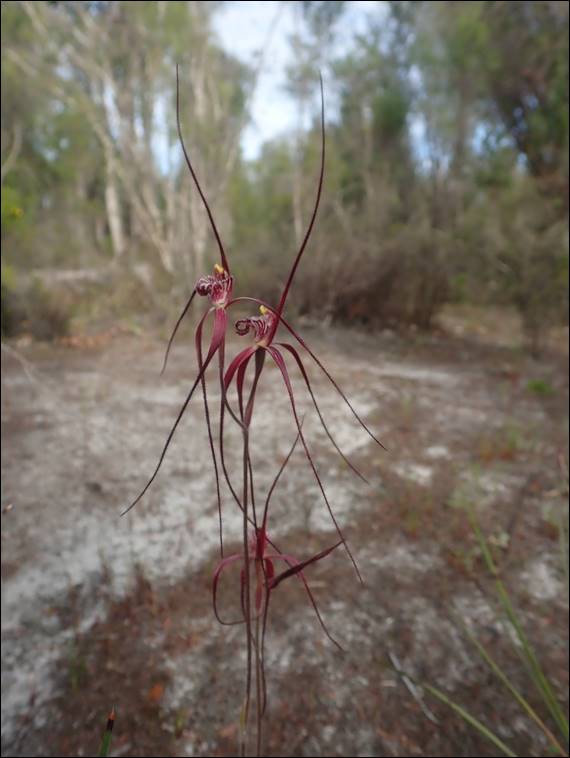
I found lots and lots of Splendid White Spider Orchids (Caladenia splendens), which were only just starting to come out here a week back. But I also came across just as many if not more Chapman’s Spider Orchids (Caladenia chapmanii). This is considered to be one of the most attractive of the Caladenia, i.e. spider, species and is commonly found with multiple flowers clumped together that enhances the visual display. What strikes me about this species is the huge variety of colouring and patterning, including white, cream, pale green, red and deep maroon. This is shown below and is why I have included four images, and I will leave them to do the talking:

 Sandbagged
Nice spiders. We saw lots of splendid whites and different cowslips at a reserve near gidgegannup yesterday.
LikeLike
It’s definitely starting to get good out there, and there should be a fair bit out down the Stirling Ranges…
LikeLike