I’ve stumbled across a new local spot to hunt orchids, and it is the closest one to where we live yet. In fact it is an even shorter distance from where we lived for seven years, and we never checked it out. That might be because it isn’t publicised, has no parking areas, and there are no formal walk paths. There are however plenty of tracks that seem to crisscross through the Capel Nature reserve. I’ve heard that not too many people head out here, so it is a great quiet spot to explore. Working from home and being a mere 10-15min drive away, today was my first trip here to have a quick look to see if was any cop:
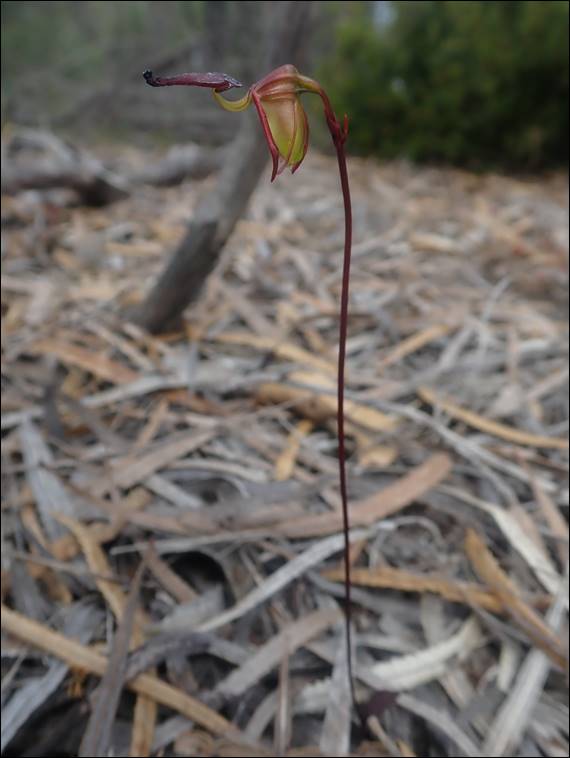
The reserve seemed to be mostly weed free. A good sign as the orchids, as well as other native plants, wouldn’t be competing against faster growing and usually bigger invasive species. There were immediately signs of orchids, and the first one to mention is the above Hort’s Duck Orchid (Paracaleana hortiorum). I was super excited last year when I found my first Duck Orchid (https://sandbagged.blog/2021/10/15/the-tipoff/), but those were the Flying Duck Orchids (Paracaleana nigrita) making todays a first time sighting for me. The difference is subtle but the labellum of this species, the bit that looks like the head, is flatter and the glands that look like purple bubbles don’t extend as far back on the labellum:
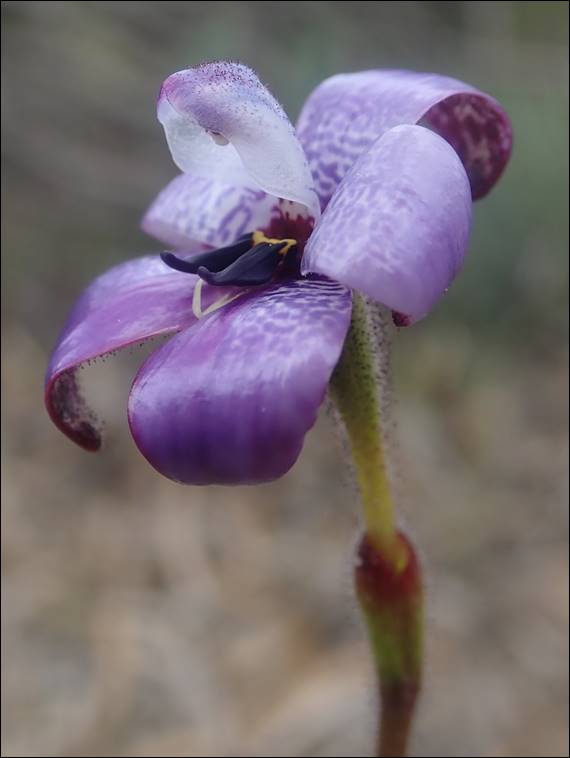
Next and above, I thought I had found an unusual orchid. Possibly a hybrid of some sort due to the pale nature of the petals with the patterning showing through, and also the column wing almost looking white. At best it may be a pale form, but is still “just” a Purple Enamel Orchid (Elythranthera brunonis). To give you an idea of why I was getting a bit excited, the image below is a classic looking specimen. It made me get up close and personal, capturing some reasonable images of the finer details. This is relevant, as I have in previous years tried to convince myself that I have spotted the Pink Enamel Orchid (Elythranthera emarginata):

The above linked post being one example. However, armed with my more detailed book, the images from today, and having checked past images it has dawned on me that I have never seen one. The obvious sign, now that I am aware, being the centre of the flower. Unlike the Duck Orchid in which the labellum is prominent; in Enamel Orchids it is small and almost inconspicuous being the white looking tongue between the two very dark calli. This part is quite different between the purple and pink species, and should I ever come across the pink species I’ll include an image to show how:
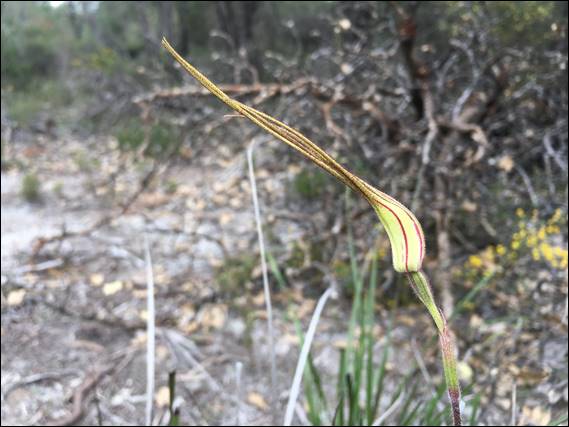
There were lots of other orchids popping up, but yet to flower. Such as the above spider orchid and I’ll have to head back next week to see if any are blooming. I’m not brave enough to try and guess what species they are until they open up. And even then it may be tricky especially if they are one of the white variety. I also saw heaps of withering greenhoods as well as healthy jugs and snails. Again maybe being overly hopeful of a new find, due to the long backward pointing sepals. But there is nothing in my book to indicate I found a different species of Snail Orchids:
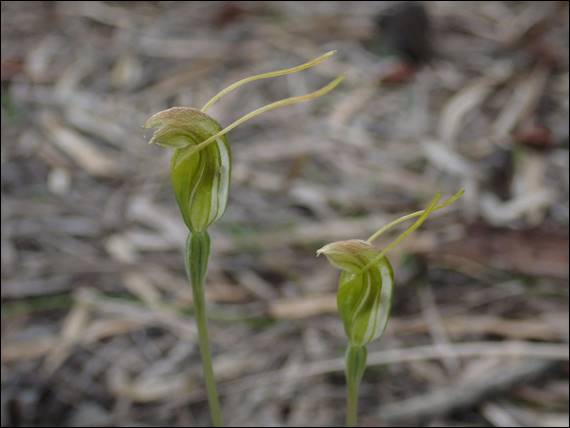
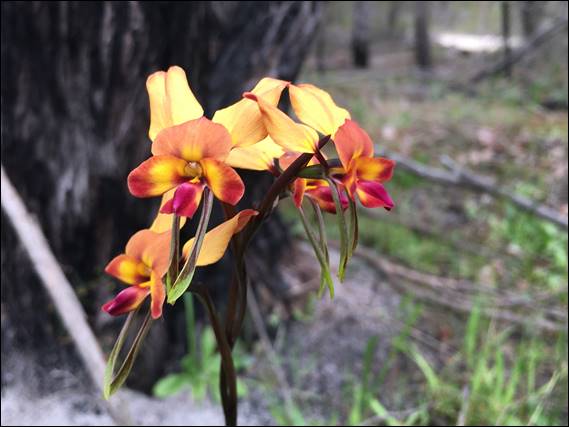
It was a reasonably quick visit, so there is only one more image and that is of course of a Donkey Orchid. I’ll guess that I found three species, but I’ll only include this one because it is different to what I recently found at Manea Park. If you are really keen to see if you agree with me check out the previous post: https://sandbagged.blog/2022/08/26/sitting-on-the-fence/. The giveaway being the labellum. A part that is yet again very different to that of both the Duck and Enamel Orchids. For this orchid it is the noticeable pink part that looks like a bottom lip, indicating it is likely to be the Dunsborough Donkey Orchid (Diuris jonesii). As for whether this place is worth coming back to, I think the images speak for themselves:
 Sandbagged