Friday afternoon I would normally be working from home, but due to unavoidable meetings I found myself in the office as the clock clicked towards the end of my working day and week. Earlier in the week I was chatting to a couple of people at work, who also like to check out the flowers, and I mentioned that the orchids were starting to come out at Manea Park. Both of them headed out there during the week and while they didn’t see heaps of variety, they were very happy with their finds. Their enthusiasm encouraged me to head back there myself. And for me, I couldn’t think of a better way to end the working week:
A couple of cars were already parked-up and as I wandered down the track, I came across three women eagerly scouring the bush. I assume they were together as I got chatting to them, it seemed they had driven here from the Wheatbelt in hunt of different varieties of orchids, to what they find out their way. They showed me a selection of the orchids that are flowering in the Wheatbelt, and I have to admit it made me very keen to head out there. Heaps of amazing spider orchid species, along with numerous other species. Sadly for them however, the orchids round our way flower a little later so they are probably two to four weeks too early to see the place in full bloom:
I left them to it, and started to walk a bit faster. One of them however tagged along with me and I discovered Jo was in fact a local. An elderly but spritely woman who over decades has been involved in looking after the land, volunteering with weed control and revegetation of areas such as this. Nowadays, she can’t sustain such a level of involvement but she still gets out and was a mind of information pointing out plants and telling me the names of so many, not that I can recall many of them now as I type. Despite having come out to spend some time alone to allow my mind to unwind, the company made a nice change especially seeing Jo was so interested and enthusiastic about nature:
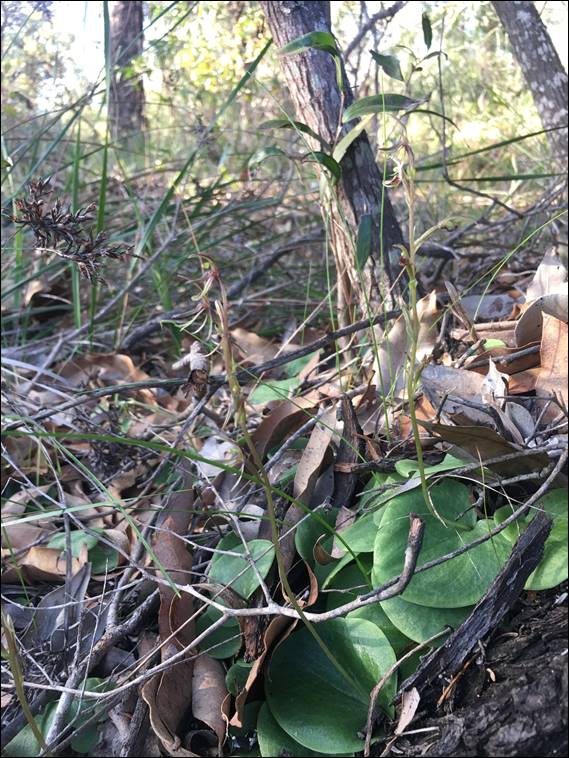
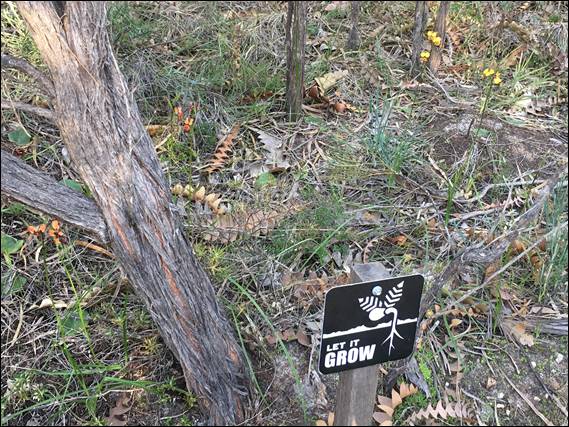
With respect to orchids we spotted the obvious finds, and she told me she had also heard the recent rumours of the Queen of Sheba being spotted in the Bunbury area. And I note now that this seems to be an rumour that pops up most years, and for most years in just that. We did however spot a small cluster of Midge Orchid (Cyrtostylis huegelii), shown in the first image. And of course there were lots and lots of donkey orchids, which next to Spider Orchids are probably one of the most well-known and easily recognisable genus of orchids. Both have distinct, colourful flowers and being mostly tall they are easy to spot. As we looked at them we wondered if there was more than one species out, and the penny dropped when we came across the small patch shown in second image:
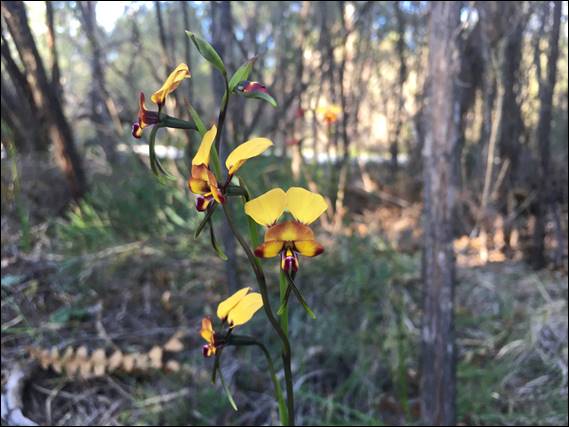
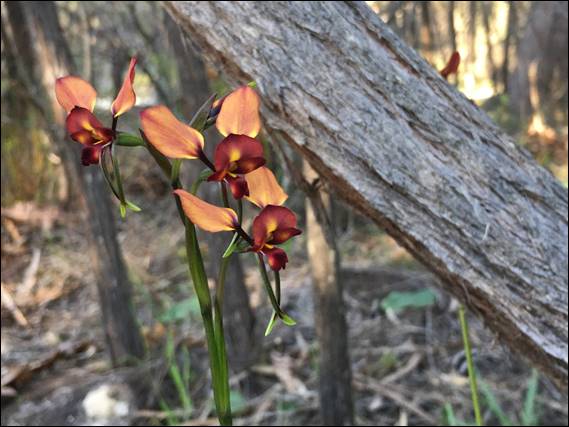
In that patch we found both the Yalgorup Donkey Orchid (Diuris porphyrochila) and Winter Donkey Orchid (Diuris brumalis), in the two images above. The colouration being distinctly different. The yellow and much brighter Winter Donkey Orchid is very similar to the Common Donkey Orchid (Diuris corymbosa), but the range of the latter tends not to extend as far south as Bunbury. Then as I scrolled through the images preparing for this post, I spotted the one below. Again a different colouration in the main flower, but also the two downward pointing sepals. This one being the Kemerton Pansy Orchid (Diuris cruenta), the range of which extends along the coastal plains from Lake Clifton to Capel:
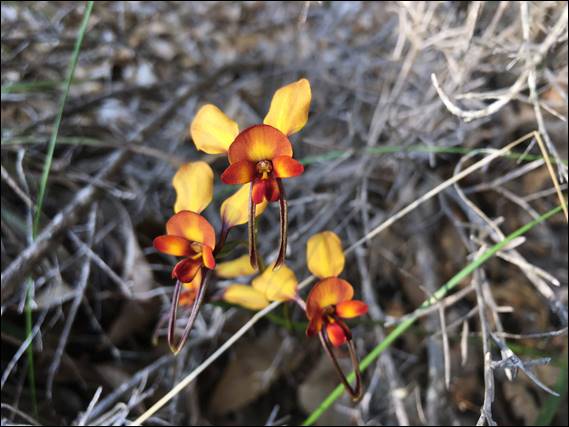
So that is now three species of Donkey orchids this season, but I have a long way to go. There are approx. 120 species of them, of which 48 (so far) have been spotted in Western Australia. These orchids can also be found for a long time, with the first species flowering in May and the last in February. One of the last being the Heberle’s Donkey Orchid (Diuris heberlei), found along the Albany coastline, and which looks quite different to the Donkey orchids we find here. I’ve not seen that one but I have spotted the Late Donkey Orchid (Diuris emarginata) that flowers until January, which is similar in appearance to the Heberle’s Donkey Orchid and an image of that can be found in this post https://sandbagged.blog/2021/11/28/a-most-unexpected-journey/:
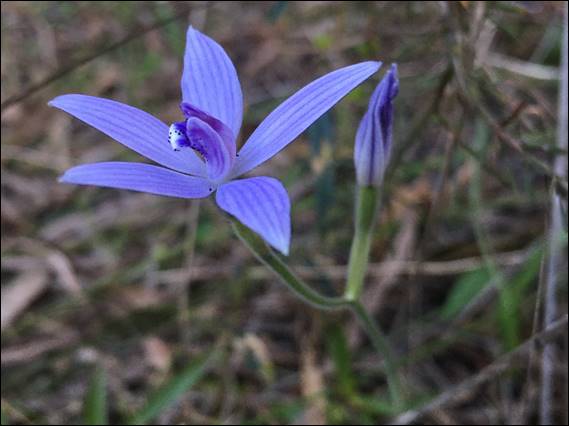
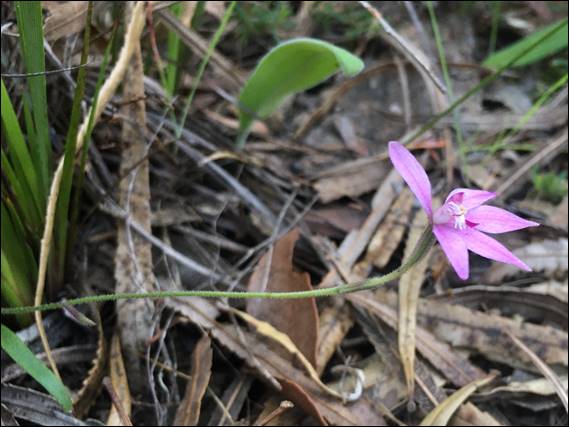
As Jo and I came to the end of our wander she told me of another species she had spotted before I had turned up. It was just off the track and I had walked right past it, so we went to check out the above Silky Blue Orchid (Caladenia sericea). This species prefers lateritic soils, which is rich in iron and aluminium, but can also found in the coastal banksia woodlands that are found on sandy soils. And as we were admiring it, Jo spotted our final find shown below. This may be a Little Pink Fairy Orchid (Caladenia reptans), as it has a relatively small flower and the arrangement has the lower four petals pointing downwards. But the stem is mostly green, and the Little Pink Fairy Orchids are usually a purplish colour. So I’m sitting on the fence about this one:
 Sandbagged