With a sunny Sunday forecast Lisa and I headed to Nannup to repeat a walk we did last year on our wedding anniversary (https://sandbagged.blog/2021/10/31/21-again/). One we had talked about as a good place to take the poodles for a walk, for a test run. Being not too long and with a path that remains dry. Also being flat and easy, as it meanders through varied forests comprising Jarrah, Marri, Sheoak, and Balga. I did worry whether my continual stopping may not be tolerated by the poodles, but it is still a little early for orchid spotting so I was hopeful I could minimise the delays:
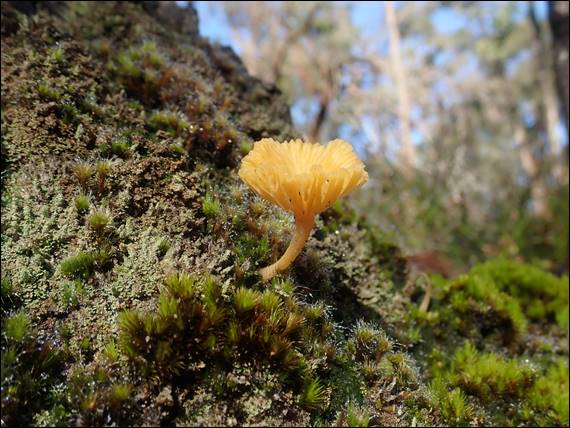
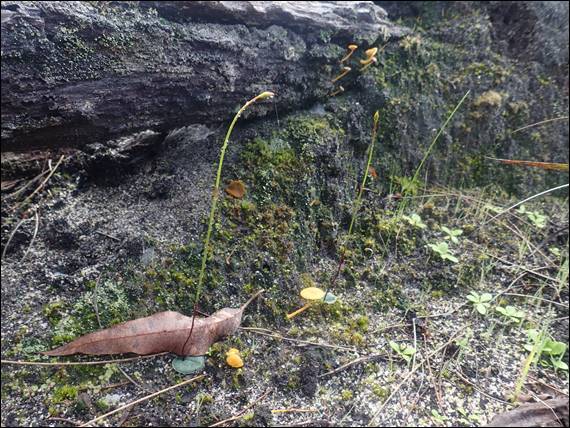
We saw lots and lots of Yellow Navel (Lichenomphalia chromacea), a bright yellow species of fungi shown above. This species is easily identified by the depressed cap that has a wavy and grooved outer edge, which is called the margin. It is a very common fungus and can grow in many environments ranging from forests, woodlands and coastal heaths across all southern parts of Australia. We also found the usual early flowering suspects from the greenhood family of orchids, including Banded, Jugs and Snails. All in abundant numbers:
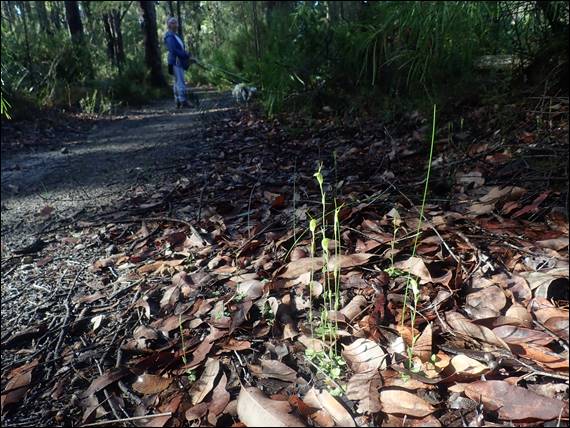
There are a quite few different types of snail orchids found in the south west of Western Australia, and I do wonder how many of them I have seen. Taking a few snaps and then trying to identify them when I get home just is not effective. To be certain I need to measure basal leafs, count leaves on the stems, check which parts were hairy, and measures respective body parts. Despite not having done that I think we may have spotted the two new ones today. The first being the Tall Snail Orchid (Pterostylis pyramidalis), which has a similar flower to the Slender Snail Orchid, previously spotted this season, but with a much taller stem:
As we walked Nicka’s tail and head down and as sniffed every inch of the path. Sooky on the other hand was tail and head up, and it seemed that she was the one walking both Nicka and Lisa. Each time I stopped to check out a find, Lisa would walk on with the poodles. Until that is Sooky realised I wasn’t with them, at which point she would come to a standstill and look round for me. As she and Lisa waited patiently, Nicka simply concentrated her sniffing to the one spot. The group did not continue until I caught up. So I didn’t make the observations, notes, measurements and images I needed:
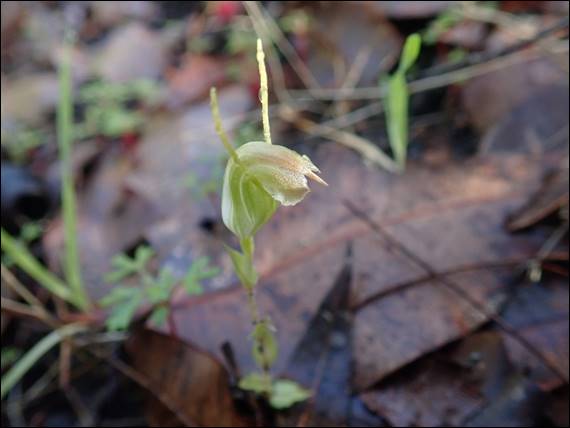
Despite that, and in truth I don’t think I would capture all that information each time, I am fairly confident with the above find being a Red-sepalled Snail Orchid (Pterostylis erubescens). Several aspects allowing me to be confident, such as the obvious pointed and broad splaying dorsal sepal at the front, long sepals pointing above the head, and the reddish-brown tinge that becomes more prominent with age. And despite the next find only just starting to flower this too was an easy one to identify. Named in 1810 from the Latin words latus and folia meaning broad/wide and leaves, respectively. The Pink Fairy Orchid (Caladenia latifolia):
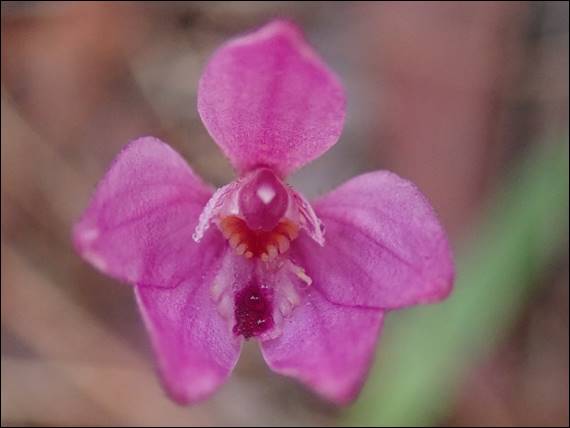
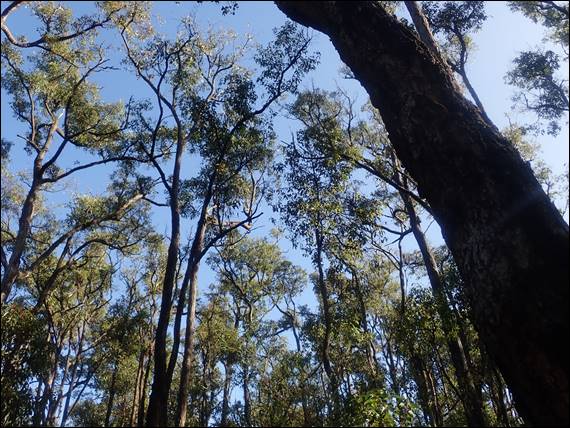
In addition to keeping eyes on the ground, on occasion we both stopped to observe the treetops. Several times we gazed upwards to observe Red-tailed Black Cockatoos foraging on the gum nuts high in the trees, hoping to catch a glimpse of their red tails. Above us, they carried on oblivious of our gaze as they continually dropped nuts, twigs, and leaves to add to the accumulating litter the forest floor. I am going to guess that they were Forest Red Tailed Black Cockatoo (Calyptorhynchus banksii naso), which are only found in south west Western Australia:
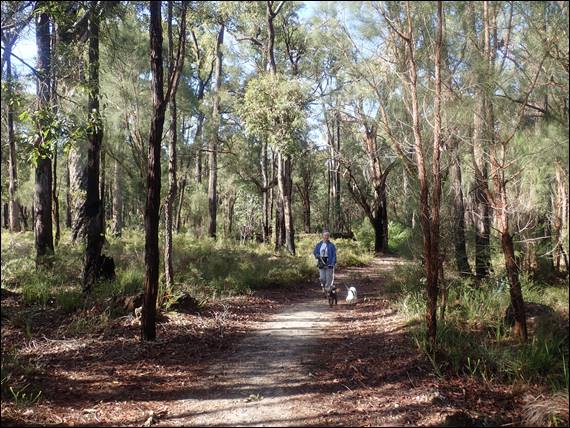
They are one of the five subspecies of these majestic birds that are native to Australia, and this is the first time I can recall seeing them being called the Forest Red Tailed Black Cockatoo. As we continued we found a Pink Fairy Orchid in full bloom, the only one we spotted. Like the Yellow Navel fungi these too are widely found across all of southern areas of Australia. In most states they are mostly found in sandy areas nearer the coast. However, in Western Australia they can range all the way inland right up to the salt lakes in the Wheatbelt. A very common orchid that we will no doubt start to see a lot more of:
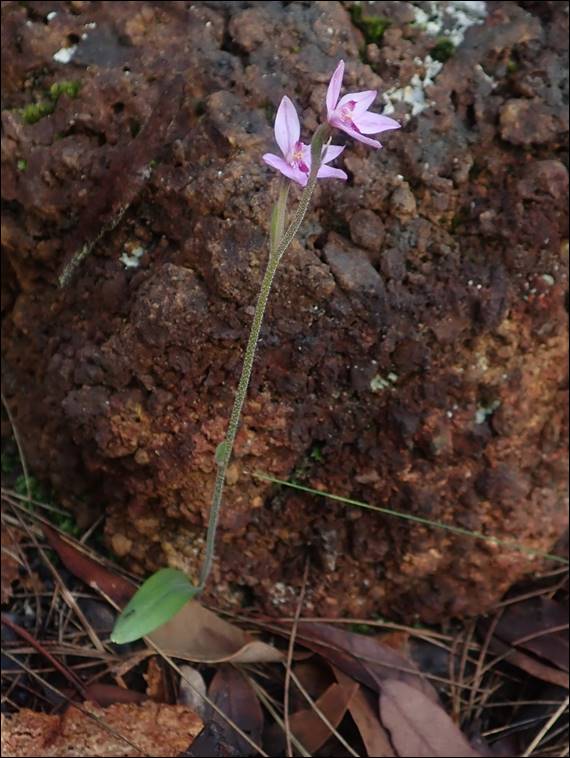
Heading out for a walk with Lisa, the flask of tea had come with us. And it makes sense that we then stop for a quick brew, when we also broke out the water bottle and bowl to give the poodles a drink. This stop gave me an opportunity to look in a bit more detail around the area, which is where I spotted a few more orchids getting ready to flower. Below the small basal leaves and long leafless stem with a dark red colour at the base makes me think they were hammer orchids, some species of which do flower as early as August. I guess we will just have to come back in a few weeks for another look to see if I am right:
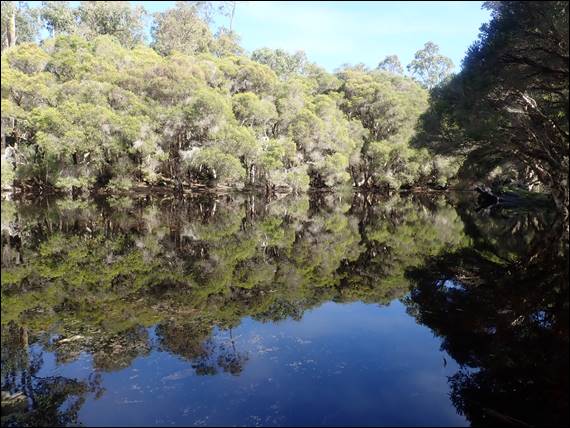
As we walked the final stretch I popped off the track for a quick look at the wetland, resulting in Sooky again stopping and insisting Lisa and Nicka stand and wait for me. I didn’t hang about too long, and soon caught up with them so we could all walk back to the car. We’d spent two hours slowly checking out the area, and it was a successful test run with the poodles to see how they would fare and probably also how I would cope. Needless to say they managed the relatively short wander, which was no more than 5km, with ease:
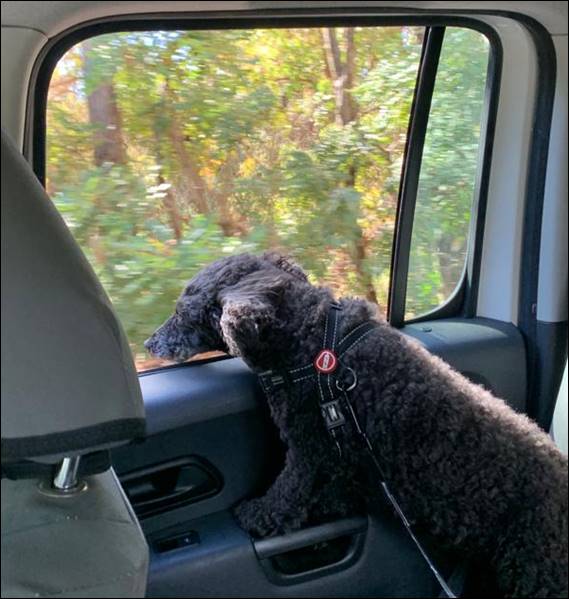
With plenty of tea in the flask we poured a cuppa for the road, and also poured another bowl of water for the dogs before loading them onto the back seat. To start with, they popped their heads out of the windows as dogs seem to love to, but soon after laid down for a well-earned rest. Rather than head straight home, we took a detour to pop in at Hippo Lakes to visit our old neighbours, and get a bite to eat at their café. Seeing Liz again was lovely, and the poodles were equally happy to say hello to her again. I have to admit it was OK going out for a wander with the poodles, so we will check out other locations where dogs are allowed:
 Sandbagged