Today Ash posed the question, where does the term sandbagged come from. Before looking at that I checked and found numerous definitions, discovering it can mean both “to thwart or cause to fail or be rejected” and “downplay or misrepresent one’s ability in a game or activity”. Thinking about my, not very good, pool playing days in England the latter definition was something we inferred when we called someone a “a shark”. Pretending to play badly, and then pulling out the moves when it matters to get a surprise win. However, in climbing the term sandbag is used in context of the first definition:
It seems the term has been used for various things through the centuries. Indeed way back in the 1500s it was used to describe filling a bag with sand, for use as a weapon. It is also claimed the noun didn’t come to fruition until the 1800s, when it was used to describe the person doing the attacking with said bag of sand. Then in the 1970s it started to get used as per the latter definition, to describe people who would conceal their real talents during a sporting event. So how does all this then relate to climbing? When Ash posed the question today I suggested it may relate to sandbags used in hot air ballooning, and according to some sites I may not be far off the mark:

Climbers will know it is inferred to mean a route feels much harder than it should, when taking into account the grade the climb has been given. Several sites I found state the term indicates that these routes feel like you are climbing them with a bag of sand attached to your harness. Sandbagging is something I have been accused of several times, as highlighted by last weekend’s trip to Rumploes Rocks where the grades of routes I established were questioned. I occasionally check an online depository of climbing routes, called The Crag, and a number of routes I put up in Alice Springs have also been questioned, With their grades having since been bumped up several grades, by consensus of people who have tried these routes:
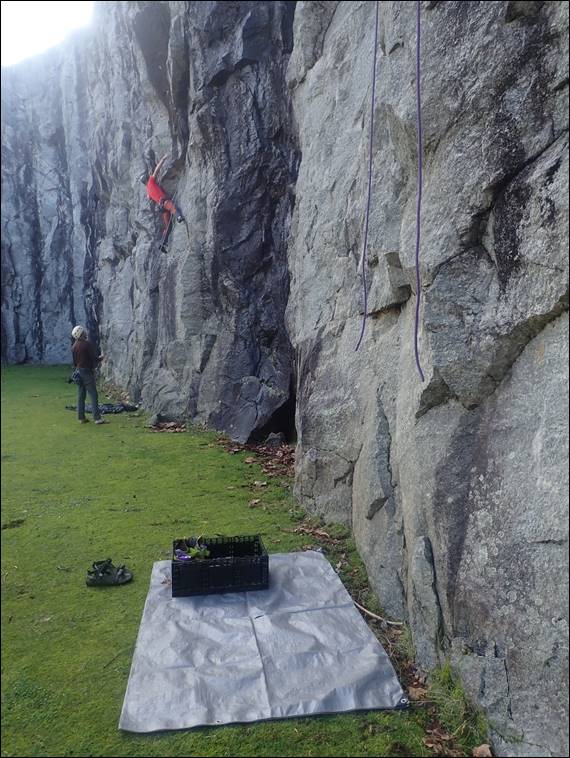
Another local place where sandbagging is a term often referred to is Welly Dam, which is where we were climbing. This was even more relevant today, as Mario, Howsie and I were introducing Andreas and Ash to the delights of this place. Whether they would measure up wasn’t the only thing under scrutiny today. You might recall that the sheaf of my rope was ripped open last week. So today was the moment of truth to see if the longer of the two short ropes I now have, after cutting the damaged section out, would be long enough for Welly Dam. The answer can be seen above, not quite for the longer routes here but today we made it work, taking into account rope stretch:
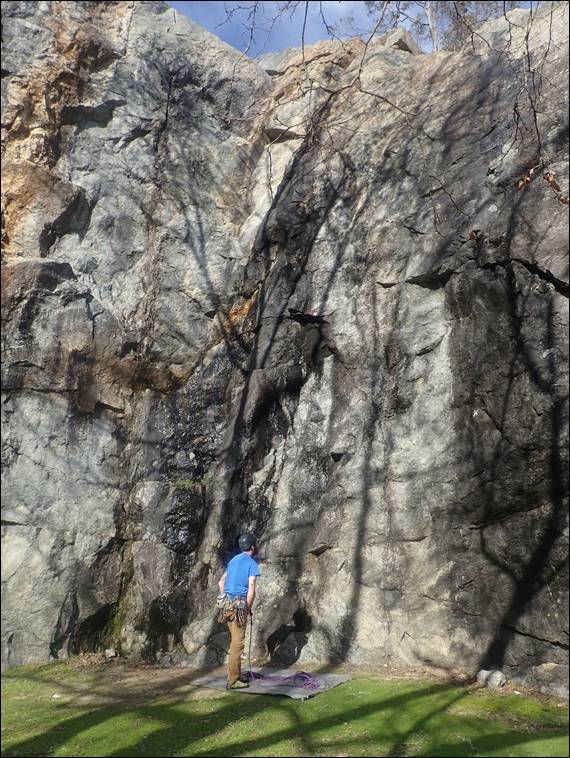
Rope stretch is quite simply how much a rope will stretch when put under load. This varies for climbing ropes designed for different uses, as well as how the load is applied. When I top rope solo I use what they call a static rope and they only stretch by about 10%, whereas a dynamic rope can stretch by as much as 40%. The reason for such a higher percentage for dynamic ropes, being that the stretch results in a falling climber coming to a more gentle stop as the rope is loaded. If it didn’t stretch it would be a very sudden stop and this could cause injuries, such as jarring of joints or worse:
While my new short rope didn’t quite measure up, it will still be very useful at numerous other crags in the area. And as for the two people being introduced to the climbing style here, well they soon came to realise why this place has a reputation. I am however very happy to report that this did not put them off one bit, and they were both very impressed and enthused by the style of climbing. This was even more impressive as they were both thrown in the deep end, following us up some of the stiffer lines. These routes being technical, hard to read and at times powerful while also needing very delicate movements. Resulting in the need for a controlled and precise approach to the climbing:
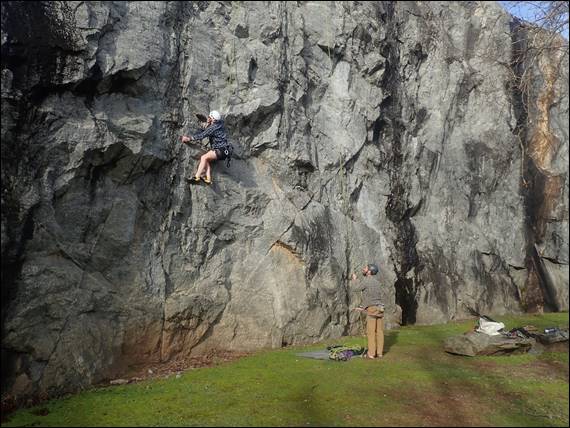
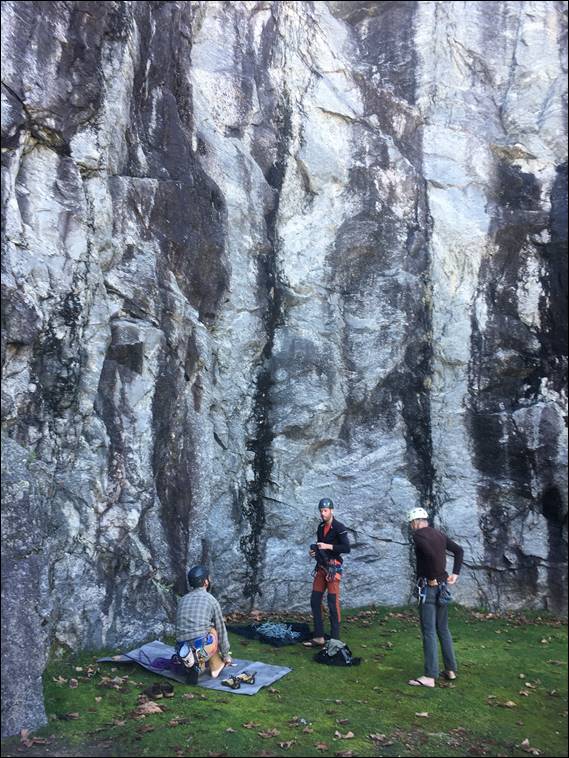
We hit a few harder lines in part due to the easier lines mostly running with water, but also because Mario, Howsie and I were keen to jump on these more challenging lines. Mario seeking some new projects to work on and Howsie with his 2022 challenge in mind. This didn’t seem to be putting neither Andreas nor Ash off, so everyone was happy. Being such a stiff place to climb, and when we are not on a tight time schedule, it makes sense to slow things down. To the point that this is the place my tea kit is most likely to make an appearance:
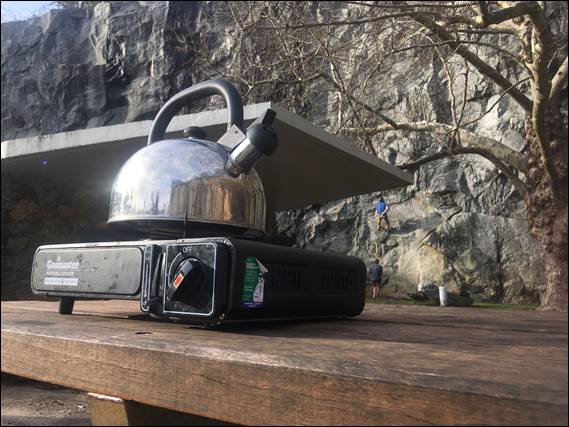
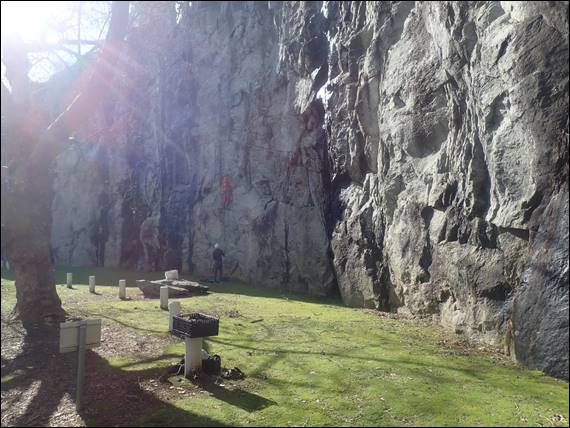
That and also because we park our cars practically at the base of the cliff so there is no need to haul the gear any distance. It felt very lucky and almost luxurious to be out on a Friday afternoon, climbing on a sunny day, and to boot have the place entirely to ourselves. No tourists came down to the quarry, although we could hear their voices above us. Although, there was something Howsie and I remarked on that we did not hear on this trip, which was a little disappointing. Neither of us heard a single call from the Red-Tailed Black Cockatoos, which is extremely rare and it is possible that it has never happened before:
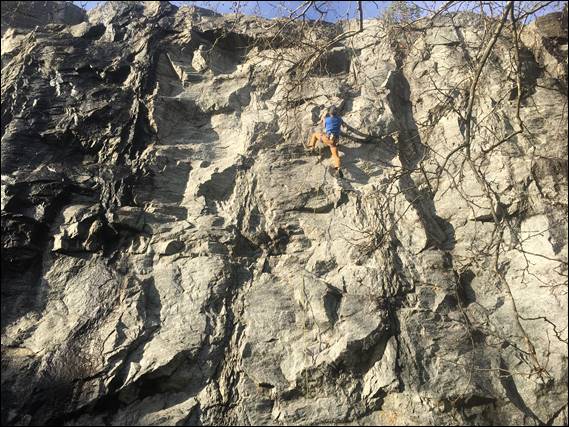
Hopefully next time their familiar call will fill the air again. But for now the teas were poured and brewing, as the last of the climbing was being wrapped up. The last of our energy was being expelled, the sun lowered in the sky resulting in the shadows start to lengthen and the air temperature beginning to show signs of dropping. It was the perfect time for a hot cuppa that went down very well with a pack of Tam-tams. Another successful and social trip to Welly Dam, topped off as I got to watch the last of the supermoons, for 2022, rise above the horizon as I drove home:

 Sandbagged