Lisa and I had intended to head out for a walk last weekend, as her energy levels had returned to somewhere near pre-COVID. Unfortunately, as seems to happen with life, other things distracted us and we didn’t get out. So this weekend I was more determined to get her out and about, for something other than work. Not wanting to go too crazy, we headed to the small nature reserve at Ambergate, a short half hour drive from our place. An easy grade walk, spilt into four quarters from which it is possible to get back to the car:
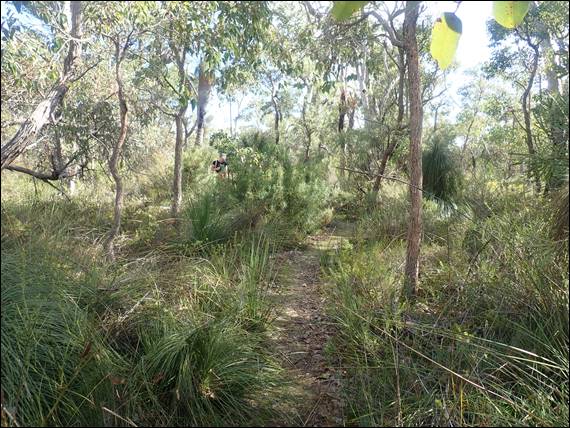
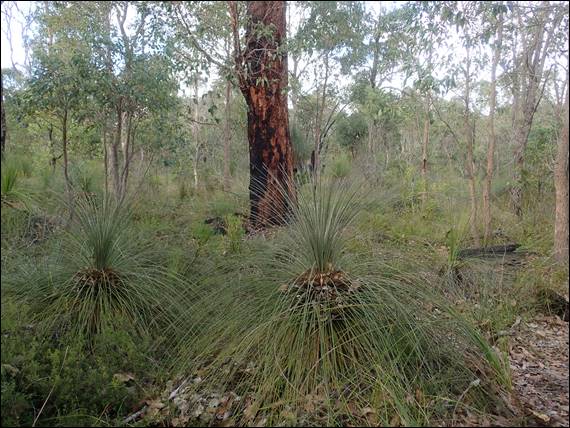
Winter is upon us and I had no expectations of seeing a floral landscape. Indeed we were prepared for the blanket of greens interlaced with slithers of brown from the tree trunks. While it may be winter a blue sky was above us and it certainly didn’t feel cold, nor had it rained enough recently to be wet underfoot. This surprised me a little, as we have had a few decent fronts dump rain over the last few weeks. I was actually hoping for slightly damper conditions, which would have brought out some fungi:
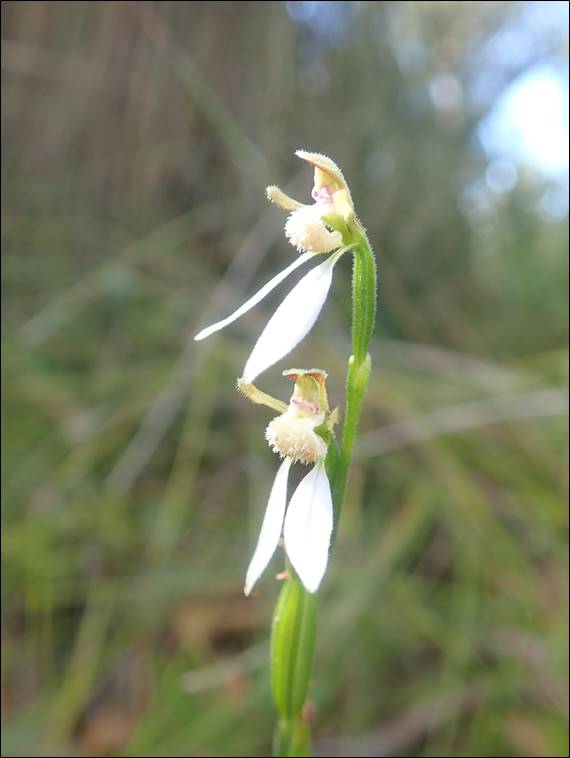
While there were not many flowers to be seen we stumbled across a Common Bunny Orchid (Eriochilus dilatatus). Unlike the ones I’ve spotted in other locations this year this one didn’t have any red tinging, so it could have been a pale form. Something they call Diuris, unlike the yellow form that is called Lutea. I also noticed it had a far more hairy labellum, and again I have been left wondering. Despite having the latest edition of Orchids of South-West Australia, with all of its 500 pages, I was unable to pin it down with any certainty:
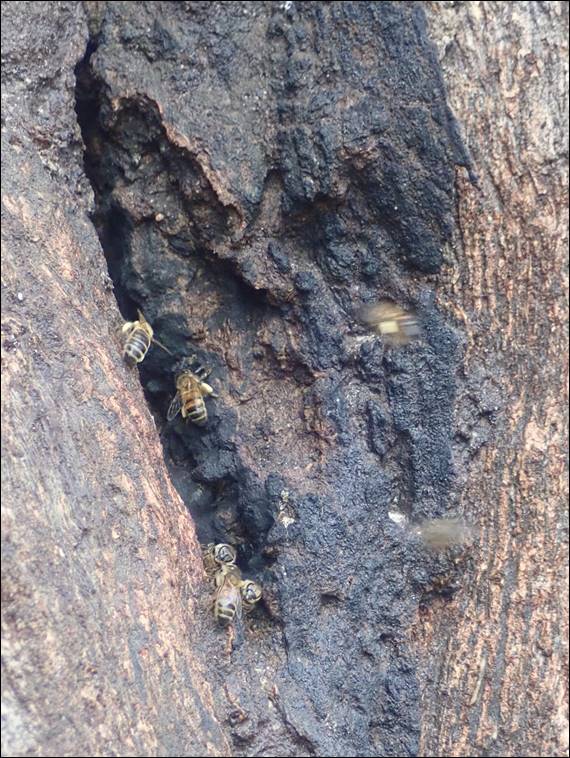
There were a few other plants in bloom but not in any great abundance, including some pea flowers. And it made me wonder where the bees had been stocking up on pollen, which we spotted buzzing in and out of a hive in one of the tree trunks. The returning bees all had legs fully ladened with the yellow powder. It certainly wasn’t from the mushrooms that we did spot, and again there were not many. I’ve attempted to identify the two species we found and this one I can only guess may have been of the Lactarius genus, commonly known as milk-caps:
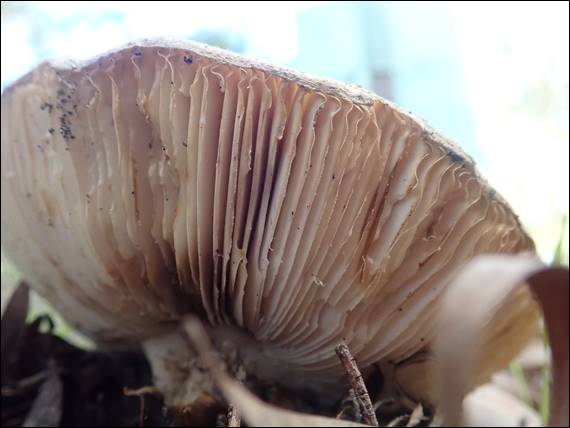
If I am right the cap would have oozed a fluid that looks milky, if I had cut it. But despite being guided by the online guide called “Fungi of the Perth Region and Beyond” I was not convinced and didn’t want to start handling it, just on case it wasn’t such an innocent species. The next image shows the second orchid we spotted, but I have to confess at the time I didn’t think it was an orchid. I even went so far as to tell someone else who had spotted them that I didn’t think they were orchids. This time my trusted, but heavy, orchid book clearly showed me I was wrong:
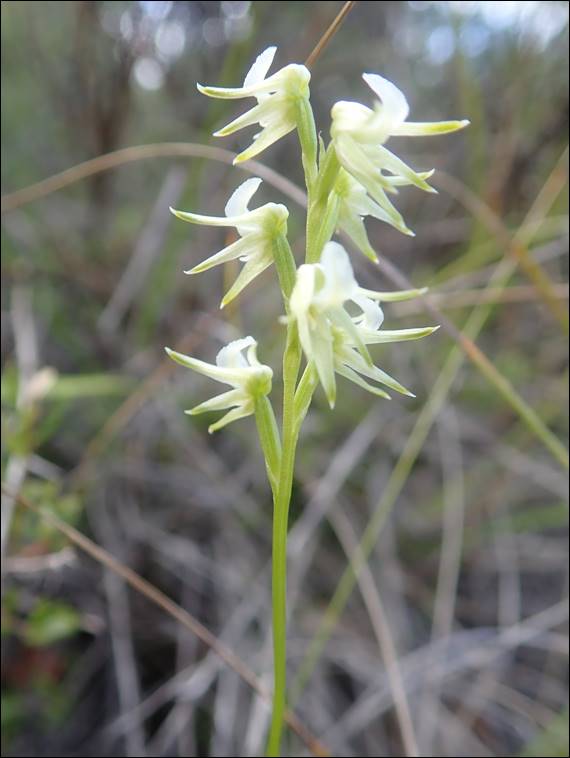
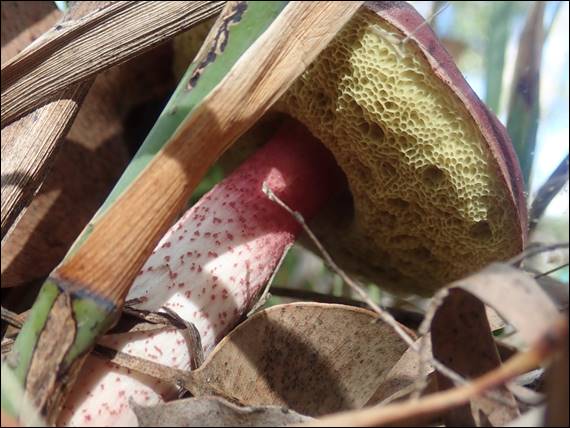
The Scented Autumn Leek Orchid (Prasophyllum), as its name suggests, is another one of the early flowering orchids. While I am stoked to have come across two orchids today, the next find was the one that I really liked. I’ve spent a fair bit of time checking what mushroom this is. I thought the very distinctive and rather unusual yellow sponge like underside of the deep red cap should have been a giveaway. Indeed, I’m sure it is of the Boletellus genus, and am prepared to go a step further and say it is a Rhubarb Bolete (Boletellus obscurecoccineus):
While on first impression the reserve had a rather drab appearance on display today, we were rewarded with some very cool finds. Better still we managed to walk all four quadrants, and Lisa was still feeling fine. That said the pace was fairly slow, due to me stopping to check things out. Regardless of that we decided we should reward ourselves with a bite to eat, so jumped in the car and found a spot in Busselton to feast on jalapeno poppers while enjoying a game of King Cribbage:
 Sandbagged