Way before the camper trailer was even a twinkle in Lisa’s eye, we had booked a getaway down on the south coast. Making use of Lisa’s long service leave to allow us to have a break during school term time, and also having Elseya at home to look after the poodles. Dogs were allowed to be brought to this place, but on arrival we were glad that he hadn’t taken the poodles. Looking about we knew they would have been off like a shot, into the surrounding scrub. They may be beach wise but not so much bush wise:
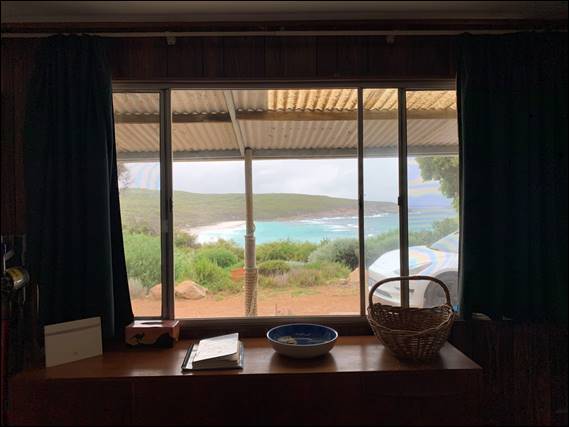
Seeing we didn’t have the camper trailer in tow, we drove down in the Tesla. It was a 450km trip from our home to what is described as a beach shack, which sits above Short Beach just outside of Bremer Bay. We hit Kojonup after the first 200km where there is a charging station, with a café conveniently located next to it. In less than an hour, and after a bite to eat, we had enough battery power to get us to our destination. It felt good to not have to pay the escalating fuel prices of today:
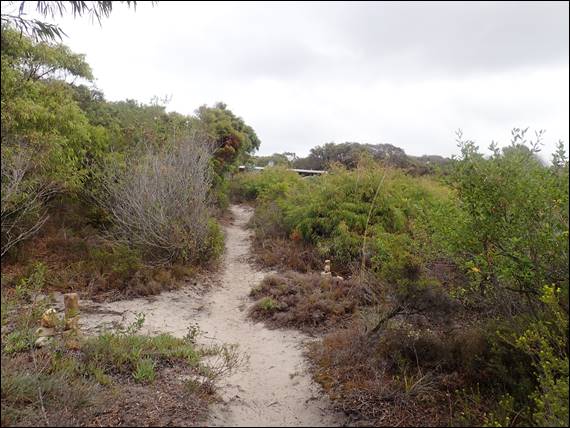
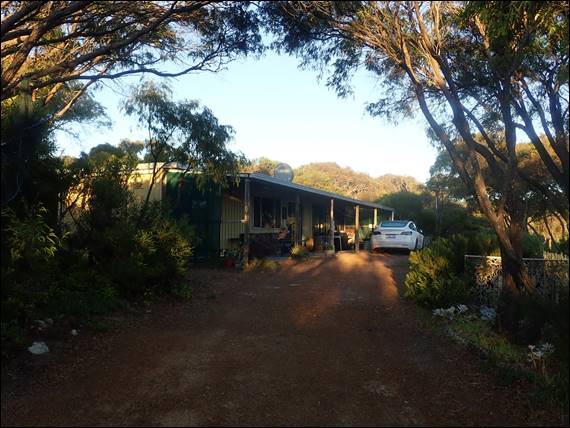
The beach shack, is just that. But it has all the creature comforts required and is secluded, quiet and has a great view of the bay and beach below. There is also a well-worn and maintained track that leads straight to the beach. It felt only right on arrival to go and put our feet in the water. It was a good job Lisa was keeping an eye out as we walked along the track, spotting a Garden Orb Weaving Spider (Eriophora transmarina) building its web ready for the nights hunt:

It was an early and quiet night, our intention was to stay put, relax and enjoy the area. This meant slightly different things for Lisa and I. She had intentions of being snuggled up in bed, with a great view through the large sliding doors of the beach and bay. While I intended to wander about checking the area out. This included having a snorkel or two in the bay, but the 2m swell and head on easterlies were putting paid to any notion of that. Instead next morning I went for a wander round the beach shack:
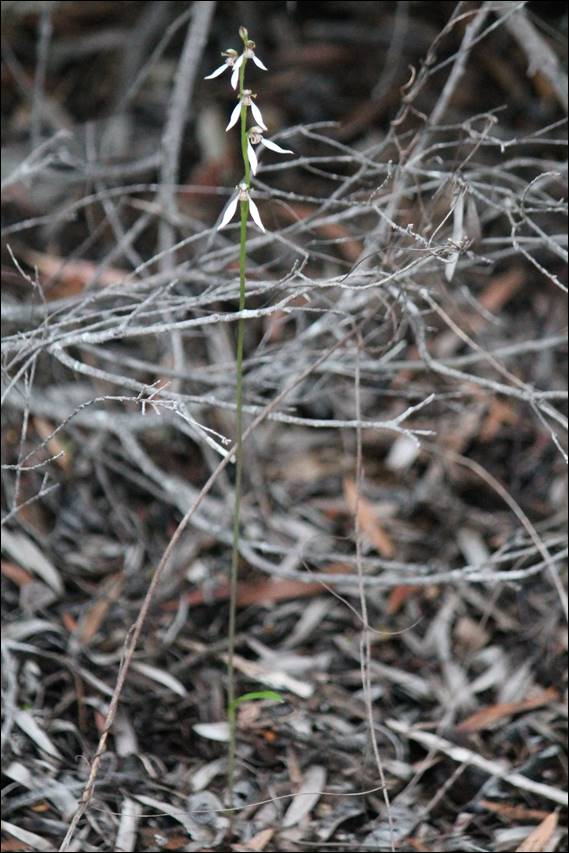
I wasn’t intentionally looking for orchids but did stumble across a few White Bunny Orchids (Eriochilus dilatatus). There were also lots and lots of dried up Mignonette Orchids (Microtis). There are fifteen named species of these so without seeing them in flower it is near impossible to work out which one this was. Most species only flower until January, so it was a little surprising to see so many intact dried up plants still standing in such good conditions:

Back at the beach shack, Lisa was ready for another cuppa. So leaving her with a fresh cuppa and good book, I took my sippy mug and went down to the bay for a rock hop along the coast. The orb spider was munching on a meal, that had been caught that night. Cocooned tightly in a mass of web, it was impossible to tell exactly what it was eating but it looked like a moth. Leaving the spider to its feast, instead of walking along the beach past the people fishing I went the opposite way. Along the rocks:
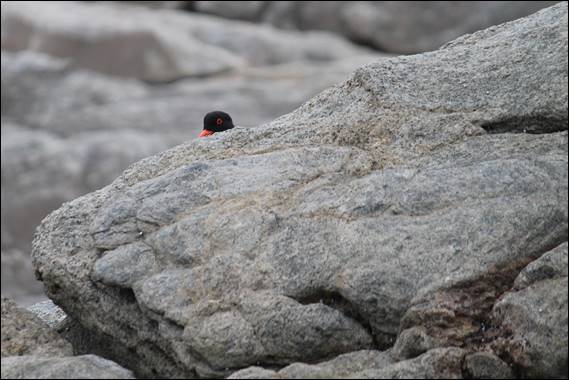
Above this Sooty Oystercatcher (Haematopus fuliginosus), which was previously standing on top of the rock decided I might have been a threat. So ducked down behind it and kept poking its head up to check if I was still there. These birds are known to eat molluscs, but will happily feast on whatever other suitable sized creatures happen to be about including crustaceans and worms. As such their long beak can be used to stab, prise, lever, hammer, scissor or pick their food from the rocks or sand:
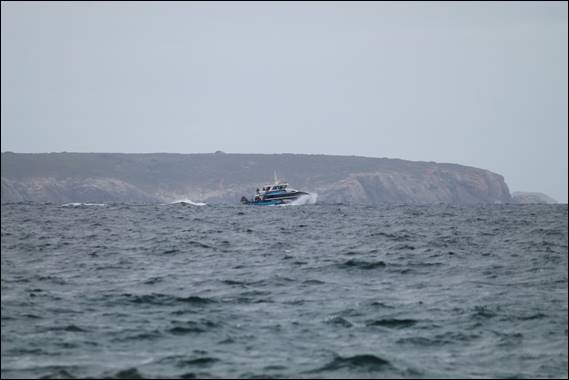
Above the Naturaliste Charter boat was heading out, I’m guessing to the Bremer Canyon. A tour that has become very popular to watch Killer Whales (Orca) in action. An eight hour round trip, and one that would no doubt be spectacular to witness. But with the swell looking like it was today I wonder whether Lisa or I would enjoy being out there. Maybe we’ll consider it for another time, but for now Lisa was happy reading in bed and I was happy hopping along the coast:
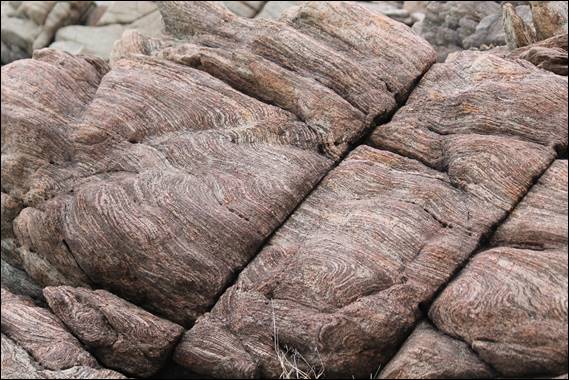
The coast is formed of gneiss, a metamorphic rock created under high-temperature and pressure. This results in the previous igneous or sedimentary rock being transformed into the gneiss that is here today. The process can result in some very cool patterns that give an indication of the movement that can occur during this process, such as the above very uniformly layered wavy display. There is also limestone in the area, and in a few spots I found the gneiss completely covered in a veneer ripple textured coating of hardened limestone:
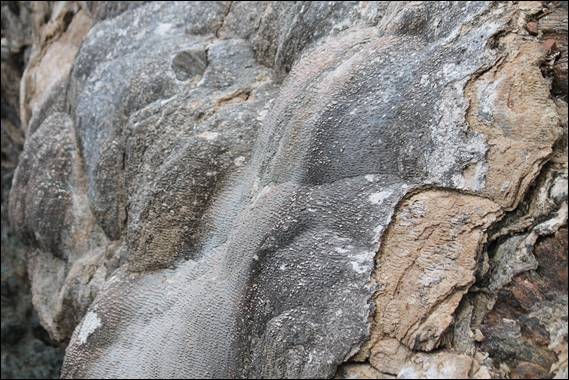
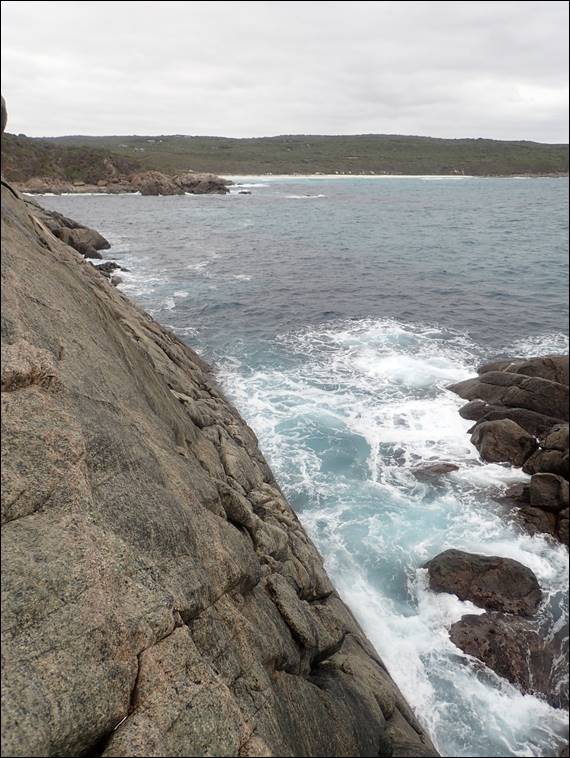
There were also spots where the above process could be observed in action, pools of calcium rich water trickling down the rock. Underneath the water’s surface the ripple pattern of the first layers could be seen. But I had to cull which images to include and so I now cut to the view I had when I reached my pre-selected destination. From the beach I’d noticed a capping rock above a slab, and the final section of my rock hop was across that slab. Not everyone would enjoy tiptoeing across a slab with a swim in the ocean if you slip, but I love this stuff:
When I got back to the beach shack Lisa was still enjoying reading her book. It has been a very long time since she has spent an entire day devouring word after word. And the whole point of a holiday is to enjoy yourself, so I made her another brew and breakfast so she didn’t have to get up. Leaving Lisa in her ideal spot, while I headed further away from the beach shack to check the surrounding bush. There are a few access tracks, one leading up to two large water tanks, and here the tracks became shared with neighbours. Far enough away not to never see or hear from them:
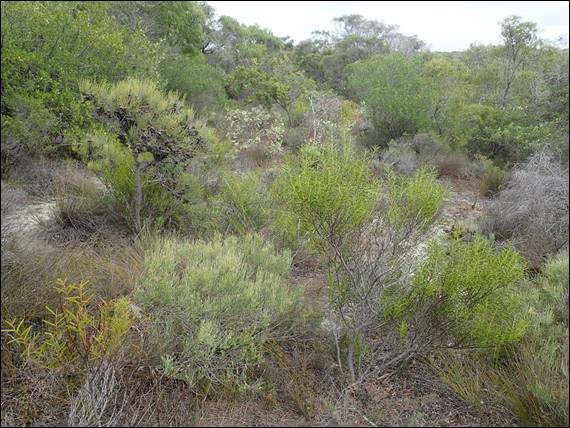
I was however keen to walk through the scrub, so deviated off the tracks. As it had been yesterday when we arrived, it was cloudy despite the sun was making every effort to break free. I scoured the ground for orchids, only finding the occasional bunny orchid, and the trees for birds. I could hear the birds but they were well hidden in the shrubs and trees, and as I approached were quick to fly away. I did however come across this beautiful Banded Orb-weaving Spider (Argiope trifasciata). This is the striking female, with the male being smaller and less colourful:

I’ve read that these spiders will drop to the ground if they feel threatened, where their pattern results in them being very well camouflaged. But this one stayed put despite me getting very close to check out its very colourful two centimetre long body. I also came across a male, minus several legs. They can become a meal for the female if they are not careful, so losing a leg is relatively a small price to pay. After almost walking into the web of the above spider I was a little more careful to look for webs, but this was the only occupied one I found:
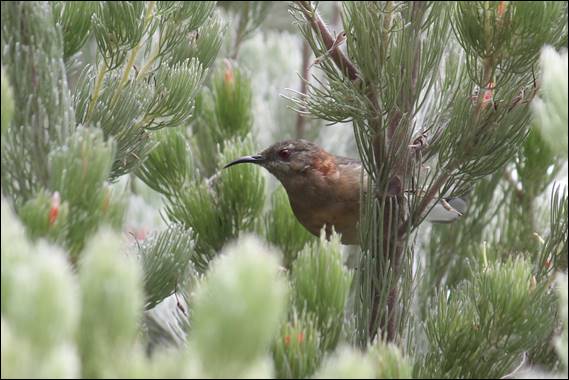
Wandering back towards the beach shack I stood quietly watching the trees, the birds were quite happily hopping about, picking meals off the leaves. But for the most part they were too far away to be captured in an image, so I just watched them. The only image worth including is the above one. Never fully exposing its body, as it pecked at morsels from the Woolly Bush (Adenanthos sericeus) it felt safe in. I’ve had a really good hunt and am pretty sure it is a honeyeater due to the beak, but which one I’m not sure:

I would normally have gone with a Brown Honeyeater (Lichmera indistincta), but it lacks the distinctive white spot behind the eye and the colours just seem too dark. So I want to say is a Dusky Honeyeater (Myzomela obscura). My bird book and several websites tells me their range is limited to northern and eastern Australia. Although the World Bird Database indicates that while rare, they may be found in Western Australia. Another find was a fly Lisa and I saw on our walk in Augusta. That time it wouldn’t sit still but this time the Snail Parasite Blowfly (Amenia imperialis) was quite happy for me to snap some images:
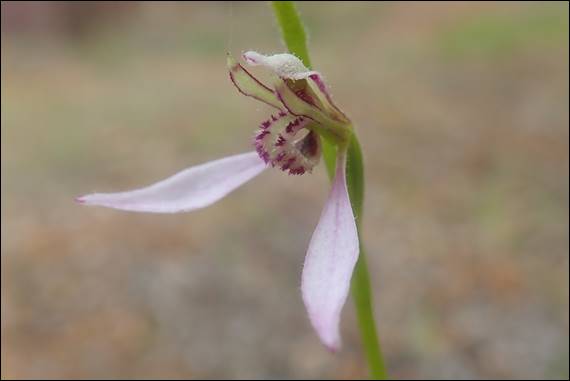
Back at the beach shack I stumbled across another bunny orchid, this this one had distinctive pink sepals, and the filaments on the labellum were more coloured. Like the honeyeater this orchid also has me stumped. It is not a pink bunny orchid, they have a very different stem and leaf structure to the white bunny orchids. So I resorted to submitting an enquiry to one of authors of the orchid identification book I have, who have suggested it is a White Bunny Orchid (Eriochilus dilatatus) that has ‘borrowed’ some colour from somewhere. When I got back Lisa was still being a book worm, so after a while and with low tide approaching I decided I might risk going in the water:
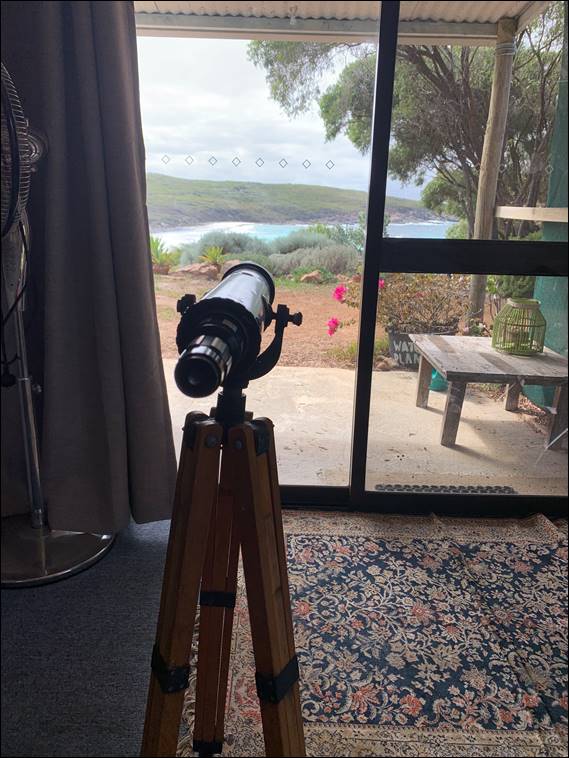
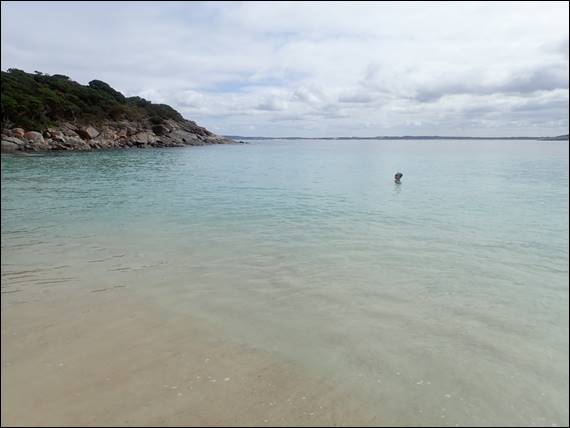
On my return from the swim I found she had set up the telescope to observe me. The beach shack came with an assortment of things. Including this, and from her vantage point she watched me at the far end of the beach. The bay has a broken rock bar across it, and the far end was the most protected. As low tide approached the waves were not breaking over the rock bar as much as they had been, making me think it might be ok to have a snorkel. From the beach shack it looked like a reasonable thought:
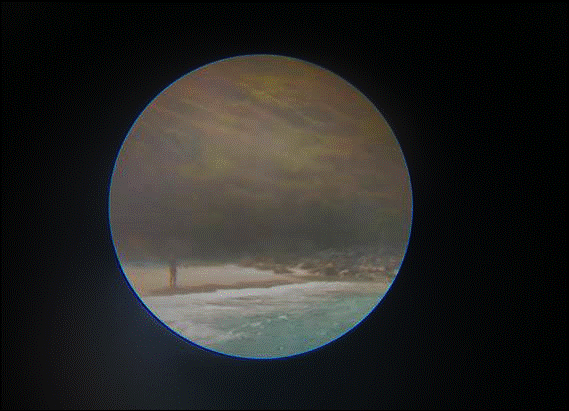
But as I stood there looking out, I wasn’t so sure. I’d brought my wetsuits with me as the water on the south coast would undoubtedly be cooler than up at our local beach. I was already suited up with my short wetsuit, so decided to just go in. The water was indeed cool, but bearable. It felt a bit like a rollercoaster, while the water was reasonably clear every time a wave came over the sand lifted into the water column. Then the sets would calm down and it wasn’t too bad again, but my biggest concern was being unexpectedly smashed against the rocks on the bed:
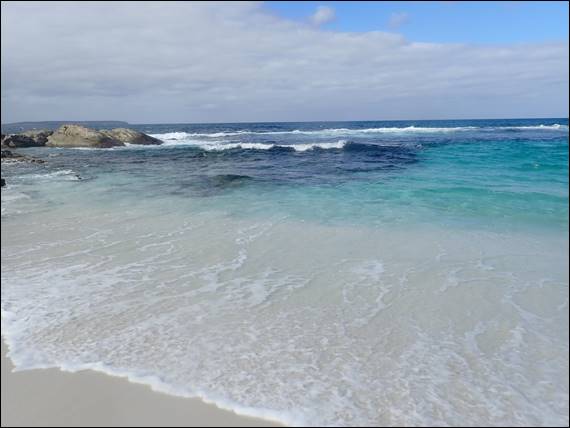
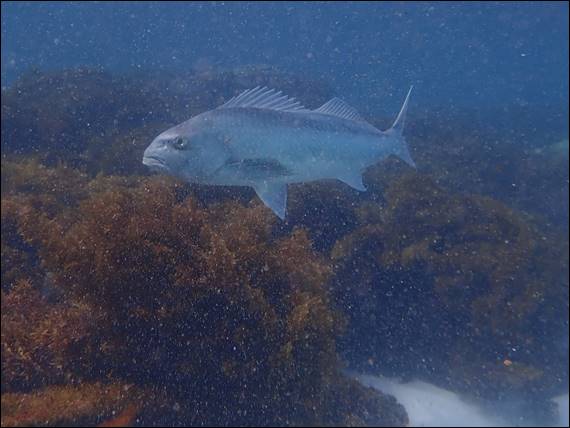
I spotted a few fish, wrasse, zebra fish, and others but the shallowness, waves and continual movement of the water made it hard to stay in one spot. So for most of the time I just bobbed about steering clear of the shallowest areas, and occasionally having a wave crash over me resulting in the water being filled with bubbles and then sand. It was certainly an experience, and I am glad I went in if only to have a close encounter with what I believe is a Dusky Morwong (Dactylophora nigricans). Not fully grown at only 7-80cm, with adults reaching 120cm:
It is safe to say that both Lisa and I really enjoyed our seemingly separate day. But we had spent time together, including playing a few games, having meals and also slobbing watching a few films in the evening, all while listening to the continually sound of the waves. The next day I was again up early, woken by the birds and I already had a plan in mind. After making a cuppa for Lisa I was out walking along the beach past the people already out and about fishing. They seemed to be there all the time despite having varied success:

My destination this time was the headland we could see from our beach shack. But before I started on my rocky scramble I sat and watched the dolphins, of which there were so many. They swam back and forth just outside the broken rocky bar that protected the beach. I lost count but would guess I spotted at least 50 or more in several large pods. I could see a few young, and above one of the young looks to have caught a feed. As they all seemed to go their separate ways, I too continued on my journey:
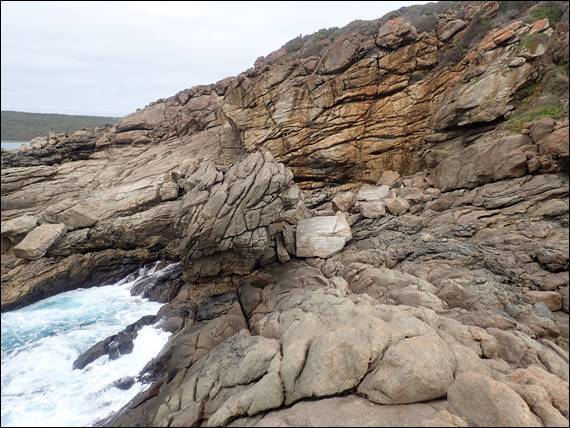
It was a great walk that included a few scrambles, several gaps to cross and some very specky looking short walls. There are a few established climbs on the coastline in this area, but they are a fair bit further to the south. I had purposely not brought any climbing gear with us and also did not intend to even head there to check the routes out. But as I looked at these fun short walls I was already wondering whether it was worth a return trip to climb some untouched rock. For now however, I was content with reaching the headland where I sat for a while taking in the view:
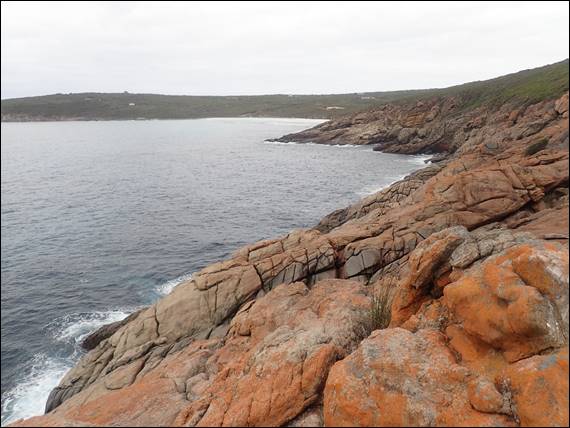
I’d spotted a few birds on the walk, but not much else. They would occasional glide along the coast past me, and from my vantage point on the headland it was a perfect spot to watch them. Below is a juvenile Pacific gull (Larus pacificus), which effortlessly cruised past. It took me a while to figure this bird out, and I am sure this juvenile is an immature 1-2 year old bird. The black tipped tail, with light patterning at the base of the body and black beak indicating it may not have reached two years old yet:

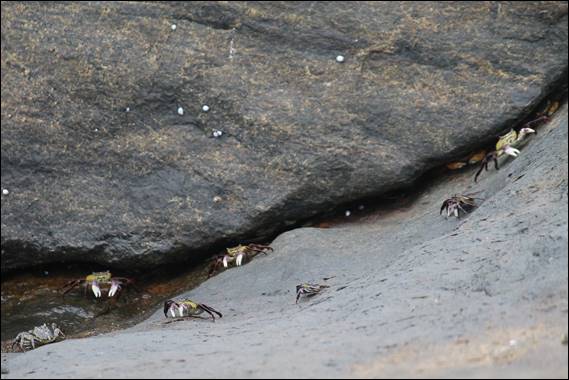
On my walk back I stopped a couple of times to watch the crabs. During the walk yesterday I had disturbed a small crab, and as it scuttled away from me a large crab lunged out from its hiding spot to grab it. So today I decided to stop and watch them feasting on the algae, and observed their movements. As the bigger crabs moved to a new feeding spot, all the smaller crabs also moved. I assume to keep a healthy life saving distance, and it was a bit like watching a Mexican standoff:
Back at the beach shack it was time for Lisa and I to have some breakfast, while we played a game. No matter where you sat or lay it was possible to look out of windows across the bay. The swell had dropped to one meter today, but the bay still looked reasonably rough. We had however already decided that we would check out another bay, one that faced west and it reputed to be snorkelable in most wind conditions. Little Harbour Bay was much smaller, but on arrival and as suggested it was flat and calm:
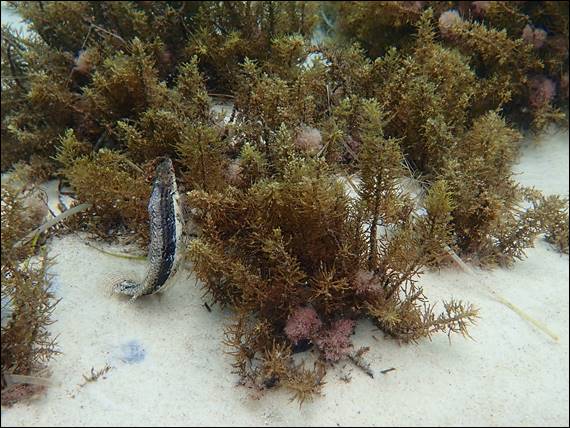
As with Short Beach, there were people fishing. It is probably the main reason people come down this way. I jumped into the perfectly clear water, sticking to the opposite side of the bay to where the people were fishing. Here I came across numerous fish, way too many to mention. Above is a Snakeskin Wrasse (Eupetrichthys angustipes), these fish have a peculiar swimming technique that is fascinating to watch. Their tail is down and their head is upright, resulting in them swimming in an almost vertical position:
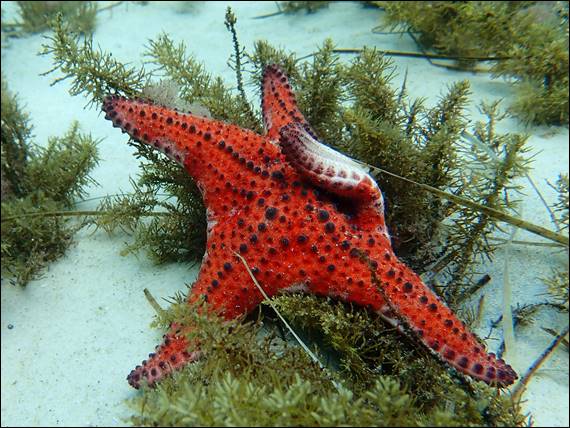
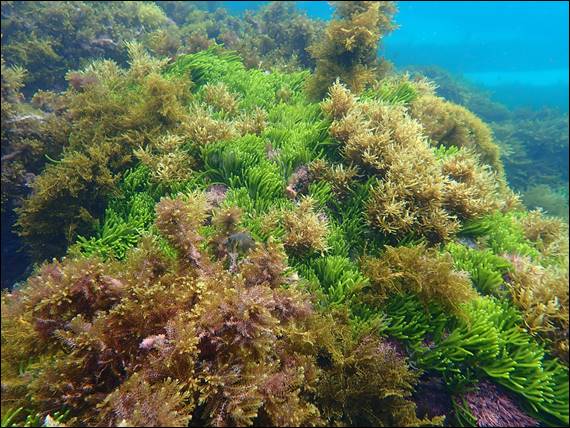
Another great find was a Knobbly Seastar (Pentaceraster), but I’m not game to say which species and nor have I found out any interesting facts about these striking seastars. It felt good to be in a place where I was seeing different fish, creatures and also weed. A leaflet at the shack said this bay had a snorkel and scuba dive trial. As such I knew which direction I was heading, following the side of a bay in search of something in particular. The rocky side dropped quickly to a quite a depth, my guess would have been 6m upwards:
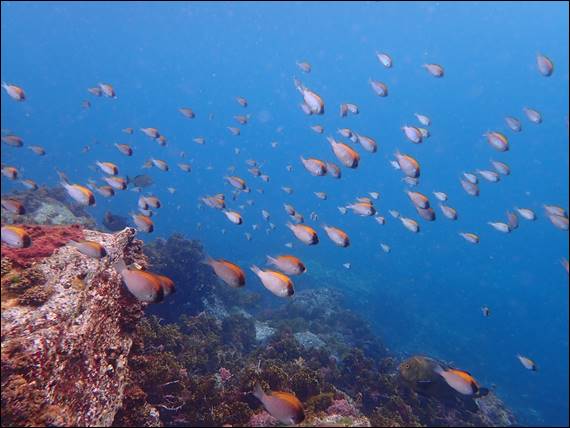
Shoal of fish could be seen, mostly in the lower depths. But the occasional shoal of Rough Bullseye (Pempheris klunzingeri) swam by, a fish that will usually be hidden in caves at our local beach. The ones that caught my eye the most however were these large shoals of Blackhead Puller (Chromis klunzingeri), the bright colours almost giving the place a tropical feel. The temperature was however telling me we were definitely on the south coast. The coldness was creeping into my body, despite wearing my wetsuit:
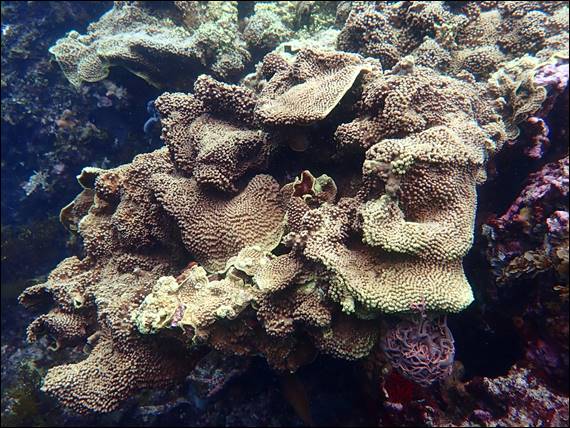
I didn’t turn back until I got to the large bommie with plate corals, It was well below the surface and I dove down to it a couple of times. Each time I reach it, I felt the uncontrollable urge that I needed to resurface. As such I really didn’t get to check it out as much as I would have liked to. I could tell the plates comprised an Astreopora genus of stony corals. But there were lots of other elements I would have enjoyed checking out in detail, such as the weird spaghetti like looking ball in the lower right. Knowing it got deeper if I went any further along, it felt like this was more of a scuba dive trail than snorkel trail:
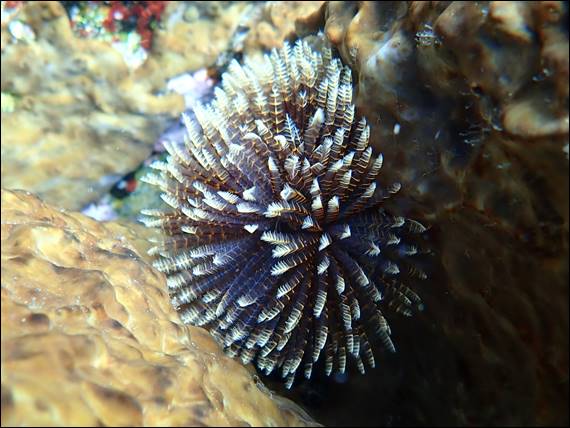
But I wasn’t complaining as I saw so much, including what I believe to have been a Feather Star (Crinoidea). I’ve not seen one before, so am not completely convinced. Also I have not being able to identify the species, but it certainly looked like one. These have been described as the closest thing we have to Triffids. They are able to release their hold on whichever surface they are clinging too and swim, float and even walk to a new location. This one was in a crevice, and it was only the movement of the branching arms that caught my attention:
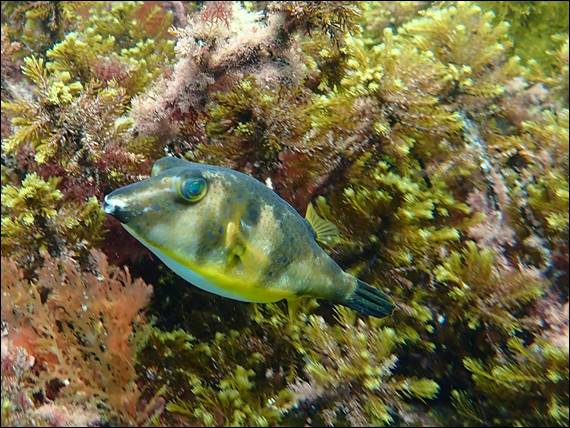
Despite getting cold and starting to shiver, there were just too many fish to check out for me to be able to rush back. This will however be the last image I’ll include. It had me foxed, Rongy and I exchanged a few messages over it and we finally narrowed it down to a Bluespotted Toadfish (Omegophora cyanopunctata). It wasn’t particularly fused with me hovering about, allowing me to get a few shots from different angles helping me to be sure on my find. Being so named, as like their namesake, toads, they have poisonous skin. It contains one of the most deadly natural poisons called tetrodotoxin:
I’d only been in the water for half an hour, but I had to get out. I’m guessing that the deeper water had resulted in this bay feeling colder, also not being helped by the fact that it was mostly cloudy. Regardless of me thinking it was cold Lisa went in for a dip after I got out and claimed it didn’t feel too bad. Although she stuck to the shallow shoreline, which probably did feel a bit warmer. It was then time to head into town for a bite to eat, as we had always intended to have at least one meal out:
We felt that a lunch out was more likely to happen than an evening meal, as we tend to find it harder to get motivated to head out in the evening, even at home. As we drove toward Bremer Bay the clouds parted and while that would have been nice at the beach, it was still very welcome. It also meant it felt warm enough to sit outside with a view of where the Bremer River met the ocean. We sat and took in the sights enjoying a late lunch, ordered only just in time before the kitchen was closing, washed down with an ale:

Retiring back to the beach shack the sky completely cleared and the sun was beaming through. But the wind had also picked up and while I could have popped down for another swim at Short Beach, I made the fatal error of lying down. Not one to have a beer too often, after having just one during lunch was enough to make me feel sleepy. This resulted in the rest of the afternoon being spent dozing. That was until darkness started to descend on us and we felt like we should probably have more to eat:

The next morning we were greeted with another cloudless sky, and for the first time I watched the sun rise and light up the bay. It was sadly time to head home, we were only able to book the place for three nights, and way back when we booked it that was the longest available slot for months to come. It is not surprising that it is popular, it is a great spot to kick back and get away from it all. Being the last morning there were no last walks or swims on the agenda. With a six hour trip back we didn’t want to leave too late:
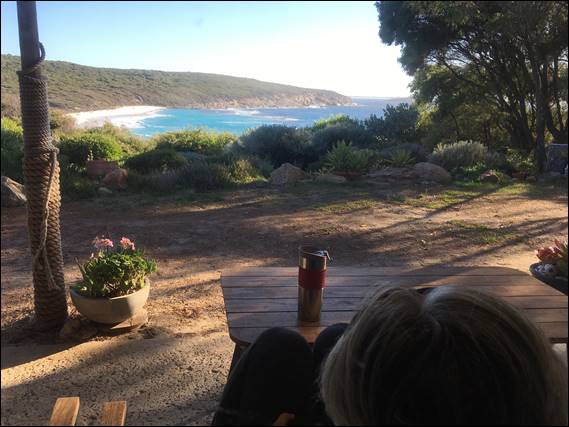
Despite the pack up and cleaning of the place, ready for the next guests. There was always time for one more cuppa while soaking in the view as we sat under the veranda one last time. Before we headed off, I popped over to look at the bunny orchid with pink sepals, just to make sure they weren’t turning white which they weren’t. We both had a lovely time, and might come back down this way again. Next time however we will have the trailer in tow leaving some else to enjoy the beach shack:
 Sandbagged
Your ‘spaghetti like ball’ is a basket star, tho they look much more impressive while feeding at night. Tho image directly after is I believe a feather duster worm. Tho they are quick to retract when disturbed (or even close to disturbed) so if you were able to get close for a pic and it didn’t disappear then I’m wrong on that one.
Lovely trip away by the sounds!
LikeLike
Yeah a great time! I got super close to what I thought was the feather star. If it’d been a feather duster worm I reckon it would have retracted for sure, seen a few and like you say they are pretty sensitive to changes in water movement. Wow the idea of the ball being a basket star wants me to go back at night!
LikeLike