The tell-tale signs are there to indicate the season for snorkelling off my local beach is drawing to a close. The sun is much lower in the sky, the water while on occasion is flat has more of a milky as oppose to aqua blue look, the beach is showing signs of the sand starting to shift, and weed is just beginning to wash ashore. Last year things seemed pretty good till the end of April, but this year I do not think I will be so lucky. That said, despite the changing conditions the water is still a good temperature and I’ll brave going in for as long as I can:
Just like a large chunk of this season, for my last three dives the ocean has been relatively quiet. Not too much to see and sadly no cephalopods, crustaceans, rays, or fish of any great note. But I have observed that the jellies are making a comeback, as had Lisa. She has decided just this week to start and brave the water again, after a bit of a break from it. Not to see the fish or get on her SUP, just to dunk and regain her confidence in the water and quite simply feel comfortable and safe in the big wide ocean:
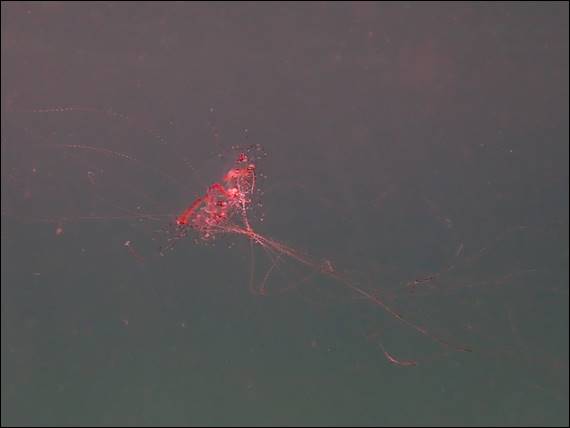
I’ve come across the jellyfish in the first image on occasion. It has the distinct jellyfish features. A bell or hood shaped body, which you can watch billow in and out to propel itself along with long tentacles, up to twenty centimetres, trailing behind. But then, and for no apparent reason, I’ve watched it become completely distorted. The body almost looks to flatten and become inside out. And the tentacles become a tangled mass, looking like a knot of discarded hair. Too entwined to be combed out, so instead pulled or cut out and thrown away:
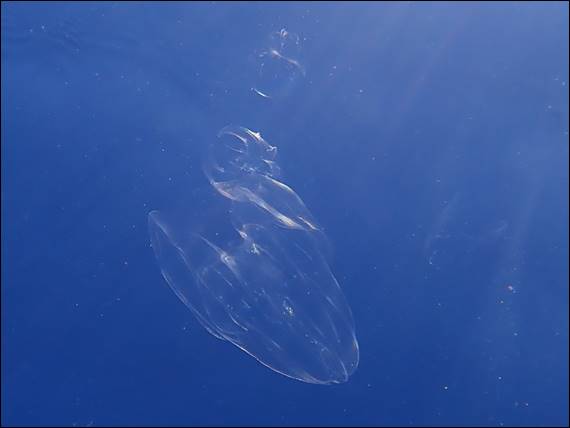
The second image should be familiar by now. The Comb Jellyfish (Phylum Ctenophora), which I have talked about in a recent post (https://sandbagged.blog/2022/02/26/close-encounters-of-the-smallest-kind/). There were lots and lots of them, and of all sizes. And as I watched this multitude of graceful and harmless jellyfish, I noticed a movement that hinted something was hiding in amongst them. A translucent fish, maybe three centimetres long, and you had to catch it in the right light to see it. I have no idea what fish it was:
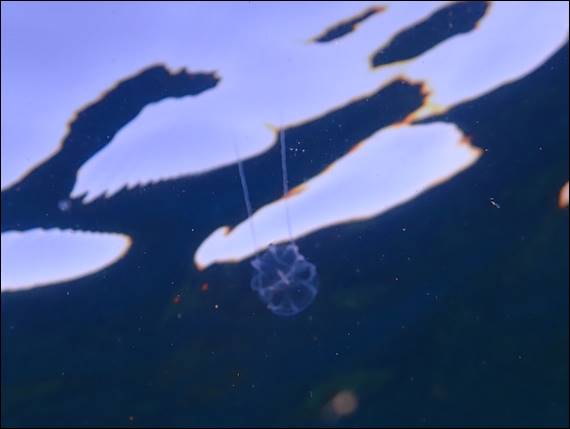
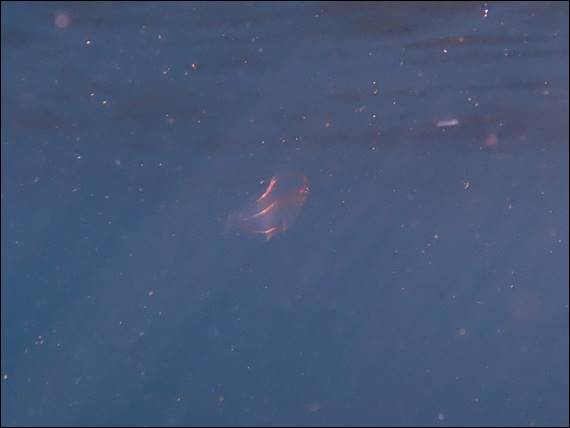
When I got too close it swam up to, and lay side on to the surface. It then flapped about making the water ripple, and just like a magician disappeared. I tried very hard, and unsuccessfully, to keep an eye on it. Shortly after I was lucky and spotted the same fish a second time, and it did the same thing and was then gone. I looked round all the combe jellyfish but didn’t see any more of these fish. While, looking so hard I did see the above jellyfish. Again almost translucence and very hard to photography. It might be a Sea Gooseberry (Euplokamis dunlapaeis), due to its body shape, small size, eight rows of combes and two tentacles:
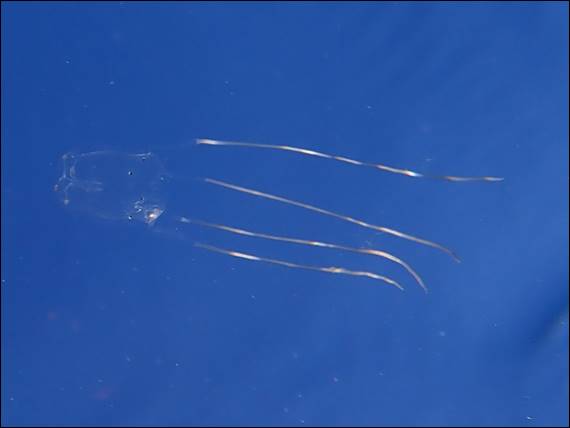
While having a similar body size it was obviously not a South Western Stinger (Carybdea xaymacana), as above, which has no combes, more of a four sided box shaped body, and four tentacles. And unlike this jellyfish it also does not have stinging cells. The two tentacles instead have sticky cells (colloblasts), which it uses to catch its prey. On Friday after work I was eager to get in amongst the jellies one more time, quietly hoping to find that small translucent fish and get a better image. It was a very tall order, and swimming out I knew I was unlikely to be successful. There were hardly any jellyfish about:
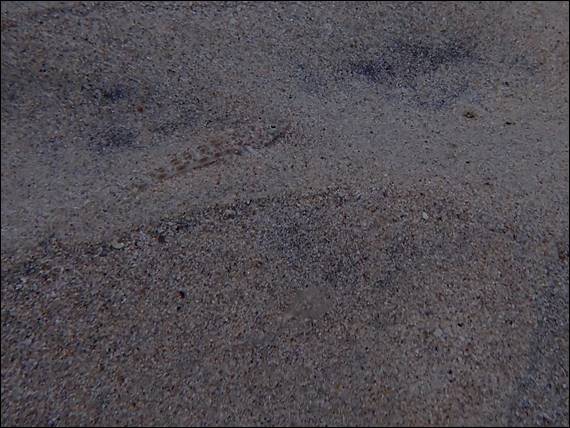
As I swam out and very close to shore I did spot the sand moving about in a strange way. Taking a closer look I found a juvenile Southern Sand Flathead (Platycephalus bassensis), no more than five centimetres long and so much smaller than the impressive ninety centimetres that these fish can grow too. If you look really closely in the above image I do wonder if I captured a second creature, but I just can’t be sure. Swimming out what struck me was that just the day before the surface was clear, and today there looked to be a dusting of particles. This was further reducing the light penetration:
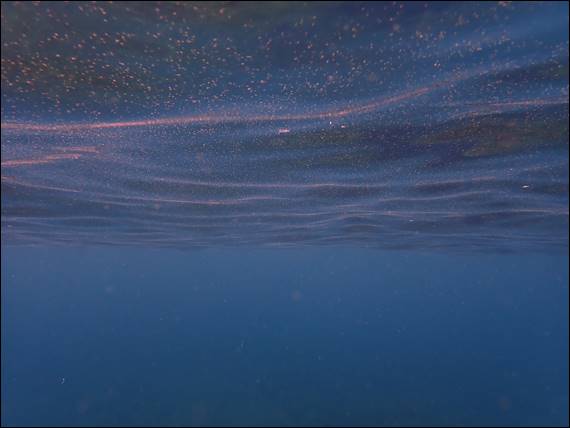
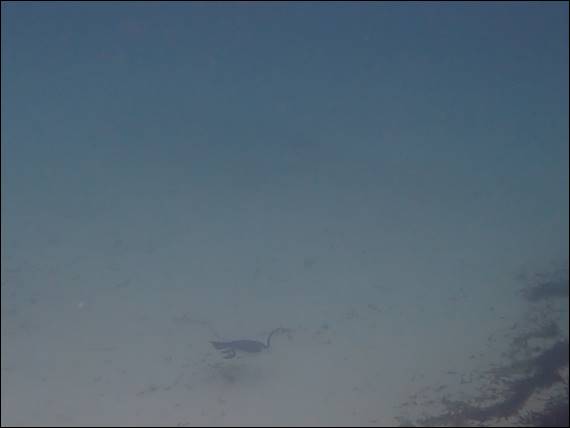
As such I stayed closer to shore, not really finding anything but just enjoying the feeling of the last remnants of the working week being washed out of my body and mind. Then out of the corner of my eye I spotted a strange shape moving along the sandy bottom, and it took me a moment or two to realise what I was seeing. I Pied Cormorant (Phalacrocorax varius) was diving for fish, and after taking a quick snap or two I videoed its ascent back to surface. You’ll have to excuse the colour distortion in the video. But just like my encounter with the translucent fish, my chances of seeing something like this again are probably pretty rare, so I just had to share it:
 Sandbagged