A long weekend heralds the arrival of crowds from Perth. We can expect busy roads on Friday, as we head home from work, and the beach starts to fill out more than usual. On such weekends there is little point in heading anywhere in the local area for a feed or to a coastal spot that is insta-famous, as it is likely to be packed. I feel Peppy Beach is getting to be more well-known and visited, which in part is due to the caravan park, but where we are located tends to be the quieter end:
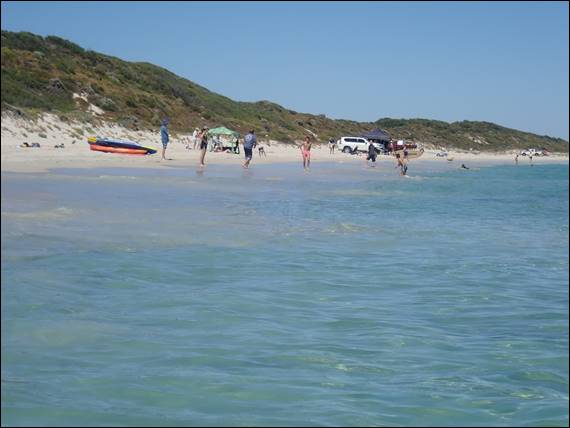
Boat access here isn’t great, and as I came out from the first dip of the weekend another car with a boat trailer was bogged in the soft sand. Hopefully discouraged from launching from this area in the future. The sound of a propeller and engine can travel long distances underwater. When you are looking down snorkelling it can feel a little uneasy hearing the sound, but not really knowing how far away or close the boat or jet ski could be. Most time, and for my three swims last weekend and into the week, I didn’t have to worry about that:

The conditions were good and I spent three quarter of an hour or so each time just floating about relaxing. During the first dive on Sunday, I spotted a few small schools of juvenile fish and spent a fair bit of time watching them. Young fish can be hard to identify, but I think the above may be juvenile Western Striped Cardinalfish (Ostorhinchus victoriae). Based on the patterning and distinctive spot at the base of the tail. But the adults of these are fish are normally solitary fish that lurk in caves, and while these were hugging a reef they were in the open water so I’m not convinced:
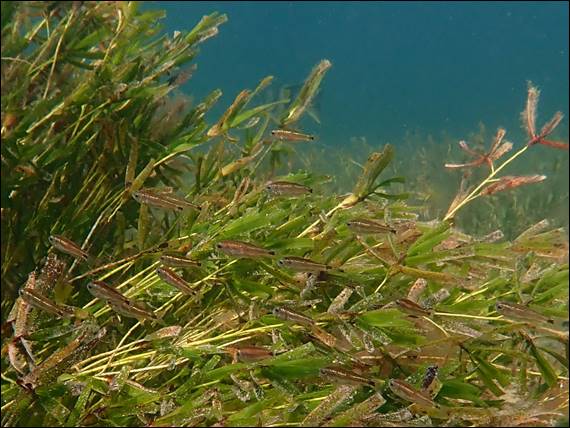
The above juvenile fish were staying just above the weed, and were well camouflaged. I am a little more confident in saying these were juvenile Western Striped Grunter (Helotes octolineatus). Slight horizontal, but less distinctive, lines and a slightly more streamlined body seemed to match what they will grow into, as they become adults. Sunday morning I got down a bit earlier to a relatively quiet beach, less people and flatter conditions. The oil slick from burley stretching out from a lone fisherman, a local fella who always gives me a wave when our paths cross:
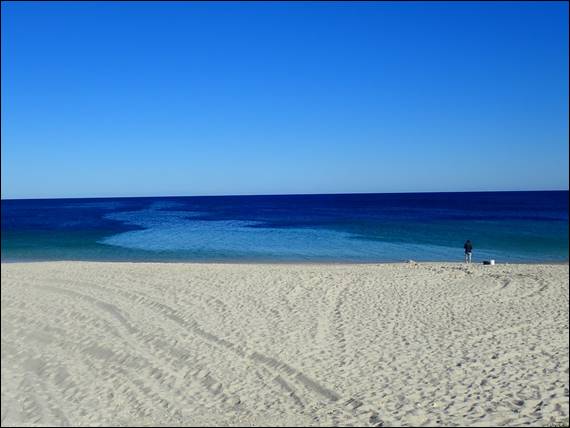
I was hoping that I might see a ray or two, drawn towards the shore by the burley. Sure enough as I went in I came across a couple of rays, but they spotted me before I saw them and took flight. A long whip like tail trailing behind, as the disappeared. With what looked like just a flick or two of the wings they were gone. Unlike the recent image of the small oval shaped stingaree, this ray’s disc was more board in shape with triangular tips, so I knew it was an eagle ray but which one was unclear:
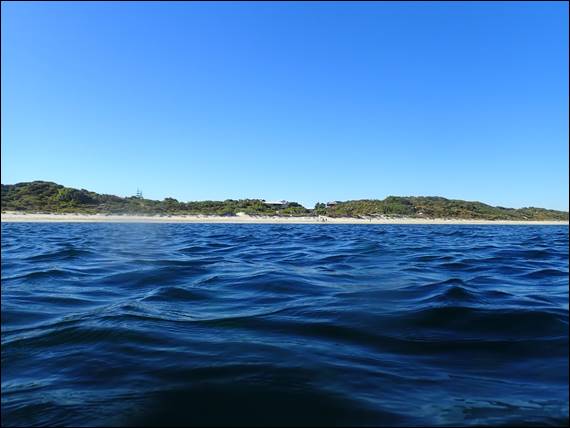
After swimming in the general direction the rays had gone, and of course not finding them, I decided to just keep swimming. Eventually I got to the furthest part of the reef that I go out too. Far from the eyes of people on the beach but still in water that is no more than 5m deep. Here I bobbed about, lots of fish life kept me entertained, and then I spotted what looked like an orange strip. To my delight I had spotted a 10cm long Short Tail Nudibranch (Ceratosoma brevicaudatum):
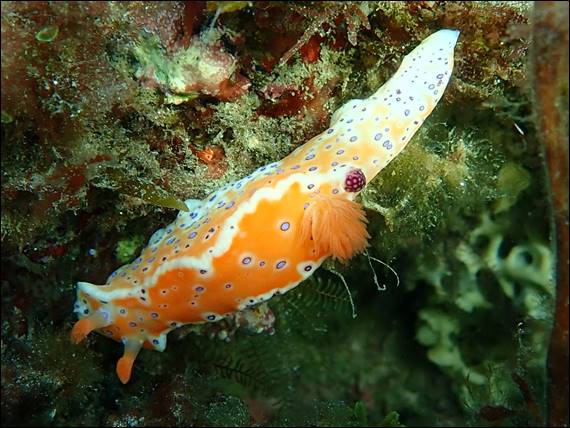
Despite being in 4m of water I spent a lot of time and energy duck diving down to see this fella. I was regretting not having my weights, which would have made getting down easier and saved me breathe to stay down long. Still I was able to get some great images and could clearly see the mushroom like ‘horn’ just behind the feathery gills. This horn is where it stores horrible tasting chemicals extracted from the food it eats. And it is specifically coloured to attract potential predators to the nastiest tasting part of the animal, so a kind of defensive mechanism:
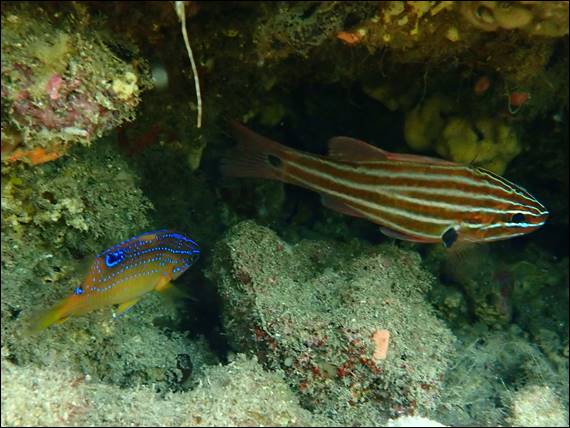
After tiring myself out in the deeper water I headed closer to shore, here I watched fish dart about below me. And have included the above image of a brightly coloured juvenile McCulloch’s Scalyfin (Parma mccullochi), next to an adult Western Striped Cardinalfish. The fish I thought the first image of the small school of juveniles might be. And not that it proves anything, but both images were taken on the same bit of reef within about five meters of each other. Looking up I saw the fisherman had left the beach and felt it was also time for me to exit the water:
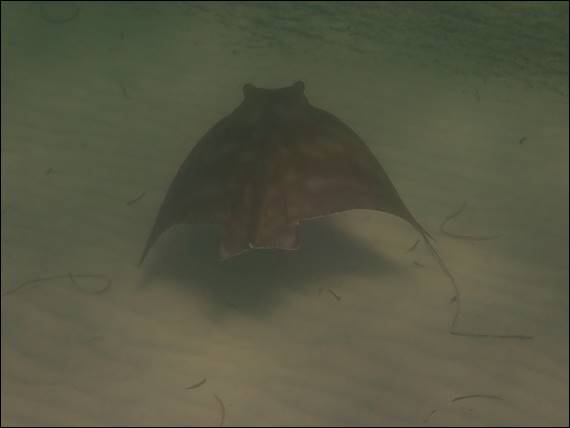
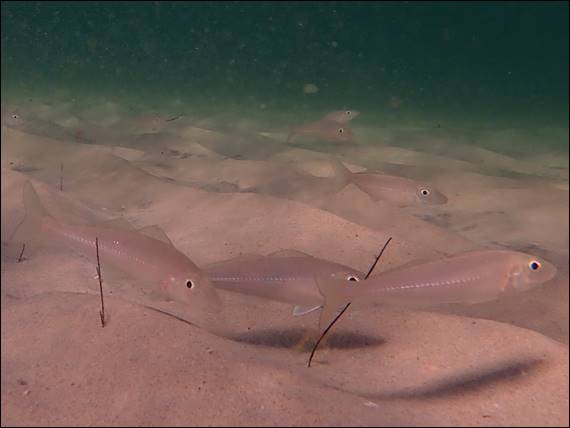
As I swam across the sandy bay, I saw a couple of the rays again. This time I got a bit closer but they were still pretty flighty. The one that didn’t escape the lens of my camera had lost its whip like tail. And with this image the mottled patterning allowed me to identify it as a Southern Eagle Ray (Myliobatis tenuicaudatus). Both rays had been munching on what I assume was burley or bait that the fisherman had left behind, and as each ray alighted from the sea bed I spotted a heap of, what I believe were, Sand Whiting (Sillago ciliate) also feasting on the leftovers:
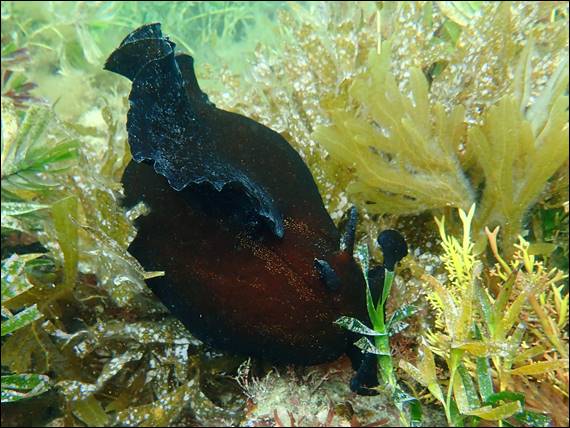
It was another hot week here so on my way home on Wednesday, with a calm wind and no hint of a sound of waves as I stepped out of my car I decided I would have a swim. I was pleased I did. I came across my second ever sighting of a Giant Sea Hare (Aplysia gigantea), my last sighting being April last year. It was at least half a meter long, and the relatives of this gentle slimy giant had hit the news as they do this time each year. Now is when dog owners are on alert, as sea hares wash onto the beach and can be very toxic to dogs:
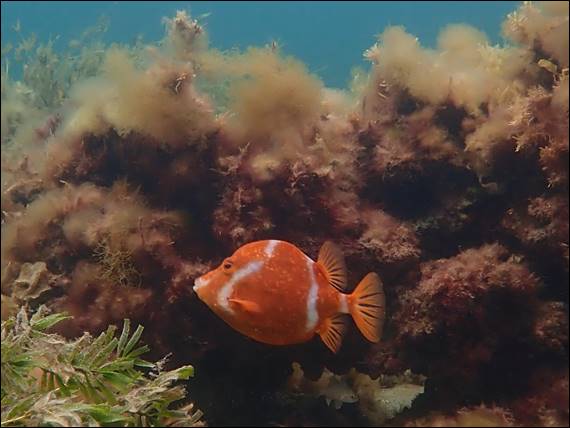
I have found afternoon dives are generally a little quieter under the surface. As such I wasn’t surprised that the rest of the dive was relatively uneventful. Still it was a great way to end a working day, and also to cool down. Just before heading out I felt like I scored when I came across a male Whitebarred Boxfish (Anoplocapros lenticularis). It really wasn’t hard to spot the foot long, bright orange, football sized fish in amongst the mottled browns and greens. Equally it wasn’t too hard for it to see me either, and it kept its distance and eventually slunk into a crevice:
 Sandbagged