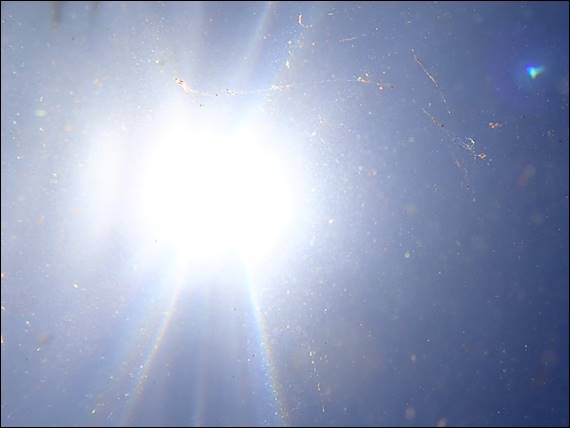
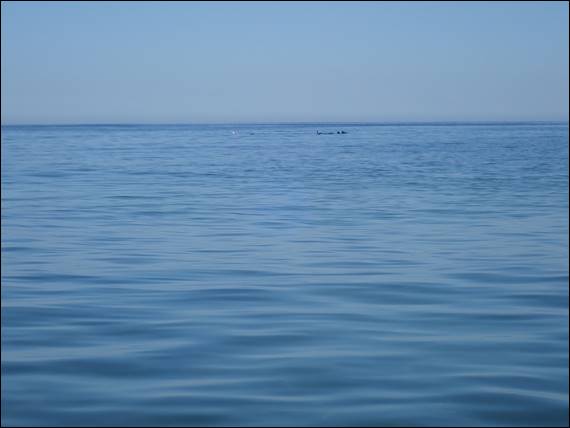
I’ve been watching the water after work each day and it seems that things have been clearing up a bit. Or so it seemed looking down at it from the road side and not taking the time to walk up to it. I was going to jump in myself but then Geoff and Nana told me they too were thinking of a dip this morning, but heading past the point where the reef was more substantial and interesting. No one else from the usual Peppy crew was available to join us, so the three of us drove out happy to see the calm conditions. Sure there was a bit of a swell but the surface looked glassy:
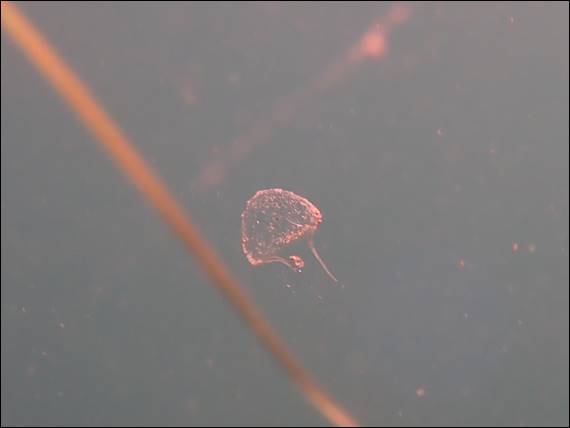
It didn’t take long to realise the water column was full of debris. We have had lots of hot days with low currents. Added to that the previous generally less settled conditions had been enough to rip the weed out, which was also floating about. All this is leading to dangerous conditions, one in which plankton can start to thrive. There are two types, phytoplankton and zooplankton comprising plants and animals respectively. While I am not going to try and guess which one was evident today, the excess presence was obvious. Slimy looking filaments were distributed through the water, the floating weed and jellyfish were coated:
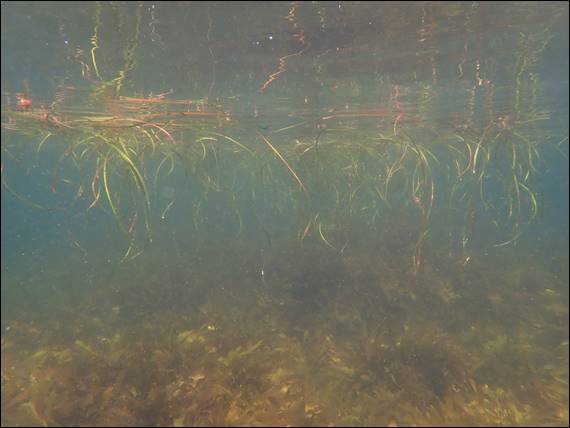
We have an abundant source of light, so with calm warm conditions the last trigger required to enable plankton to kick off like this are nutrient levels. Nutrients are flushed into the ocean via the rivers, and via groundwater, originating from many sources. The main contributor in our local area being agriculture, with excess fertilizer application and animal waste leaching out of the catchment. While the Capel River catchment has one of the lower nutrient concentrations compared to other catchments that flow into the Geographe Bay, with the current conditions it has been enough to tip the balance. And whether this has resulted in increased phytoplankton, zooplankton, or gelatinous zooplankton activity the result is the same, low oxygen conditions:
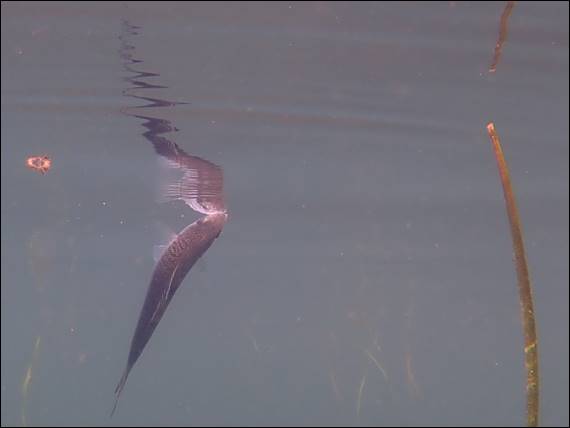
Sadly, this too was obvious and I came across two herring gulping for air at the surface. Fish will do this for, usually, one of two reasons. Poor water quality or more likely today, based on the conditions we have had, there wasn’t enough dissolved oxygen in the water. This results in their normal respiratory mechanism, of drawing water over the gills to extract the oxygen, is ineffective. All we can hope is that the winds come in and help to generate greater currents. The movement of water will help to distribute and dilute the effect of the nutrients, reduce the water temperature and avoid pockets of low oxygen water:
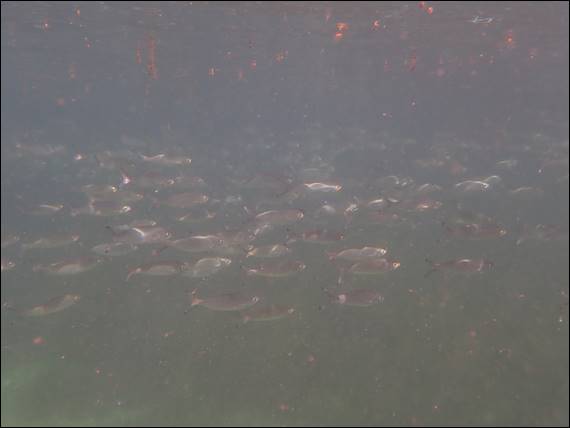
We spent a fair bit of time looking about, and while there were a few fish about all three of us felt the reef seemed empty of life. As such our dive today was not as long as it could have been. The good news being that as we swam slowly to shore we spotted more life. I came across a reasonable school of Australian Herring, Arripis georgianus (Valenciennes 1831). These fish spawn here from April to June, and the Leeuwin Current then takes the eggs and larvae eastward towards the southern bays. Here they spend about two years, after which the return as adults in February and March to start the cycle again:
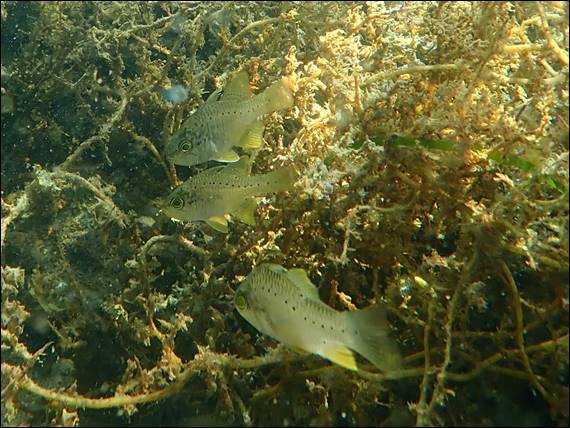
Below are a fish that I used to spend a lot of time watching on the reef off my local beach. Not a recreational fish, so most people wouldn’t be interested in them. There is however something about the Western Gobbleguts, Ostorhinchus rueppellii (Günther 1859), that tweaks my interest. I didn’t realise it before but they are paternal mouthbrooders, which means they protect their eggs and/or young by holding them in their mouth. Quite a few fish are like this, including all of the cardinalfish family, which these fish are in:
I also came across a few King George Whiting, Sillaginodes punctatus (Cuvier 1829). Not a fish that will normally allow me to get too close, but this one seemed okay with me popping down to say hello. Punctatus comes from the Latin word punctum meaning spot or small hole, hence punctuation and puncture. In this case it is thought to be due to the brownish spots along the fishes body. This is the largest of the whiting family and can grow to approx. 70cm, but are more commonly found at half this size. The ones I saw were no more than 35cm, but being a highly prized table fish I wonder if Geoff would have considered spearing one or two:
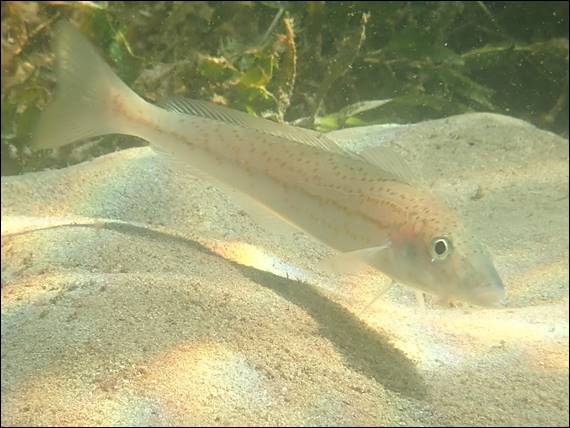
I spent a bit of time watching the above Whiting, due to how it feeds. The snout is conical at the end of which is small mouth, from where the jaws can extend outwards. The fish would bury the tip of its snout into the sand, and suck small invertebrates into the clutches of its jaws. With each attempt to find food little puffs of sand would billow out. It was both interesting and relaxing to watch it go about this process. When we came in the water still looked great being flat and glassy, but underneath there were pockets on the cusp of becoming dangerously deoxygenated. Fingers crossed the conditions change to prevent this happening:
 Sandbagged