Christmas Day crept up on us. The household no longer explodes into feverish excitement at the first sign of light, eager to see if the big man had been. So I was hoping to have a morning dip. Although, after a quick walk over the dunes to check the conditions, it was clear that it was probably not going to be worth it. In addition to the searing temperatures we have been experiencing, there have also been strong easterly winds. The orientation of the coastline results in these winds churning up the water enough to mobilise the fine sand:
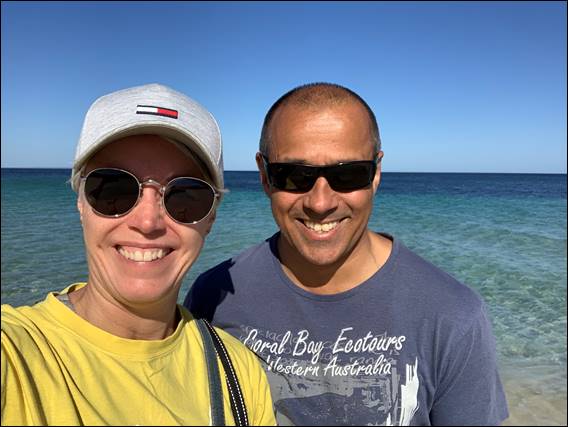
Instead of a snorkel Lisa and I headed down with the poodles. Taking them for an early run on the beach to avoid the crowds and, more importantly, unfamiliar and potentially unfriendly dogs who come down with the holiday makers. The water looks clear behind us in the above image, but the waves while small were effective at stirring things up. Later in the day Lisa and Elseya ventured back down to watch the sunset and have a dip to cool off, which is when another visitor that arrives during the summer holiday struck:
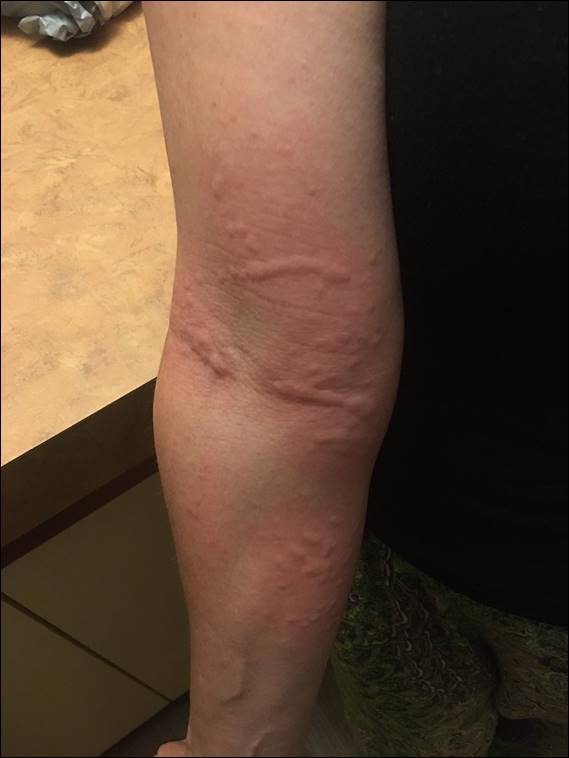
The South Western Stingers were back almost to the day that they arrived two years back, https://sandbagged.blog/2019/12/23/right-on-cue/. Lisa copped a couple of them and had the evidence to prove it. This didn’t however put me off heading down early on Boxing Day, determined to have a snorkel regardless of the conditions. As I walked down I could see a pod of dolphins lazily heading northwards. Eager to see them I didn’t think about stingers, and jumped in managing to get out just in time to watch them cruise past really close:

The image above shows just how poor the visibility was, but I couldn’t resist taking a quick video all the same. I was out now, beyond the reach of the stingers that seemed to be lurking in the shallows along the shoreline, so I continued. The only other find was a baby squid, no more than an inch long and so small that my attempts to photograph it were all in vain. Eventually it had enough and squirted to jets of ink at me, as it sped away. I took it as a sign and headed out myself managing to avoid being hit, as hard as Lisa had been, by the stingers:
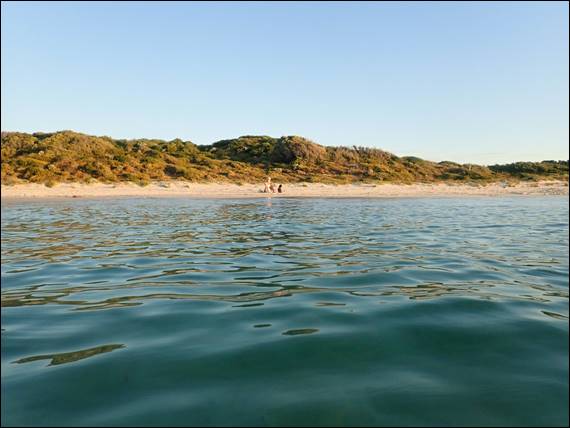
Boxing day was even hotter so in the evening Lisa and I went down for a dip, and I chanced the waters again. This time the stingers were not confined to the shallows and were instead hunting in the top 10cm of the water column wherever I went. The water was still cloudy, and there was nothing to see. In fact I spent most my time looking forward instead of downward, checking for signs of tentacles so I could avoid my forehead getting smashed. I would normally preserve with these conditions and suck it up, because I really enjoy heading out:
For now however I’m applying a different approach. For those familiar with the hierarchy of controls; I can’t remove the hazard, the stingers are here to stay for now; I also couldn’t replace the hazard, unless I could release a creature who voraciously predates on the stingers; so I am down to the third ranked preference of an engineering control to isolate myself from the hazard. For those clever clogs out there who suggest I should go straight for the fifth ranked hazard control of using PPE, or personal protective equipment. Putting on a wetsuit, hood and gloves is simply too much phaffing about:
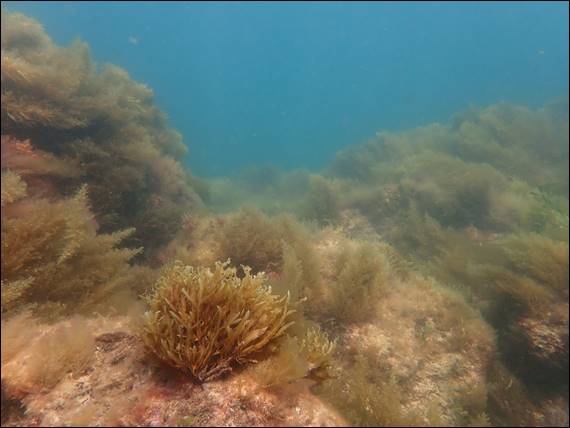
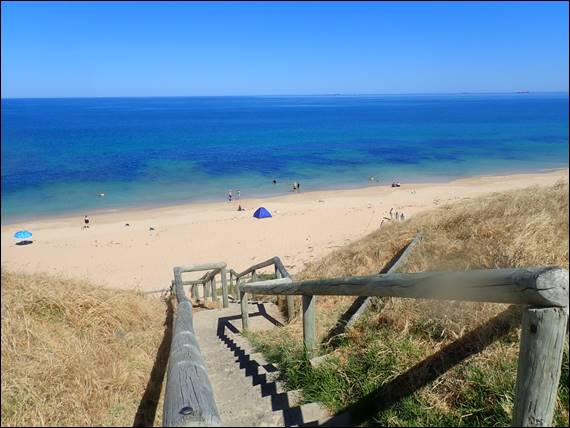
For that reason, and at least until the wind conditions allow the waters to properly clear up again, I’ve therefore decided to try other locations. Granted this means jumping in the car, but I had to try it first before I could decide if it was worth it. So today I drove to Bunbury’s Back Beach, which is approximately 25km along the coast to the north east’ish. The coast here starts to veer northwards and the land mass is considerably higher, as the previous image shows. This means the water is not affected by the easterlies, as much as our local beach is. While it wasn’t super clear the bigger positive was that there wasn’t a stinger in sight:
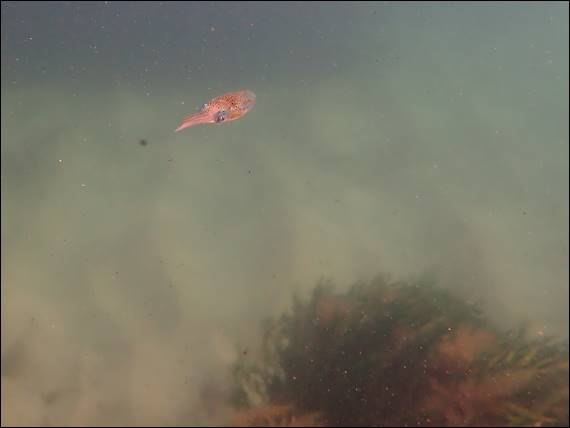
It felt lush to be in the water and not need to continually look up to check for stingers. While the cloudy water made it hard to see much I did come across a couple of baby squid and I again unashamedly pestered them. To the point that they eventually shot away leaving a few droplets of ink dispersing in the water. Nothing that a small square of blotting paper wouldn’t be able to clear up, but it seemed so much compared to their tiny bodies. I was however rewarded with one in focus image. The ground here looked interesting and I went down multiple times, finding protected areas where schools of fish were hiding from the swell:
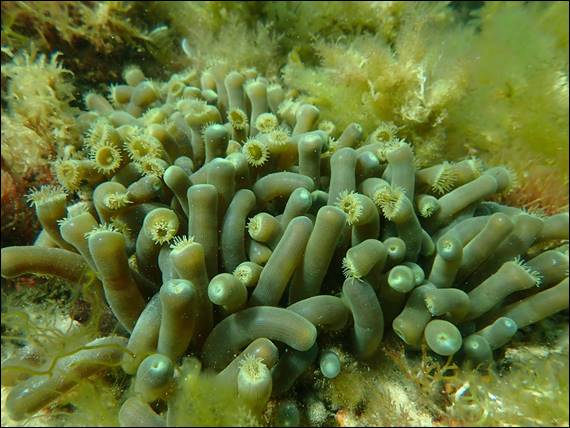
I also saw lots of Finger Zoanthid (Zoanthus praelongus), which I have only seen off our local beach a couple of times, https://sandbagged.blog/2021/03/14/barren-ground/. These are distantly related to sea anemone, and similar to them have a mutualistic relationship with microscopic algae, which makes a home within its soft fleshy tissue. The Finger Zoanthid feed at night, when the fingers stand upright and tentacles come out to capture plankton. Then in the daytime their bodies usually flop down. Maximising the surface area that sunlight can reach, and hence enhance how much energy it can obtain from the algae through photosynthesis:
 Sandbagged