The sun sets and rises really quickly in this part of the world, and if you look away you might miss that magical moment. In a similarly fast fashion the season seems to have switch over almost overnight. It seems that after weeks of looking at a grey and weed ridden ocean things have magically cleared up. The only reason we spotted it was because Lisa and I were heading back along Forest Beach Road, after a late breakfast and game of King Cribbage in Busselton. The only nagging doubt I had, having just come of the back of another front, was whether it may have been a bit chilly:
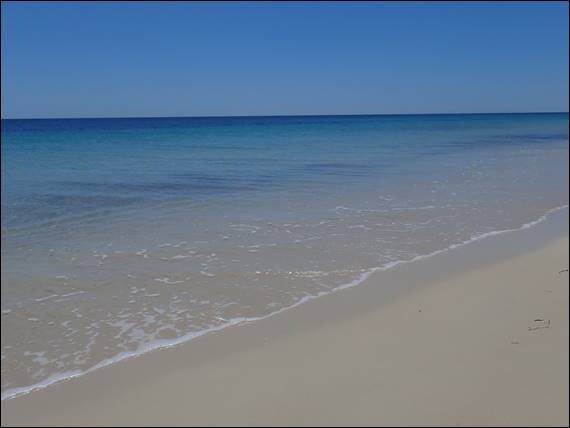
I feel that I normally wait till its properly warmed up before going in, closer to the school summer holidays that are still five weeks away. However, my mind was made up and so this swim felt like it may be one of the earliest snorkels of any season for me. I rugged up with my wetsuit and headed down, and as I walked along to my usual entry point I dipped my feet in the water and much to my surprise it didn’t feel too bad. Swimming out, as the water trickled into the wetsuit, it felt a little cool but the trapped water soon warmed up:
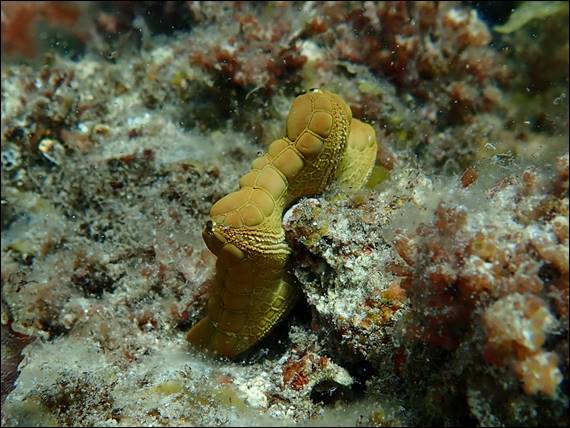
It felt really good to be back in the water, and the visibility was amazing. There wasn’t a heap of fish life to report on, but it was great to say hello to some familiar faces. I did however spot heaps of seastars. Including quite a few of the above Biscuit Seastars, and this one seemed to have latched onto something tasty being in unusually position that left its soft and more vulnerable underside exposed. I have not come across a mustard brown one before and based on the colour and swollen plates at the end of each arm, I think it may be a Southern Biscuit Star (Tosia australis):
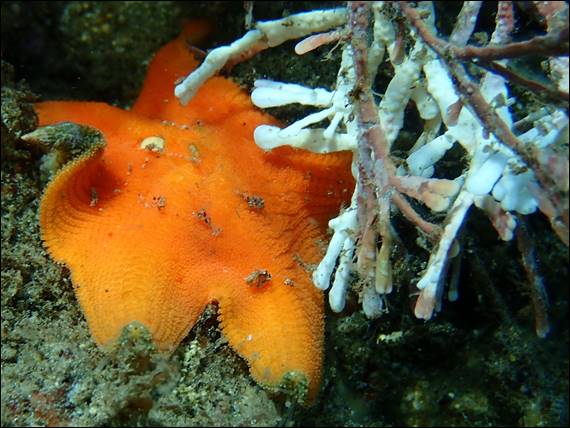
Above is a Bat Star seastar (Patiria miniata) that not surprisingly gets its name from the webbing between the arms. I’ve seen them before, but not in bright orange. It seems this seastar is a bit of a gut bucket and will eat both plants and animals, regardless of whether they are alive or dead. It does this by covering the food source with its stomach, releasing digestive juices that liquefies the food and then ingesting the tasty meal. It is also a bit different in that there are no pincers, which most starfish use to clean their skin surface. Instead it has small, moving hairs that create enough of a water current to keep its skin clean:
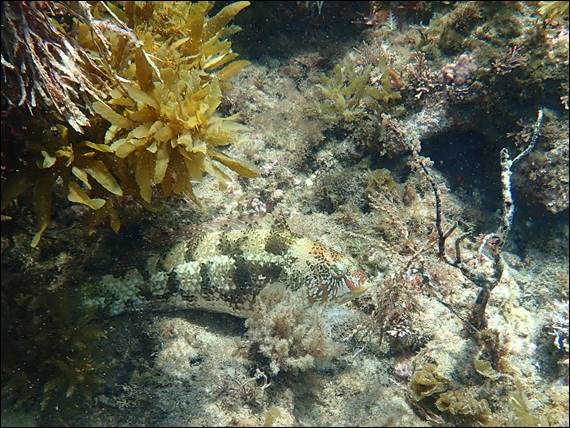
I had to include one image of a fish, and for this post it is a female Brown Spotted Wrasse, Notolabrus parilus. Whenever I kicked my fins to come back up from a duck dive I would stir up the sediments, and within second these fish would be darting though the murky water I left behind. I’m guessing looking for food. I can tell I’m out of snorkelling practice, as my breathe holding ability seems to have waned somewhat. I felt like I struggled to stay down too long, but I made an extra big effort when I came across this floral garden arrangement:
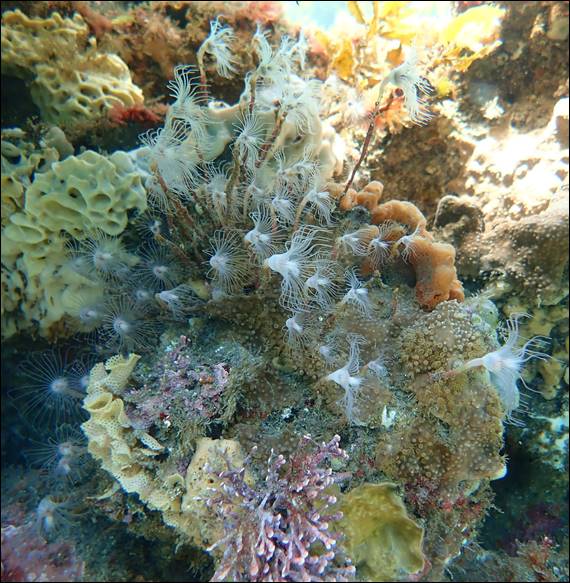
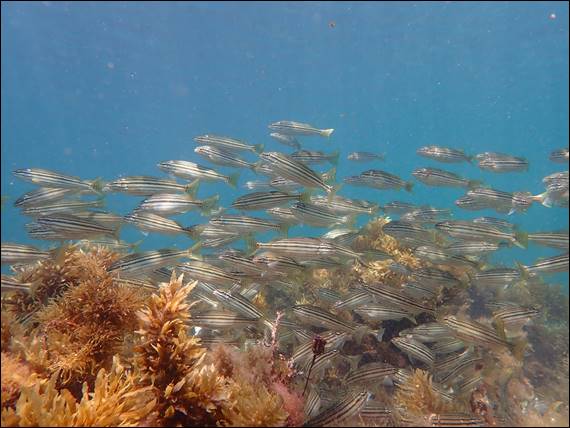
I’ve made a mental note of the location I found this amazing sight, which was under a rock shelf, and hope to be able to find it again to get some better close up images. They are obviously not feather duster worms, but I’m pretty sure they are filter feeders of some type. I can only guess they are tube worms, but have failed miserably in trying to find out any more detail on them. While I wasn’t feeling cold, after what felt like ages I started to make my way in. That was until I got distracted by this school of Western Striped Grunter, Helotes octolineatus:
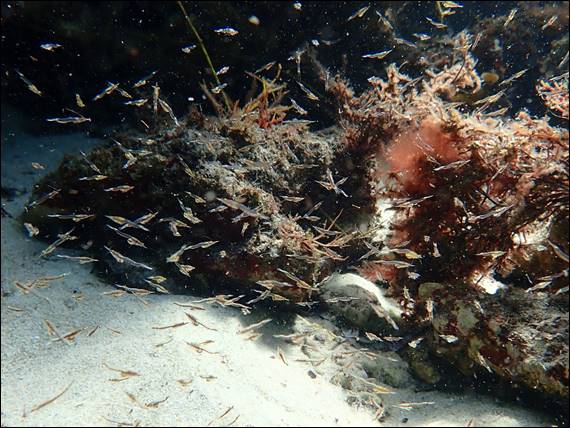
It was a forty minute dunk and I didn’t come out blue with cold, which I’ll take as a good sign for the season to come. I even came across a few schools of baby fish, something I didn’t see until quite late into last season. Now last year I had intended to combine a swim with my climbing trips, so I could check out some new locations a bit further afield. Hopefully I can make that happen this time, but for now I’ve already lined up a snorkel next weekend at a new location not too far from home. Fingers crossed the conditions are alright:
 Sandbagged