Steve was in need of a circuit breaker from the non-stop lifestyle of the big smoke. And what better way to do that than to head down to the relatively sleepy south west, camp out and then head to the cliffs at almost day break. In addition he also managed to get a bit adventurous 4WDing in to get to the scheduled campsite he was aiming for. Plus he managed to catch his own dinner and prepare a fish curry. With such a rewarding, peaceful and relaxing afternoon and night out with nature, when we met at the Wilyabrup carpark he was ready for adventure:
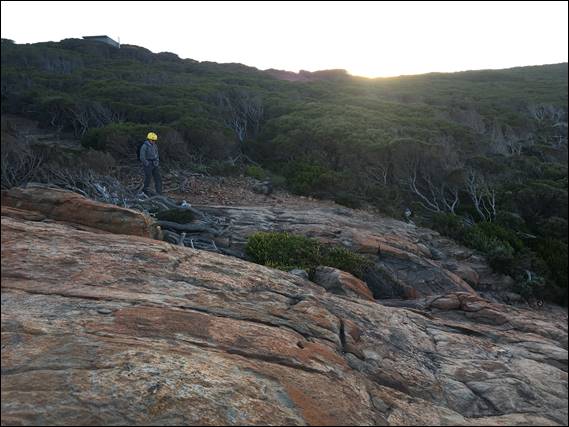
Both Hannah and Glen had hinted at joining us this morning. Sadly neither of them made it, and this left the two of us with the crag all to ourselves. It had been a while since Steve had been out and managed to climb with any conviction plus, as I was to find out later, in his usually way he had done a thing or two that wasn’t helping with his mobility nor state of mind. Wandering along the base of the cliff we passed English Ethics. It was looking in reasonable condition, compared to previous trips here, but I knew that would be way to feisty for Steve:
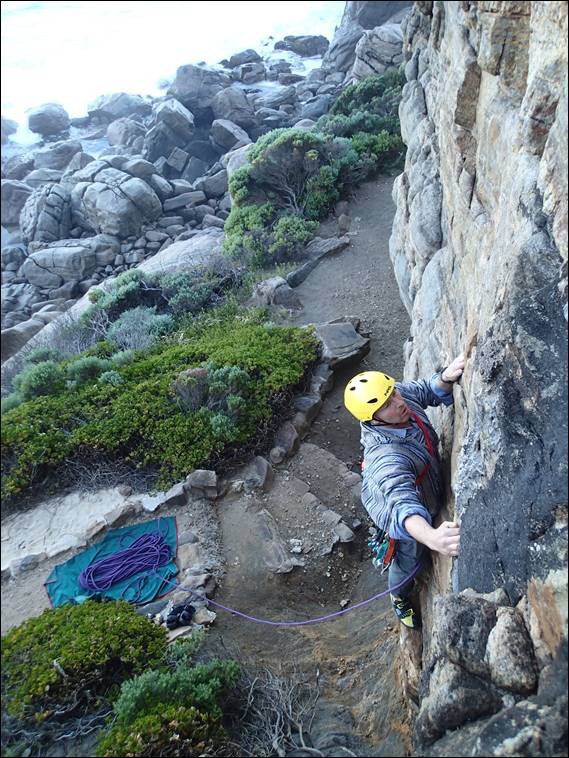
We walked on, what we needed was something fun and nothing too taxing. Orryjohn fitted the bill, and it didn’t take long to come to this decision. I could see Steve’s eyes drawn to it and a grin spread across his face, a bit like a kid in a toy shop when they see what they would really like for Christmas. I was more than happy with his choice, an enjoyable trad outing with a flared chimney, at the back of which there is crack wide enough to gobble up even Steve’s biggest tricams. While I had offered to supply the gear and rope, he insisted on bringing his tricams:
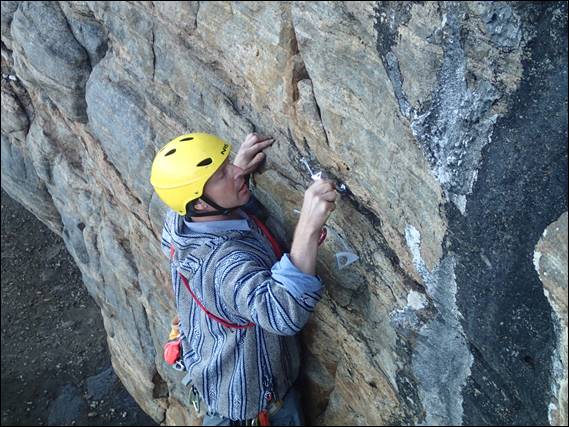
Due to the route he’d picked I only allowed Steve to put tricams on his harness, which I knew he wouldn’t mind. For those more familiar with climbing protection, you may recognise the wired tricams Steve is fiddling with above. The only other person I know who has these being Wiggins, and after one outing they never saw the light of day again. But when Steve stumbled across these without knowing about Wiggins nor my experience of them, just like the appeal of Orryjohn today he simply had to have some. It was to be their first outing, and the question is whether they will make it out again:
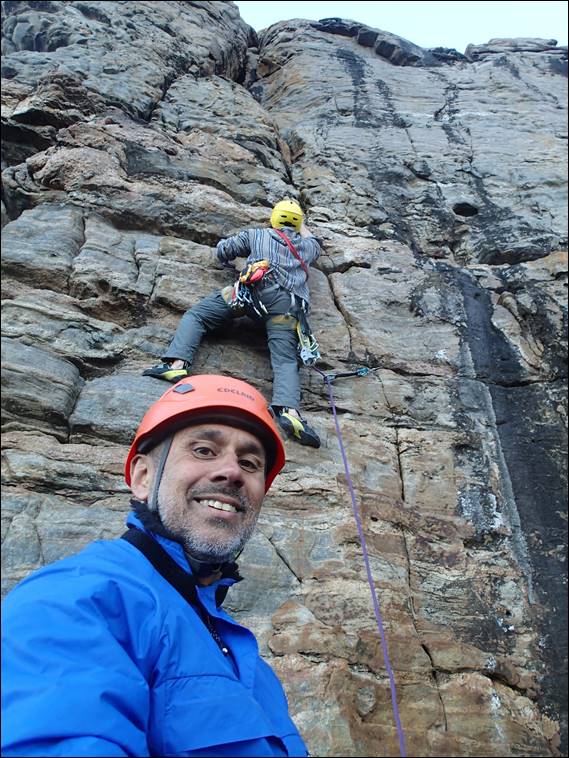
By the time he had fiddled the wired tricam into position and clipped the rope in, I had scampered like a mountain goat from my lofty position taking images back down to put Steve safely on belay. Now for those not familiar with climbing protection, the way tricams work is by using the rotation on the single pivot/point to wedge the curved back against the rock. For those mechanically minded; as the wire, or in the image below tape, is loaded it pulls the back of the curved edge forward to increase the pressure on the back curve creating greater friction. So why did Wiggins hide his wired tricams from daylight you may ask:
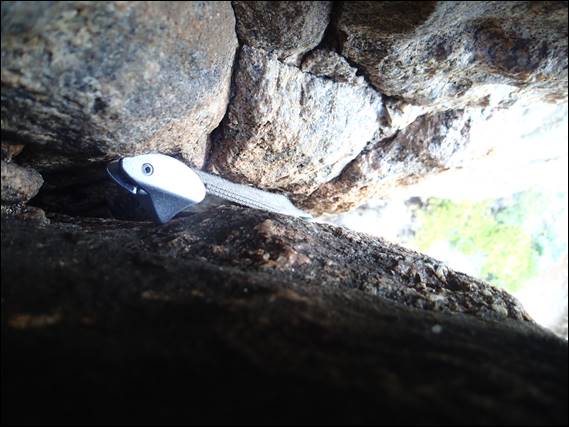
With a taped tricam it is usually not too hard to push the head of the tricam back, reducing the pressure on the back curve allowing the piece of gear to be taken out. But with the wired tricams, the wire becomes spring loaded when it is placed. This means when taking it out you need to continually place tension on the wire to stop the spring loading effect, as well as knock the head back to remove the pressure on the back curve. These two actions are opposing, so can be pretty hard to achieve while hanging onto the rock. So while they may provide completely bomber protection for the leader, the person coming up second can have a very hard time getting them out:
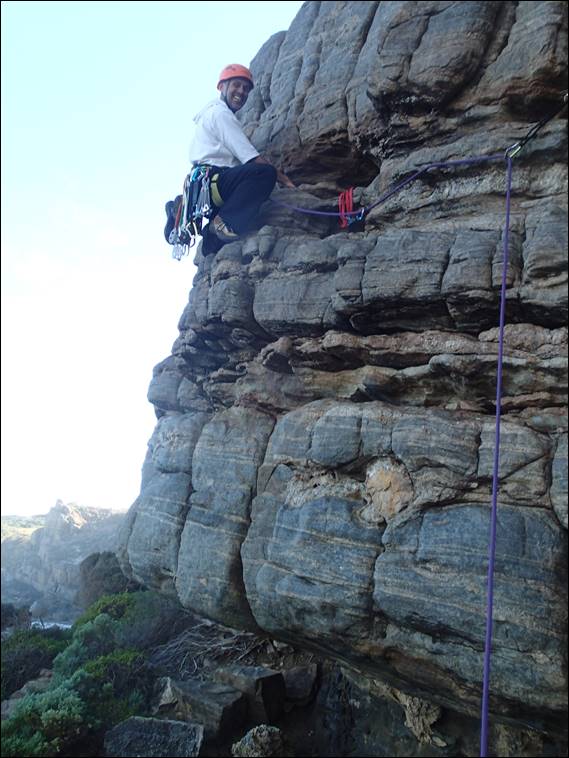
Steve had not been moving too well on his first lead. It was easy to see that he was comfortable being out and was placing enough solid gear, but his movements seemed awkward and he wasn’t really in the right frame of mind. While I suspected something as he led, it wasn’t until after I followed him up the route that I discovered about the “thing or two” he had done recently. As soon as I heard it made absolute sense as to why he was not moving as well as would be expected, nor why his focus was a little off kilter today. But it wasn’t until he had followed me up my lead that he hinted it was bad enough to consider calling it a day:
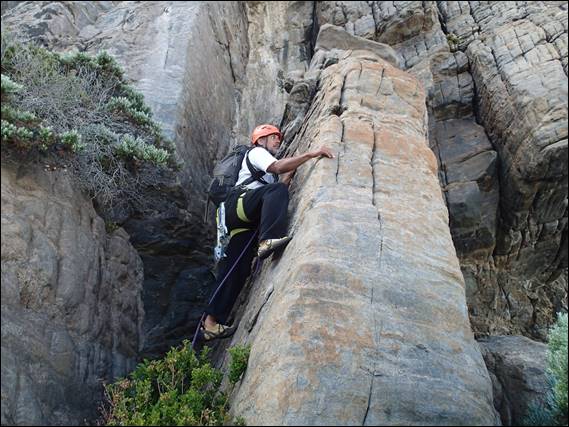
It wasn’t that my route had been too hard and worn him down too much, as it really wasn’t very difficult. In fact the line isn’t even written up as a route, and I doubt that anyone ever thinks to climb it. I picked the line because I could tell we needed to go easy, and more importantly because I saw a great opportunity to place a sling. This was the only piece I used that wasn’t a tricam, and I also used a wired tricam! After we got back down and I offered Steve two options, pack up and walk out or climb out with the packs. I was quietly happy when he voted for the latter:
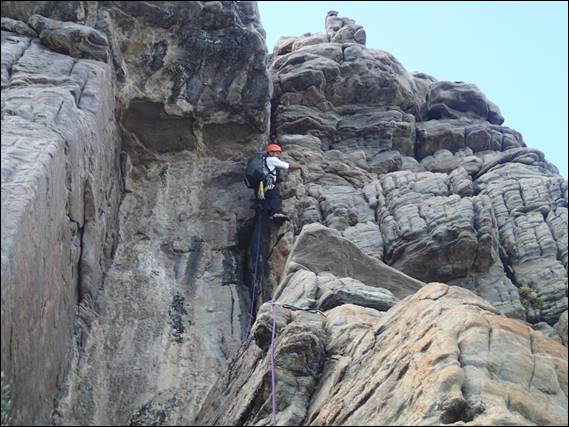
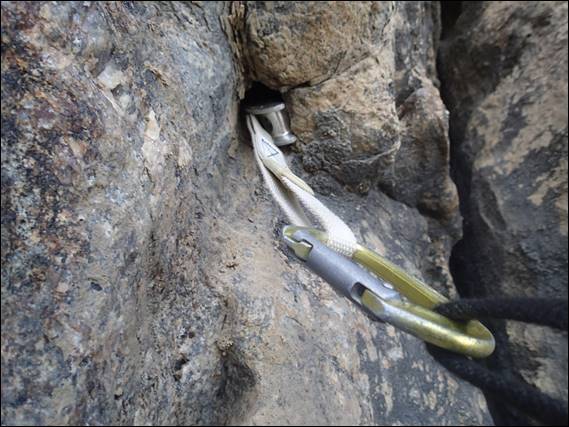
We plumped for another low grade but tradition style climb. I was again only armed with tricams and Steve was tickled pink when he came across one of his larger tricams nestled in the perfect pocket, shown below. I had intended to climb one of the earliest recorded routes here, Stormcock first written up as having been climbed in 1973. But I had never climbed it and after the climbing big leaning block, from which the climb gets its name, I went straight up. While never too hard it felt more sustained and certainly had exposure:
In addition it was made more exciting by a reasonably weighted pack on my back, full of my climbing gear that had been unused today. It was a stellar line and I thoroughly enjoyed it, and began to wonder why I hadn’t previously climbed on this section of Wilyabrup more often. It’s the same area where a month or two back I sent Rongy up a line he had never done before. I was nervous about what he might say but he ranted and raved about it. I think on my next trip to Wilyabrup I’ll aim to jump on another line here, as there are a few I have yet to experience:
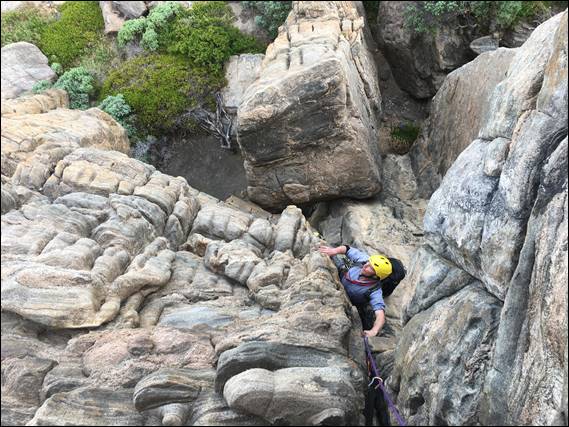
Next time I will however check the guidebook. Despite having written it myself, today proved I really didn’t know where all the routes went. The original Stormcock route, traversed right from the top of the block and then up an arête. The steep crack I had climbed seems to be part of a route called Sombre, which was quite a few grades harder than the intended line. Despite this and how he was feeling, plus not knowing what we were really climbing, Steve also loved the line and came up beaming. And I think all the bomber tricams added to his pleasure:
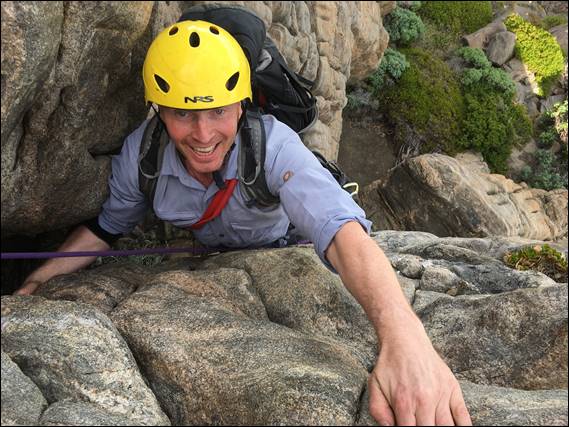
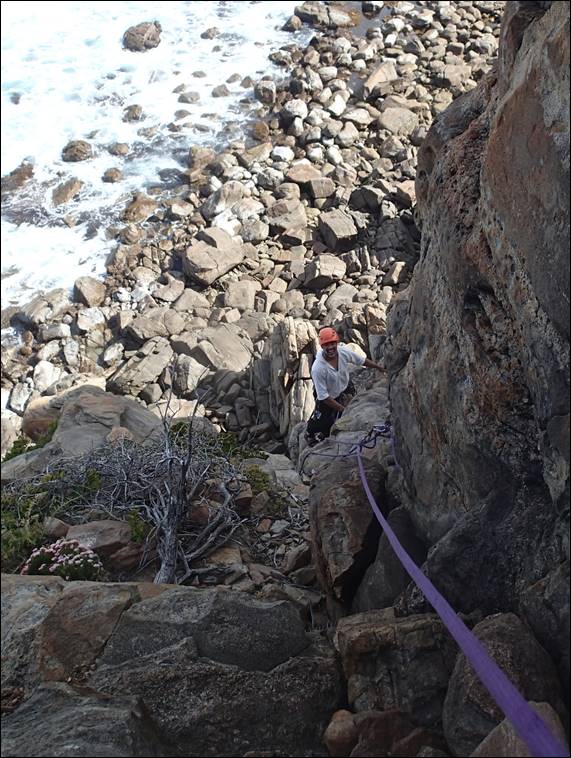
He was also very weary, and we really did need to call it a day now. It was probably one of my shortest visits to Wilyabrup on record, but we had bagged three very fun traditional style routes. Plus we had laced all three with copious amounts of tricams of multiple sizes and styles, which is always enough to put a smile of both Steve and my faces. So it didn’t feel wrong as we packed up and walked out, getting back to the cars before 9am. Leaving the twenty plus people we walked past, as they headed to the cliffs, to enjoy the crag in a more crowded state. I also have a feeling that the trip had provided the much needed circuit breaker Steve was looking for:
 Sandbagged