It’s amazing just how many walks are dotted about the place, and I seem to be hearing about them as more people cotton on to my growing flower fetish. The most recent one being a spot out in the Wheatbelt reputedly littered with orchids, including several I have not as yet personally sighted. But that place is a two-hour trip, one way, so it is tempting to leave it for next spring. Today Lisa and I didn’t fancy going too far away, and we opted for a quick 45min drive to a short walk that Glen mentioned to me just yesterday:
The Kondil Wildflower Walk is just out of Nannup and offers three walks the longest a mere 3.3km. Strangely several websites suggested allowing up to three hours for this walk. Lisa and I, even when I’m in full “look at the one, and that one, and that one…” mode, can cover 3km in an hour, so either this walk was overflowing with treasures or they were making allowances for the real, really, really unfit. The general area was forested for the Allocasuarina tree in the early 1900’s when Barrabup Mill was operational:
Casuarina comes from the neo-Latin word of casuarius, which means Cassowary. The tree looks a bit like a pine with thin spindly leaves that droop down, very much like the feathers of the Cassowary bird (but also the more broadly distributed Emu in my mind). Allos means other, in Greek, and was used to describe this endemic Australian tree’s relationship with the broader Casuarina genus. When Lisa and I saw these trees, we pondered what they were and they reminded us of the Desert Oaks we used to see and love in Central Australia:
The Desert Oaks, or Allocasuarina decaisneana, are directly related to those found near Nanup, which have a common name of Sheoak, or Allocasuarina fraseriana. The name Sheoak being given as the timber resembled the deciduous Oak tree that the workers were familiar with from back in England. I seem to have digressed and talked about a whole heap of stuff I hadn’t intended too, and I’m sad to say I didn’t even take a picture of any Sheoaks. Instead my focus was on the smaller flowers dotted about the place:
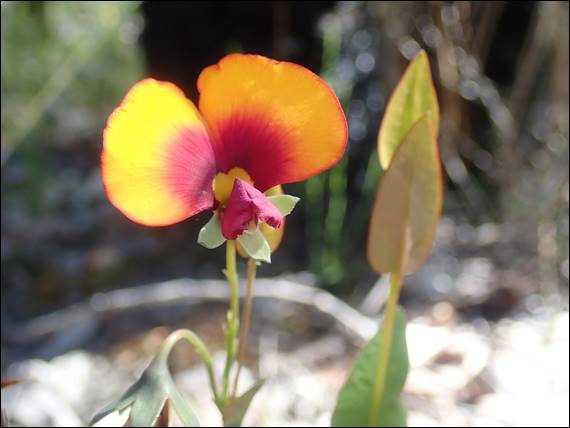
So far I have included an image of Banksia grandis, commonly called the bull or giant banksia. What struck us about this tree, which was only just starting its journey, was the strange looking centre. We were not entirely sure what it was, but having checked it out it is now pretty obvious that they are the new leaves at a very early stage of development. The second image is of a Granny Bonnet pea, Isotropis cuneifolia. The flower was larger than most peas at close to 20mm across and had very clean and clear colours, with a lovely orange fringe round the petals:
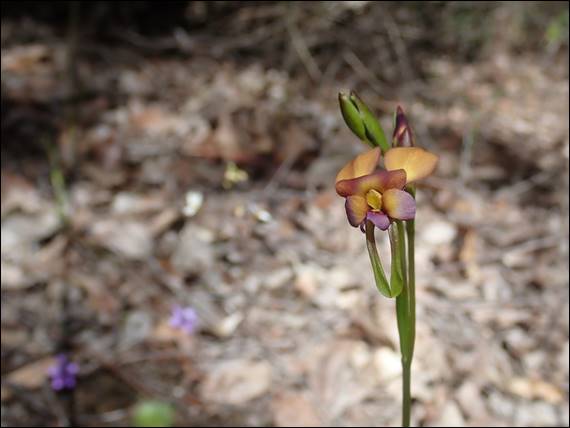
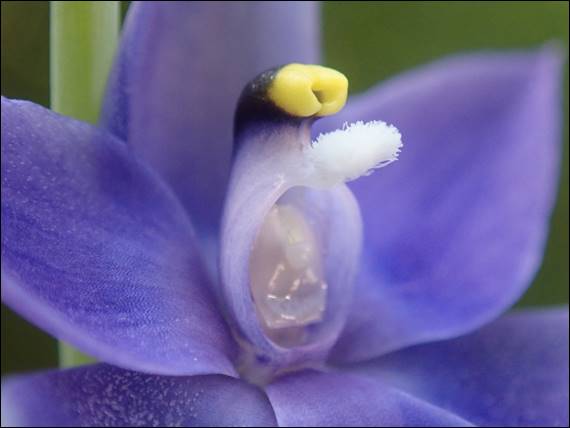
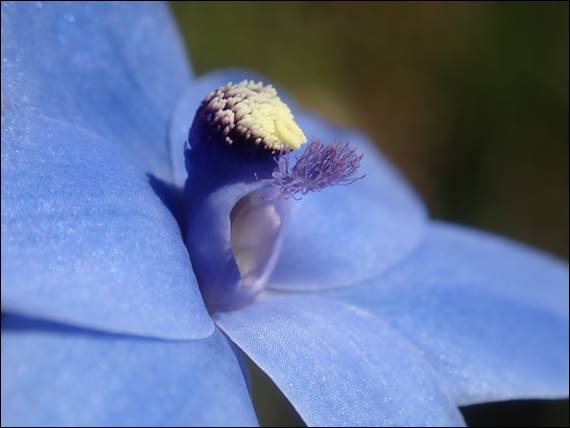
We did pretty well and found seven or eight species of orchids on the walk, all of which we had previously seen or so we thought. If you look closely you will see a couple of Purple Enamels in the background of the image of a Pansy Orchid. The close up above and below are of the Scented Sun and then Blue Lady Orchid, and I purposely took the close up images to show the difference in the column and tufts. The Scented Sun Orchid being the most common of the sun orchids, and can grow up to a meter in height and have upwards of fifteen flowers on one stem:
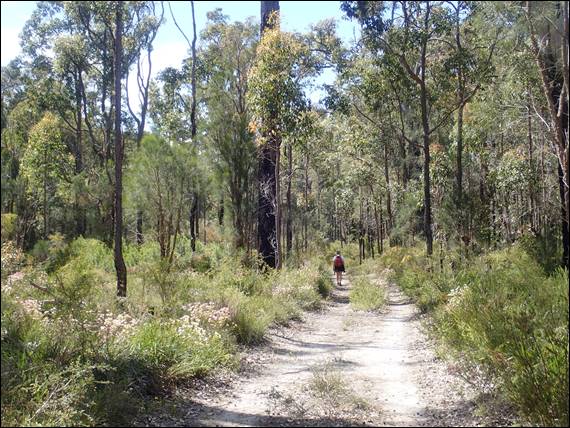
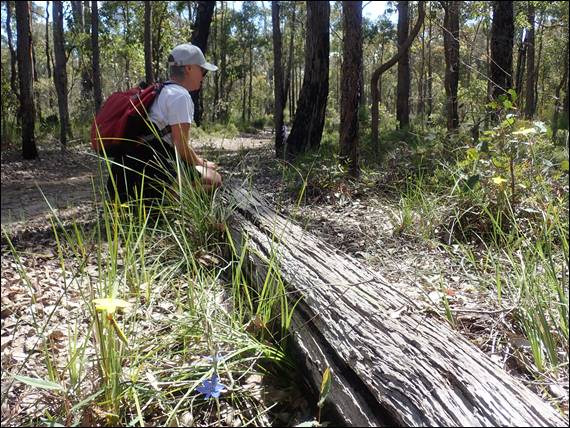
The reason for including the image of Lisa walking ahead of me, was not because of mosquitos of which there were a few. But the nastier March Flies, it is warming up and it is the first time we have come across them on our walks. Mosquitos stick a needle in you, while in comparison the March Flies will take a pound of flesh. Lisa did however stop a few times including when we came across this next Scented Sun Orchid, and it was after this that we started to wonder if we were seeing different plants:
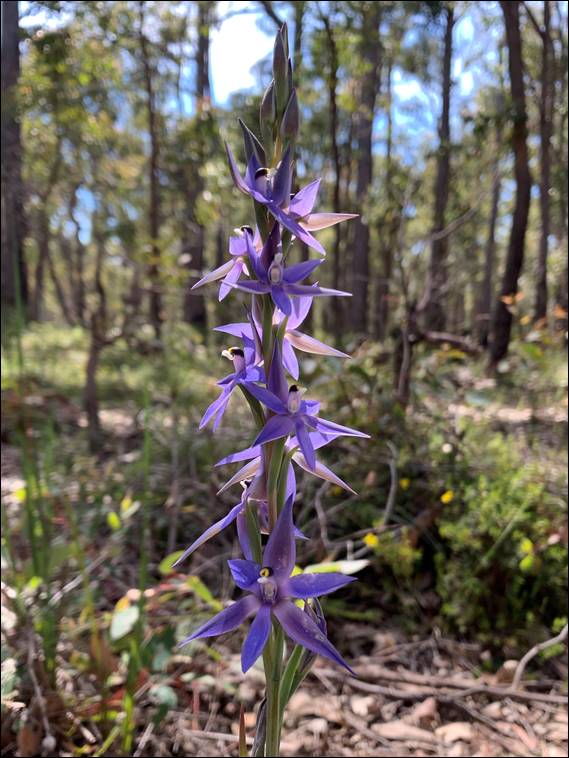
The petals and sepals on this one were much narrower and the flower looked much more star like. It seems that this could be either the Scented or Plain Sun Orchid, but they are hard to tell apart. All I can find to tell them apart is that the latter flowers slightly later in the season, but their flowering period does overlap. That is when I then started to question whether the shorter plants we were seeing, all of which looked to have wider petals, such as that in the close up image earlier on, may be the Shy or Slender Sun Orchid but other than size I could see no distinguishing features:
As I said we did pretty well on the Orchid front, and in addition to the above mentioned finds we saw Cowslips, Rattle Beaks, a single White Spider and several Forest Mantis. The latter were getting on in life and shrivelling up. While there are so many varied shapes and sizes of orchids in the South West of Western Australia, there is one thing in common and that is at the base of the flower is where the ovary sits. It is possible to tell if pollination has been successful, as the green pod between the stem and the flower will swell up:
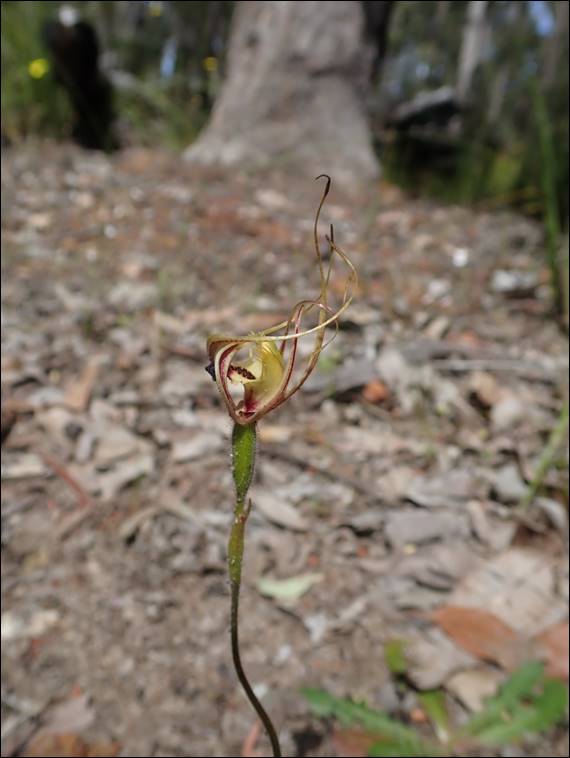
To my untrained eye I’m going to take a stab and say the above Forrest Mantis was not successful with reproduction, which I say because for some other orchids I’ve seen the ovary has been very noticeably swollen and looking back at other images of Forest Mantises this one isn’t. Below was a pea that stood out for me, due to the tight cluster and the deep colours of the flowers. It seems this plant, endemic to the south-west of Western Australia (again!), has had a name change over the years. Originally named Burtonia conferta in 1825, and changed in 1987 to Gompholobium confertum:
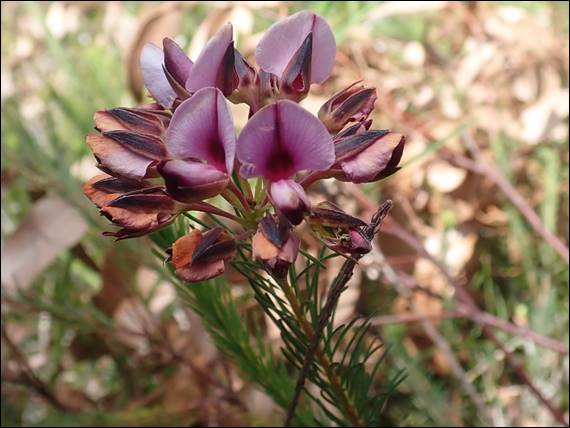
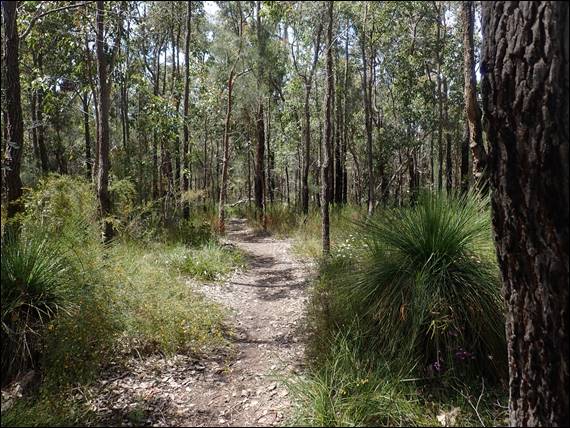
I haven’t discovered the reason for the name change, but the term confertum means “crowded”. This does not relate to the cluster of flowers at the end of each branch, but the foliage itself. Despite the trails being relatively short and also in quite close proximity to each other, the area was lovely to wander through. Unless there were other people on the tracks, which only happened once for us, you would have no idea how close they were. Indeed, when we walked on the next circuit there’s no way we could have told we were within tens of meters of the last track:
I’ve mentioned both the Purple and Yellow Flag, or Patersonia sericea and umbrosa, and we saw plenty of them today. We did however find one plant that was definitely of the same genus, but I’ve been unable to identify the species. I hazard a guess that it may have been a single albino plant, but while the three petals were a soothing pale creamy colour the stamin was the same distinctive yellow of those found on the purple and yellow variety. I’ve been using Google Lens but can safely say for this trip it has been utterly useless:

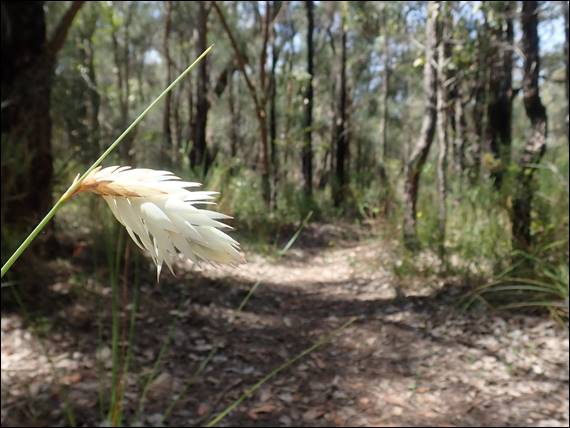
We’ve also been spotting and taking a liking to the many native grass species. These are usually clumping and do not sprawl across and engulf the ground like the pasture or turf grasses that we have introduced. The seed or is it flower head of these grasses are architecturally fascinating, and they look like they have been created by a perfectionist with perfectly sized overlapping leaves with just a hint of colour graduation. The image below being of a Hooded Lily, Johnsonia lupulina, that was opening up in the warm sun:
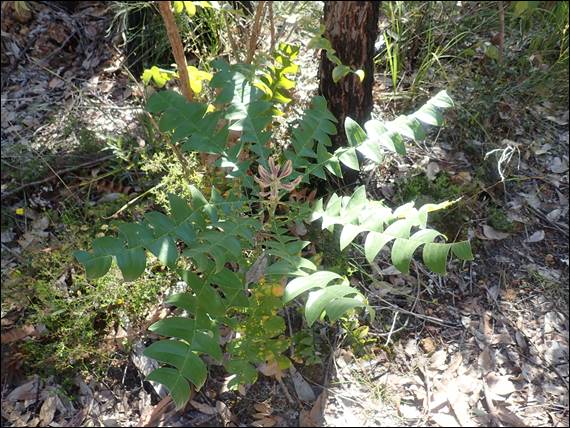
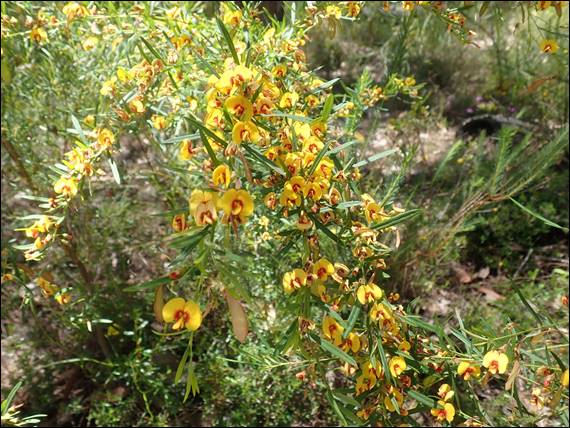
One last pea, this one being Bossiaea linophylla and I can’t find a common name for it. Abundant and much smaller flowers than the other peas I have included in this post. But they stood out so brightly when the sun hit them. The flowers can be a bright yellow to orange or apricot-coloured or red flowers, and the fruit of this plant is known to attract the Western Rosella parrot. The reason I took the image was that I thought it was the plant from which I found the fruit or seedpods, but looking at the leaf structure now it is obvious I was wrong:
So now I have no idea what plant this was, but I simply couldn’t walk past these strange looking bulbous pods and had to include them. I have attempted to identify them with Google Lens and had some quite funny results. Originally leaving the app to pick out the part of the image to focus on it suggested they were peaches, then when I manually focused it on just one whole pod it came back with a pomegranate. Of course there is no way of telling Google Lens they are only 20-30mm in size, so you can understand the results. Needless to say I’ve given up on this one, but if I come across them again I will untangle the plants to see it I can track down any flowers that will hopefully be easier to identify:
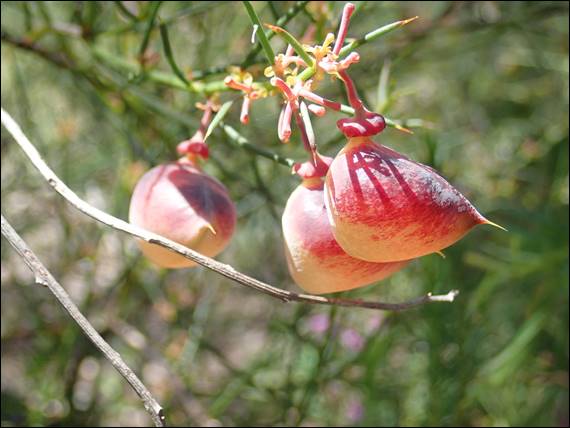
Even packing in the two longer trails we were ready to leave within a few hours, which was a good job as the sun was out and it was getting warmer. It seems that dogs are allowed here, so Lisa has in mind to pop back with the poodles. If that happens sooner rather than later, I might get a chance to check the above pods out in more detail. But for now, we considered heading into Nannup for a bite to eat but have taken a liking to the Shelter in Busselton. So this is where we ended up for lunch and a celebratory beer to say cheers to twenty-one great years of marriage:

 Sandbagged
Congratulations. Bob and Mary
LikeLike
Thanks guys, hope all is well in the beautiful Lake District.
LikeLike
Congratulations!
LikeLike
Thanks Howsie 😃
LikeLike