At work I’m not known for mingling or sitting in the tea room to have a yarn, and can usually be found tucked away in front of my computer getting on it. Some may say I’m a little introvert and others may say antisocial, but for me I’m there to work and live my life away from the office. However, Friday is my go a bit slower day and this week I actually took a lunch break and visited a small reserve a few minutes away. One website touts Manea Park as “Bunbury’s premier bush reserve” yet despite working so close to it, this was my first visit here:
A limestone track takes you on a loop walk that is just over 2km, and I had picked a bit of a stinker of a day to have a wander at lunchtime. The car thermometer told me the temperature was hitting thirty degrees, and it felt hot. Stretches of the track are however shaded by low shrubs and trees, and underneath these is an array of understorey that included what I had come out to see. In several sections there was evidence of where the Friends of Manea Park had been clearing weeds and revegetating with natives and when they found orchids they had fenced them off making them even easier to spot:
While the above and below images may seem the same they are different orchids. And before I tell you which ones they are here are a few words about orchids from the big man himself, Sir David Attenborough: “Each and every species of flowering plant has its own unique evolutionary story that’s closely coupled with the animals that pollinate it. But one family of flowering plant has developed this relationship in more complex ways than any other, and in doing so has become the most numerous, and diverse, on the planet.”:
In addition this this mighty claim, there are an estimated 25,000 species of orchid on the planet and this represents 10 per cent of all flowering plants. The south west of Western Australia contains about 400 species of orchids, which makes my tally this year of somewhere between 40 and 50 species seem a bit pathetic. But while I have raised my efforts in orchid hunting up a notch or two on previous years, I’m still not at the point of cataloguing my finds, hence not knowing precisely how many species I have found:
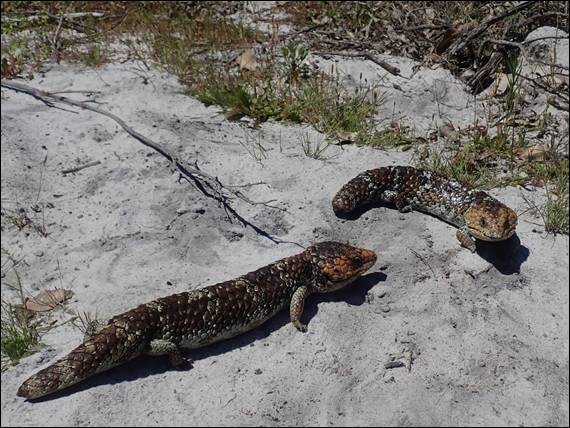
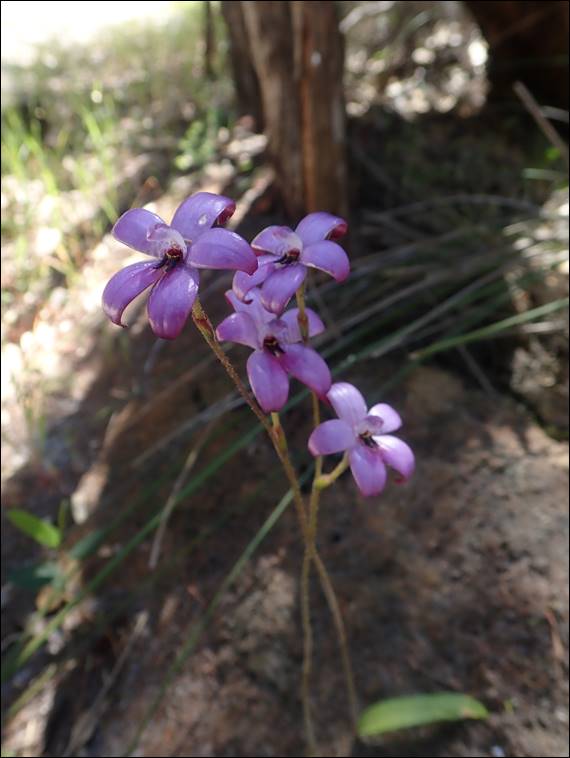
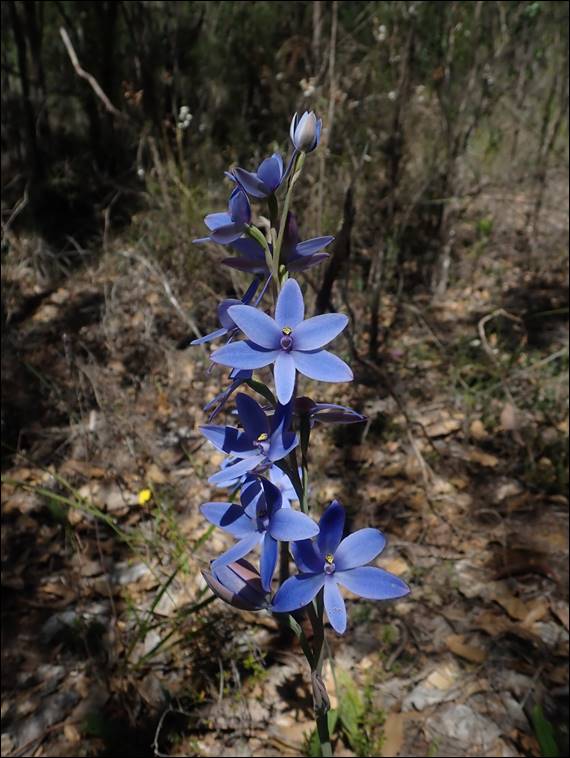
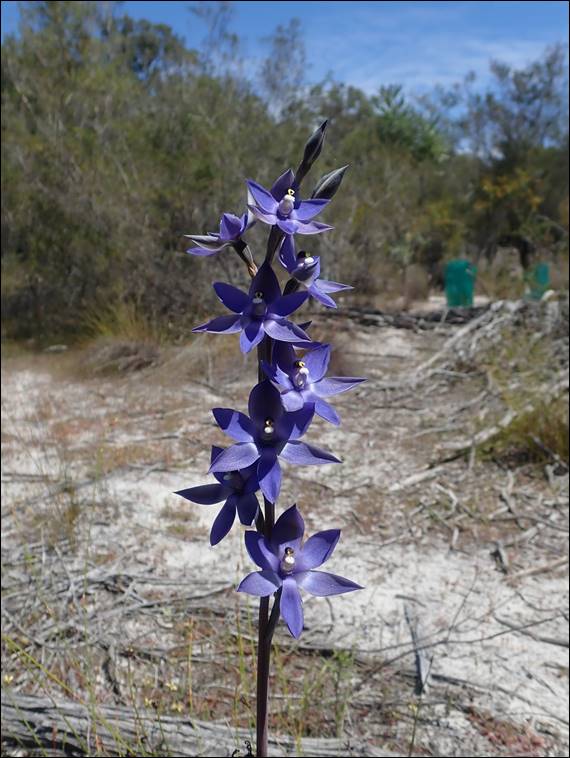
As I said earlier it was a hot day and I was not the only one out for a walk. I have often seen bobtails, but it is not often I have found a pair together. Back to orchids and you may easily recognise the Purple Enamel in the first image, I liked the image as it had two plants each with two flowers out. Most I have seen to date have only had a single flower. The next two are a Blue Lady Orchid and then Scented Sun Orchid, if you look closely you may see main difference of the petal and sepal shape and hue. When you get to detail the labellum is also different:
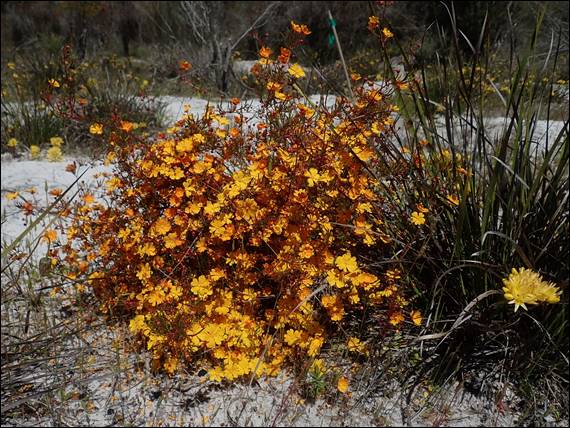
Manea Park is known for its wild flowers and there were a lot out, so I had to include just one which is the Orange Star. It was a very bright day so the image above may not do it justice, but the colours are a brilliant orange and it stands out amongst all the other flowering plants. This one grows in swamps and Manea Park has several wetlands, but unless you knew it you would not be able tell as you walk round the path. This plant is extremely sensitive to phytophthora, commonly called dieback:
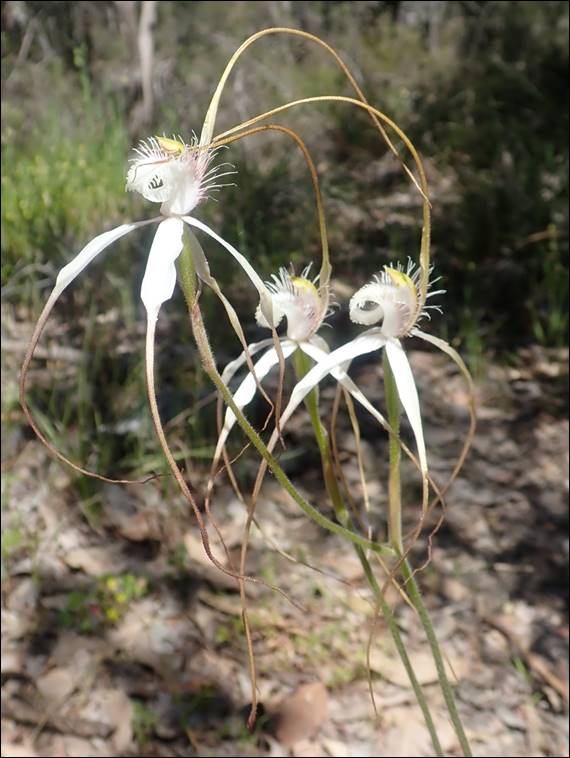
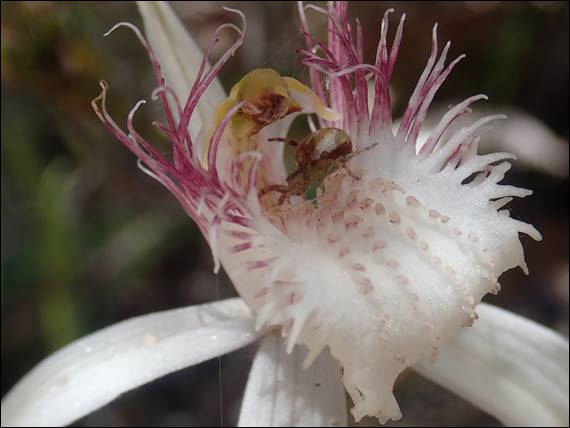
I have just read that Phytophthora comes from two Greek words of phytón, meaning plant, and phthorá, meaning destruction. So literally translates as the plant-destroyer and it is devastatingly effective is doing so. Seeing the Orange Star was a good sign that this destructive plant pathogen has not, yet, taken hold in Manea Park. Again back to orchids, and I came across another species of spider orchid, this one being the Sandplain White Spider Orchid. Identifiable by amongst other things the four rows of mostly white calli, as well as ragged fringes, on the labellum:
It was time to head back to the office, and I have to say that I thoroughly enjoyed my wander. I might be tempted to head back there again, as I spotted quite a few orchids that were yet to bloom. Back in the office, a work colleague noticed an image of an orchid on my screen and showed me an image of a spider orchid he had found recently at a small reserve not far from where we live. So after work instead of heading home I drove out to Ruabon Nature Reserve, a small patch of bush I have driven past many times before and never even noticed:
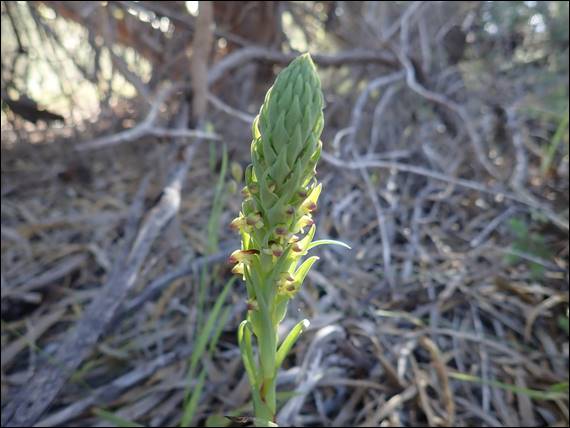
I hadn’t asked for any details of where he had spotted the spider orchid, so I parked up on the side of the road and started to walk along some obvious vehicle tracks and then along kangaroo trails keeping an eye out. Just like at Manea Park I found a few regulars, including Pink Fairies, Cowslips, Purple Enamels. Common Mignonette and Mantis but not what I was looking for. I did however come across the above introduced South African Orchid, which was first recorded near Albany in 1944 and has now spread widely across the south west of Western Australia:
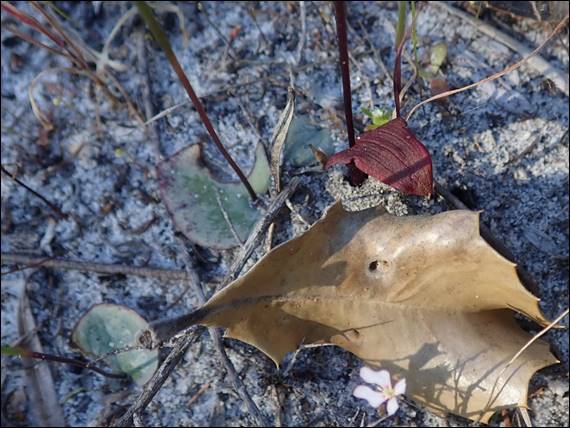
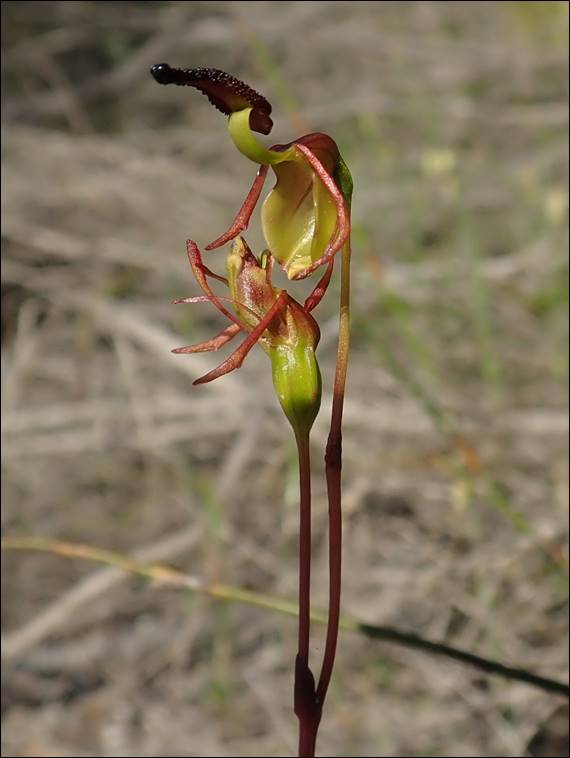
I eventually found where my work collage would have been, a track that lead to groundwater observation bores. Along this track I spotted the familiar leaf of the King in his Carriage Orchid, the green leaf above, and next to it was a deep red leaf that was elevated off the ground. This belongs to another orchid that I have been hoping to find, the Flying Duck Orchid. I found this one in varies stages of blossoming making me think I had found a whole heap of species, but it was the leaf images that told me later they were all one in the same:
I was not successful in finding any spider orchids, let alone the one that my work colleague had spotted and photographed. A reason I was keen to find it was because it seemed to me to be one that is found out in the Wheatbelt, a completely different environment to here. With the season we have been having there are new species being found and some species being found out of their previously thought range. It is therefore was possible I was right, but without personally spotting and trying to more positively identify it I sadly can’t tell:
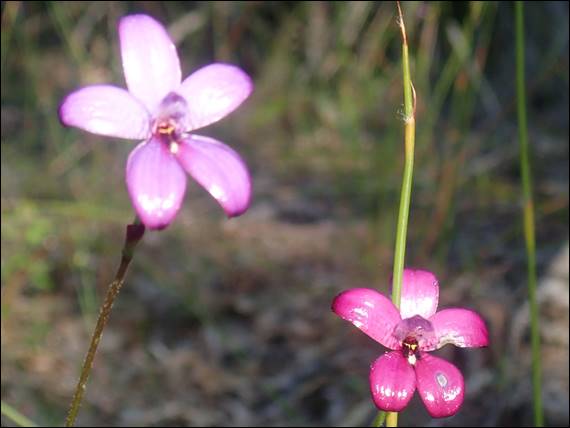
I wouldn’t normally include two images of the same plant in a post, unless there is good reason such as the previous image of the spider I found making its home in the Sandplain White Spider Orchid. And similarly there is a reason for including a second enamel orchid image, as the one above includes both a Purple and Pink Enamel Orchid. It’s a subtle difference but a call I’m happy to make, both are supposed to be common throughout the south west and until now I have not found one that I felt confident in saying is the pink variety until now:
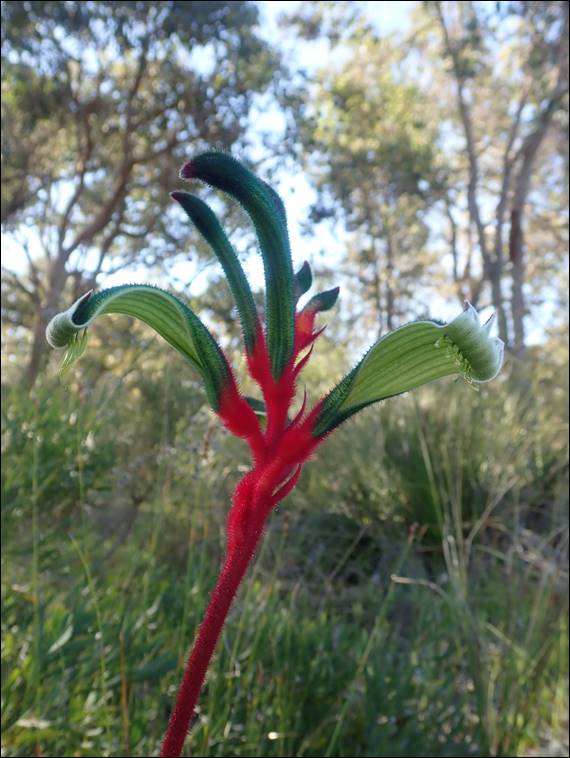
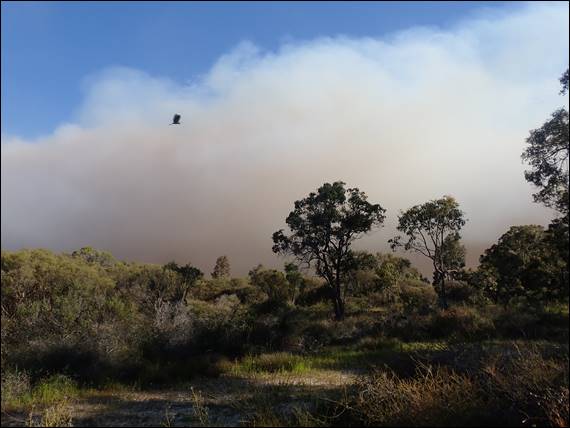
The other plant that I found at both locations, which I spent some time checking out was the Red and Green Kangaroo Paw. The colours on these plants were extremely vivid and contrasting making them stand out. However, unlike my increasing interest in orchids I will refrain from trying to find all eleven species of kangaroo paws. As I made my way back to the car to head home I couldn’t resist an image of the dirty brown looking clouds forming in the south, a sign of bushfires raging that were hopefully controlled burns:
 Sandbagged